(By Khalid Masood)
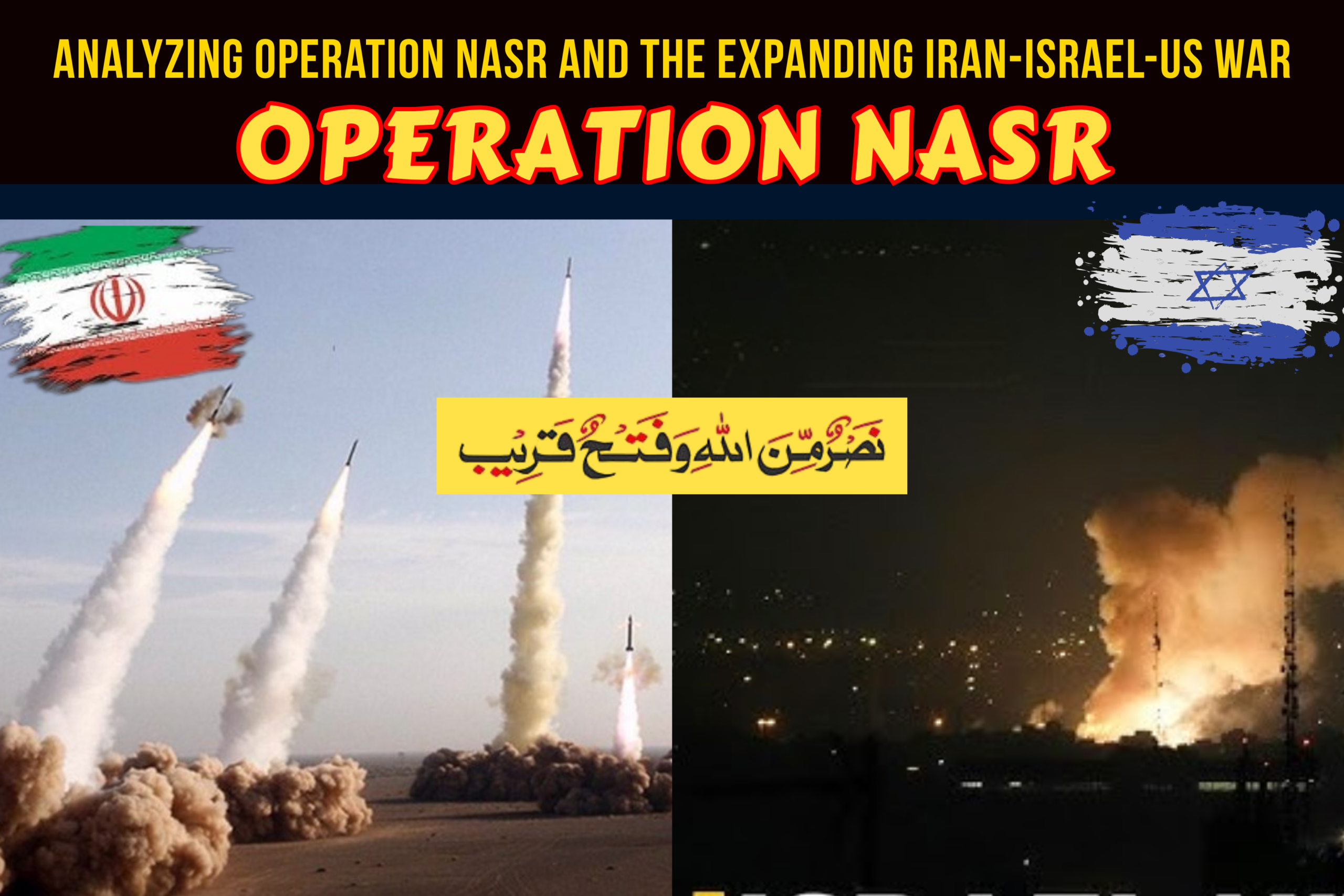
The unfolding tragedy in West Asia is not merely a distant geopolitical chess game; for the people of Pakistan, the broader Muslim world, and the Global South, it is a stark reality that directly impacts our economic survival, energy security, and regional stability. As the flames of conflict continue to spread, the fragile equilibrium of the Middle East has shattered once again. As of June 7, 2026, the region has entered a perilous new phase. While the broader conflict traces back to joint US-Israeli strikes on February 28—explicitly aimed at inducing regime change in Tehran—the immediate catalyst for this latest escalation is Israel’s relentless refusal to abide by the ceasefire. Over the past three months, continuous Israeli attacks on southern Lebanon, characterized by the indiscriminate use of white phosphorus munitions on civilian populations, have deeply irked the Iranian leadership. Viewing these actions as a deliberate sabotage of diplomatic pathways and a direct assault on civilian life, Tehran has responded with a major new offensive: Operation Nasr. With negotiations now completely stalled and “blockade diplomacy” choking global chokepoints, the world stands at the precipice of a broader, uncontrollable war.
This analysis unpacks the military, geopolitical, and macroeconomic dimensions of this escalating crisis, offering a neutral, fact-based assessment of the strategic calculus driving the key players.
Background: Ceasefire Violations and the Catalyst for Operation Nasr
The current phase of the conflict did not emerge in a vacuum; it is the direct culmination of Israel’s relentless refusal to abide by the ceasefire agreement. Despite the truce, the Israeli Defence Forces (IDF) continued near-daily military operations in southern Lebanon, systematically undermining the peace process and preventing the return of displaced civilians.
What particularly irked the Iranian leadership was the IDF’s widespread and unlawful use of white phosphorus munitions against civilian areas. Monitoring bodies documented hundreds of such strikes, notably in the village of Arnoun in the Nabatieh district, where artillery-fired white phosphorus was dropped directly over residential homes. The continuous bleeding of Lebanon through these ceasefire violations, coupled with the indiscriminate nature of the incendiary weapons used on civilians, convinced Tehran that diplomatic pathways were entirely blocked by Israeli military escalation. This persistent aggression and the resulting civilian toll served as the immediate catalyst for Iran’s decision to launch Operation Nasr.
Documented Israeli Ceasefire Violations (Last 3 Months: March – May 2026)
The following table details specific incidents of Israeli attacks in Lebanon during the three months immediately preceding the current war, highlighting the scale of the violations and the civilian casualties that precipitated Iran’s military response.
| Date (2026) | Location | Type of Attack / Violation | Reported Casualties | Source |
|---|---|---|---|---|
| March 3 | Arnoun, Nabatieh (South Lebanon) | Artillery-fired white phosphorus dropped directly over residential homes | Part of broader campaign (20 killed across Lebanon in 24 hrs) | Human Rights Watch www.hrw.org, Xinhua 新华网 |
| March 4 | Across Lebanon (including Beirut) | Intense airstrikes (part of Operation “Roaring Lion” waves) | At least 20 killed and 283 injured in a 24-hour period | Xinhua 新华网, Israel Alma Center israel-alma.org |
| April 8 | Beirut (densely populated neighborhoods) & South | Massive wave of over 100 strikes (Operation “Eternal Darkness”) | Over 300 killed (HRW) / At least 254 killed (Al Jazeera) | Human Rights Watch www.hrw.org, Al Jazeera www.aljazeera.com |
| April 11 | Village near Sidon, Southern Lebanon | Airstrikes | At least 8 killed, 9 wounded | Al Jazeera www.aljazeera.com |
| April 27 | Southern Lebanon | Airstrikes | 14 killed (deadliest day since truce) | Asharq Al-Awsat english.aawsat.com |
| April 29 | Southern Lebanon | Airstrikes | 8 killed, including 3 rescue workers | Euronews www.euronews.com |
| May 5 | Lebanon | Airstrikes | 6 killed | Wikipedia en.wikipedia.org |
| May 17 | Southern and Eastern Lebanon | Airstrikes | At least 7 killed | Al Jazeera www.aljazeera.com |
| May 24 | Southern Lebanon | Airstrikes amid fresh evacuation orders | At least 6 killed | Al Jazeera www.aljazeera.com |
| May 25 | Lebanon | Airstrikes | 34 killed | Wikipedia en.wikipedia. |
Operation Nasr: Tactical Realities and the Danger of Regional Spillover
The launch of “Operation Nasr” (Victory) by the Islamic Revolutionary Guard Corps (IRGC) marks a significant escalation in Iran’s military strategy. According to recent reports, the IRGC has launched ballistic missiles directly targeting Israel’s Tel-Nof and Nevatim airbases. Unlike previous exchanges that often utilized proxies or targeted peripheral assets, Operation Nasr is a direct, conventional strike aimed at the backbone of Israel’s aerial warfare and nuclear delivery capabilities.
Israel’s Likely Response
Israel’s strategic doctrine has long relied on a form of “defensive offence”—striking deep into enemy territory to preempt threats and maintain overwhelming deterrence. However, applying this doctrine against a heavily armed, battle-tested state like Iran carries existential risks. Israel’s likely response will be swift and disproportionate. We can anticipate deep-penetration airstrikes targeting Iran’s remaining air defences, command and control centers, and potentially its critical energy infrastructure and nuclear facilities. Furthermore, Israel will likely intensify its cyber warfare campaigns to cripple Iranian domestic infrastructure.
The Danger of a Multi-Front War
The most alarming aspect of Operation Nasr is the high probability of regional spillover. The conflict is already multi-front, and the strategic linkage between various theaters is becoming explicit. Iran and Hezbollah are actively attempting to link any Israeli capitulation or de-escalation in Lebanon to broader US-Iran negotiations. If Israel retaliates massively against the Iranian mainland, Hezbollah could unleash its full precision-guided missile arsenal on Israeli population centers. Concurrently, Iranian-aligned militias in Iraq and the Houthis in Yemen are likely to intensify attacks on US military assets and commercial shipping. The region is no longer facing isolated skirmishes, but a synchronized, multi-theater war.
The Geopolitical Chessboard: Reactions from Washington, Moscow, and Beijing
As this new phase begins, the world’s major powers are being forced to recalculate their strategic positions. The reactions of the US, Russia, and China will dictate whether this conflict remains contained or spirals into a global confrontation.
The United States: The Dilemma of Entanglement
Washington finds itself in a severe strategic dilemma. The US initiated the February 28 strikes alongside Israel, launching nearly 900 sorties in a matter of hours with the stated objective of regime change . However, with US-Iran negotiations completely stalled, the US is now reaping the consequences of this maximalist approach. While politically bound to defend Israel against Operation Nasr, the Pentagon is deeply wary of being dragged into another endless Middle Eastern war. The US response will likely focus on active defence—deploying additional naval and air assets to intercept Iranian missiles—and intelligence sharing. Washington’s primary goal will be to deter Iran while desperately trying to prevent Israel from crossing red lines that would force direct, sustained US combat involvement.
Russia: Opportunistic Realpolitik
Moscow views the chaos in West Asia through a lens of opportunistic realpolitik. A prolonged conflict serves several Russian interests: it keeps the United States militarily and diplomatically distracted, and it drives up global energy prices, which benefits the Russian economy under Western sanctions. While Russia will offer diplomatic cover to Tehran at the UN and potentially accelerate covert military-technical cooperation, Moscow is unlikely to risk a direct military confrontation with the US. Russia will support Iran just enough to bleed American resources, but not enough to trigger a direct Russo-American clash.
China: The Pragmatic Mediator
Beijing’s primary concern is strictly economic. The 2026 Strait of Hormuz crisis has severely disrupted global petroleum supply chains, posing a direct threat to China’s energy security [[19]]. As the world’s largest importer of Gulf energy, China cannot afford a total closure of the strait. Consequently, Beijing is likely to position itself as a neutral peacebroker. Leveraging its strong diplomatic and economic ties with Tehran, China will push for an immediate ceasefire. Simultaneously, Beijing will accelerate efforts to secure alternative energy routes and insulate its economy from the shock, using the crisis to highlight the instability of US-led global security architectures.
The Economic Fallout: Energy Weaponization and the Burden on the Global South
Perhaps the most devastating consequence of this expanding war is its impact on the global economy. The conflict has triggered a major 2026 Strait of Hormuz crisis, transforming energy into a primary geopolitical lever. With US-Iran negotiations stalled, “blockade diplomacy” has taken over global chokepoints, creating a man-made energy shock.
Inflation and Supply Chain Disruption
The disruption of oil flows through the Strait of Hormuz has sent energy prices sharply higher, triggering a new wave of global inflation. Beyond oil, the closure of these vital waterways has caused severe shortages of key fertilizers and agricultural products, threatening a global food crisis. The global supply chain, still recovering from previous disruptions, is now facing a systemic shock.
The Disproportionate Impact on Developing Nations
While the Global North can absorb some of these shocks through strategic reserves and economic stimulus, the Global South bears the brunt of the fallout. For developing nations like Pakistan, the economic implications are devastating. Surging oil prices exacerbate balance of payments crises, drive up domestic inflation, and drastically increase the cost of essential imports. The weaponization of global chokepoints disproportionately punishes nations that have no stake in the conflict, threatening to push millions into poverty and derailing years of economic development. The 2026 Strait of Hormuz crisis is not just a regional issue; it is a direct assault on the economic stability of the developing world.
Conclusion: The Imperative for Conflict Resolution
The launch of Operation Nasr and the subsequent escalation of the Iran-Israel-US war mark a dark new chapter in the history of West Asia. The strategy of inducing regime change through military force has not brought stability; rather, it has birthed a volatile, multi-front conflict that threatens to engulf the entire region.
For Pakistan, the wider Muslim Ummah, and the Global South, the path forward must be rooted in the unwavering demand for diplomatic resolution. We must advocate for a strategic framework that prioritizes mutual security over hegemony, and dialogue over destruction. The international community, particularly neutral global powers, must unite to press for an immediate ceasefire and the reopening of diplomatic channels. True conflict resolution requires moving away from the paradigm of military adventurism and towards a framework of inclusive, pragmatic diplomacy. The world cannot afford another catastrophic war in West Asia; the time for de-escalation, strategic restraint, and a focus on the economic survival of the Global South is now.