
(By Quratulain Khalid)
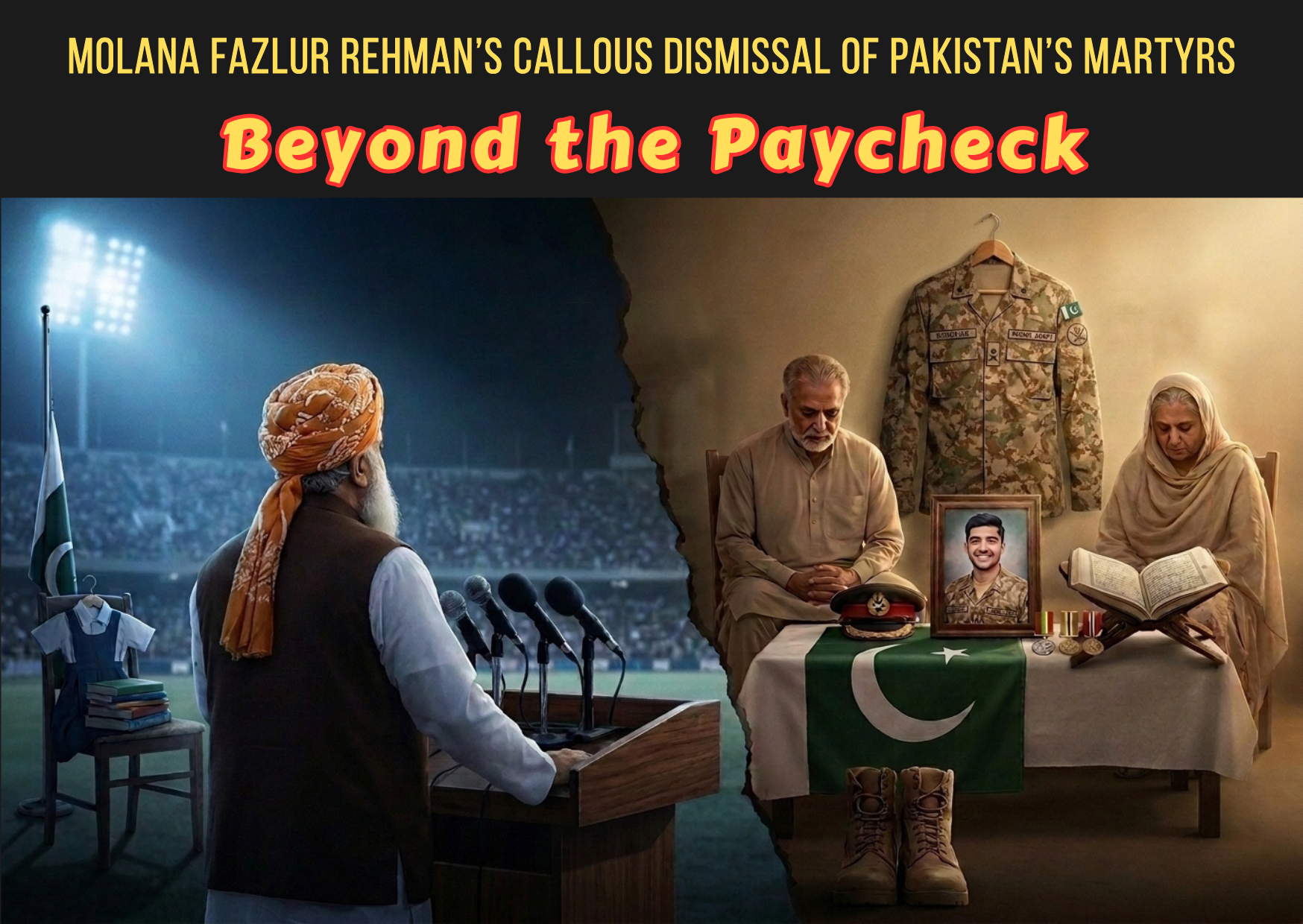
There is a profound, sacred boundary between the administrative duties of a state and the supreme, transcendent sacrifice of those who lay down their lives to defend it. Yet, from the safety of a podium at a JUI-F “power show” rally in Kasur on the weekend of July 11–12, 2026, Maulana Fazlur Rehman chose to obliterate that boundary. In a display of staggering moral and spiritual insensitivity, the JUI-F chief reduced the martyrdom of Pakistan’s soldiers to a mere condition of their employment. By treating the ultimate sacrifice as a transactional footnote, Maulana Fazlur Rehman has not only insulted the defenders of the state but has inflicted deep, secondary wounds on the grieving families of the fallen.
The Anatomy of an Insult: Words That Wound
The verbatim Urdu translation of Maulana Fazlur Rehman’s remarks is far sharper and more venomous than polite English paraphrases suggest. Addressing a crowd, he sneered: “They tell us, ‘our soldiers are being martyred.’ Oh please — your soldiers strapped on the belt for exactly this; they take a salary precisely so they will fight for the country’s security. What obligation is your blood placing on me?”
The tone is unmistakably arrogant, belittling, and deeply dismissive. The casual use of “Oh please” is not merely a rhetorical flourish; it is a deliberate mockery of public grief. It strips the nobility, terror, and finality of death in combat and reduces it to a mundane employment contract.
Such careless, toxic talk is not just a political misstep; it is profoundly dangerous. It demoralizes the troops on the front lines, emboldens the enemies of the state, and poisons the national psyche. When a leader of his stature diminishes the concept of martyrdom, he actively works to erode the very moral fabric that holds a nation together in times of war.
The Emotional Toll: A Secondary Trauma for the Parents of Shaheeds
The most unforgivable aspect of Maulana Fazlur Rehman’s rhetoric is its devastating emotional toll on the mothers and fathers of the shaheeds (martyrs). For parents who have already endured the unimaginable, soul-crushing agony of losing a child to terrorists, this careless speech acts as a brutal secondary trauma.
Imagine a mother who will never again hear her son’s voice, or a father who has folded his child’s uniform for the last time, turning on the television only to hear a prominent politician declare that their child’s death was just a “salary requirement.” It is a profound invalidation of their grief. It tells the parents that their child’s blood holds no obligation, no sacred weight, and no higher purpose. It is an act of profound cruelty against those who have already given everything to the nation.
Maulana Fazlur Rehman’s transactional logic completely collapses when confronted with a sacrifice that transcends any paycheck. Consider the heartbreaking historical example of nearly an entire class of 30 students from the FG (Federal Government, administered by the Pakistan Army) Public School in Quetta. These young men laid down their lives for Pakistan after receiving their commissions in the Pakistan Army, fighting bravely in Waziristan and elsewhere. They were in the prime of their youth, stepping onto the battlefield not merely to draw a state salary, but out of a profound sense of duty. Did they strap on their combat gear just for a monthly wage? Did they face enemy fire simply for a paycheck? No. They gave their lives purely out of a fervent love for the motherland. Maulana Fazlur Rehman’s cynical worldview simply has no vocabulary to comprehend such a selfless, ultimate sacrifice by the nation’s finest sons.
The Spiritual Dimension: The Quranic Greatness of Shaheeds
Fazlur Rehman, a cleric by title, views military service and martyrdom through a purely secular, bureaucratic lens. This is a staggering spiritual failure. The Islamic paradigm, as outlined in the Quran, elevates military service and martyrdom to the highest possible spiritual tiers, entirely refuting his “salary” argument.
The Quran explicitly commands believers not to view martyrs through a worldly, transactional lens. In Surah Al-Baqarah (2:154), Allah says: “And do not say about those who are killed in the way of Allah, ‘They are dead.’ Rather, they are alive, but [your] perception [is] insufficient.” Maulana Fazlur Rehman’s perception is tragically, dangerously insufficient.
He asks, “What obligation is your blood placing on me?” The Quran answers this in Surah Ali ‘Imran (3:169-170): “Never think of those who are killed in the cause of Allah as dead. Rather, they are alive with their Lord, receiving provision.” They are not dead for a state salary; they are alive in the divine presence, receiving eternal provision.
Furthermore, the Quran beautifully encapsulates the virtue of military service and unity in Surah As-Saff (61:4): “Indeed, Allah loves those who fight in His cause in a row as though they are a [single] structure joined firmly.” This is a direct divine endorsement of the military’s unity and purpose, elevating it far beyond a mere “job.”
Ultimately, the transaction is not between the soldier and the state payroll. As Surah At-Tawbah (9:111) declares: “Indeed, Allah has purchased from the believers their lives and their properties [in exchange] for that they will have Paradise.” The ultimate compensation is divine, not financial. To reduce this sacred covenant to a monthly paycheck is not just ignorant; for a man of the cloth, it borders on the blasphemous.
Kicking a Nation While It Bleeds: The Appalling Timing
The timing of these remarks makes them even more combustible and morally bankrupt. Pakistan is currently navigating an intense and bloody counter-militancy cycle. The nation is still reeling from the devastating train attack in Balochistan on May 24, the Jamaat-ul-Ahrar assault on a Rangers camp in Karachi on June 27, and near-daily intelligence-based operations in North Waziristan, Khuzdar, and Panjgur.
Just days before his speech, the DG ISPR held a press conference on July 8, and the military had recently buried fallen personnel, including a Group Captain. Against this backdrop of fresh graves and bleeding wounds, true leadership offers solace and solidarity. Instead, Maulana Fazlur Rehman chose to exploit the nation’s tragedy for a cheap political point, kicking a bleeding country while it was down.
A Nation United in Disgust: The Bipartisan Backlash
The backlash, which erupted by July 13, proved that insulting the parents of martyrs is a universal red line in Pakistan. The ruling coalition led the charge:
- Defence Minister Khawaja Asif condemned the “moral insensitivity,” noting that no one lays down their life for a salary, and that Maulana Fazlur Rehman had wounded “thousands of martyrs, ghazis, widows, and orphans.”
- Planning Minister Ahsan Iqbal struck a regretful but firm tone, citing Qur’an 3:169 to argue that describing an unparalleled sacrifice as mere salary compensation is inconsistent with Islamic teachings.
- Information Minister Attaullah Tarar and PM’s adviser Rana Sanaullah rightly pointed out that martyrdom is beyond the grasp of “us worldly, salaried people.”
The most poignant rebukes came from those who dismantled his logic entirely. Minister of State Aun Chaudhry invoked the memory of 16-year-old Aitzaz Hasan, who died stopping a suicide bomber at his Hangu school in 2014, asking the Maulana: “Did he use to take a salary?” Meanwhile, IPP’s Fayyaz-ul-Hassan Chohan offered Rs 20 million of his own money if Maulana Fazlur Rehman’s two sons would serve just two months in the freezing heights of Siachen or the hostile terrain of Waziristan.
Crucially, the condemnation crossed aisle lines. PPP’s Faisal Karim Kundi, MQM figures, Punjab Assembly Speaker Malik Ahmad Khan, and the Karachi Bar Association all united in censure, proving that the nation stands firmly with its shaheeds and their grieving parents.
The Coward’s Defence and Legal Repercussions
JUI-F’s defence is predictable and hollow: the party claims the clip was stripped of context and that Maulana Fazlur Rehman was merely discussing the constitutional roles of state institutions versus civilian militias. But this defence is intellectually bankrupt. A valid constitutional argument about state responsibility does not require mocking the dead or insulting the parents of shaheeds. One can argue for state duty without calling the blood of martyrs an “obligation” placed upon them.
As of mid-July, Maulana Fazlur Rehman has refused to apologize or withdraw his remarks, doubling down on his arrogance. Consequently, the law is catching up. On July 15, a Lahore sessions court issued notice to the National Cyber Crime Investigation Agency (NCCIA) on a petition by a citizen who argued that the speech, which spread virally on social media, hurt public sentiment and the families of martyrs. The digital spread of his contempt has triggered formal legal scrutiny, with the agency ordered to respond by August 17.
Conclusion: The Indelible Stain on a Political Legacy
Maulana Fazlur Rehman’s Kasur speech is a masterclass in how to diminish the ultimate sacrifice. He failed entirely to distinguish between a state’s administrative duty to pay its soldiers and a citizen’s supreme, transcendent sacrifice of life itself.
We must remember the parents of the shaheeds. Their children did not die for a paycheck; they died so that politicians like Maulana Fazlur Rehman could sit in air-conditioned rooms, breathe free air, and speak without fear of terrorist reprisal. Salaries pay for time, labor, and risk, but they can never buy the blood of a martyr. By refusing to walk back his careless, hateful talk, Maulana Fazlur Rehman has cemented his remarks not just as a political blunder, but as a profound moral and spiritual failing that the parents of the martyrs—and history—will not forgive.

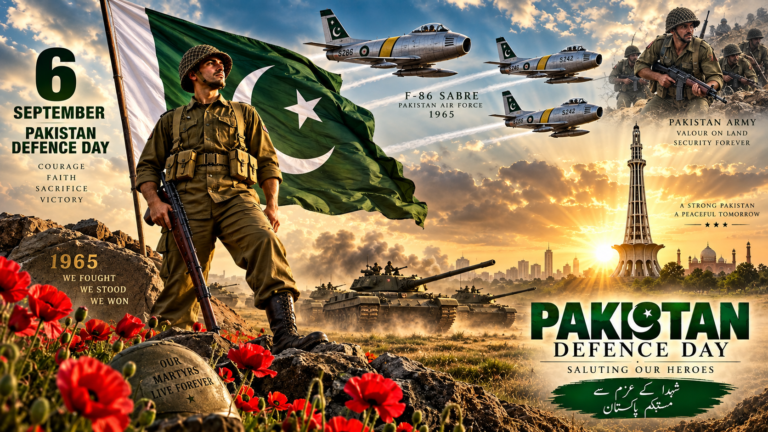
As the sister of a Shaheed Captain of the Pakistan Army, I listened to Maulana Fazlur Rehman’s words with profound pain. My brother did not embrace martyrdom for a salary. His pay stopped the day he laid down his life, but his sacrifice lives forever in the hearts of our family and our nation.
No amount of money can compensate a mother who waits for a son who will never return, a father who buries his pride, or siblings who live the rest of their lives with an empty chair at every family gathering. To reduce the sacrifice of our martyrs to a paycheck is to diminish the grief, honor, and courage of every family that has given a loved one for Pakistan.
Political leaders are free to criticize policies and institutions, but they should never speak in a way that hurts the families of those who made the ultimate sacrifice. We ask for no special privilege—only respect for those who gave everything so that others could live in peace.
My brother wore the uniform by choice. He died fulfilling his oath. That sacrifice can never be measured in rupees, and it deserves far more than being dismissed as “just doing a paid job.”