(By Khalid Masood)
1. HISTORICAL FOUNDATIONS
The Accession and Its Discontents
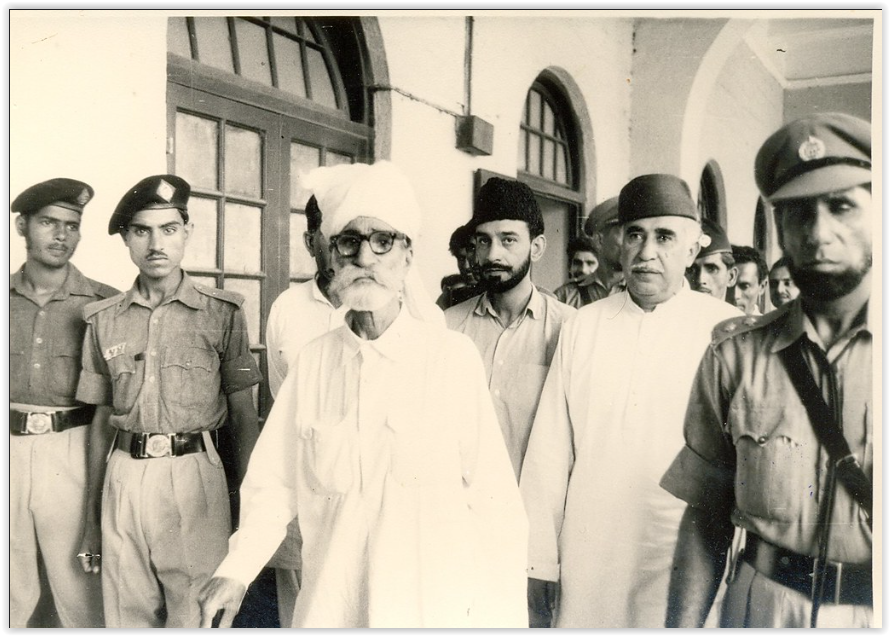
The Balochistan insurgency traces its origins to the contested integration of the princely state of Kalat into Pakistan in March 1948. While the Khan of Kalat signed the Instrument of Accession, his brother Prince Agha Abdul Karim launched an armed revolt in July 1948, seeking Afghan and Soviet support before ultimately surrendering. This established a recurring pattern: Baloch resistance followed by state suppression, followed by negotiated settlement, followed by renewed grievance.
Five Phases of Insurgency
Phase I (1948): The Kalat revolt, led by Prince Abdul Karim, was quickly suppressed. The revolt was isolated—most of Balochistan did not join—establishing the tribal-urban divide that persists today.
Phase II (1958–1959): The One Unit policy, which decreased tribal representation, triggered resistance under Nawab Nauroz Khan. This phase ended with the restoration of provincial status in 1970.
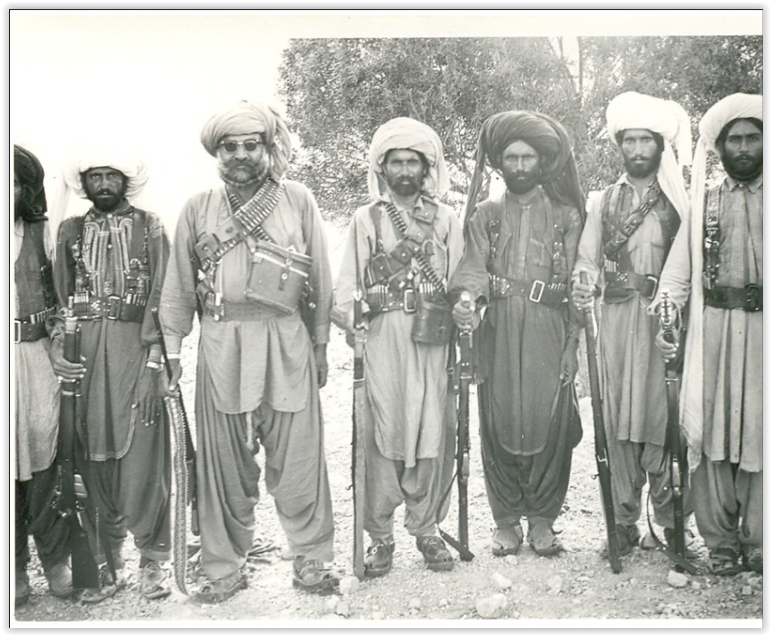
Phase III (1963–1969): Marxist-Leninist ideology influenced this phase, with Sher Muhammad Marri (General Sherof) leading the Baloch People’s Liberation Front across 72,000 square kilometers of guerrilla territory. The conflict ended when General Yahya Khan abolished One Unit and Air Marshal Nur Khan negotiated a settlement restoring provincial autonomy.
Phase IV (1973–1977): The most consequential historical turning point before the current conflict. Prime Minister Zulfikar Ali Bhutto dismissed the NAP-led provincial government, jailed Chief Minister Sardar Atta Ullah Mengal and other leaders under the Hyderabad Conspiracy Case, and launched a massive military operation involving 80,000 troops, Iranian support (the Shah feared spillover into Iranian Balochistan), and helicopter gunships. The 1973 operation killed an estimated 3,300–5,000 insurgents and 5,300 troops, displaced 200,000 civilians, and poisoned Baloch-Punjabi relations for generations.
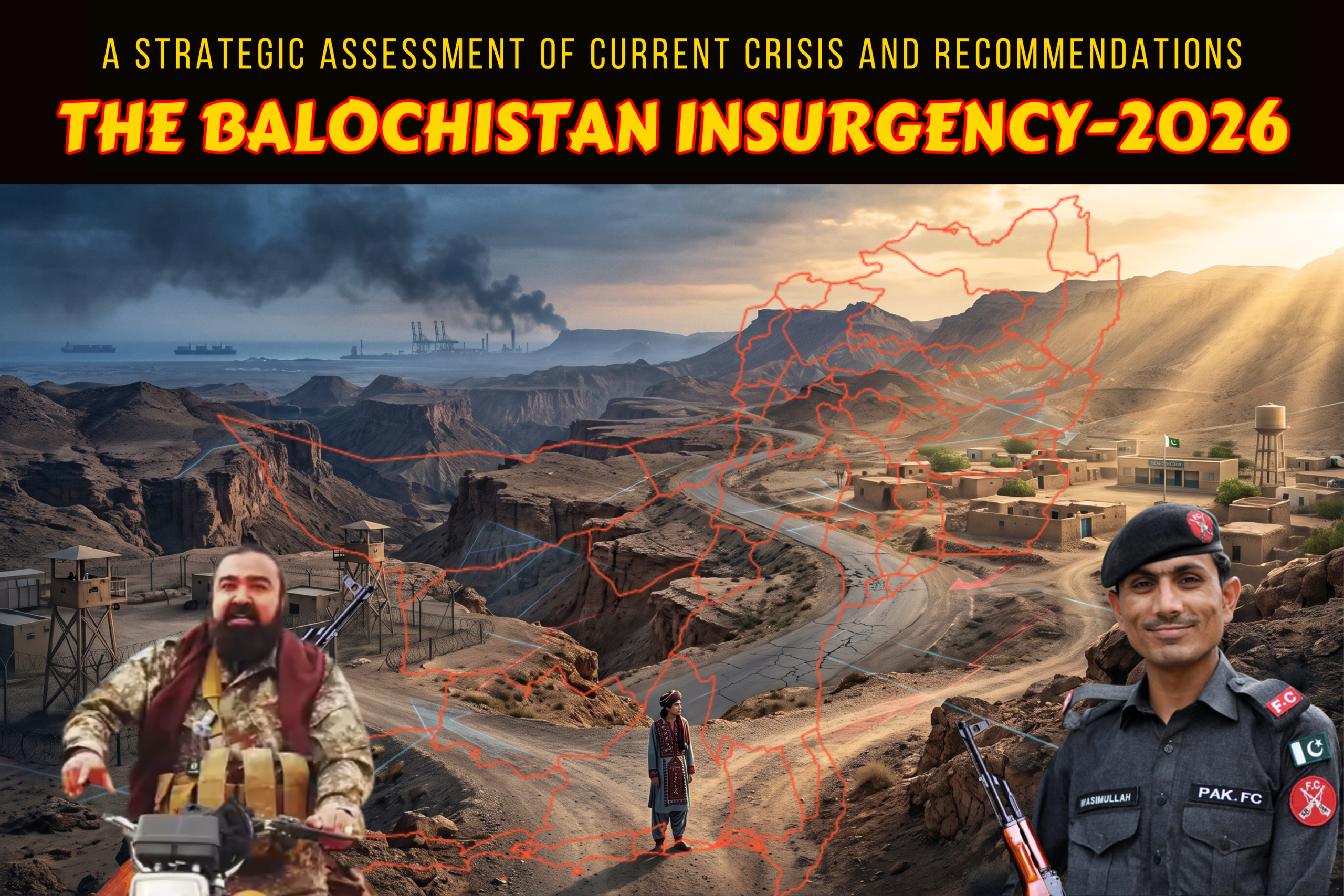
Phase V (2004–present): The current and most lethal phase erupted after the 2006 killing of Nawab Akbar Khan Bugti, a former Chief Minister and Governor who had presented a 15-point agenda in 2005 demanding resource control and a moratorium on military bases. His death in a cave complex—along with 60 Pakistani soldiers and 7 officers—transformed a low-level tribal revolt into a broad-based insurgency. The 2006 killing, ordered by the Musharraf regime, is universally recognized by analysts as the catalyst for the fifth phase.
Structural Grievances
Three structural drivers underpin the current conflict:
Resource Exploitation: Balochistan contains Pakistan’s largest natural gas reserves (discovered at Sui in 1952), substantial copper-gold deposits (Reko Diq, Saindak), and coal reserves, yet remains Pakistan’s poorest province. The Sui gas field supplied Pakistan for decades while most Baloch villages lacked electricity. The 18th Amendment nominally transferred resource control to provinces, but implementation has been incomplete—federal excise duties on gas and petroleum wellheads remain contested, and mining sector revenue collection stays centralized.
Political Marginalization: Despite comprising 44% of Pakistan’s territory, Balochistan holds minimal political weight. The Senate’s equal provincial representation (reinforced by the 18th Amendment) provides formal equality, but real power resides in the National Assembly where Punjab dominates. The 18th Amendment abolished the Concurrent List and devolved 17 federal ministries, yet Balochistan’s capacity to absorb these functions remains limited, and federal bureaucratic resistance has stymied implementation.
Federal Overreach: The province remains under de facto military administration. The Frontier Corps (FC) operates with near-total autonomy, while the civilian provincial government exercises minimal control over security policy. The 18th Amendment did not address provincial control over security agencies—a critical gap that perpetuates the conflict dynamic.
2. CURRENT THREAT LANDSCAPE (2025–2026)
The Escalation Trajectory
The insurgency has entered its most lethal phase. According to the Pakistan Institute for Peace Studies (PIPS), Balochistan experienced at least 254 attacks and 1,026 casualties in 2025—a 26% increase over 2024. Independent monitoring by SATP documented 938 attacks in 2024 resulting in over 1,002 deaths, an 80% increase in fatalities from 2023. The BLA alone conducted 302 attacks in 2024 causing over 580 fatalities.
Operation Herof and Tactical Innovation
Operation Herof I & II: The BLA’s coordinated offensive in late January 2026 marked a strategic inflection point. On January 30–31, 2026, the BLA conducted 12 coordinated attacks across Balochistan targeting military installations, banks, prisons, and police stations, including a prison break freeing approximately 30 inmates in Mastung. BLA spokesperson Jeeyand Baloch termed Operation Herof II a “declaration of decisive resistance.” The Pakistani government claimed 48 killed (including civilians and security personnel) while reporting over 170 BLA fighters neutralized; the BLA claimed 34 fighters lost and over 200 security personnel killed.
The Majeed Brigade Evolution: The BLA’s elite suicide unit has undergone dramatic transformation. Initially male-only, the Brigade has formalized a women’s wing. At least five confirmed female suicide bomber cases have emerged since 2022, including:
- Shari Baloch (April 2022): 30-year-old mother of two with a master’s degree in zoology, attacked the Confucius Institute at Karachi University, killing three Chinese nationals.
- Sumaiya Qalandrani Baloch (June 2023): Journalist and fiancée of a previous male suicide bomber, attacked a military convoy in Turbat.
- Mahikan Baloch (March 2025): Science graduate, attacked a Frontier Corps patrol in Kalat.
- Zareena Rafiq (November 2025): BLF-affiliated, attacked an FC complex housing Chinese mining projects in Chagai.
The deployment of women is strategically calculated: female operatives evade security profiling, exploit cultural norms that limit searches of women, expand target reach, and generate amplified media impact. The BLF has now emulated this tactic, forming its own “Saddo Operational Battalion” suicide unit.
The TTP-BLA Operational Nexus
Despite fundamentally divergent ideologies—BLA pursues secular Baloch ethno-nationalism while TTP seeks Islamist Sharia implementation—intelligence assessments (2024–2025) confirm growing tactical cooperation. UN Security Council monitoring reports identified at least four joint training camps in southern Afghanistan (Walikot and Shorabak districts) for weapons handling, explosives training, and cross-border logistics. Pakistani field reports indicate TTP conducted direct operational training for BLA militants in January 2025, focusing on coordinated attack timing, diversionary tactics, and safe-house management. Interrogations of arrested TTP commanders Nasrullah and Idrees revealed January 2024 coordination plans with BLA Majeed Brigade commander Bashir Zeb, including detailed militant movement routes from Afghanistan into southern Balochistan.
This nexus has produced clear tactical convergence: town takeovers, suicide bombings, sniper and ambush tactics. The Jaffar Express hijack (March 11, 2025)—where BLA fighters seized a Quetta-Peshawar train, held over 350 hostages for 30 hours, and killed 59 people—demonstrated this enhanced sophistication. Weapons linked to abandoned U.S. stockpiles from the 2021 Afghanistan withdrawal, including M4/M16 rifles with thermal optics, were reportedly used.
Geographic Expansion
The insurgency has expanded beyond traditional Baloch-majority areas into previously peaceful Pashtun-majority regions. The TTP’s encroachment into Balochistan—previously warned by PICSS—has added a religiously motivated dimension, with former Taliban fighters from Balochistan joining TTP ranks. Attacks have struck Urak, Ziarat, and other areas previously considered secure. The January 2026 coordinated offensive hit Quetta, Gwadar, Mastung, Nushki, Dalbandin, Kharan, Panjgur, Tump, and Pasni simultaneously.
CPEC Security Implications
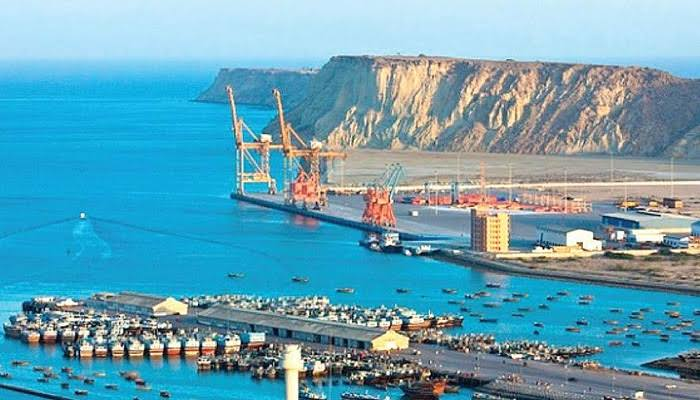
CPEC has become the insurgency’s primary economic target. The BLA’s Operation Zir Pahazag, launched in 2019, specifically targets Chinese nationals and infrastructure. High-profile incidents include:
- July 2021: Nine Chinese workers killed at Dasu Hydropower Project.
- March 2024: Five Chinese engineers killed in a suicide bomb attack on the Karakoram Highway.
- March 2025: Jaffar Express hijack, directly challenging state authority along CPEC transit routes.
- April 2026: BLF declaration that all foreign companies in Balochistan would be targeted regardless of origin.
- May 2026: Attack on a copper-gold site in Chagai; arson of 30+ cargo containers in Nushki.
The April 2026 announcement by a BLF commander represents a strategic expansion from anti-China targeting to generalized anti-foreign-investment posture, directly threatening the $1.3 billion U.S. Export-Import Bank commitment to Reko Diq and broader CPEC Phase II sustainability.
3. FOREIGN DIMENSION
India: RAW, Jadhav, and Strategic Competition
The arrest of Indian Navy officer Kulbhushan Jadhav in Balochistan on March 3, 2016, remains the most documented case of alleged Indian covert involvement. In a video confession, Jadhav—a serving officer who established a business cover in Chabahar, Iran—acknowledged working for RAW since 2013, directing activities in Karachi and Balochistan, and funding Baloch separatists. India rejected the confession as doctored.
Strategic Context: India’s interest in Balochistan is multidimensional:
- Chabahar-Gwadar Competition: India’s Chabahar port development in Iran directly competes with CPEC’s Gwadar terminal. Chabahar offers India alternative access to Afghanistan and Central Asia while bypassing Pakistan.
- Strategic Depth: Supporting Baloch insurgency ties down Pakistani military assets, preventing their deployment against India.
- Water Warfare: Balochistan’s coast offers potential leverage against Pakistan’s maritime flank.
Evidence Assessment: Beyond Jadhav, concrete evidence of sustained Indian material support remains circumstantial. Pakistani officials consistently allege Indian backing, but independent verification is limited. The August 2025 U.S. designation of BLA as a Foreign Terrorist Organization—long sought by Islamabad—suggests Washington acknowledges some Pakistani concerns, though it does not confirm Indian involvement.
Afghanistan: Post-Taliban Sanctuary
Afghanistan under the Taliban has emerged as the primary external sanctuary for both BLA and TTP. UN monitoring reports and Pakistani intelligence confirm:
- Joint training camps in southern Afghanistan (Walikot, Shorabak).
- Al-Qaeda facilitation between TTP and BLA, including ideological justification and trust-brokering.
- Cross-border infiltration routes for facilitators, recruits, and suicide bombers.
- Taliban denials of hosting anti-Pakistan militants are contradicted by operational evidence.
The February 2026 declaration of “open war” on Afghanistan by Pakistan’s Defence Minister Khawaja Asif, followed by Operation Ghazab Lil Haq striking Taliban military installations, represents a dramatic escalation. Taliban retaliatory strikes in Balochistan have created a persistent low-intensity cross-border conflict.
Iran: Sistan-Balochistan Dynamics
The Iran-Pakistan Balochistan relationship is characterized by mutual accusations and tit-for-tat strikes:
Jaish al-Adl: The anti-Shia Sunni militant group operates from Pakistani Balochistan against Iranian targets. In 2024–2025, the group conducted multiple attacks on Iranian courthouses and police stations. Iran has repeatedly accused Pakistan of providing sanctuary.
January 2024 Crisis: Iran launched missile and drone strikes into Panjgur, Balochistan, claiming to target Jaish al-Adl bases; two Pakistani children were killed. Pakistan retaliated two days later with Operation Marg Bar Sarmachar, striking seven BLF/BLA hideouts in Iran’s Sistan-Balochistan. Iran confirmed nine killed (all Pakistani nationals). Rapid de-escalation followed, brokered partly by China, but the episode revealed both countries’ willingness to violate sovereignty.
November 2024: A joint Pakistan-Iran operation killed 12 Jaish al-Adl militants, including leader Salahuddin Farooqui, suggesting episodic cooperation against shared threats.
Indian-Iranian Nexus (Alleged): Pakistani officials privately accuse Iran of insufficient border control and potential facilitation of Indian intelligence. The Jadhav case revealed his Chabahar-based operations, suggesting Iranian territory may serve as a staging ground. However, evidence of official Iranian complicity in supporting Pakistani Baloch insurgents remains speculative.
Assessment of External Support
The foreign dimension is real but often overstated by Islamabad for political effect. What is demonstrable:
- Afghanistan provides definitive sanctuary and training infrastructure.
- India has demonstrated intent and some operational presence (Jadhav), but sustained material support to BLA remains unproven.
- Iran is primarily concerned with its own Baloch insurgency (Jaish al-Adl) and cooperates episodically with Pakistan, though border porosity benefits all militant groups.
The insurgency’s primary drivers are domestic; external support amplifies but does not create the conflict.
4. SOCIO-POLITICAL DRIVERS
The “Soft Corner” Phenomenon
Despite the insurgency’s violence, significant segments of the Baloch population maintain sympathy or “soft corner” for militant groups. This does not indicate majority support for secession, but rather reflects a population caught between insurgent coercion and state repression, with grievances that align more closely with insurgent narratives than state promises.
Enforced Disappearances: The Core Wound
This is the single most radicalizing factor. The Human Rights Council of Balochistan documented 107 enforced disappearances in January 2026 alone—including one woman and 11 teenagers. Only 31 reappeared; 19 previously disappeared individuals were extrajudicially killed in fake encounters or custodial killings. The Frontier Corps was identified as the perpetrator in 56 cases, intelligence agencies in 32, CTD in 12, and state-backed “death squads” in 7.
The Baloch Yakjehti Committee (BYC) has documented 752 cases, with 181 released, 25 confirmed dead in custody, and 546 remaining missing. The pattern is systematic: abduction during house raids (78 of 107 cases in January 2026), detention without charge, torture, and either release, transfer to jail on false charges, or execution.
Notable Pattern: Students are the largest victim category (24 in January 2026), followed by fishermen (11) and shopkeepers (10). This targeting of educated youth and economic livelihoods directly fuels recruitment. The January 2026 killing of Zohaib Ahmed—a graduate student abducted from a municipal office, tortured, and dumped with bullet wounds—exemplifies the brutality that transforms families into insurgent sympathizers.
Frontier Corps: Perception as Conflict Driver
The FC is perceived not as a protector but as an occupying force. Its personnel—primarily recruited from Punjab and Khyber Pakhtunkhwa, not Balochistan—conduct house raids, demolish homes, extort money at checkpoints, and operate with complete impunity. The January 2026 raid in Gogdan, Turbat—where FC personnel broke cupboards, scattered belongings, humiliated women and children, and searched mobile phones—exemplifies the daily indignities that generate insurgent recruitment.
Economic Deprivation Despite Mineral Wealth
Balochistan’s paradox—extreme resource wealth alongside Pakistan’s worst human development indicators—underpins the grievance narrative. A 2025 World Bank report found nearly 50% of children under five in Balochistan experience stunted growth (versus one-third nationally). The province has the highest percentage of unvaccinated children (31.5%) and lowest access to social programs. Despite the 7th NFC Award increasing Balochistan’s share to 9.09% (from 5.13%), capacity constraints and federal bureaucratic resistance prevent effective utilization.
CPEC-Related Grievances
CPEC has intensified rather than alleviated grievances. Local populations perceive CPEC as:
- Extraction without inclusion: Chinese mining projects (Reko Diq, Saindak) employ minimal local labor.
- Demographic transformation: Settlement of non-Baloch workers alters ethnic composition.
- Militarization: CPEC security has brought increased FC presence, more checkpoints, and restricted movement.
- Resource alienation: Gwadar Port remains under federal control despite 18th Amendment provisions.
The BLF’s April 2026 declaration targeting all foreign companies reflects the broadening of CPEC grievances into generalized anti-development sentiment.
Radicalization of Educated Youth
The insurgency has successfully transitioned from tribal-base to urban, middle-class recruitment. Social media campaigns target educated Baloch youth, including women. The Majeed Brigade’s female suicide bombers are not illiterate tribal recruits but university graduates, journalists, and science professionals. This “professionalization” of militancy indicates deep societal penetration. Following the March 2025 Jaffar Express attack, the arrest of prominent rights defender Mahrang Baloch (a physician) and the shooting of three protesters at a peaceful Quetta sit-in closed nonviolent avenues, pushing aggrieved civilians toward militant narratives.
5. SECURITY APPARATUS CRITIQUE
The Frontier Corps: Mandate and Composition
The FC is a federal paramilitary force operating under the Ministry of Interior, with primary responsibility for Balochistan’s internal security. Its composition is critically flawed: personnel are overwhelmingly recruited from Punjab and KP, creating an ethnically alien occupation force. The FC operates with minimal civilian oversight, functional immunity from prosecution, and a mandate that conflates counterterrorism with population control.
U.S. Backing and Operational Failures
The FC has historically received U.S. assistance through the Coalition Support Fund and counterterrorism programs. However, its operational record is one of consistent failure:
- Intelligence Deficit: The FC lacks human intelligence networks within Baloch communities, relying instead on coercion and informants—often motivated by personal vendettas rather than loyalty.
- Tactical Incompetence: The January 4, 2025 suicide bombing of an FC convoy in Turbat—killing 11 FC personnel and injuring 56, including children—occurred despite the convoy’s predictable route and timing.
- Human Rights Abuses: The FC’s systematic use of enforced disappearance, extrajudicial killing, and collective punishment has made it the insurgency’s most effective recruiting tool.
“Conflict Driver” Perception
The FC is widely perceived by Baloch civilians as a predatory force rather than a security provider. Its checkpoints extort money; its raids destroy property and dignity; its “death squads” eliminate political activists. The January 2026 killing of local council chairman Jam Khudadad—who died from psychological pressure during an FC search operation—exemplifies how state violence alienates even moderate community leaders.
Aghaz-e-Haqooq-e-Balochistan: Anatomy of Failure
The 2009 package, launched by President Zardari, was the most comprehensive federal attempt at reconciliation. It included:
- A public apology for past excesses.
- Release of political prisoners.
- Withdrawal of military to barracks.
- Investigation of enforced disappearances.
- Economic development commitments.
- Implementation of the 7th NFC Award.
Why It Failed:
- Simultaneous Military Operations: The federal government continued military operations while announcing reforms, creating a “buffet of reforms in the midst of state violence” that deepened mistrust.
- Lack of Implementation: Promised changes in resource control, job creation, and demilitarization never materialized. Bureaucratic delays stalled even basic commitments.
- Civilian Government Weakness: Nationalists correctly assessed that civilian governments lacked authority over military policy. The military establishment retained control over crucial decisions, rendering civilian promises hollow.
- No Insurgent Consultation: The package was designed without insurgent input. Separatists termed it “deception and a continuum of Musharraf rule.”
- Broken Promises Syndrome: Historical pattern of unfulfilled commitments (1972, 1977, 2009) created a credibility deficit that no new package could overcome without demonstrated action.
6. COMPARATIVE COUNTER-INSURGENCY
Malaysia: The Briggs-Templer Model (1948–1960)
Key Components:
- Briggs Plan (1950): Mass resettlement of 500,000 rural Chinese into 600 “New Villages” (fortified hamlets), severing insurgent-food supply links.
- Templer’s “Hearts and Minds” (1952–1954): Combined military pressure with political concessions—citizenship for Chinese, local elections, economic development, and amnesty for surrendering insurgents.
- KESBAN (1970s): Integrated civil-military operations combining security, development, and political mobilization.
- Special Branch Intelligence: Deep penetration of insurgent networks through human intelligence, not coercion.
Lessons for Balochistan:
- Population Control Works: The New Villages concept—controversial but effective—could translate into secured, developed enclaves with genuine service delivery, not military ghettos.
- Amnesty Must Be Credible: Malayan amnesty worked because surrendered insurgents were genuinely integrated, not persecuted. Pakistan’s “death squad” culture makes amnesty non-credible.
- Local Recruitment is Essential: The Malayan Police Special Branch succeeded because it recruited from all ethnic communities. The FC’s Punjabi/KP composition is the antithesis of this.
- Political Timetable: Templer set a clear 2-year timeline for independence (achieved in 1957), giving the population a stake in stability. Pakistan offers no comparable political horizon.
Risks of Replication: The New Villages model involved forced displacement that would violate international norms today. Malaysia’s ethnic Chinese population (40%) had genuine political demands that could be met within a democratic framework; Baloch separatists’ independence demands may be non-negotiable.
India: The Greyhounds and Naxalite Operations
Key Components:
- Greyhounds (Andhra Pradesh, 1989): Elite, 2,000-strong state police commando unit trained in jungle warfare, paid 150% of standard salaries, operating under flexible cross-district command with strong intelligence support.
- Local Recruitment: Personnel drawn from affected regions, creating community investment in success.
- Surrender and Rehabilitation: Comprehensive packages including housing, employment, and family support for former Maoists.
- “Carrot-and-Stick”: Simultaneous development (roads, schools, clinics) in cleared areas with persistent military pressure.
Lessons for Balochistan:
- Local Force Composition: The Greyhounds’ success stemmed partly from local knowledge and community legitimacy. A Baloch-recruited counterinsurgency force would transform the conflict dynamic.
- Elite Unit Model: Small, highly trained, well-compensated units outperform mass conscription. Pakistan’s reliance on FC bulk deployments is tactically inefficient.
- Rehabilitation Credibility: Andhra Pradesh’s rehabilitation packages were substantial and consistently applied. Pakistan’s promises lack implementation credibility.
- State-Level Autonomy: Indian states led COIN efforts, with central support but local control. Balochistan’s provincial government lacks comparable authority.
Risks of Replication: The Greyhounds have been accused of extrajudicial killings and operating outside constitutional oversight—problems already endemic in Pakistan. The “push” effect (chasing Maoists into neighboring states) created regional spillover; Balochistan’s geography makes this less relevant but cross-border Afghan sanctuary is the equivalent challenge.
Sri Lanka: The Rajapaksa Model (2006–2009)
Key Components:
- Political Will: Unwavering commitment to “eliminate and annihilate” the LTTE, with no negotiations or ceasefires.
- “Go to Hell” Diplomacy: Ignoring international criticism and civilian casualty concerns.
- Media Regulation: Complete control of war reporting; no independent access to conflict zones.
- Operational Freedom: Military leadership given total autonomy in tactics and targeting.
- Supply-Line Interdiction: Naval blockade preventing LTTE resupply from Tamil Nadu.
- Karuna Defection: Splitting the LTTE by co-opting eastern commanders (Colonel Karuna) with political and economic incentives.
- Kinetic-Non-Kinetic Alternation: Military pressure combined with development in cleared areas.
Lessons for Balochistan:
- Defection Works: The Karuna split was decisive. Pakistan has failed to exploit BLA/BLF factional rivalries (BLA-Jeeyand vs. BLA-Azad competition could be leveraged).
- Supply Interdiction: Sri Lanka’s naval success prevented LTTE rearming. Pakistan’s border with Afghanistan and Iran is porous and uncontrolled—supply interdiction is currently impossible.
- Political-Military Unity: The Rajapaksa brothers provided seamless political-military coordination. Pakistan’s civil-military divide prevents comparable unity.
- Timeline Pressure: Rajapaksa faced electoral deadlines that concentrated effort. Pakistan’s open-ended conflict allows drift.
Critical Risks: The Rajapaksa model entailed 40,000+ civilian deaths and potential war crimes charges. Its applicability to Balochistan is limited because:
- The LTTE was a territorially concentrated force in northern Sri Lanka; Baloch insurgents are dispersed across vast, mountainous terrain.
- Sri Lanka is an island; Balochistan has three international borders.
- The LTTE had no significant ethnic support outside Sri Lanka; Baloch nationalism spans three countries.
- International scrutiny of Balochistan is higher than 2009 Sri Lanka; China and the U.S. both have equities that constrain scorched-earth tactics.
Synthesis: Actionable Lessons for Pakistan
- From Malaysia: Population control through service delivery, not coercion; credible amnesty; local force recruitment; clear political timeline.
- From India: Elite, well-compensated local units; state-level operational autonomy; sustained rehabilitation credibility.
- From Sri Lanka: Exploit insurgent factionalism; interdict supplies (requires border control); maintain political-military unity.
The Overarching Lesson: All three models succeeded only when political strategy preceded or accompanied military action. Pakistan’s current approach—inverting this sequence—guarantees failure.
7. STRATEGIC OPTIONS
Political Domain
Option A: Full 18th Amendment Implementation
- Transfer genuine control over natural resources, mining revenues, and Gwadar Port to the provincial government.
- Establish provincial control over security agencies operating within Balochistan (FC subordination to provincial chief minister).
- Empower the Council of Common Interests and National Economic Council as genuine dispute-resolution forums.
- Risks: Federal bureaucratic resistance; Punjab-dominated political class opposition; potential precedent for other provinces; short-term revenue loss for federal government.
Option B: Constitutional Reform Beyond 18th Amendment
- Negotiate a special autonomy statute for Balochistan (akin to AJK’s arrangement or India’s Article 370 pre-2019).
- Establish a truth and reconciliation commission with judicial powers to investigate enforced disappearances.
- Create a provincial “Balochistan Guard” with federal funding but provincial command.
- Risks: Requires military buy-in that may be absent; separatists may reject anything short of independence; constitutional amendment process is politically fraught.
Option C: Negotiated Settlement with Insurgents
- Direct or indirect talks with BLA/BLF leadership, potentially mediated by neutral third parties (Norway, Switzerland, or regional actors).
- Ceasefire-for-amnesty arrangements with verified implementation mechanisms.
- International monitoring of human rights compliance.
- Risks: “No negotiation with terrorists” taboo in Pakistani security culture; insurgent factionalism makes unified representation impossible; spoilers on both sides.
Security Domain
Option A: FC Reform and Local Recruitment
- Replace 60% of FC personnel with Baloch recruits over 3 years.
- Rotate FC commanders every 18 months to prevent corruption networks.
- Establish civilian oversight boards with judicial powers to investigate abuses.
- Risks: Baloch recruits may be insurgent infiltrators; short-term operational degradation during transition; resistance from FC establishment.
Option B: Border Management Regime
- Joint Pakistan-Iran-Afghanistan border monitoring mechanism (potentially under SCO or Chinese auspices).
- Biometric border controls with development corridors.
- Hot-pursuit agreements with defined protocols.
- Risks: Afghan Taliban non-cooperation; Iranian suspicion of Pakistani motives; cost and technical complexity.
Option C: Intelligence-Led Operations
- Replace area-domination (checkpoints, cordon-and-search) with targeted operations based on human intelligence.
- Invest in Special Branch-style deep penetration networks.
- Separate counterterrorism (targeted) from counterinsurgency (population-centric).
- Risks: Requires years to build intelligence assets; current institutional culture favors kinetic solutions.
Economic Domain
Option A: CPEC Recalibration
- Mandate 70% local employment quotas for all CPEC projects in Balochistan.
- Establish provincial revenue-sharing from Gwadar Port operations.
- Create community development funds from mining royalties (Reko Diq, Saindak).
- Risks: Chinese resistance to cost increases; project delays; insurgent targeting of “collaborator” workers.
Option B: Youth Employment Surge
- Massive expansion of vocational training and federal employment programs.
- Preference for Baloch youth in federal services (CSS) and security forces.
- Microfinance and agricultural support in insurgent-affected districts.
- Risks: Corruption in program delivery; insurgent extortion of beneficiaries; time lag before impact.
Option C: Resource Revenue Devolution
- Direct payment of gas/mining royalties to district-level councils.
- Transparent publication of all resource extraction contracts.
- Provincial control over licensing and environmental regulation.
- Risks: Federal revenue loss; capacity constraints at district level; elite capture of local funds.
Diplomatic Domain
Option A: Regional Cooperation with Iran
- Joint counterterrorism operations against Jaish al-Adl/BLA cross-border networks.
- Intelligence sharing on militant movements.
- Economic cooperation (border markets, energy transit) to create mutual stakes in stability.
- Risks: Iranian suspicion of Pakistani sincerity; Saudi-Pakistan defense pact complications; sectarian tensions.
Option B: Afghanistan Engagement
- Negotiated security agreement with Taliban on militant sanctuaries.
- Economic incentives (trade transit, energy projects) conditional on counterterrorism cooperation.
- Multilateral pressure (China, U.S., Gulf states) on Taliban compliance.
- Risks: Taliban ideological commitment to “jihad”; Pakistani overreach triggering nationalist backlash; potential state-to-state conflict.
Option C: International Legitimization
- Invite UN or OIC human rights monitoring mission.
- Accept ICRC access to detention facilities.
- Publish transparent data on enforced disappearances and counterterrorism operations.
- Risks: Loss of sovereignty narrative; potential ICC jurisdiction exposure; domestic political backlash.
8. ACTIONABLE RECOMMENDATIONS: A PHASED ROADMAP
The “Five S’s” Framework for Balochistan
Security: Protect the population from insurgent coercion and state abuse.
Support: Generate political and economic support through genuine inclusion.
Sanctuary: Deny insurgents cross-border refuge and internal safe havens.
Supply: Interdict weapons, funding, and logistical networks.
Suborning the Enemy: Split insurgent factions and offer credible alternatives to violence.
Phase I: Stabilization (0–12 months)
Immediate Actions:
- Halt Enforced Disappearances: Issue unambiguous military directive criminalizing extrajudicial detention. Establish 24-hour judicial remand requirement for all arrests in Balochistan. Create independent monitoring cell with Baloch civil society representation.
- FC Personnel Transition: Announce 3-year plan to achieve 60% Baloch composition in FC Balochistan wing. Begin immediate recruitment drive with premium salaries (150% of standard scale, following Greyhounds model). Rotate all current FC commanders.
- CPEC Employment Mandate: Enforce 70% local employment quota on all CPEC projects through contract renegotiation. Create “Balochistan Development Corps” employing 50,000 youth in infrastructure, conservation, and community projects.
- Political Prisoner Release: Release all political detainees not charged with specific violent crimes. Publicly apologize for past excesses (repeating Zardari’s 2009 gesture, but with implementation guarantees).
- Ceasefire Offer: Declare unilateral 90-day ceasefire with amnesty terms: surrender of weapons, verification of non-involvement in civilian targeting, and integration into rehabilitation program with housing, employment, and family support.
Risk Mitigation: Expect insurgent testing of ceasefire; respond to violations with targeted operations, not area bombardment. Prepare for FC resistance to reform through Inspector-General replacement if necessary.
Phase II: Consolidation (12–36 months)
Structural Reforms:
- 18th Amendment Plus: Negotiate special autonomy statute with Baloch political parties (not just insurgents). Transfer Gwadar Port control to provincial government. Establish provincial security force (“Balochistan Constabulary”) with federal funding but provincial command, incorporating surrendered insurgents.
- Truth and Reconciliation Commission: Establish judicially empowered commission to investigate all enforced disappearances since 2000. Mandate publication of findings, compensation for victims, and prosecution of perpetrators. International technical assistance acceptable.
- Border Management Treaty: Negotiate trilateral Pakistan-Iran-Afghanistan border security agreement with Chinese facilitation. Establish joint monitoring posts, hot-pursuit protocols, and intelligence sharing on Jaish al-Adl, BLA, and TTP.
- Economic Devolution: Direct 50% of Reko Diq and Saindak royalties to district-level development councils with elected representation. Publish all CPEC and mining contracts. Establish provincial environmental and labor regulatory authority.
- Insurgent Defection Program: Systematically exploit BLA/BLF factionalism (BLA-Jeeyand vs. BLA-Azad rivalry). Offer political amnesty, security protection, and economic packages to mid-level commanders willing to renounce violence and facilitate intelligence on networks.
Risk Mitigation: Federal bureaucratic and military resistance will be intense. Require Prime Minister-Army Chief personal commitment. Use Chinese pressure (CPEC security concerns) to leverage military compliance.
Phase III: Transformation (36–60 months)
Long-Term Integration:
- Constitutional Reform: Amend Constitution to provide Balochistan (and potentially other provinces) option of enhanced autonomy short of independence, including residual powers clause and provincial veto over federal military deployment.
- Regional Economic Integration: Develop Balochistan as transit hub connecting CPEC with Chabahar, Central Asia, and Afghanistan. Create special economic zones with genuine local equity participation.
- Security Force Localization: Complete transition to Baloch-majority security apparatus. Establish community policing model with elected local oversight.
- Education and Cultural Revitalization: Massive investment in Balochi-language education, university expansion, and cultural preservation. Address the “missing generation” of educated youth lost to militancy or emigration.
- International Monitoring: Invite permanent UN or OIC human rights monitoring presence. Accept international humanitarian law training for all security forces.
Risk Mitigation: Spoiler violence from irreconcilable insurgent factions likely. Maintain elite counterterrorism capability (reformed, intelligence-led) for persistent threats. Manage Punjab political backlash through national dialogue on federalism.
Critical Success Factors
- Political-Military Unity: The Rajapaksa model’s one valid lesson—seamless political-military coordination—is essential. Pakistan’s civil-military divide must be bridged through National Security Committee mechanisms with genuine civilian leadership.
- Implementation Credibility: The Aghaz-e-Haqooq failure teaches that promises without action deepen alienation. Each Phase I commitment must have visible, verifiable implementation within 90 days.
- Chinese Leverage: China has unique influence with both Pakistan and (through economic incentives) the Taliban. Beijing’s concern for CPEC security creates alignment for pressuring both Islamabad (to reform) and Kabul (to deny sanctuary).
- Iranian Cooperation: The January 2024 strikes demonstrated mutual vulnerability. A structured cooperation regime on Jaish al-Adl/BLA serves both countries’ interests.
- U.S. Alignment: The August 2025 BLA terrorist designation and $1.3 billion Reko Diq investment create U.S. stakes in stability. Washington can support intelligence sharing, border technology, and human rights monitoring.
Unintended Consequences and Contingencies
- Insurgent Escalation: Ceasefire offers may be met with spectacular attacks to demonstrate strength. Response must be measured—targeted operations against perpetrators, not collective punishment.
- Punjabi Backlash: FC reform and resource devolution will face resistance from Punjab-based political and military interests. National-level federalism dialogue required to prevent zero-sum perception.
- Chinese Withdrawal: If security cannot be guaranteed, China may reduce CPEC commitment. This would eliminate a key leverage point and economic opportunity. Urgent CPEC security recalibration is essential.
- Afghan State Collapse: If Taliban-Pakistan conflict escalates to sustained war, cross-border sanctuary will expand uncontrollably. Diplomatic off-ramps must be maintained.
- Iranian Instability: The ongoing Iran war (2026) creates unpredictable spillover. Jaish al-Adl may escalate, drawing Pakistani Balochistan into broader sectarian conflict.
CONCLUSION
The Balochistan insurgency as of 2026 represents Pakistan’s most complex internal security challenge—simultaneously a nationalist rebellion, a geopolitical proxy battleground, a human rights catastrophe, and an economic chokepoint. The fifth phase, catalyzed by Bugti’s killing in 2006, has evolved into a sophisticated, multi-factional insurgency with suicide capabilities, female operatives, cross-border sanctuary, and tactical cooperation with Islamist militants.
Pakistan’s current security-centric approach has demonstrably failed. The FC is a conflict driver, not a solution. Enforced disappearances manufacture insurgents faster than operations can eliminate them. CPEC, intended as development, has become a grievance multiplier.
The comparative evidence is unambiguous: successful counterinsurgency requires political strategy to precede and accompany military action. Malaysia’s Templer succeeded because he offered citizenship, elections, and a clear timeline. India’s Greyhounds succeeded because they were local, elite, and supported by genuine rehabilitation. Sri Lanka’s Rajapaksa succeeded through political will and defection exploitation—not merely brutality.
Pakistan’s available options are constrained but real. The 18th Amendment provides a constitutional framework; its implementation requires only political will. The FC can be reformed; its composition is a policy choice, not a natural law. CPEC can be recalibrated; Chinese interests align with local inclusion. The insurgency can be split; factional rivalries exist to exploit.
The phased roadmap presented above is ambitious but necessary. Without transition from security-centrism to population-centrism, Pakistan faces not merely continued insurgency but potential state fragmentation, Chinese withdrawal, and international isolation. The window for controlled transformation narrows with each enforced disappearance, each fake encounter, each broken promise.
The Balochistan question is ultimately a question about Pakistan’s nature as a federation. Addressing it requires not tactical adjustments but strategic redefinition—of civil-military relations, of center-province power distribution, of the social contract between state and citizens. The cost of failure is existential; the path to success is known, if politically difficult.