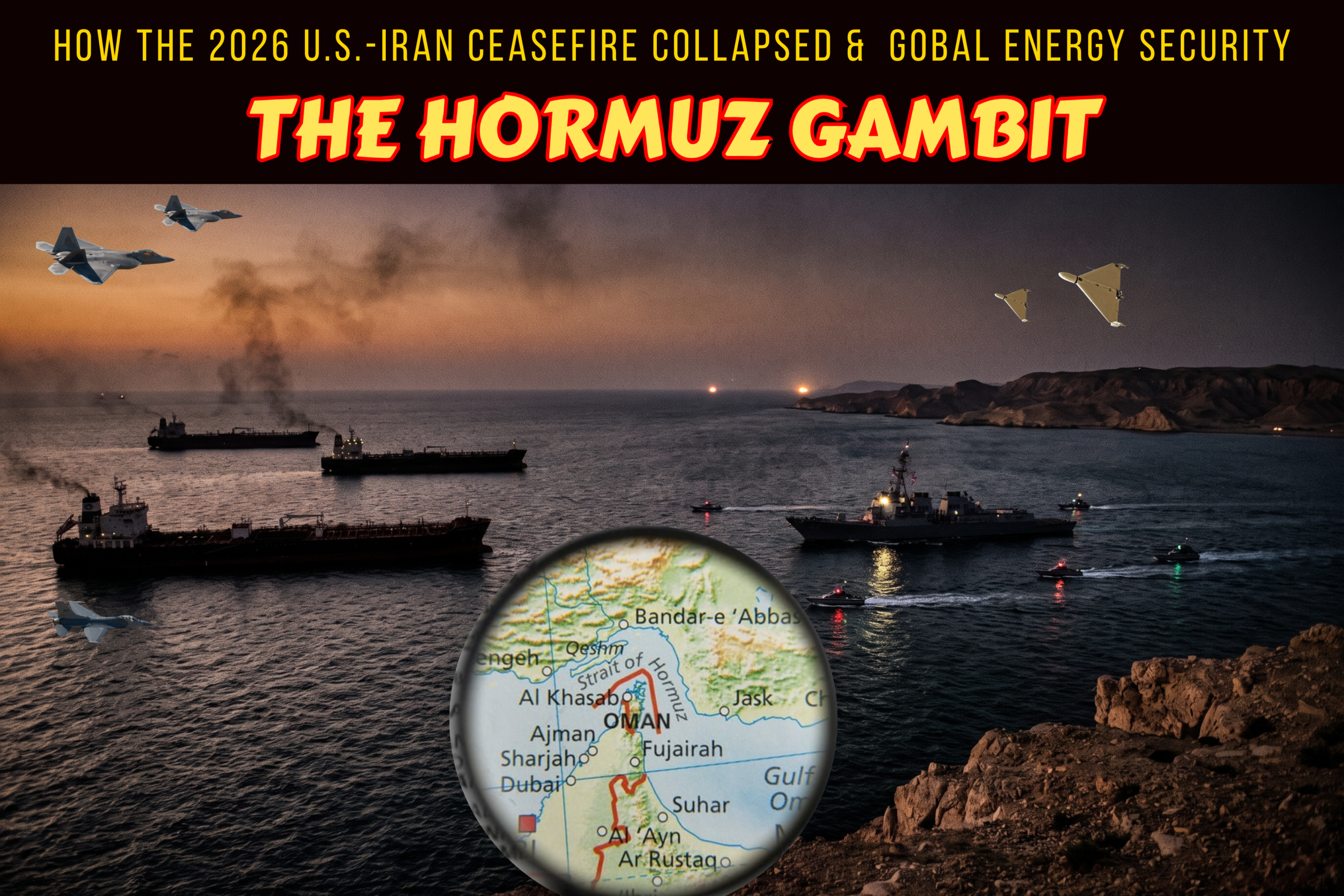
(By Khalid Masood)
I. The Breaking Point
In the marble halls of the Turkish presidential palace in Ankara, President Donald Trump stood before a gaggle of reporters on the evening of July 8, 2026, and delivered a verdict that sent tremors through capitals from Tehran to Tokyo.
“To me, I think it’s over,” he said, his voice flat and final. “I don’t want to deal with them. They’re scum. They’re sick people.” The subject of his contempt was the Islamic Republic of Iran, and the object of his dismissal was the Islamabad Memorandum — a ceasefire agreement signed less than a month earlier that was supposed to halt the deadliest U.S.-Iran conflict in modern history and open a 60-day window for a permanent settlement.
It was not supposed to end this way.
On June 17, 2026, Trump and Iranian President Masoud Pezeshkian had put their signatures to a document brokered by Pakistan that promised to stop the shooting, reopen the Strait of Hormuz, and begin negotiations on Iran’s nuclear program and sanctions relief. The war, which had erupted on February 28 with Israeli-American strikes killing Supreme Leader Ali Khamenei, had already cost the United States an estimated $113 billion and claimed thousands of lives. The Islamabad Memorandum was meant to be the off-ramp.
Instead, it became a dead end.
Within three weeks, the deal unraveled in a cascade of tanker attacks, retaliatory airstrikes, revoked oil waivers, and missile barrages against American bases. By the time Trump spoke in Ankara, oil prices had surged to two-week highs, the U.S. Fifth Fleet headquarters in Bahrain had come under Iranian fire, and the world’s most critical energy chokepoint was once again a battlefield.
This is the story of how a ceasefire died — and why the next one may be even harder to achieve.
II. From Khamenei to Islamabad: The Road to a Fragile Peace
To understand why the ceasefire collapsed, one must first understand what it was trying to contain.
The war began on February 28, 2026, when the United States and Israel launched a coordinated strike against Iran’s nuclear and military leadership. Supreme Leader Khamenei was killed. Iran’s response was swift and devastating: missile barrages against U.S. bases, the closure of the Strait of Hormuz to all commercial traffic, and attacks on shipping that stranded 150 vessels and sent global oil markets into convulsions.
For weeks, the Gulf became a no-go zone. Indian sailors died on burning tankers. Saudi Arabia, the UAE, and Kuwait quietly urged Washington to keep fighting until the Iranian regime itself was brought to heel. China and Russia condemned the American naval blockade of Iranian ports as “irresponsible” and warned of an “economic earthquake.”
The first ceasefire, brokered by Pakistan in April, lasted two weeks. It reopened Hormuz but left a festering contradiction: Iran allowed commercial traffic, yet the U.S. maintained its naval blockade on Iranian ports. Tehran viewed this as a violation in spirit if not in letter.
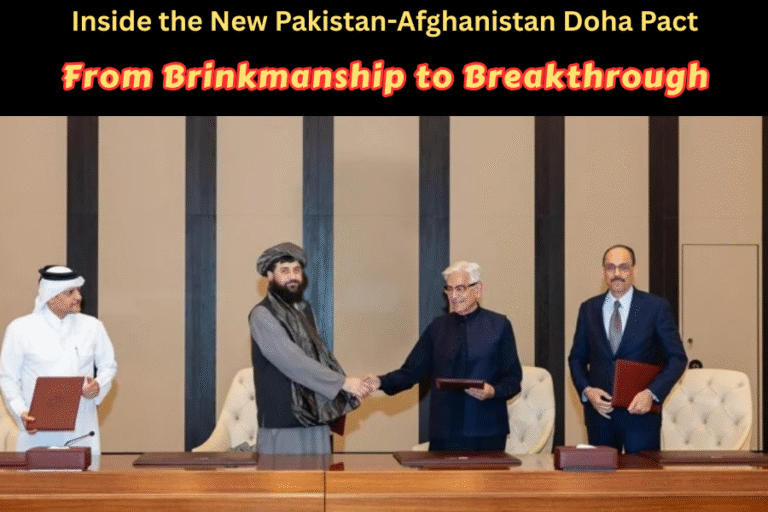
The Islamabad Memorandum, signed on June 17, was an attempt to fix that. It extended the truce for 60 days, committed Iran to a nuclear program without weapons, promised U.S. sanctions relief, and — critically — gave Iran a 30-day window to control Hormuz de-mining and transit corridors while a permanent arrangement was negotiated.
But the memorandum was built on two incompatible visions of what “peace” meant.
III. The Anatomy of Collapse: Two Countries, Two Realities
The Hormuz Sovereignty Dispute
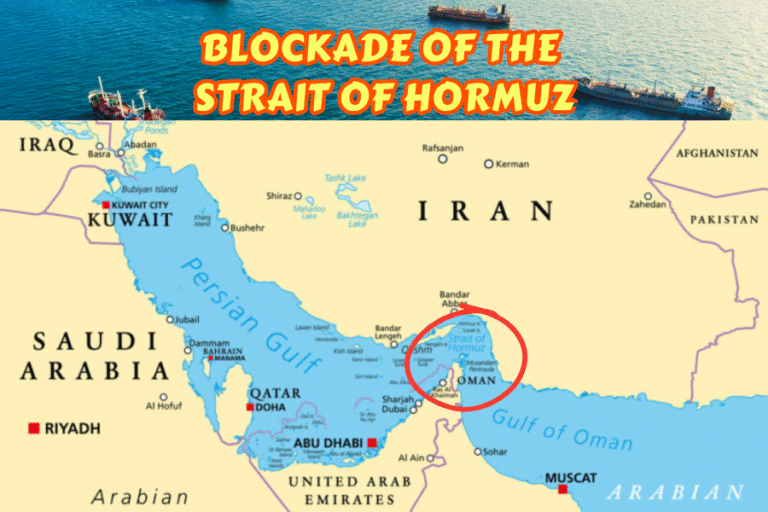
The Strait of Hormuz is not merely a shipping lane. For Iran, it is sovereign territory and leverage. For the United States and its Gulf allies, it is an international waterway that must remain open under all circumstances.
The memorandum’s fatal ambiguity lay here. Iran insisted on controlling transit routes and charging fees for passage — a position Tehran’s chief negotiator, Mohammad Bagher Ghalibaf, described as “non-negotiable.” The United States and Oman, meanwhile, proposed an alternative corridor hugging the Omani coast, effectively bypassing Iranian-controlled waters.
On July 2, Iran issued a blunt warning to international tankers: use approved routes or face a “forceful response.” For Washington, this was a red line. For Tehran, it was enforcing the terms of the deal.
The Tanker Attacks and CENTCOM’s Hammer
The spark came on July 6 and 7. Three commercial vessels were struck in the strait:
| Vessel | Flag | Link | Status |
|---|---|---|---|
| Al Rekayyat | Marshall Islands | Qatari-linked | Attacked, damaged |
| Wedyan | Saudi Arabia | Saudi-flagged | Attacked |
| Cyprus Prosperity | Liberia | International | Attacked |
The Al Rekayyat was particularly significant. Qatar, a key mediator in the conflict, had a commercial stake in the vessel. Its attack signaled that Iran was willing to escalate even against the interests of its own diplomatic patrons.
CENTCOM’s response was immediate and overwhelming. U.S. forces struck more than 80 Iranian military targets, including coastal radar installations, air defense batteries, and approximately 60 IRGC small boats — the very vessels Iran had been using to harass shipping. The strikes hit Qeshm Island, Sirik, and Bandar Abbas, all critical nodes in Iran’s coastal defense architecture.
The Oil Waiver Revocation
The day after the tanker attacks, the U.S. Treasury Department dropped a diplomatic bomb of its own. It revoked the oil sanctions waiver issued on June 22, which had allowed Iran to sell oil on international markets for the first time in years. Tehran was given until July 17 to wind down all transactions.
Ghalibaf called the revocation a “major breach” of the Islamabad Memorandum. The Trump administration saw it differently. “This was a performance-based deal,” a senior official told reporters. “They performed badly.”
The Doha Talks That Never Were
Even before the shooting resumed, the diplomatic track was already derailed. Trump had announced that a high-level meeting would take place in Doha, Qatar, on July 1. Iran denied any such meeting was scheduled. By July 8, Qatar confirmed that U.S. envoys would meet Qatari mediators — but not Iranian officials directly.
The confusion was emblematic of the broader dysfunction. The two sides were not merely negotiating different terms; they were operating in different realities.
IV. The Escalation Spiral: From Tankers to Missiles
By July 8, the conflict had moved beyond the maritime domain. Iran fired missiles and drones at two critical U.S. military installations: the Fifth Fleet headquarters in Bahrain and Ali Al Salem Air Base in Kuwait. Both Bahrain and Kuwait confirmed activating air defense systems to intercept incoming projectiles.
No American casualties were reported, but the message was unmistakable: Tehran was willing to strike at the heart of U.S. military power in the region.
Trump’s rhetoric matched the moment. In Ankara, he threatened to “finish the job” — language that U.S. officials confirmed referred to potential strikes on Kharg Island, Iran’s primary oil export terminal, and broader regime targets. “We have many targets,” Trump said. “We have some very big targets.”
NATO Secretary General Mark Rutte offered unequivocal support. “The strikes were absolutely necessary,” he said, urging allies to confirm that Iran must “completely re-open the Strait of Hormuz.” The transatlantic alliance, which had been divided on the war’s origins, was now firmly behind Washington’s hard line.
V. The Diplomatic Wreckage: What Remains Unresolved
The collapse of the Islamabad Memorandum was not merely a failure of timing or temperament. It was the collapse of a framework that tried to solve too many problems at once.
The Nuclear Question
The memorandum required Iran to commit to a nuclear program without weapons. But Iran’s parliament had already passed a law barring International Atomic Energy Agency (IAEA) inspectors from visiting the bombed sites at Fordow, Natanz, and Isfahan. Without verification, the nuclear commitment was meaningless.
The Lebanon Complication
The ceasefire was supposed to cover all hostilities. But Israel continued striking targets in Lebanon — which Iran and Pakistan insisted violated the agreement. The U.S. and Israel maintained that Lebanon was a separate theater. This dispute poisoned the diplomatic atmosphere from the start.
The Blockade Paradox
Perhaps the most fundamental contradiction was this: the Islamabad Memorandum was meant to end a war and reopen Hormuz, but it left the U.S. naval blockade of Iranian ports in place. Iran saw this as economic warfare continuing under the guise of peace. The United States saw it as leverage.
VI. Global and Regional Implications
Energy Markets
The immediate consequence of the ceasefire’s collapse was economic. Oil prices jumped more than 2% to two-week highs within hours of Trump’s Ankara statement. Traders priced in the risk of sustained supply disruption. For a global economy still recovering from the February shock, the prospect of a prolonged Hormuz closure was a nightmare.
The Gulf Arab Dilemma
The Gulf monarchies find themselves in an impossible position. Saudi Arabia, the UAE, and Kuwait had previously pushed Trump to continue the war until Iranian leadership changed. Qatar, meanwhile, is trying to preserve its role as mediator while protesting attacks on vessels linked to its interests. None of them want a full war on their doorstep. None of them trust Iran to keep the strait open without American military pressure.
The Great Powers
China and Russia, which had earlier condemned the U.S. naval blockade, have watched the collapse with a mixture of alarm and opportunism. Beijing depends on Gulf oil but has also deepened economic ties with Tehran. Moscow has supplied Iran with military technology throughout the conflict. Neither wants a wider war. Neither is willing to intervene to stop one.
The United Kingdom and France have promoted a multinational task force to secure Hormuz independently — a proposal that now looks more urgent than ever.
The Human Cost
Amid the geopolitical maneuvering, the human toll is often forgotten. Indian crew members have been killed or stranded on multiple tankers. New Delhi has condemned the attacks but finds itself with limited leverage. The sailors on the Al Rekayyat, the Wedyan, and the Cyprus Prosperity were not combatants. They were cooks, engineers, and deckhands from a dozen countries, caught in a war they did not choose.
VII. What Happens Now? Three Scenarios
As of this writing, three paths are possible:
| Scenario | Likelihood | Description |
|---|---|---|
| Return to Full War | High | Trump has discussed with Pentagon officials the option of “finishing the job” with strikes on Kharg Island and regime targets. This would mean a dramatic expansion of the conflict. |
| Frozen Conflict | Medium | Low-intensity skirmishes in Hormuz continue while diplomacy stalls. The strait remains technically open but practically dangerous. |
| Third-Party Mediation | Low | Pakistan, Qatar, or Oman attempt to resurrect talks. But with Trump declaring “it’s over” and Iran’s leadership humiliated by strikes on its soil, trust is shattered. |
Trump has set an August 18, 2026 deadline for a nuclear deal. But he has also said he is “comfortable extending talks” — a contradiction that signals either strategic flexibility or strategic confusion, depending on one’s interpretation.
VIII. Conclusion: A Strait Too Narrow for Peace
The tragedy of the 2026 U.S.-Iran war is not that peace failed, but that the two sides were never negotiating for the same peace. For the United States, the Islamabad Memorandum was a performance-based contract: Iran would behave, and Washington would reward it. For Iran, it was a recognition of sovereignty: the strait was theirs to administer, and American military presence was the problem, not the solution.
The Strait of Hormuz — the prize both sides claimed to want open — became the very reason the ceasefire died.
When Trump stood in Ankara and called Iran’s leaders “scum,” he was not merely expressing anger. He was acknowledging, perhaps unconsciously, that the framework he had signed three weeks earlier was never sturdy enough to bear the weight of history, geography, and mutual suspicion that it was asked to carry.
The next ceasefire, if there is one, will have to answer a question that the Islamabad Memorandum evaded: not just who controls Hormuz, but how it is governed in a way that both Iran and the world can live with.
Until then, the strait remains a fault line — narrow, volatile, and too precious to be left to the mercy of men who have already proven they cannot share it.