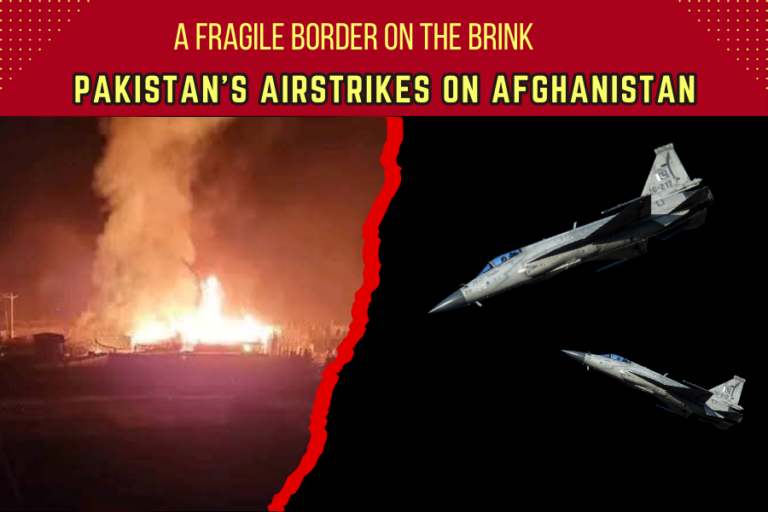
(By Khalid Masood)
1. Introduction: The Geopolitical Flashpoint
On February 27, 2026, President Donald Trump — traveling on Air Force One to Texas — authorized Operation Epic Fury, a joint US-Israeli military offensive against the Islamic Republic of Iran. The next morning, February 28, American missiles, drones, and Israeli F-35I Adir fighters struck simultaneously across Iran, hitting Tehran’s Pasteur Street district, the presidential palace, the National Security Council, and military bases nationwide. Iranian Supreme Leader Ayatollah Ali Khamenei was killed in the strikes, along with thousands of IRGC personnel. Israel codenamed its component Operation Roaring Lion — the largest combat sortie in its history. The strikes, conducted during the holy month of Ramadan, triggered an Iranian response codenamed Operation True Promise IV, unleashing ballistic missiles at Israel, Bahrain, Kuwait, the UAE, Saudi Arabia, and Iraq. Within hours, the Middle East was engulfed in what would become known as the “Ramadan War” — the most dangerous conflict in the region since 1991.
What followed was not the swift regime change that hawks in Washington and Tel Aviv had predicted, but rather a grinding, three-and-a-half-month war that exposed the fragility of American military omnipotence and the resilience of Iranian asymmetric warfare. The US Navy blockaded the Strait of Hormuz. Iranian ballistic missiles rained down on Al Udeid Air Base in Qatar and US naval assets in the Gulf of Oman. Hezbollah unleashed thousands of rockets into northern Israel. The Houthis shut down Red Sea shipping. Global oil prices spiked to historic highs.
And then, against all expectations, the guns fell silent.
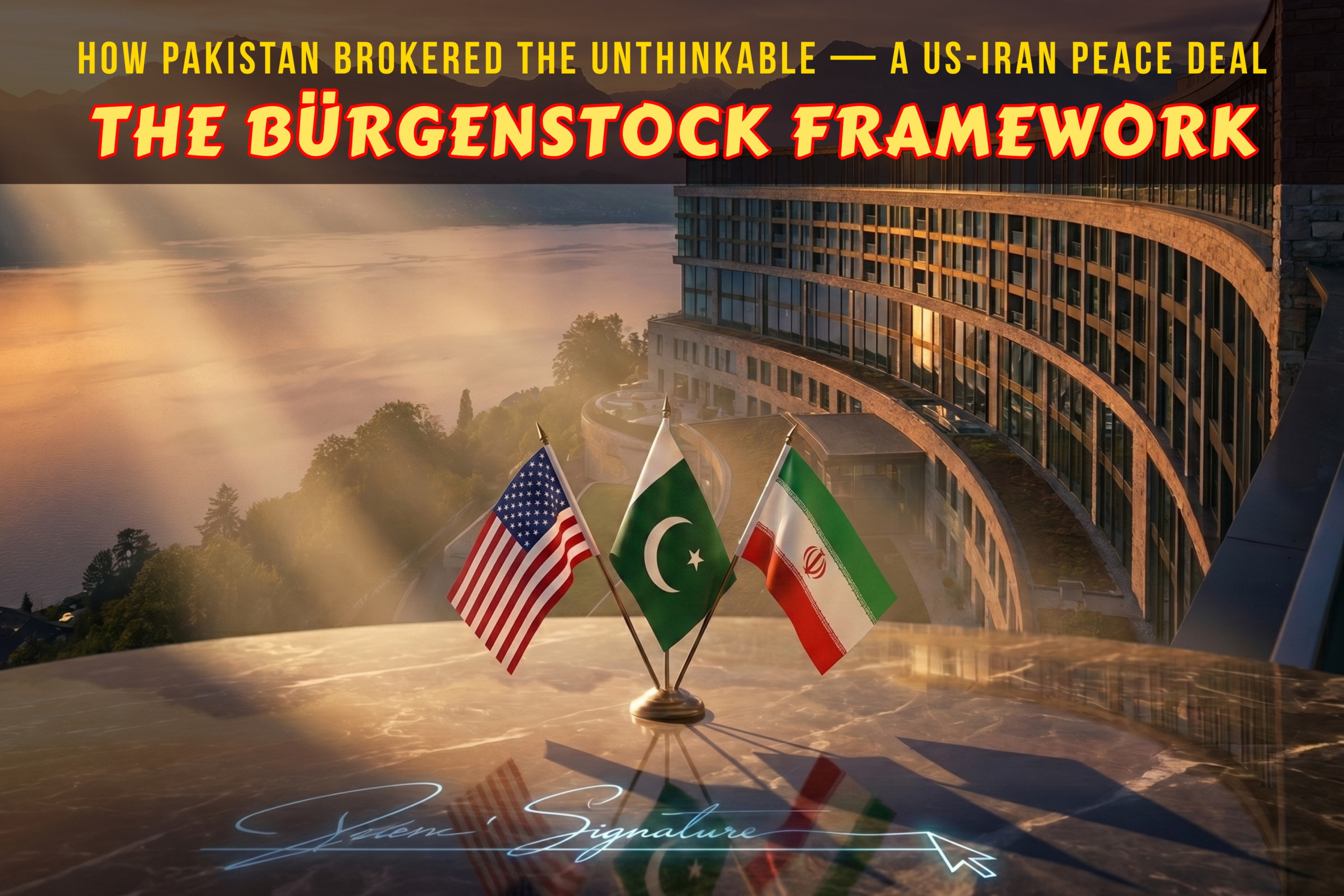
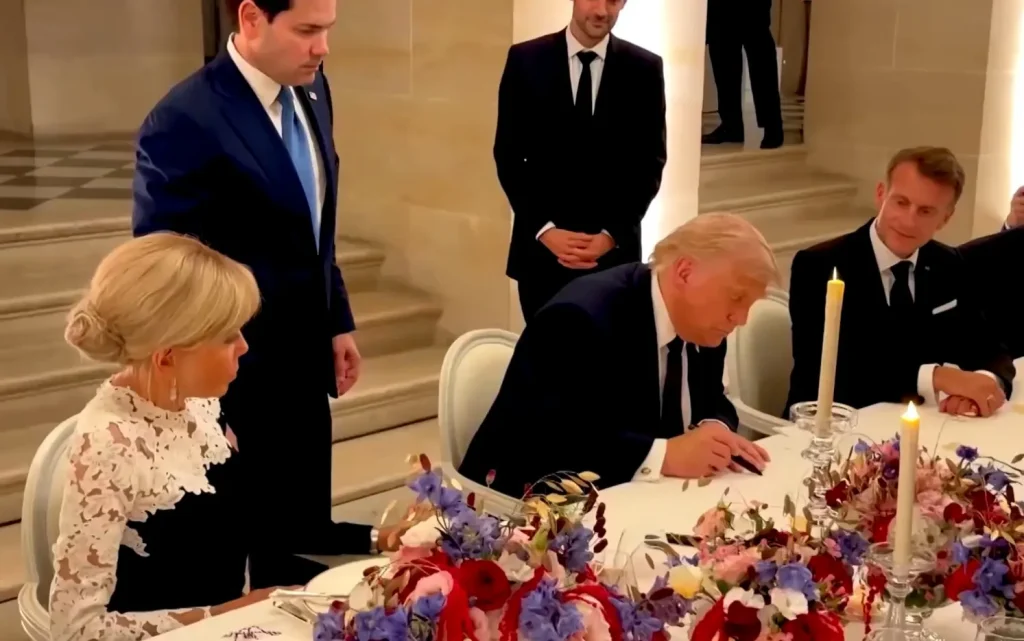
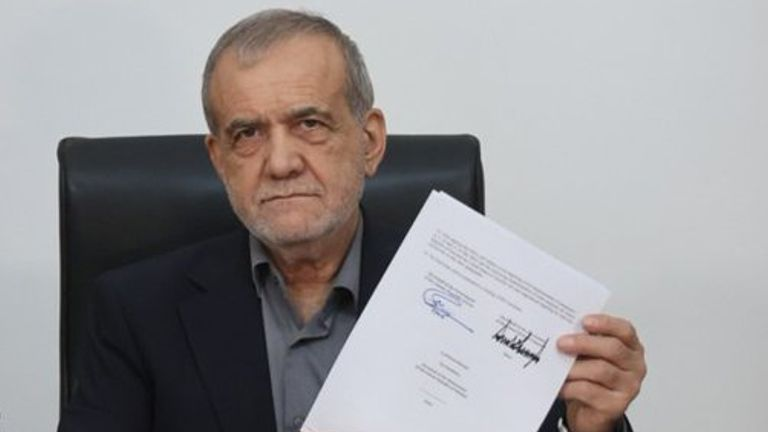
On April 8, 2026, Pakistan’s Prime Minister Shehbaz Sharif announced that the US and Iran had agreed to a conditional two-week ceasefire, mediated by Pakistan, during which talks would be held on a lasting agreement. After multiple extensions and fraught negotiations, on June 15, 2026, Sharif announced that the two sides had reached a Memorandum of Understanding (MoU). The framework agreement was electronically signed by President Donald Trump, Vice President JD Vance, and Iranian Parliament Speaker Mohammad Bagher Ghalibaf — authorized by Supreme Leader Mojtaba Khamenei. The formal signing ceremony is scheduled for June 19, 2026, at the Bürgenstock resort in Switzerland.
This is the story of how a nuclear-armed South Asian nation of 240 million people — often dismissed as a failing state or a mere client of greater powers — became the indispensable mediator in the most dangerous conflict of the 21st century. It is the story of what the agreement actually contains, what it means for Iran’s future, and how it has transformed Pakistan’s position in the world — for better and for worse.
2. The Road to Bürgenstock: How Pakistan Became the Mediator
a. The War That Nobody Wanted
The 2026 war did not begin with a grand strategy. It began with miscalculation.
Israel’s February 28 strikes were premised on a familiar assumption: that decapitating Iran’s leadership and destroying its nuclear infrastructure would trigger regime collapse. Instead, they triggered national mobilization. Iran’s Supreme National Security Council declared a “Sacred Defence” against “Zionist-American aggression.” The IRGC’s missile forces — dispersed, camouflaged, and operating on pre-delegated launch authority — fired hundreds of ballistic missiles at Israel and US bases across the region.
President Trump, who had pursued negotiations with Iran through Omani mediators in February 2026, found himself authorizing war. On February 20, he had given Iran a 10-day deadline to reach a deal. On February 27, with talks collapsed, he authorized strikes. The next day, war began.
By early March, Trump was demanding Iran’s “unconditional surrender.” By late March, he was threatening to destroy Iran’s power plants, bridges, and oil infrastructure. Yet the war ground on, with neither side able to achieve decisive victory.
b. Islamabad’s Diplomatic Opening
Pakistan’s mediation was not improvised. It was the culmination of months of quiet preparation by a civilian-military leadership team that recognized early that a US-Iran war would devastate Pakistan’s economy, inflame its sectarian tensions, and potentially draw it into conflict through its defence pact with Saudi Arabia.
Prime Minister Shehbaz Sharif and Army Chief General Asim Munir — who had cultivated close ties with both American and Gulf security establishments — began reaching out to both Washington and Tehran as tensions escalated. Pakistan’s unique position was its leverage:
- With the US: A Major Non-NATO Ally, and a partner whose assistance in counterterrorism operations — including the arrest of Mohammad Sharifullah, alleged planner of the 2021 Kabul airport bombing — had earned Trump’s public praise.
- With Iran: A 909-kilometer shared border, the world’s second-largest Shia population with deep religious ties to Iran, and a relationship strengthened when Pakistan publicly supported Iran during the June 2025 Twelve-Day War.
- With Saudi Arabia: A Strategic Mutual Defence Agreement (SMDA) signed on September 17, 2025, that treats aggression against either kingdom as aggression against both — creating a tripwire that Pakistan desperately wanted to avoid triggering.
Critically, Pakistan hosts no US military bases — a status that made it acceptable to Iran as a neutral venue, unlike Qatar or other Gulf states whose territory was being used for strikes against Iran.
By early April 2026, with the war inflicting mounting damage on all sides, Pakistan positioned itself as the only country trusted by both antagonists. On April 8, 2026, Sharif announced the conditional two-week ceasefire. The first round of direct US-Iran talks since 1979 was held in Islamabad on April 11, 2026 — with Vice President JD Vance, special envoy Steve Witkoff, and Jared Kushner meeting Iranian Foreign Minister Abbas Araghchi and Parliament Speaker Mohammad Bagher Ghalibaf. The talks ended without agreement on April 12, but the process had begun.
c. The Negotiation Architecture
The talks proceeded through multiple channels and phases:
- Oman: Hosted initial indirect talks in February 2026 before the war.
- Pakistan: Delivered a 15-point US proposal to Iran on March 25, 2026; hosted the first direct meeting on April 11; coordinated with China on a five-point peace initiative.
- Qatar: Joined as co-mediator for the final phase; proposed Bürgenstock as the signing venue alongside Pakistan.
Pakistan’s strategy was not to impose terms but to create a “zone of possibility.” For Trump, this meant a deal that could be sold as victory — Iran’s nuclear program constrained, the Strait reopened, sanctions leverage preserved. For Iran, it meant regime survival, an end to bombing, and a face-saving exit from a war it could not win.
3. The Fourteen-Point Memorandum of Understanding
The 14-point U.S.-Iran agreement, known as the Islamabad Memorandum, electronically signed on June 15, 2026, by President Donald Trump, Vice President JD Vance, and Iranian Parliament Speaker Mohammad Bagher Ghalibaf — authorized by Supreme Leader Mojtaba Khamenei — is the pivot upon which this entire peace process turns. While the full text remains partially classified pending the formal Bürgenstock ceremony, authoritative sources have confirmed its core provisions.
The Fourteen Points
Point 1: Immediate and Permanent Cessation of Hostilities All offensive military operations by the United States, Israel, and the Islamic Republic of Iran shall cease immediately and permanently across all theaters. This includes a halt to all airstrikes, missile attacks, naval blockades, and ground offensive operations.
Point 2: Reopening of the Strait of Hormuz The Strait of Hormuz shall be immediately reopened to commercial shipping with no tolls. Iran shall clear the mines it deployed in the strait to allow ships to pass freely. The US shall lift its naval blockade on Iranian ports.
Point 3: Nuclear Program Dismantlement Commitment Iran commits to the complete dismantlement of its nuclear weapons program. All existing stockpiles of enriched uranium shall be removed from Iran and transferred to international custody. Iran’s nuclear enrichment facilities shall be decommissioned.
Point 4: No Release of Frozen Assets Until Full Compliance No Iranian funds frozen abroad shall be released until Iran carries out every term of the deal. The principle is “relief for performance” — sanctions relief and asset unfreezing are conditional on verified Iranian compliance.
Point 5: Cessation of Proxy Funding Iran shall permanently cease all funding, training, and material support for non-state armed groups, including Hezbollah (Lebanon), the Houthis (Yemen), Kata’ib Hezbollah and Asa’ib Ahl al-Haq (Iraq), and Palestinian Islamic Jihad.
Point 6: Withdrawal of Iranian Forces from Regional Theaters All IRGC advisors, militia coordinators, and military personnel shall be withdrawn from Syria, Lebanon, Yemen, and Iraq. Iranian presence in these countries shall be limited to diplomatic staff only.
Point 7: Sanctions Relief Framework The United States shall negotiate the lifting of sanctions during the 60-day period. Sanctions relief shall be implemented only as part of a final agreement that is verifiably implemented. The US shall issue sanctions waivers to allow Iran to sell oil freely during the interim period.
Point 8: $300 Billion Reconstruction Fund An international fund of up to $300 billion shall be established to support the reconstruction of war-damaged Iranian infrastructure. Disbursement shall be conditioned on Iranian compliance with nuclear and security commitments.
Point 9: Release of Detained Nationals and Prisoners of War All prisoners of war, detained nationals, and political prisoners held by either side shall be released within the framework of the agreement.
Point 10: Mutual Non-Aggression Pledge The United States and the Islamic Republic of Iran shall pledge mutual non-aggression. Neither party shall undertake, support, or condone military operations against the other’s territory, citizens, or interests.
Point 11: Maritime Security Protocol A regional framework shall be established ensuring safe navigation through the Strait of Hormuz. The protocol shall include international monitoring and dispute resolution mechanisms.
Point 12: 60-Day Negotiating Window for Comprehensive Treaty The MoU establishes a 60-day ceasefire period (until mid-August 2026) during which the parties shall negotiate a comprehensive, binding peace treaty addressing unresolved issues, including the final status of Iran’s nuclear program, verification mechanisms, and long-term security arrangements.
Point 13: Lebanon Ceasefire Integration The war between Israel and Hezbollah in Lebanon shall end as part of the broader agreement. The ceasefire is not one-sided; if Hezbollah attempts to rearm or instigate attacks, Israel retains the right to take preventive action.
Point 14: Joint Monitoring Committee A trilateral monitoring committee comprising representatives from the United States, Iran, and Pakistan shall be established to oversee implementation, investigate violations, and mediate disputes. Pakistan shall chair the committee for the initial period, leveraging its unique position as the mediator trusted by both sides.
What the MoU Explicitly Is NOT
- It is not a peace treaty — it is a framework for future negotiations. As Vice President Vance stated, it is “about a page and a half, so it is a very general document.”
- It does not resolve the nuclear issue definitively — it defers detailed terms to the 60-day follow-up negotiations.
- It does not include immediate, unconditional sanctions relief — relief is strictly “relief for performance.”
- The $300 billion figure is described as a possibility, not a guaranteed commitment.
4. Implications for Iran: Survival at a Price
a. The Nuclear Concession
The MoU represents a potential comprehensive dismantlement of Iran’s nuclear program — if implemented. Unlike the 2015 JCPOA, which allowed limited enrichment, Trump’s stated position is “zero enrichment.” Whether this is achievable depends on the 60-day follow-up negotiations.
Iran’s official position, stated by the head of its Atomic Energy Organization, is that it will not accept limits on enrichment. Yet Ghalibaf’s signature on the MoU suggests a gap between public rhetoric and negotiated reality. The technical challenges of dismantling — securing enriched uranium, decommissioning facilities, verifying compliance — remain formidable.
b. Economic Pressures and Opportunities
Sanctions relief offers Iran a path out of economic isolation, but the MoU makes clear that relief is conditional and behavioral. Trump: “If they do what they’re supposed to do, that starts taking effect.” This creates a dynamic where Iran must continuously demonstrate compliance to maintain benefits — a significant shift from the upfront relief model of the JCPOA.
The war itself inflicted devastating damage on Iran’s infrastructure. Reconstruction needs are estimated in the hundreds of billions, but no binding international fund has been established in the MoU.
c. The Post-Khamenei Power Struggle
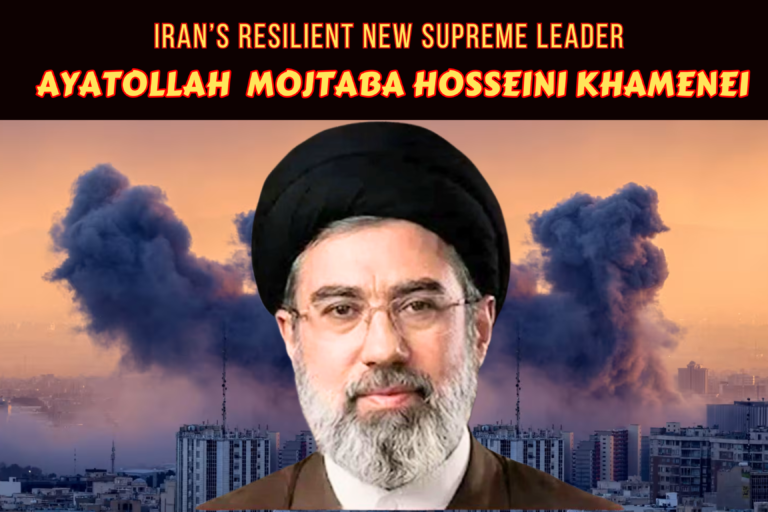
Khamenei’s assassination on February 28, 2026, created a succession crisis. His son, Mojtaba Khamenei, was appointed as the new Supreme Leader — a controversial choice that consolidated clerical power but lacked his father’s religious and political legitimacy. The MoU’s success or failure will shape the internal balance between pragmatists seeking economic normalization and hardliners demanding resistance.
d. Regional Influence: From Revolution to Retrenchment
The MoU requires Iran to cease support for proxies — Hezbollah, the Houthis, Iraqi militias — as part of any final deal. Yet Lebanon was explicitly included in the ceasefire. This creates a contradiction: Iran is asked to abandon its regional network while the war against its most important proxy is brought to an end. Whether Iran can or will comply remains the central strategic question.
5. Implications for Pakistan: The Mediator’s Dividend
a. Diplomatic Elevation: From Pariah to Indispensable
Pakistan’s mediation has accomplished something no other nation could: bringing the United States and Iran into direct negotiations for the first time since 1979. This has transformed Pakistan’s global standing.
The transformation is personal as much as institutional. General Asim Munir — invited to a historic White House luncheon with Trump in 2025 — has been praised by the US president. Shehbaz Sharif has emerged as a statesman of genuine international stature. For a country accused of “lies and deceit” by Trump in 2018, this is a profound reversal.
Pakistan’s role has been compared to its 1971 facilitation of Henry Kissinger’s secret visit to China — the last time Islamabad played such a pivotal role in great-power diplomacy.
b. Energy Security: Ending the Economic Siege
The war’s impact on Pakistan’s economy was immediate and devastating. With nearly 90% of crude oil imports from Saudi Arabia and UAE, and 99% of LNG from Qatar, the Hormuz blockade caused fuel prices to surge. On April 3, 2026, petrol reached PKR 458.41 per litre and diesel PKR 520.35 — among the steepest hikes in Pakistan’s history. The government was forced to implement emergency austerity: four-day work weeks, daily loadshedding, online classes to conserve energy, and targeted subsidies for vulnerable groups.
Prime Minister Sharif spent PKR 129 billion from national resources to absorb the price shock before the April 3 hike. The Finance Minister warned that monthly oil import bills could climb to $600 million.
The MoU’s Hormuz reopening provision ends this crisis. Trump has stated the Strait is “already partially” opened and will be “completely open” on Friday, June 19.
d. Remittances and Trade: Protecting the Lifelines
Pakistan received $30.3 billion in remittances during the first nine months of FY2025-26, with Saudi Arabia ($7.4 billion, 25%) and UAE ($5.5 billion, 18.7%) as the top sources. A prolonged war would have devastated these flows, as Gulf economies contracted and Pakistani workers were evacuated.
By May 2026, remittances had surged to a record $4.25 billion monthly, with annual projections exceeding $41 billion — suggesting that the ceasefire and anticipated deal had already restored confidence among overseas Pakistanis.
d. Border and Security Stability
Pakistan’s 909-kilometer border with Iran runs through Balochistan — already volatile. The war risked:
- Refugee flows: Mass displacement from war-damaged Iran.
- Cross-border militancy: IRGC operations in Pakistani territory.
- Baloch insurgent safe havens: The BLA and Jaish al-Adl exploiting chaos.
The MoU reduces these risks, though post-war Iranian instability remains a concern.
e. Sectarian Tensions: The Domestic Time Bomb
Khamenei’s assassination triggered violent protests across Pakistan. At least 26 people were killed as protesters clashed with police. Demonstrations in Karachi and Gilgit-Baltistan escalated into clashes with security forces, prompting temporary curfews and military deployment. The MMU and Shia communities launched three-day mourning periods.
Pakistan was the only regional state to condemn the US-Israeli attacks on Iran — a stance that reinforced its credibility in Tehran but created tension with Washington. The peace deal provides a pressure release, but underlying sectarian polarization remains.
6. The Abraham Accords Dilemma: Pakistan’s Red Line
The MoU’s success has created an unexpected complication. On May 25, 2026, Trump demanded that Saudi Arabia, Qatar, Pakistan, Turkey, Egypt, and Jordan join the Abraham Accords — normalizing relations with Israel — as part of any Iran peace deal. During a conference call with regional leaders, there was “silence on the line” when Trump made the request; he joked, “Are they still there?”
Trump later posted: “It should be mandatory that all of these Countries, at a minimum, simultaneously, sign onto the Abraham Accords.” Senator Lindsey Graham threatened “severe repercussions” for countries refusing.
Pakistan has publicly rejected this demand. Islamabad-based analyst Syed Mohammad Ali stated Pakistan’s position on Israel “remains unchanged.” Former ambassador Masood Khan noted the Abraham Accords demand “gives an altogether new dimension to the diplomatic and mediatory processes because this issue was not on the agenda.”
This rejection carries risks. Trump is famously transactional. Yet Pakistan’s stance reflects genuine domestic constraints: no Pakistani government can recognize Israel without political explosion, given strong public support for the Palestinian cause.
7. Regional and Global Ripple Effects
a. Saudi Arabia and the GCC: Relief and Anxiety
The Gulf monarchies are ambivalent beneficiaries. They feared Iranian nuclear weapons but fear a resurgent Iran with sanctions lifted even more. The SMDA with Pakistan — signed after the September 9, 2025 Israeli strike on Doha killed five Hamas leaders — was designed to deter Iran. Now that Iran is nominally at peace, the pact’s rationale is unclear.
Saudi Crown Prince Mohammed bin Salman has cooled on normalization with Israel, demanding a clear path to Palestinian statehood — a condition Netanyahu’s government rejects.
b. China: The Silent Partner
China co-sponsored a five-point peace initiative with Pakistan and has strong energy security interests in Gulf stability. Yet Beijing also benefits from American strategic overextension. A US at peace with Iran can pivot resources to the Indo-Pacific — not an outcome China welcomes.
c. Israel: Tactical Victory, Strategic Uncertainty
Israel achieved its primary war aim: destroying Iran’s nuclear infrastructure and killing Khamenei. Yet the MoU leaves Israel deeply unsatisfied. It does not address Iran’s ballistic missile program. It does not require Iranian recognition of Israel. And it creates a monitoring role for Pakistan — a country with no diplomatic relations with Israel.
Netanyahu faces the prospect that his “total victory” narrative rings hollow, even as the Palestinian question remains unresolved.
d. Russia and Europe: Marginalization and Opportunity
Russia, Iran’s arms supplier, finds itself sidelined by a deal brokered by Pakistan and signed in Switzerland. Europe, which struggled to maintain the 2015 JCPOA, welcomes the deal but resents its exclusion. France’s Macron has called the agreement “very important” — diplomatic language for “we had no role in it.”
8. Critical Challenges: The 60-Day Window
The MoU is not a peace treaty. It is a framework for negotiation — and the coming months will determine whether it becomes durable or collapses.
a. Verification and Compliance
The IAEA has never monitored a nuclear dismantlement of this scale. Iranian hardliners may sabotage implementation. The Joint Monitoring Committee — if established — must identify violations without triggering crisis.
b. The Proxy Problem
Iran’s proxy network is an institutional ecosystem, not merely a policy. Even if Tehran orders a cutoff, proxies may continue autonomously. A Houthi missile strike or Hezbollah rocket barrage could derail everything.
c. American Political Volatility
Trump’s signature is binding only until January 2029. Congressional Republicans have already criticized the deal. The 60-day window may be consumed by American domestic politics.
d. Pakistan’s Sustained Role
Pakistan’s leverage is perishable. If negotiations fail, Pakistan is blamed. If they succeed, its role diminishes. Islamabad must navigate the classic mediator’s dilemma with no historical experience at this scale.
9. Conclusion: A New Middle East or a Temporary Truce?
The Bürgenstock Framework represents either the most significant diplomatic breakthrough in the Middle East since the 1979 Egypt-Israel peace treaty, or the most elaborate ceasefire in a conflict that will resume within years. The difference depends on implementation — and implementation depends on political will that remains uncertain on all sides.
For Iran, the MoU offers survival at the price of strategic transformation. Whether its revolutionary system can adapt to a commerce-based rather than militia-based regional influence is the central question of its future.
For the United States, the deal offers an exit from endless war — but also an admission that military dominance cannot reshape the Middle East. Whether American politics can accept this humility remains doubtful.
For Pakistan, the mediation represents a coming of age. After decades of being defined by terrorism, instability, and great-power dependency, Islamabad has demonstrated that middle powers can shape global outcomes when they leverage geography, relationships, and timing. The “Islamabad Moment” — even if the deal itself bears no such name — may prove as significant for Pakistan’s self-conception as the 1998 nuclear tests.
Yet the moment is fragile. The Abraham Accords pressure, the 60-day negotiating cliff, the proxy problem, and the sectarian time bomb all threaten to unravel what Pakistan has built. Success requires not merely diplomatic skill but strategic patience — a quality that has rarely characterized Pakistani statecraft.
The world will watch Bürgenstock on June 19, 2026, as the MoU is formally signed. But the truly important date is the end of the 60-day window in mid-August. If a comprehensive treaty emerges, the Middle East enters a new era. If negotiations collapse, the 2026 war may prove merely the opening act of a longer, darker conflict.
Pakistan has bet its emerging global stature on the former outcome. The stakes could not be higher.
Annexes
Annex A: Corrected Timeline of the 2026 US-Iran War and Peace Process
| Date | Event |
|---|---|
| February 6, 2026 | Oman-mediated indirect US-Iran talks; described as constructive |
| February 20, 2026 | Trump gives Iran 10-day deadline for deal |
| February 27, 2026 | Trump authorizes Operation Epic Fury from Air Force One |
| February 28, 2026 | Joint US-Israeli strikes begin; Khamenei killed; Ramadan War starts |
| March 6, 2026 | Trump demands “unconditional surrender”; threatens energy infrastructure attacks |
| March 25, 2026 | Pakistan delivers 15-point US proposal to Iran; Iran rejects, issues 5-point counter-proposal |
| March 30, 2026 | Pakistan and China deliver joint 5-point peace initiative |
| April 5, 2026 | Pakistan proposes 45-day ceasefire framework; Iran declines, calls for permanent solution |
| April 7, 2026 | Trump threatens “a whole civilization will die tonight” if no deal |
| April 8, 2026 | Pakistan announces conditional 2-week ceasefire; MoU process begins |
| April 11, 2026 | First direct US-Iran talks since 1979 held in Islamabad |
| April 12, 2026 | Vance leaves Pakistan saying no agreement reached; Trump attends UFC event |
| April 16, 2026 | Separate US-mediated ceasefire begins in Lebanon |
| April 21, 2026 | Trump extends Iran ceasefire indefinitely at Pakistan’s request |
| May 25, 2026 | Trump demands Pakistan, Saudi Arabia, Turkey, Egypt, Jordan join Abraham Accords |
| June 15, 2026 | MoU electronically signed by Trump, Vance, and Ghalibaf |
| June 19, 2026 | Formal signing ceremony scheduled at Bürgenstock, Switzerland |
| Mid-August 2026 | End of 60-day window for final comprehensive treaty |
Annex B: Pakistan’s Economic Indicators — Pre-War, War Peak, and Post-MoU
| Indicator | Pre-War (Feb 2026) | War Peak (April 3, 2026) | Post-MoU (June 2026) |
|---|---|---|---|
| Petrol Price | ~PKR 260/litre | PKR 458.41/litre | Reduced to PKR 378, then falling |
| Diesel Price | ~PKR 280/litre | PKR 520.35/litre | Subsidized for transport sector |
| Monthly Remittances | ~$3.0 billion | $3.29 billion (Feb) | $4.25 billion record (May) |
| Cumulative Remittances (9 months) | — | $30.3 billion (Jul-Mar FY26) | Projected $41+ billion annually |
| Government Subsidy Expenditure | — | PKR 129 billion absorbed | Austerity measures eased |