How Modern Warfare Is Being Redefined by Counter-UAS Technology
(By Khalid Masood)
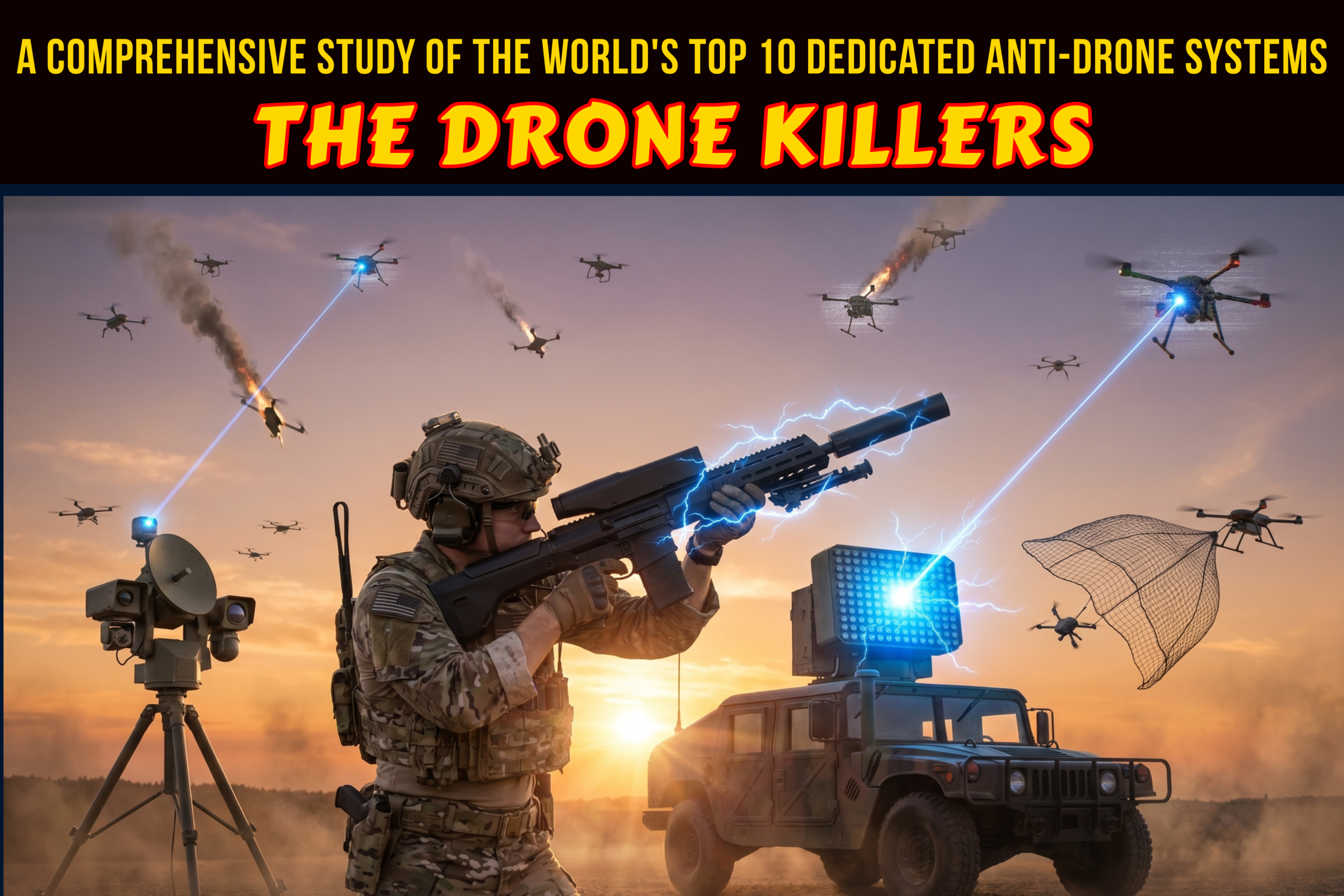
The proliferation of unmanned aerial systems (UAS) has created one of the most pressing tactical challenges of the 21st century. From $500 first-person view (FPV) kamikaze drones to sophisticated loitering munitions and autonomous swarms, the threat spectrum has expanded far beyond the reach of traditional air defence systems like Patriot or NASAMS. This article examines the top ten dedicated Counter-Unmanned Aerial Systems (C-UAS) — purpose-built technologies designed specifically to detect, track, and neutralize small-to-medium UAVs.
The global C-UAS market is projected to exceed $2.5 billion by 2026, with Pentagon spending alone peaking at $1.9 billion in 2027. But the most important lesson from the world’s largest live-fire laboratory — the war in Ukraine — is that the winning anti-drone system is not necessarily the most sophisticated. It is the one that achieves cost-exchange parity: neutralizing a $500 FPV drone with a $20,000 jammer rather than a $1 million missile.
I. Classification Framework: How Counter-Drone Technologies Work
Before examining individual systems, it is essential to understand the five technological approaches that define the C-UAS landscape:
| Category | Mechanism | Examples |
|---|---|---|
| Electronic Warfare (EW) | RF/GNSS jamming, spoofing | Bukovel-AD, Kangal, DroneGun |
| Directed Energy | High-power microwaves (HPM), lasers | Leonidas, Gökberk, Drone Dome (laser) |
| Kinetic Interception | Nets, projectiles, drone-on-drone | DroneHunter F700, Şahin |
| Detection & Tracking | Multi-sensor fusion, AI classification | DedroneTracker |
| Cyber-Takeover | Protocol exploitation, command hijacking | Classified systems |
The most effective defences employ layered integration — combining detection, classification, and multiple defeat mechanisms to address the full threat spectrum.
II. The Top 10 Dedicated Anti-Drone Systems
1. Drone Dome (Israel)
Developer: Rafael Advanced Defence Systems
Method: Integrated Detection + Jamming + Soft-Kill Laser
Country: Israel
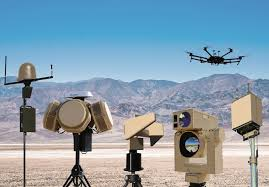
Drone Dome represents one of the most mature integrated counter-drone platforms in the world. Its architecture follows a classic “detect-track-defeat” paradigm: a 360-degree radar provides initial detection, electro-optical/infrared (EO/IR) sensors confirm and classify the threat, an RF jammer disrupts control links, and an optional high-energy laser delivers precision hard-kill capability for drones resistant to electronic attack.
The system has been combat-proven in Israeli operations against Hamas and Hezbollah small UAVs. Its multi-layered approach makes it particularly effective against mixed threats — from commercial quadcopters to military-grade reconnaissance drones. However, its high unit cost and primarily fixed-site configuration make it less suited for the mobile, distributed warfare seen on the Ukrainian front.
Strengths: Comprehensive layered defence; proven against diverse threats; laser option for jam-resistant targets
Limitations: High cost; fixed-site optimized; limited mobility for maneuver warfare
2. Leonidas (USA)
Developer: Epirus, Inc.
Method: High-Power Microwave (HPM)
Country: United States
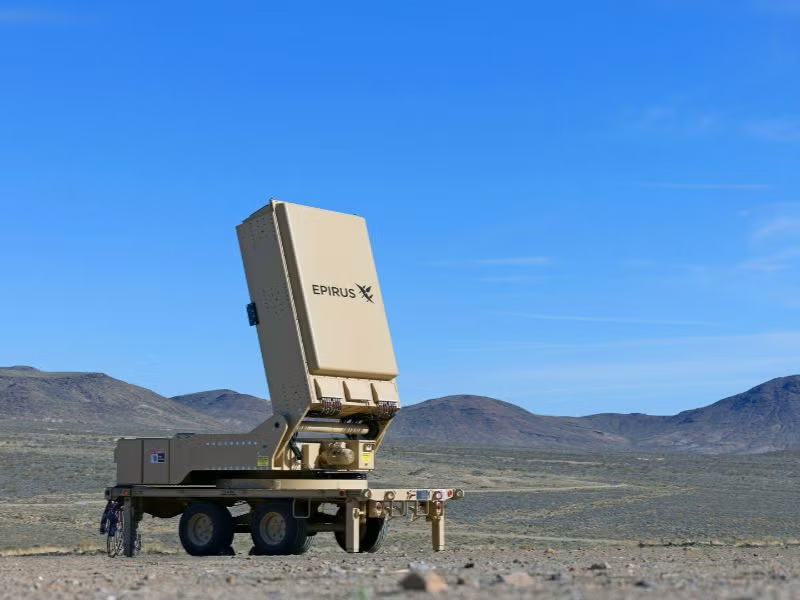
Leonidas is arguably the most technologically ambitious system on this list. Using solid-state gallium nitride (GaN) amplifiers, it generates directional microwave beams capable of frying the electronics of multiple drones simultaneously. In July 2025, the U.S. Army awarded Epirus a $44 million contract for the IFPC-HPM Generation II program, cementing Leonidas as a Program of Record.
What distinguishes Leonidas from other directed-energy systems is its selective engagement capability — it can disable hostile drones while allowing friendly UAS to continue operating in the same airspace. This “friend-or-foe” discrimination is critical in modern combined arms operations where both sides employ drones extensively.
The system is scalable from fixed-site installations to vehicle-mounted configurations, including Stryker integration for mobile defence. Its primary value proposition is swarm defeat — where traditional kinetic or EW defences would be overwhelmed by sheer numbers.
Strengths: Swarm defeat capability; no ammunition limit (power-dependent); selective engagement; speed-of-light kill
Limitations: High power requirements; weather attenuation in rain/fog; thermal signature; significant logistics burden
3. DroneGun Tactical (Australia)
Developer: DroneShield (Australia)
Method: RF & GPS Jamming
Country: Australia
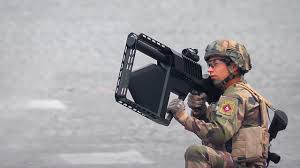
The DroneGun Tactical is the quintessential man-portable counter-drone weapon. Weighing approximately 16 pounds (7.3 kg) with over two hours of continuous operation, it takes the form factor of an oversized rifle and targets the 2.4 GHz, 5.8 GHz, and GNSS bands that control most commercial and improvised drones.
Its effect is immediate but non-destructive: the jammed drone typically enters a “return to home,” hover, or emergency landing mode. This makes it ideal for urban and civilian environments where collateral damage must be minimized. In February 2025, DroneShield secured a $22 million contract package from a Western military customer, followed by an $8 million Pentagon order in September 2025.
Strengths: Highly portable; non-kinetic (minimal collateral); immediate effect; proven in Five Eyes service
Limitations: Completely ineffective against autonomous drones with pre-programmed inertial navigation or fiber-optic control; limited range; single-target focus
4. DedroneTracker (USA)
Developer: Dedrone (now Axon)
Method: Detection & Tracking (AI Sensor Fusion)
Country: United States
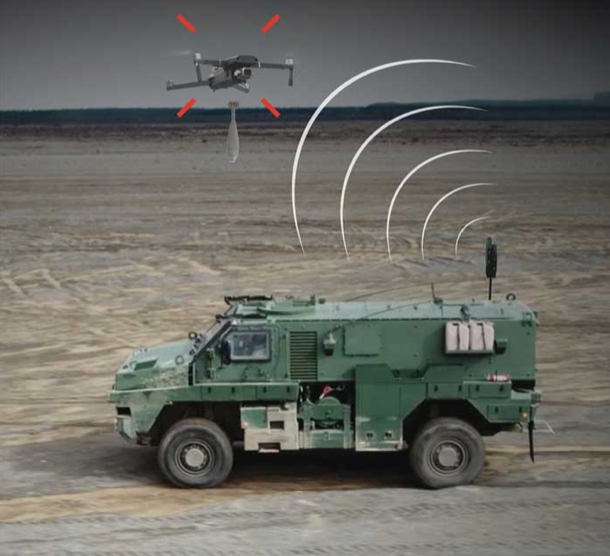
DedroneTracker does not directly defeat drones — it is the “eyes and brain” of a counter-drone architecture. Using AI-driven sensor fusion, it integrates RF sensors, radar, acoustic detectors, and cameras to detect, classify, and track UAVs across complex airspace.
A particularly powerful feature is RF fingerprinting — the ability to identify a drone’s specific make, model, and even serial number by analyzing its radio emission signature. This intelligence is invaluable for attribution and threat assessment. The platform integrates seamlessly with third-party defeat systems, serving as the command and control layer for layered defences.
Strengths: Best-in-class detection and classification; RF fingerprinting; scalable architecture; integrates with any effector
Limitations: No direct defeat capability; requires integration with separate neutralization systems; dependent on sensor coverage
5. DroneHunter F700 (USA)
Developer: Fortem Technologies
Method: Drone-on-Drone Interceptor (Net Capture)
Country: United States
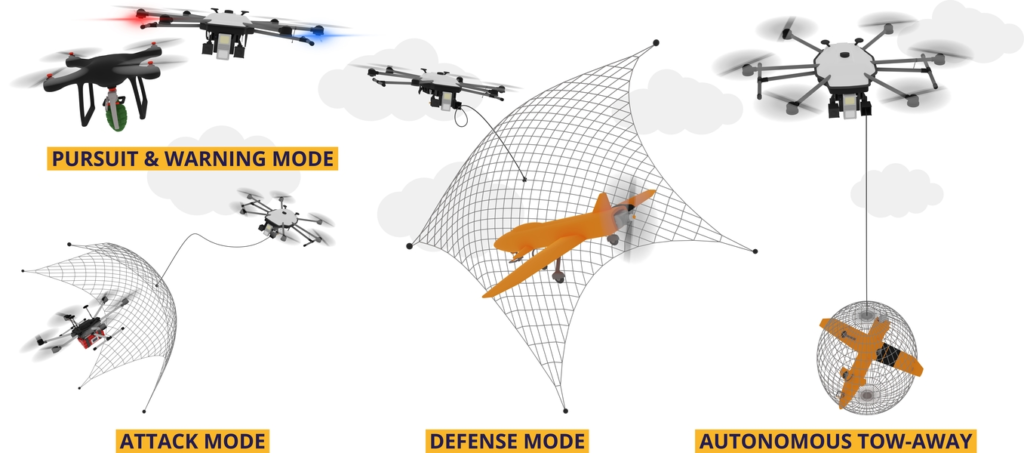
The DroneHunter F700 takes a fundamentally different approach: it fights drones with drones. This autonomous interceptor UAV uses onboard radar and AI to pursue, track, and physically capture target drones with a deployed net. The captured drone can then be towed to a safe location for forensic analysis — a capability no jammer or laser can provide.
This kinetic approach is uniquely valuable against autonomous or jam-resistant drones that cannot be electronically disrupted. However, the one-to-one engagement ratio means magazine depth is limited, and each interceptor is a relatively expensive asset compared to a disposable jammer.
Strengths: Effective against all autonomy levels; physical capture enables intelligence; no spectrum interference
Limitations: One-to-one engagement ratio; limited magazine; weather-sensitive; high per-unit cost
6. Kangal (Turkey)
Developer: Aselsan
Method: Electronic Warfare (RF + GPS + Data-Link Jamming)
Country: Turkey
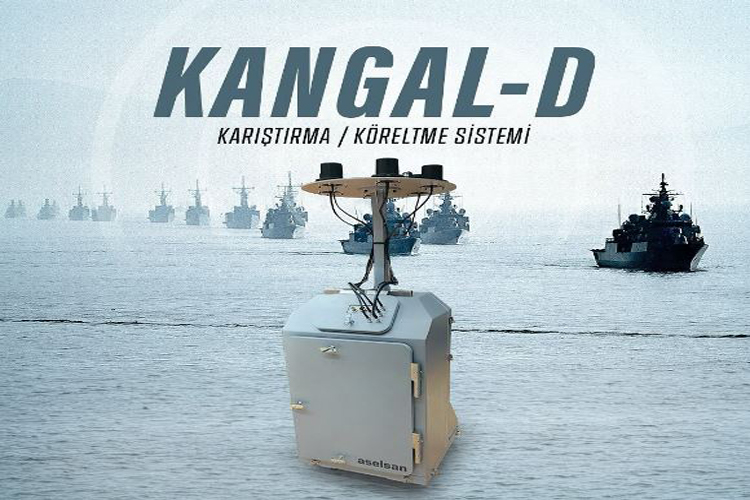
Kangal is Turkey’s most combat-proven counter-drone system and one of the most widely respected EW platforms on the modern battlefield. Developed by Aselsan, it offers multi-band RF jamming, GPS denial, and data-link disruption in both portable man-pack and vehicle-mounted variants.
Its battlefield credentials are substantial: deployed to protect military bases, airports, and strategic facilities across multiple conflict zones. In Ukraine, Kangal has earned a reputation as one of the most practical battlefield systems, rated alongside Bukovel-AD for effectiveness against FPV drones and DJI-type commercial UAVs.
In 2025, Poland selected Aselsan for a $410 million contract covering electronic warfare and counter-drone systems, underscoring NATO confidence in Turkish C-UAS technology.
Strengths: Combat-proven; versatile configurations; effective against RF-controlled threats; NATO-validated
Limitations: Ineffective against fiber-optic or fully autonomous drones; like all jammers, vulnerable to frequency-hopping and encrypted links
7. İhtar (Turkey)
Developer: Aselsan
Method: Radar + Electro-Optical + Jamming (Integrated)
Country: Turkey
İhtar represents a step up in automation from Kangal. This integrated system combines radar for initial detection, electro-optical sensors for visual confirmation, and a jamming suite for neutralization — all orchestrated through automated detection-to-engagement workflows.
While Kangal is optimized for mobility and frontline deployment, İhtar is designed for fixed-site perimeter defence of critical infrastructure. Its higher degree of automation reduces operator burden and enables 24/7 autonomous protection.
Complementary Turkish Systems:
- Şahin: 40mm programmable airburst ammunition for kinetic destruction of autonomous drones
- Gökberk: 5kW mobile laser system representing Turkey’s directed-energy future
Strengths: High automation; integrated sensor-to-shooter chain; proven Turkish industrial base
Limitations: Primarily fixed-site; less mobile than Kangal for maneuver warfare
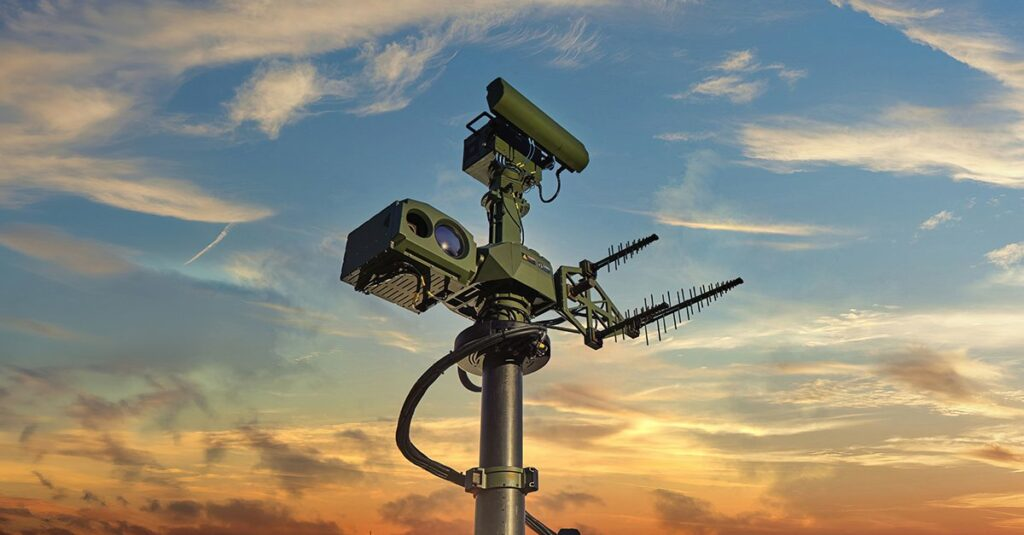
8. Bukovel-AD (Ukraine)
Developer: Spetstechnoexport / Ukrainian Industry
Method: Electronic Warfare / Jamming
Country: Ukraine
Bukovel-AD is arguably the most important counter-drone system of the 2020s — not because it is the most advanced, but because it embodies the lesson that has defined modern drone warfare. This indigenous Ukrainian system detects and jams FPV drones, DJI commercial UAVs, Russian Orlan-10 reconnaissance drones, and some loitering munitions. Mounted on vehicles and widely distributed along the 1,000-kilometer frontline, it has become the backbone of Ukraine’s tactical air defence.
The system’s genius lies in its cost-exchange mathematics: a roughly $20,000 jammer that defeats hundreds of $500 FPV drones provides overwhelming economic leverage. Ukrainian officers have learned that a $20,000 jammer placed every few kilometers across the battlefield provides more value than a multimillion-dollar laser system protecting a single base.
Strengths: Proven in the world’s most intensive drone warfare; mass-deployable; cost-exchange optimal; ruggedized for frontline conditions
Limitations: Ineffective against autonomous/fiber-optic drones; requires constant frequency adaptation against evolving threats
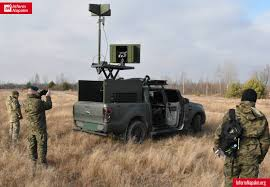
9. Nota (Ukraine)
Developer: NAUDI (Ukraine)
Method: Advanced Electronic Warfare Platform
Country: Ukraine
Nota represents a more sophisticated tier of Ukrainian electronic warfare. While Bukovel-AD focuses on tactical drone jamming, Nota is designed as a broad-spectrum electronic attack platform capable of disrupting not only drone control links but also satellite navigation and broader communications infrastructure.
Built on a robust truck-mounted chassis, Nota likely incorporates software-defined radio (SDR) architecture, allowing rapid frequency adaptation — a critical capability when adversaries constantly shift their drone control frequencies to evade jamming.
Strengths: Broad-spectrum capability; strategic-level electronic attack; indigenous Ukrainian production
Limitations: Larger footprint than Bukovel-AD; primarily vehicle-dependent; less distributed than trench systems
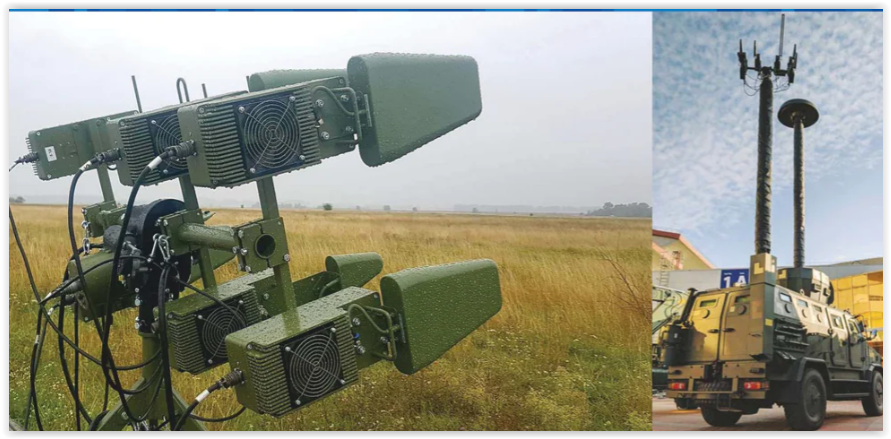
10. EDM4S SkyWiper (Lithuania)
Developer: NT Service
Method: Portable RF Jammer
Country: Lithuania
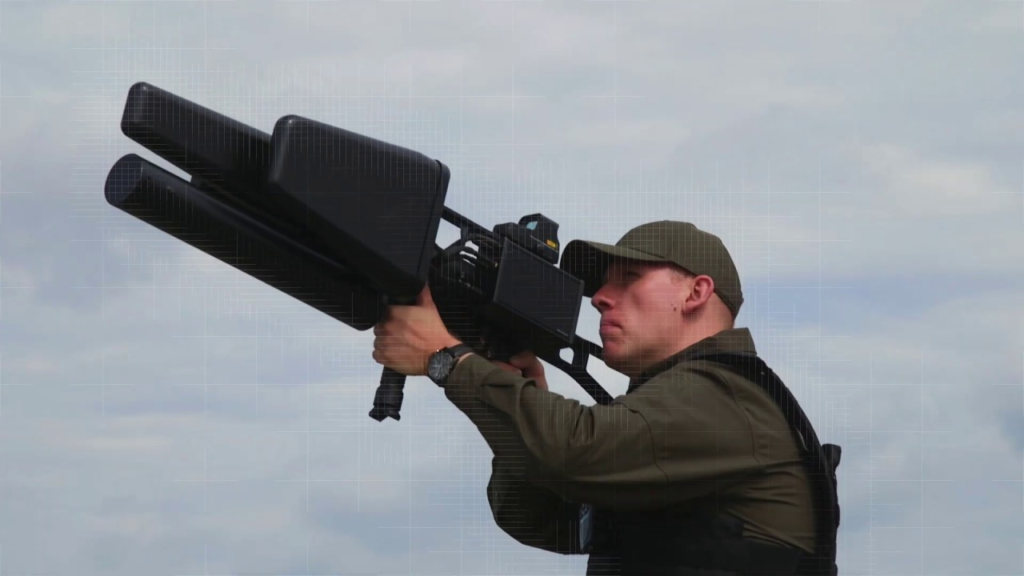
The EDM4S SkyWiper is the European answer to man-portable drone defence. Taking the form of a shoulder-fired “gun,” this compact system targets standard UAV control frequencies and GNSS navigation. It is designed for immediate response by individual soldiers or security personnel who spot a drone threat.
Its primary advantages are simplicity and accessibility: minimal training required, rapid deployment, and low cost. However, its effective range is shorter than vehicle-mounted systems, and like all RF jammers, it is completely ineffective against autonomous threats.
Strengths: Extremely portable; low cost; minimal training; rapid deployment
Limitations: Short range; ineffective against autonomous drones; single-operator dependent
III. The Ukraine Laboratory: What Three Years of War Has Taught Us
A. The Threat Evolution Timeline
Table
| Period | Primary Threat | Countermeasure Response |
|---|---|---|
| 2022–2023 | Commercial DJI drones, basic FPVs | RF jammers (Bukovel-AD, Kangal) |
| 2024 | Massed FPV swarms, Orlan-10 recon | Trench EW, vehicle jammers, hunter drones |
| 2025 | Turbojet Shahed-types (250–500 km/h) | Counter-drone interceptors, mobile gun groups |
| 2025–2026 | Fiber-optic FPVs (jam-proof), AI swarms | Nets, kinetic, directed energy, counter-drone UAVs |
B. The Cost-Exchange Revolution
Ukraine’s most important strategic insight is economic rather than technical:
“Spending a few hundred dollars worth of energy to disable a drone is preferable to firing a missile costing tens or hundreds of thousands of dollars.”
This principle has driven the proliferation of trench EW systems — hundreds of locally produced backpack jammers, vehicle-mounted systems, and FPV suppressors manufactured by small private companies across Ukraine.
These systems typically feature:
- 100–500 meter effective range
- 2+ hours battery autonomy
- 6–8 frequency bands
- Remote activation to reduce electromagnetic signature and avoid detection
C. The Winning Formula
The biggest lesson from Ukraine is that the winning anti-drone system is not necessarily the most sophisticated one — it is the one that can be produced in large quantities and placed every few kilometers across the battlefield.
A $20,000 jammer that defeats hundreds of FPV drones provides more cumulative value than a $5 million laser protecting one installation. Mass, mobility, and cost-exchange advantage trump technical elegance.
IV. Turkish Counter-Drone Ecosystem: A Case Study in Strategic Investment
Turkey’s investment in anti-drone systems reflects its position as both a leading drone exporter and a nation that understands the threat from the inside. Beyond Kangal and İhtar, Turkey has developed a comprehensive family of C-UAS capabilities:
Şahin — The Kinetic Answer
The Şahin system uses 40mm programmable airburst ammunition to physically destroy drones rather than jamming them. This is the critical answer to autonomous drones that cannot be electronically disrupted — a capability gap that pure EW systems cannot fill.
Gökberk — The Laser Frontier
Gökberk is Turkey’s entry into directed-energy weapons — a 5kW mobile laser system designed to burn through small UAVs at ranges up to one mile. Successfully tested in 2025, it represents Turkey’s strategic hedge against a future where jamming becomes increasingly ineffective.
V. Comparative Performance Matrix
Effectiveness by Threat Category
| Threat | Best Systems | Why They Succeed |
|---|---|---|
| FPV Drones | Bukovel-AD, Kangal, DroneShield, trench jammers | RF jamming breaks control link; mass deployment |
| DJI-Type Commercial | Kangal, Bukovel-AD, DroneGun Tactical | Well-known frequency signatures; force RTH/landing |
| Drone Swarms | Leonidas (HPM), Drone Dome (laser), Gökberk | Area effectors; magazine depth unlimited |
| Autonomous/Jam-Resistant | Şahin (airburst), DroneHunter (net), lasers | Kinetic/directed energy; no RF dependency |
| Shahed/Geran Loitering | Counter-drone interceptors, mobile guns | Speed/maneuverability match; HPM potential |
VI. Technology Deep-Dive: Strengths, Limitations, and Failure Modes
Electronic Warfare (RF/GNSS Jamming)
| Strength | Critical Limitation |
|---|---|
| Cost-effective; scalable; immediate | Completely ineffective against fiber-optic controlled drones |
| Wide area coverage | Self-detection by enemy SIGINT; reveals positions |
| Forces predictable drone behavior | Encrypted/frequency-hopping links reduce effectiveness |
| Low cost-per-shot (energy only) | Friendly UAV interference; spectrum management |
High-Power Microwave (HPM)
| Strength | Critical Limitation |
|---|---|
| Swarm defeat; no ammunition limit | High power requirements; logistics burden |
| Selective engagement (Leonidas) | Weather attenuation (rain, fog) |
| Permanent electronics kill | Thermal signature; vulnerability to precision fires |
| Speed-of-light engagement | Limited range vs. missiles |
Laser Directed Energy
| Strength | Critical Limitation |
|---|---|
| Precision engagement; no ammunition | 3–5+ kW power requirement; massive energy logistics |
| Speed-of-light; silent kill | Weather sensitive (rain, dust, turbulence) |
| Low cost-per-shot | Reflective surfaces deflect beam; safety concerns |
| Requires precise tracking; ineffective against swarms |
Kinetic Interception
| Strength | Critical Limitation |
|---|---|
| Effective against ALL autonomy levels | One-to-one ratio; limited magazine |
| Physical destruction/capture | Short effective range |
| No EM interference | Weather/visibility constraints |
| Forensic intelligence value | Cost approaches threat cost |
VII. Strategic Assessment: Which System for Which Mission?
| Mission Profile | Recommended System(s) | Rationale |
|---|---|---|
| Frontline Infantry Protection | Trench EW, Bukovel-AD, Kangal (portable) | Mobility, low cost, mass deployment |
| Fixed-Site Critical Infrastructure | Drone Dome, İhtar, Leonidas | Layered defence, automation, persistent |
| Swarm Defence | Leonidas (HPM), Mjölnir (THOR successor) | Area effect, magazine depth |
| Urban/Civilian Environment | DroneGun Tactical, EDM4S SkyWiper | Non-kinetic, portable, minimal collateral |
| Autonomous Drone Defence | Şahin (airburst), DroneHunter, lasers | Kinetic/directed energy required |
| Convoy/Mobile Force Protection | Vehicle-mounted Kangal, Bukovel-AD | On-the-move protection, rapid deployment |
VIII. The Future of Counter-Drone Warfare (2026–2030)
Emerging Trends
- AI-Driven Autonomy: Both offensive drones and defensive systems will employ machine learning for target recognition and electronic counter-countermeasures. The “OODA loop” will compress to milliseconds.
- Fiber-Optic Drones: The proliferation of jam-proof fiber-optic FPVs will force a fundamental shift from EW-dominated defence to kinetic and directed-energy solutions.
- Directed-Energy Maturation: Lasers and HPM will transition from prototype to Program of Record. Power density, weather resilience, and logistics integration are the critical hurdles.
- Distributed/Collaborative C-UAS: Networks of cheap sensors and effectors will replace monolithic systems. The future is a mesh of $5,000 nodes, not $5 million platforms.
- Counter-Drone Interceptors: AI-guided drone-on-drone combat is evolving rapidly, with Ukrainian systems like Wild Hornets and Alta Ares achieving 250–400 km/h to chase down turbojet Shahed-types.
IX. Procurement Recommendations for Military Forces
- Layered Approach: No single system defeats all threats. Combine EW (for RF drones), kinetic (for autonomous), and directed energy (for swarms).
- Mass Over Class: Prioritize systems producible in thousands, not dozens. The $20,000 jammer beats the $5 million laser when distributed across the battlespace.
- Spectrum Dominance: Invest in SIGINT to understand enemy drone frequencies before jamming. Adaptability is the decisive edge.
- Cost-Exchange Discipline: Evaluate every system by the metric: “How many $500 drones can this defeat per dollar spent?”
- Tactical Integration: C-UAS must be organic to maneuver units — an infantry platoon’s survival tool, not a division-level afterthought.
X. Conclusion: The Art of the Possible
The anti-drone landscape is defined by a central tension that will shape military procurement for decades: sophistication versus scalability. Systems like Leonidas and Drone Dome represent the technological frontier, but the hard lessons from Ukraine demonstrate that the decisive factor is mass, mobility, and cost-exchange advantage.
The future belongs not to the force with the most advanced anti-drone system, but to the force that can deploy the most effective ones everywhere they are needed. In the electromagnetic spectrum, as in maneuver warfare, presence is capability. The force that turns every kilometer of frontline into a denied zone for hostile drones — through thousands of cheap, reliable jammers — will dominate the battlespace.
The drone revolution has democratized air power. The counter-drone revolution must democratize air defence. The systems examined in this article represent the vanguard of that transformation — but the true revolution is happening in Ukrainian workshops and Turkish factories, where $20,000 jammers are being produced by the hundred to meet a threat that evolves by the week.
The drone killers are here. The question is not whether they work, but whether we can build enough of them, fast enough, to stay ahead of the threat.
Appendix A: System Specifications Comparison
| Rank | System | Country | Method | Weight | Range | Cost Class | vs. Autonomous |
|---|---|---|---|---|---|---|---|
| 1 | Drone Dome | Israel | Radar/EO/Jammer/Laser | Fixed | Medium-Long | $$$$ | Partial (laser) |
| 2 | Leonidas | USA | HPM | Vehicle | Medium | $$$$ | Yes |
| 3 | DroneGun Tactical | Australia | RF/GNSS Jamming | 16 lbs | Short | $$ | No |
| 4 | DedroneTracker | USA | Detection/Tracking | Fixed | Long | $$$ | N/A |
| 5 | DroneHunter F700 | USA | Net Interceptor | UAV | Short | $$$ | Yes |
| 6 | Kangal | Turkey | EW (RF/GPS) | Man/Vehicle | Medium | $$ | No |
| 7 | İhtar | Turkey | Radar/EO/Jamming | Fixed | Medium | $$$ | Partial |
| 8 | Bukovel-AD | Ukraine | EW/Jamming | Vehicle | Medium | $$ | No |
| 9 | Nota | Ukraine | EW (Broadband) | Vehicle | Long | $$$ | No |
| 10 | EDM4S SkyWiper | Lithuania | Portable Jammer | Man-portable | Short | $ | No |
Appendix B: Key Contracts & Procurement Actions (2025–2026
| Date | System | Value | Customer |
|---|---|---|---|
| July 2025 | Epirus Leonidas | $44M | U.S. Army (RCCTO) |
| Feb 2025 | DroneShield Package | $22M | Western Military Customer |
| Sept 2025 | DroneShield | $8M | U.S. DoD |
| March 2025 | Anduril Lattice | Up to $20B | U.S. Army |
| Sept 2025 | Raytheon KuRFS/Coyote | Up to $5B | U.S. Army |
| 2025 | Aselsan (Kangal/İhtar) | $410M | Poland |
Appendix C: Glossary
- C-UAS: Counter-Unmanned Aerial Systems
- EW: Electronic Warfare
- HPM: High-Power Microwave
- FPV: First-Person View (drone)
- RF: Radio Frequency
- GNSS: Global Navigation Satellite System
- EO/IR: Electro-Optical / Infrared
- SIGINT: Signals Intelligence
- SDR: Software-Defined Radio
- RTH: Return to Home