(By Khalid Masood)
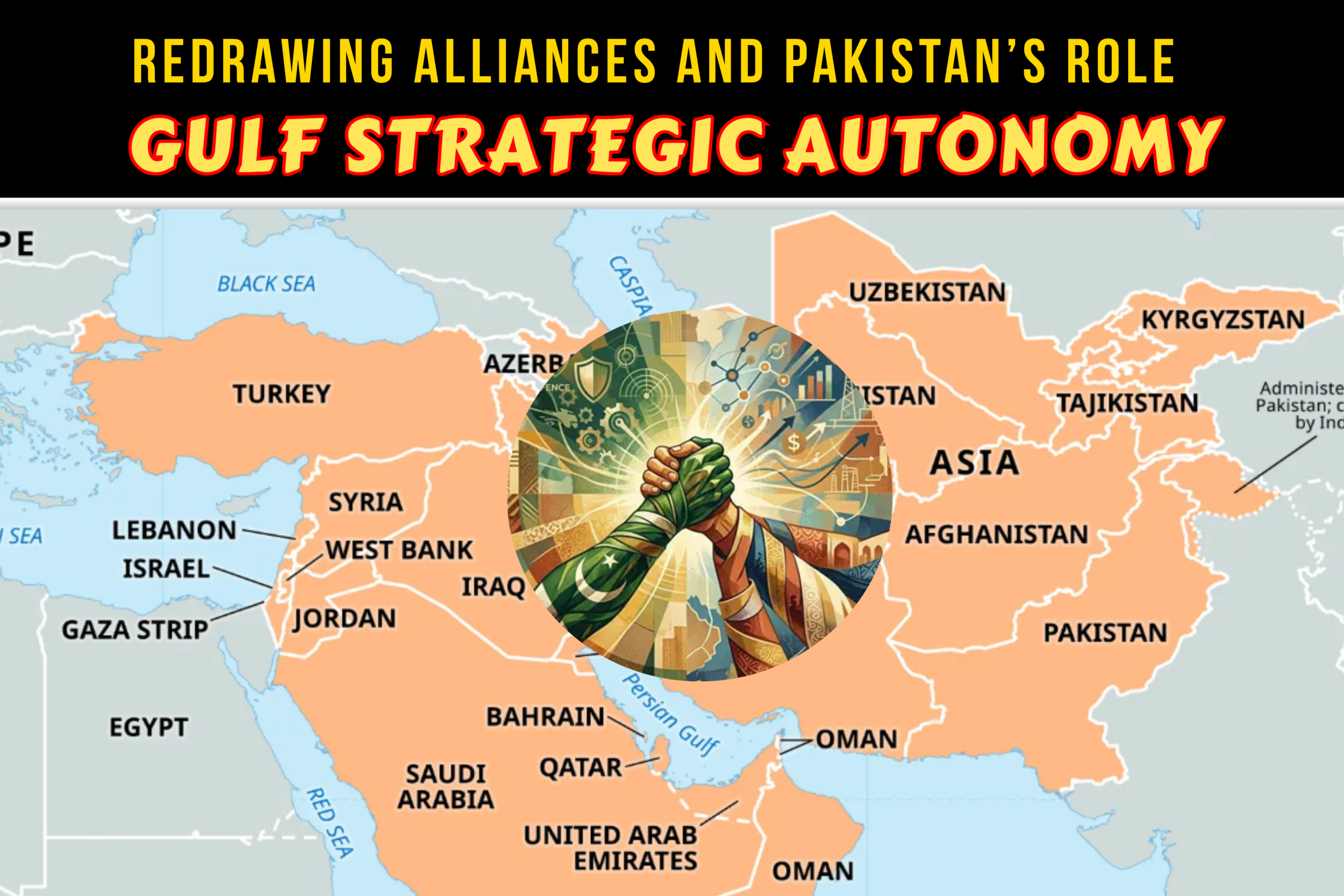
For over half a century, the security architecture of the Middle East revolved around a single axis: Washington. From the Carter Doctrine to the post-Cold War security guarantees that underpinned Gulf stability, the United States functioned as the region’s indispensable security patron. Today, that paradigm is undergoing a profound structural shift. Gulf states are no longer passive clients of American foreign policy; they are sovereign actors actively crafting their own strategic autonomy. The 2023 China-brokered Saudi-Iran détente, the United Arab Emirates’ rapid defence industrialisation and diplomatic diversification, and Qatar’s intricate multi-alignment diplomacy collectively signal the emergence of a post-hegemonic Middle East. Within this recalibrated landscape, Pakistan’s historical reliability, security capacity, and civilizational linkages are positioning it not as a peripheral observer, but as an increasingly indispensable stabilising bridge.
As Dr. Abdulaziz Sager, Chairman of the Gulf Research Center, observes: “The Gulf is no longer asking for permission; it is making calculations based on its own national interests. This is not anti-Western—it is pro-Gulf.” This sentiment encapsulates the strategic autonomy now driving regional statecraft.
The US-Israel-Iran Dynamic and Gulf Strategic Recalibration
The ongoing US-Israel military posture against Iran has sharply exposed Gulf vulnerability. With American forces, missile defence batteries, and intelligence assets heavily concentrated on Israeli security, Iranian retaliatory strikes have repeatedly targeted Gulf airspace, energy infrastructure, and maritime corridors. This operational reality has underscored a uncomfortable truth for GCC capitals: American security guarantees are neither automatic nor comprehensive. The presence of US bases across the Gulf has, paradoxically, rendered these states part of the conflict’s battlespace rather than insulated from it.
Rather than accept strategic dependency, Gulf states have embraced defence diversification as a core doctrine of statecraft. Riyadh moved decisively: on 17 September 2025, Saudi Arabia and Pakistan signed a Strategic Mutual Defence Agreement, declaring that an attack on either nation constitutes an attack on both, and committing to joint deterrence, intelligence sharing, and military cooperation. Doha is now advancing similar arrangements, with high-level diplomatic visits in early 2026 reaffirming defence ties and reports indicating a landmark security pact is nearing finalisation. Abu Dhabi, meanwhile, is accelerating partnership diversification—engaging Pakistani, Chinese, Turkish, and European partners to reduce over-reliance on any single security provider.
For Pakistan, this represents not merely diplomatic validation but strategic opportunity. Its battle-tested military, credible conventional and nuclear deterrence, and principled neutrality position it as the Gulf’s most reliable alternative security partner. Unlike Western alliances that often carry political conditionalities or shifting domestic priorities, Pakistan’s historical ties with Gulf states have been anchored in mutual security commitments, demographic linkages, and crisis-tested cooperation. As Gulf capitals seek predictable partners who understand regional fault lines and respect strategic autonomy, Islamabad’s diplomatic posture and institutional memory offer a distinct advantage.
Table 1: Gulf States’ Strategic Security Shifts (2025–2026)
| Country | Primary Security Concern | New/Expanded Partnerships | Strategic Rationale |
|---|---|---|---|
| Saudi Arabia | Iranian retaliation, Red Sea instability, US-Israel focus | Pakistan (SMDA signed Sept 2025), China, France | Diversify deterrence, secure flank, reduce US dependency |
| Qatar | Regional escalation, LNG infrastructure vulnerability | Pakistan (advanced talks), Turkey, UK, US | Balance alliances, secure mediation credibility, harden defences |
| UAE | Drone/missile threats, maritime chokepoints, tech warfare | Pakistan, France, India, domestic (EDGE Group) | Indigenous capability, multi-vector diplomacy, strategic hedging |
| Pakistan | Strategic depth, economic resilience, regional stability | KSA, UAE, Qatar, China, Türkiye | Mutual defence, economic integration, diplomatic balancing |
Source: Compiled from SIPRI, Gulf Research Center, and national defence white papers (2026)
The China-Brokered Saudi-Iran Détente: De-escalation as Statecraft
The March 2023 Beijing agreement that restored diplomatic relations between Saudi Arabia and Iran marked a structural watershed rather than a temporary tactical pause. Facilitated by Chinese mediation, the accord recognised a shared regional reality: prolonged proxy conflicts drain economic resources, disrupt energy markets, and invite external interference that ultimately compromises Gulf sovereignty.
Since the agreement, tangible progress has emerged. Embassies have reopened, security dialogues have resumed, and both nations have coordinated more closely within OPEC+ and emerging multilateral frameworks such as BRICS+ and the Shanghai Cooperation Organisation. Crucially, the détente has reduced the incentive for zero-sum proxy competition in Yemen, Lebanon, and Iraq, creating space for broader Islamic world cooperation and economic normalisation.
China’s role in this process reflects a different diplomatic philosophy: economic leverage paired with non-interference, prioritising stability over ideological alignment. For Gulf states, this approach offers an attractive alternative to Western conditionality. Pakistan, historically maintaining balanced relations with both Riyadh and Tehran, is uniquely positioned to capitalise on this de-escalation. Islamabad can serve as a commercial conduit, facilitating energy trade, infrastructure development, and people-to-people connectivity that bridges the Persian Gulf and the Indian Ocean. Moreover, Pakistan’s advocacy for intra-Islamic dialogue and its experience in managing complex bilateral sensitivities make it a credible facilitator for confidence-building measures that sustain the détente beyond diplomatic formalities.
As former Pakistani Foreign Minister Bilawal Bhutto Zardari noted during the 2024 Islamabad Security Dialogue: “Pakistan’s geography is not a burden; it is a bridge. We connect the Gulf to South Asia, Central Asia to the Indian Ocean. In an era of connectivity, that is strategic wealth.”
UAE’s Independent Defence Posture & Strategic Diversification
Perhaps the most visible manifestation of Gulf strategic autonomy is the United Arab Emirates’ rapid transformation into a defence-industrial and diplomatic hub. Through the EDGE Group, Abu Dhabi has consolidated dozens of domestic defence manufacturers into a globally competitive conglomerate, producing advanced drones, missile systems, and AI-enabled surveillance platforms. The UAE no longer relies solely on foreign procurement; it co-develops, exports, and integrates technology with partners across Europe, Asia, and the Global South.
Abu Dhabi’s foreign policy mirrors this defence agility. The UAE maintains security cooperation with Washington and Paris, energy partnerships with Beijing and New Delhi, defence dialogues with Ankara and Moscow, and economic ties with Israel and African states. This multi-vector approach ensures that no single relationship dictates Abu Dhabi’s strategic calculus.
Pakistan’s alignment with the UAE’s vision is both historical and forward-looking. For decades, Pakistani military personnel have contributed to training, advisory, and operational frameworks within Emirati defence institutions. Joint exercises, counter-terrorism intelligence sharing, and maritime security cooperation have created interoperable security cultures. Economically, the UAE remains one of Pakistan’s largest sources of foreign direct investment, a critical anchor for remittance flows, and a growing market for Pakistani IT services, engineering expertise, and halal manufacturing. As the UAE expands its defence-tech and aerospace sectors, structured joint ventures with Pakistani engineering firms, defence universities, and cybersecurity institutes represent a logical next step in deepening a partnership built on mutual trust and complementary capabilities.
Qatar’s Multi-Alignment Diplomacy & Mediator Statecraft
Qatar has perfected the art of strategic agility through a combination of energy diplomacy, financial statecraft, and conflict mediation. As one of the world’s largest liquefied natural gas exporters, Doha leverages its energy exports not merely as a commodity, but as a geopolitical stabiliser, ensuring long-term supply contracts that bind diverse economies to its strategic interests.
Simultaneously, Qatar has cultivated a reputation as an indispensable mediator. From facilitating the US-Taliban negotiations to hosting ceasefire talks in Gaza, Sudan, and Lebanon, and managing hostage releases across conflict zones, Doha has positioned itself as a neutral convenor trusted by adversaries. Its diplomatic infrastructure is further reinforced by hosting Al Udeid Air Base (a critical US military hub) while maintaining working relationships with Turkey, Iran, China, the European Union, and African states. This networked approach allows Qatar to punch well above its demographic weight.
Pakistan shares significant diplomatic synergy with Qatar’s mediation-oriented statecraft. Both nations advocate for de-escalation, Islamic solidarity, and Global South representation in multilateral institutions. Qatari investments in Pakistani education, healthcare, real estate, and Islamic finance have created enduring institutional linkages. Looking ahead, joint initiatives in climate-resilient infrastructure, renewable energy financing, and digital governance could further align Doha’s capital with Islamabad’s developmental priorities, transforming economic ties into strategic resilience.
As Sheikh Tamim bin Hamad Al Thani, Emir of Qatar, stated at the 2025 Doha Forum: “Mediation is not about taking sides; it is about creating space for dialogue. In a fractured world, that space is the most valuable currency.” Pakistan’s own diplomatic tradition echoes this philosophy, making Doha and Islamabad natural partners in conflict resolution.
Pakistan’s Strategic Opportunity in the New Gulf Architecture
The convergence of Saudi-Iran détente, UAE defence independence, and Qatari multi-alignment diplomacy reveals a clear pattern: Gulf states are prioritising predictability, mutual benefit, and non-ideological partnerships. In this recalibrated environment, Pakistan’s strategic value is increasingly recognised through three interconnected dimensions.
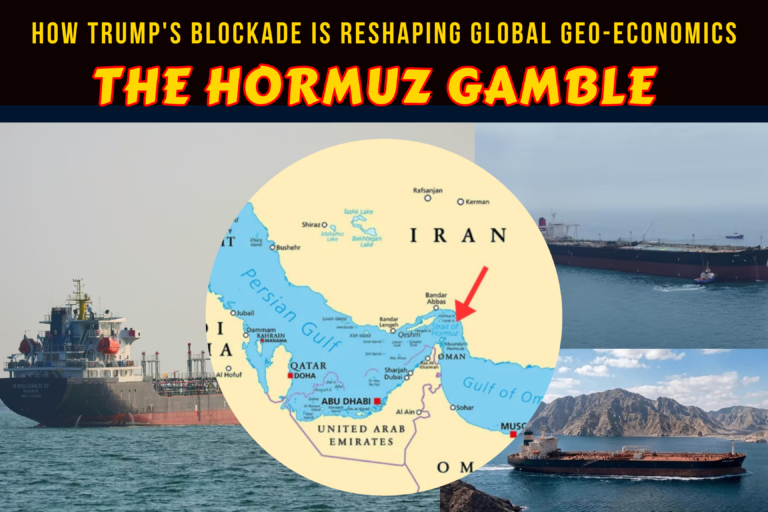
First, security and defence interoperability remains a cornerstone. Pakistan’s armed forces have decades of experience in counter-terrorism, maritime domain awareness, and joint operational planning. With the Strait of Hormus and Arabian Sea serving as critical global trade arteries, Pakistan’s naval presence at Gwadar and Karachi offers complementary capabilities for regional maritime security. Structured defence dialogues, joint training programmes, and potential co-production of unmanned systems, radar technology, and cybersecurity frameworks could institutionalise these ties for the long term.
Second, economic and infrastructure diplomacy presents untapped potential. The China-Pakistan Economic Corridor (CPEC) has already demonstrated Pakistan’s capacity to deliver large-scale infrastructure under complex geopolitical conditions. Gulf sovereign wealth funds, seeking stable, high-yield investments outside Western-dominated markets, can partner with Pakistani institutions to develop renewable energy grids, logistics hubs, and special economic zones. Pakistan’s growing IT sector, skilled engineering workforce, and expanding halal manufacturing ecosystem align seamlessly with Gulf diversification goals under Vision 2030 and similar frameworks.
Third, diplomatic balancing and civilizational connectivity offer Pakistan a unique niche. Unlike states entangled in regional rivalries, Islamabad has consistently advocated for principled neutrality, Islamic solidarity, and South-South cooperation. The expatriate Pakistani community, numbering in the millions across the Gulf, serves as a living bridge of cultural exchange, labour expertise, and remittance-driven economic stability. By formalising track-II dialogues, academic exchanges, and religious-cultural partnerships, Pakistan can deepen soft-power linkages that reinforce hard strategic ties.
Table 2: Pakistan-Gulf Economic & Security Cooperation – Key Metrics (2026)
| Indicator | Saudi Arabia | UAE | Qatar | Total Gulf |
|---|---|---|---|---|
| Pakistani expatriates (millions) | 2.5 | 3.5 | 0.4 | ~6.4 |
| Annual remittances (USD billion) | 7.2 | 9.8 | 1.5 | ~18.5 |
| Gulf FDI in Pakistan (USD billion, cumulative) | 8.5 | 12.3 | 3.2 | ~24.0 |
| Bilateral trade (USD billion, 2025) | 6.8 | 9.2 | 2.1 | ~18.1 |
| Defence cooperation framework | Strategic Mutual Defence Agreement (2025) | EDGE-Pakistan MoUs, tech transfer | Cybersecurity & defence talks (2026) | Multiple active partnerships |
| Energy cooperation | Oil refinery investments, LNG | Solar projects, grid integration | LNG supply agreements | Diversified energy portfolio |
Source: State Bank of Pakistan, Ministry of Overseas Pakistanis, Gulf bilateral trade data (2026)
In a multipolar Middle East, Pakistan is not a passive beneficiary but an active architect of stability. Its historical reliability, demographic weight, and geopolitical positioning make it a natural node connecting Gulf capitals with broader Asian, African, and Islamic world networks.
Implications for Regional & Global Order
The rise of Gulf strategic autonomy carries profound implications for the global order. A multipolar Middle East reduces the efficacy of unilateral Western leverage while expanding Chinese, European, Indian, and Asian diplomatic and economic footprints. Energy pricing, sovereign capital allocation, and technology supply chains are gradually diversifying away from Western monopolies, creating new corridors for South-South trade and financial cooperation.
Yet, this transition also carries risks. Fragmented security architectures, competing economic blocs, and uncoordinated regulatory frameworks could exacerbate volatility if not managed through inclusive multilateralism. Gulf states are acutely aware of these vulnerabilities, which is why they increasingly seek partners who offer institutional continuity, crisis-tested reliability, and non-zero-sum diplomacy.
Pakistan’s positioning strategy must reflect this reality. By formalising structured economic funds, defence-tech memoranda, and diplomatic coordination mechanisms with Gulf capitals, Islamabad can lock in long-term mutual prosperity while contributing to regional stability. The goal is not alignment with one bloc against another, but strategic integration that enhances Pakistan’s economic resilience, security depth, and diplomatic influence.
As Dr. Maleeha Lodhi, Pakistan’s former Ambassador to the US and UN, articulated: “Pakistan’s foreign policy must be guided by strategic clarity, not strategic drift. Our partnerships with the Gulf are not transactional; they are civilizational, demographic, and geopolitical. That is our comparative advantage.”
Conclusion: From Bystander to Bridge
The erosion of the US-centric Middle East order is not a retreat of influence but a redistribution of agency. Gulf states are exercising strategic autonomy through de-escalation, defence industrialisation, and multi-alignment diplomacy. In this new architecture, Pakistan’s consistency, security capacity, and civilizational linkages position it as a vital stabilising bridge between Gulf capitals, the broader Muslim world, and emerging multipolar institutions.
The opportunity before Islamabad is clear: institutionalise historical partnerships into forward-looking frameworks, leverage demographic and technological strengths for mutual economic benefit, and maintain principled neutrality that prioritises regional stability over ideological competition. By doing so, Pakistan will not merely navigate the shifting tides of Gulf strategic autonomy—it will help shape them.
________________________________________________________