(By Faraz Ahmed)
I. The Spark: A Reshare, Not a Statecraft
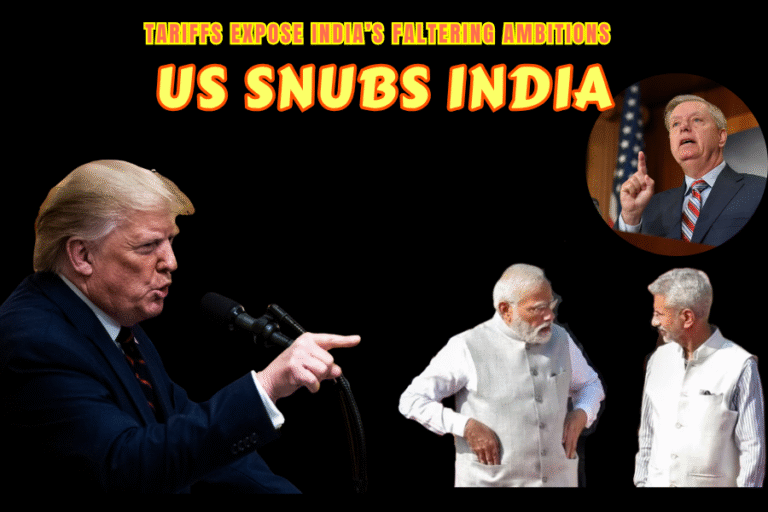
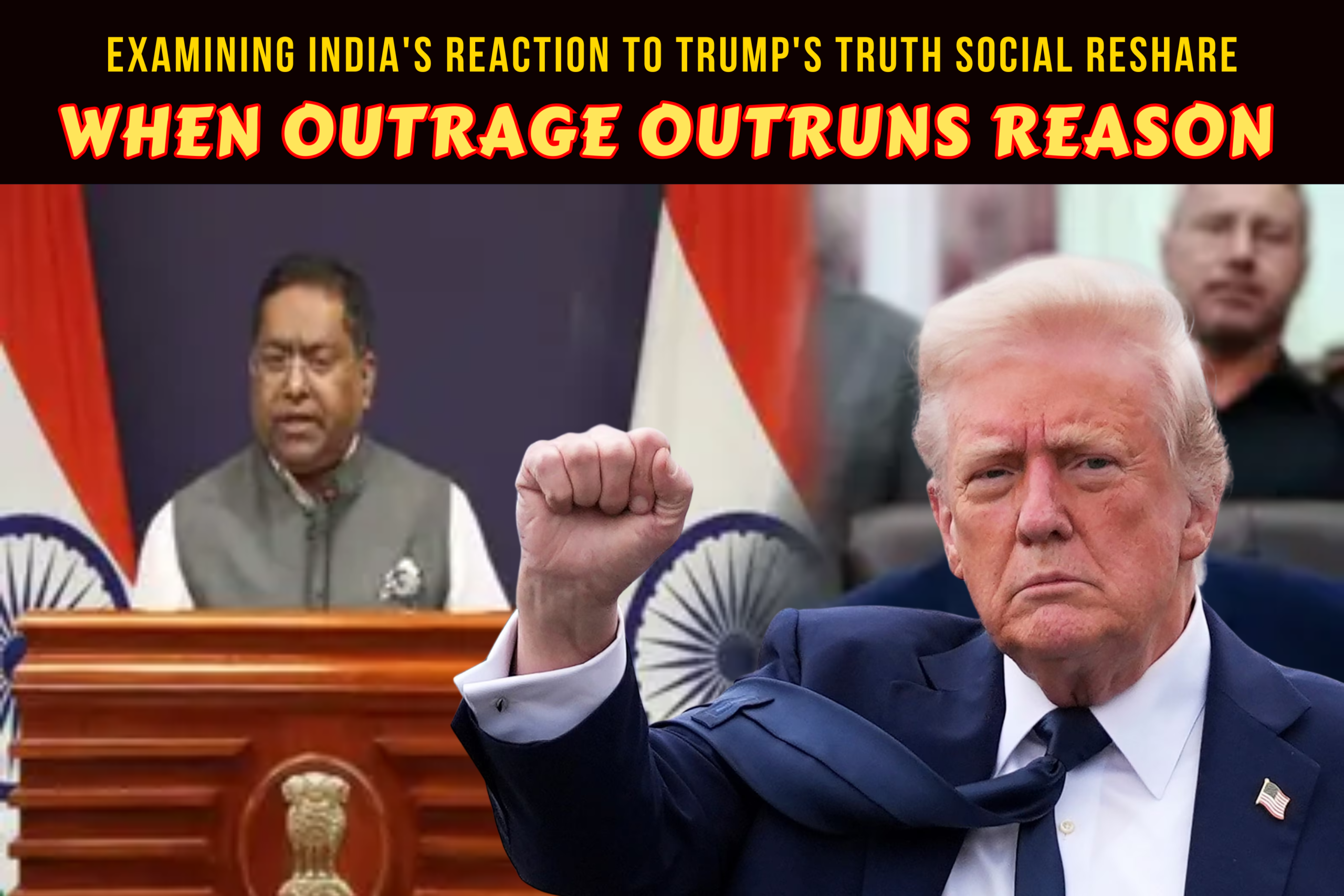
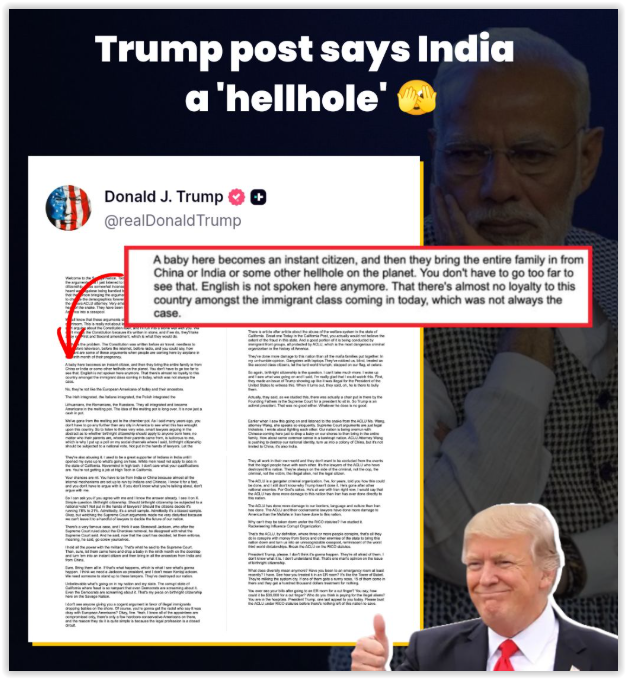
On 22 April 2026, US President Donald Trump amplified a third-party podcast excerpt on Truth Social containing the phrase “hellhole” in reference to India and China—within a domestic American debate on birthright citizenship. Crucially, Trump did not author the remark; he reshared it. Yet within hours, New Delhi had issued a formal diplomatic protest, with Indian MEA spokesperson Randhir Jaiswal declaring the comments “obviously uninformed, inappropriate and in poor taste”.
The speed and intensity of India’s response warrants scrutiny. While any derogatory characterisation of a nation merits objection, one must ask: does a reshared social media post—lacking the weight of official policy—justify the diplomatic machinery’s full activation?
“The remarks certainly do not reflect the reality of the India-US relationship, which has long been based on mutual respect and shared interests.”
— Randhir Jaiswal, MEA Spokesperson
The US Embassy in New Delhi swiftly moved to contain the fallout, highlighting Trump’s prior description of India as “a great country” and Prime Minister Modi as “a very good friend“. Yet the Indian media landscape had already ignited.
II. The Amplification Cycle: How a Niche Post Became a National Crisis
What followed was a masterclass in algorithmic escalation. Mainstream Indian outlets ran headlines framing the remark as a “slur on India“, often without clarifying the reshare context or the US domestic political framing. Social media platforms saw hashtags like #BoycottUS and #TrumpApologize trend within hours, driven less by verified reporting than by emotional engagement metrics.
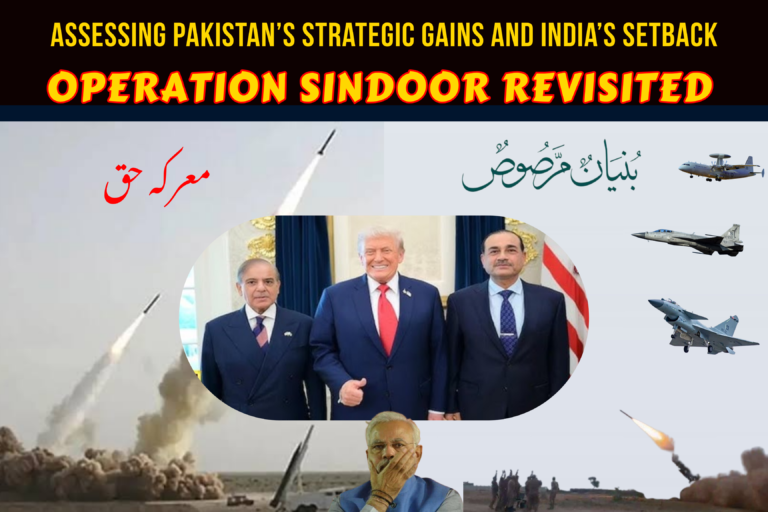
Consider the disparity: Trump’s actual commentary on Operation Sindoor—India’s May 2025 military action—was measured: “I hope it ends very quickly”. Yet that nuance received scant attention compared to the “hellhole” controversy. The incident reveals a troubling pattern: Indian media and political discourse often prioritise reactive outrage over contextual analysis.
“India wants to focus on more substantive outcomes instead of media reports being shared.”
— Government source, cited by CNBC-TV18
One wonders whether this focus on symbolic victories distracts from substantive diplomatic work. As trade negotiations between India and the US continued in parallel—described by External Affairs officials as “ongoing and constructive”—the social media storm consumed oxygen that might have been better spent on policy detail.
III. The “Reaction Matrix”: A Comparative View
Below is an unconventional breakdown of how different Indian stakeholders responded to the incident. Note the variance in proportionality.
| Stakeholder | Primary Response | Tone | Strategic Value | Opportunity Cost |
|---|---|---|---|---|
| MEA (Official) | Formal protest via spokesperson | Diplomatic, firm | ✓ Reinforces dignity principle | ✗ Risks elevating noise to policy level |
| Opposition Parties | Condemnation, political framing | Combative, populist | ✓ Domestic political capital | ✗ Blurs line between principle and partisanship |
| Mainstream Media | High-volume coverage, emotional framing | Urgent, indignant | ✓ Audience engagement | ✗ Context often secondary to virality |
| Social Media Users | Viral hashtags, memes, personal attacks | Highly emotional | ✓ Community solidarity | ✗ Amplifies misinformation, drowns nuance |
| Diaspora Voices | Mixed: some outrage, some restraint | Varied | ✓ Represents plural perspectives | ✗ Fragmented messaging weakens collective influence |
Table note: “Strategic Value” and “Opportunity Cost” assessed from a realist diplomatic perspective, not moral judgement.
IV. Double Standards in the Discourse
A critical observation: Indian political and media ecosystems frequently deploy robust, even inflammatory, language regarding neighbouring states, domestic critics, or historical adversaries. Yet external criticism—particularly from Western figures—often triggers disproportionate sensitivity.
This asymmetry invites uncomfortable questions:
- Why does a reshared remark by a US politician warrant more diplomatic energy than substantive policy disagreements with regional partners?
- Why are domestic media outlets quicker to amplify outrage than to interrogate the mechanisms of algorithmic provocation?
- Why does the demand for “respect” from foreign leaders rarely extend to equivalent expectations of restraint in domestic political rhetoric?
“India’s partnership with the US includes collaboration on defence, technology, industry, and space.”
— Government source, CNBC-TV18
Precisely. If the relationship rests on such substantive pillars, might a more measured response to social media noise better serve long-term strategic interests?
V. The Cost of Reactive Diplomacy
There are tangible risks to prioritising symbolic victories over strategic patience:
- Diplomatic capital depletion: Every formal protest consumes bureaucratic bandwidth and political goodwill.
- Perception management: International observers may interpret hypersensitivity as insecurity, potentially weakening negotiating leverage.
- Empowering provocateurs: Overreaction can validate narratives among populist actors who frame criticism of India as “elitist bias” or “Western condescension”.
- Distraction from substance: While headlines focused on semantics, trade talks, technology partnerships, and regional security coordination continued—yet received comparatively muted coverage.
Former US diplomat Jeffrey Gunter‘s blunt assessment of Indian media conduct during recent diplomatic discussions—comparing certain panels to “a bunch of school children“—may have been undiplomatic, but it underscores a broader concern about the quality of public discourse.
VI. A More Measured Path Forward
This is not an argument for silence in the face of derogatory language. Rather, it is a case for proportionality and strategic clarity:
- Tiered response protocols: Reserve formal diplomatic protests for official policy statements, not algorithmically amplified third-party content.
- Media literacy investment: Encourage audiences to distinguish between personal social media activity and state policy, and to interrogate the incentives driving viral content.
- Strategic silence: Sometimes, refusing to amplify a provocative remark is the most powerful diplomatic tool available.
- Focus on substance: Channel energy into advancing concrete interests—trade, technology, security—rather than reacting to every social media provocation.
“The engagements are ongoing and constructive as both sides are working on balanced, mutual, forward-looking trade arrangement.”
— MEA statement on India-US trade talks
That is the story worth telling.
Conclusion: Pride, Principle, and Proportionality
National pride is legitimate. Defending a nation’s dignity is necessary. But in an age of algorithmic amplification, the line between principled response and performative outrage grows perilously thin.
India’s strategic rise demands not just emotional resilience, but diplomatic discipline. The Trump “hellhole” episode offers a timely reminder: in the theatre of global affairs, the most powerful statements are sometimes those left unmade—and the most effective diplomacy often proceeds quietly, beyond the glare of trending hashtags.
As the Indian MEA itself noted, the India-US relationship “has long been based on mutual respect and shared interests”. Perhaps the greatest tribute to that partnership would be to let it breathe—unperturbed by the ephemeral storms of social media.