

(By Ayesha Mahnoor)
Introduction: The Dawn of Destruction
On a crisp autumn morning, October 8, 2005, the Himalayan foothills awoke not to the gentle call of birds, but to the earth itself unleashing its fury. At 8:50 a.m. local time, a magnitude 7.6 earthquake—measured on the moment magnitude scale—struck with its epicenter just 19 kilometers northeast of Muzaffarabad, the bustling capital of Pakistan-administered Kashmir. The quake, lasting nearly a minute, originated from a shallow depth of about 26 kilometers along the active Balakot-Bagh thrust fault, a volatile seam in the collision zone where the Indian and Eurasian tectonic plates grind inexorably together. This geological hotspot, long overdue for seismic release, amplified the disaster’s reach, sending tremors rippling through northern Pakistan, Indian-administered Kashmir, and even into Afghanistan.
The human cost was staggering. Official tallies report over 86,000 lives lost, with approximately 75,000 in Pakistan alone, alongside 1,360 deaths in India and a handful in Afghanistan. Injuries numbered around 69,000, many suffering crush wounds and fractures amid the chaos. In an instant, 3.1 million people—entire families, villages—were rendered homeless, their world reduced to rubble. Over 2.5 million structures collapsed or were severely damaged, including fragile schools, hospitals, and homes perched precariously on steep mountain slopes. Landslides, triggered by the shaking, buried roads and isolated remote hamlets, turning escape routes into traps.
Imagine nine-year-old Ihtesham-ul-Haq, buried alive under the pancaked ruins of Shaheen School in Muzaffarabad. As the ground heaved like “the earth roaring in anger,” he later recounted, the classroom walls folded in, trapping dozens of children mid-lesson. Rescued after 22 harrowing hours, his survival became a flicker of hope amid the grief. This was no abstract statistic; it was a Saturday morning stolen from innocents, a calamity that etched deep scars into the soul of Kashmir. Yet, from this abyss emerged threads of resilience—local hands sifting rubble, global hearts opening wide. As the dust settled, the world watched, ready to lend a hand in a story of loss and unlikely unity.
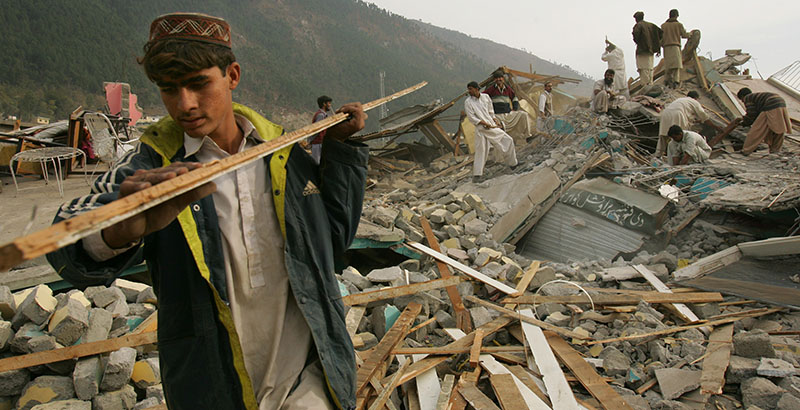
Ruins of buildings in a street in central Muzaffarabad, Pakistan, destroyed by the 2005 earthquake.
The Heart of the Heartbreak: Pakistani People’s Response
In the shadowed valleys of Muzaffarabad, Bagh, and Neelum Valley, the earthquake’s roar gave way to an eerie silence, broken only by cries echoing off fractured cliffs. For the people of Pakistan-administered Kashmir and the North-West Frontier Province (now Khyber Pakhtunkhwa), the immediate aftermath was a tapestry of raw grief and unyielding resolve. Families, clans, and neighbors—bound by the tight-knit fabric of mountain life—mobilized with whatever tools fate left them: bare hands, shovels scavenged from farms, and an unbreakable will to reclaim their kin from the debris. In Bagh, where over 5,000 perished, locals formed human chains to clear blocked paths, sharing meager rations of tea and bread amid the chill of early winter.
This communal spirit, rooted in Pashtunwali codes of hospitality and mutual aid, shone brightest in the face of isolation. Mosques, transformed into impromptu command centers, coordinated searches using megaphones and lanterns, while women in Neelum Valley wove temporary shelters from salvaged tarps, cradling orphaned children as their own. Yet, shock rippled deeper than the fault lines. The quake claimed an entire generation: over 17,000 schoolchildren perished when unreinforced concrete classrooms crumbled like sandcastles, leaving parents to dig through nightmarish piles of twisted rebar and textbooks. Psychological wounds festered—survivors haunted by “earthquake dreams,” as one elder in Muzaffarabad described the recurring tremors in their sleep.
Heroism emerged from the ordinary. In Balakot, a teacher named Aminah Khan clawed through rubble for hours, pulling classmates from the wreckage of her school, her hands bloodied but unyielding. “We didn’t wait for machines,” she reflected years later. “Our grief fueled us; in our sorrow, we found our strength.” Such tales, whispered around evening fires, underscored a profound unity, even as frustrations mounted over government delays in reaching remote outposts. Initial critiques from locals highlighted the military’s focus on urban centers, leaving highland villages like those in Neelum to fend for themselves for days. For women and minorities—often overlooked in aid distribution—the disaster amplified vulnerabilities, with widows heading households amid scarce resources and cultural taboos on seeking help.
These stories of endurance were not mere survival; they were acts of defiance against oblivion. As one poet from Bagh penned in the quake’s shadow: “From cracked earth, we rise—not unbroken, but unbowed.” This local heartbeat, pulsing with both pain and purpose, set the stage for a global embrace, reminding the world that humanity’s truest measure lies in its response to rupture.
A World United in Aid: Global Solidarity and Response
As news of the devastation pierced global headlines, an extraordinary wave of solidarity surged toward the Himalayas. Within hours, pledges poured in from over 50 nations and organizations, totaling an unprecedented $6.5 billion for relief and reconstruction—far exceeding initial appeals. Saudi Arabia led with $573 million, followed by the U.S. at $510 million, the EU’s $130 million contribution, China’s $326 million, and Turkey’s swift $100 million package, reflecting deep cultural and fraternal ties. This outpouring wasn’t just financial; it was a lifeline, airlifting essentials to valleys where roads lay entombed in landslides.
At the helm stood the United Nations’ Office for the Coordination of Humanitarian Affairs (OCHA), orchestrating a symphony of response amid chaos. OCHA’s situation reports mapped needs with precision, deploying clusters for shelter, health, and logistics that treated over 100,000 in field hospitals within weeks. The International Red Cross and Red Crescent Movement mobilized 1,500 volunteers, distributing 1.2 million tents and blankets, their red-vested teams navigating treacherous terrain on foot when helicopters faltered. In Muzaffarabad’s makeshift camps, aid workers from Japan and Norway shared stories over shared meals, fostering cultural bridges—volunteers learning basic Urdu phrases like “Khairiyat?” (Are you safe?) to build trust with shell-shocked families.
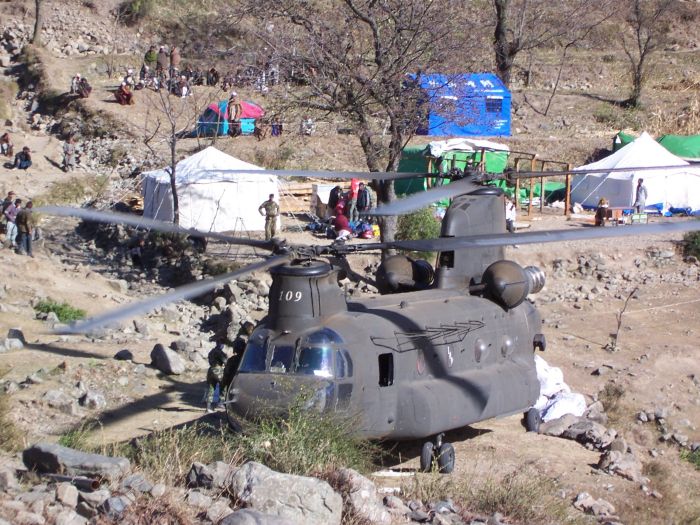
Celebrity voices amplified the call. Imran Khan, then a cricket icon turned philanthropist, launched the “Earthquake Appeal,” rallying $4 million through high-profile galas and matching donations, his plea—”This is our moment to show the world our compassion”—resonating across Pakistan and beyond. International stars like Angelina Jolie visited camps, drawing media spotlights that boosted contributions by 30% in the first month. Logistical triumphs included U.S. Chinook helicopters airlifting 500 tons of supplies daily to remote Neelum Valley, though challenges abounded: winter’s approach forced rushed distributions, and cultural sensitivities—such as gender-segregated aid for women—demanded adaptive strategies.
Geopolitically, the quake cracked open a rare fissure of hope along the Line of Control (LoC), the heavily militarized divide between India and Pakistan. India offered $25 million in aid, including tents and medicines, while Pakistan reciprocated with shipments across five newly opened crossings. At Kaman Post, soldiers from both sides exchanged crates under minefield warning signs, a poignant tableau of enmity paused for humanity. “For a moment, we forgot the rifles,” recalled an Indian porter, carrying relief under the bridge’s shadow. Though tensions simmered—crossings closed after months—this brief thaw humanized the divide, proving disasters can forge paths where diplomacy falters.
In the end, this global mosaic didn’t just deliver aid; it wove a narrative of shared vulnerability, turning strangers into saviors and rivals into reluctant allies. As one OCHA coordinator noted, “The earthquake shook more than the ground—it shook our divisions.”
Rebuilding from the Rubble: Progress and Persistent Challenges
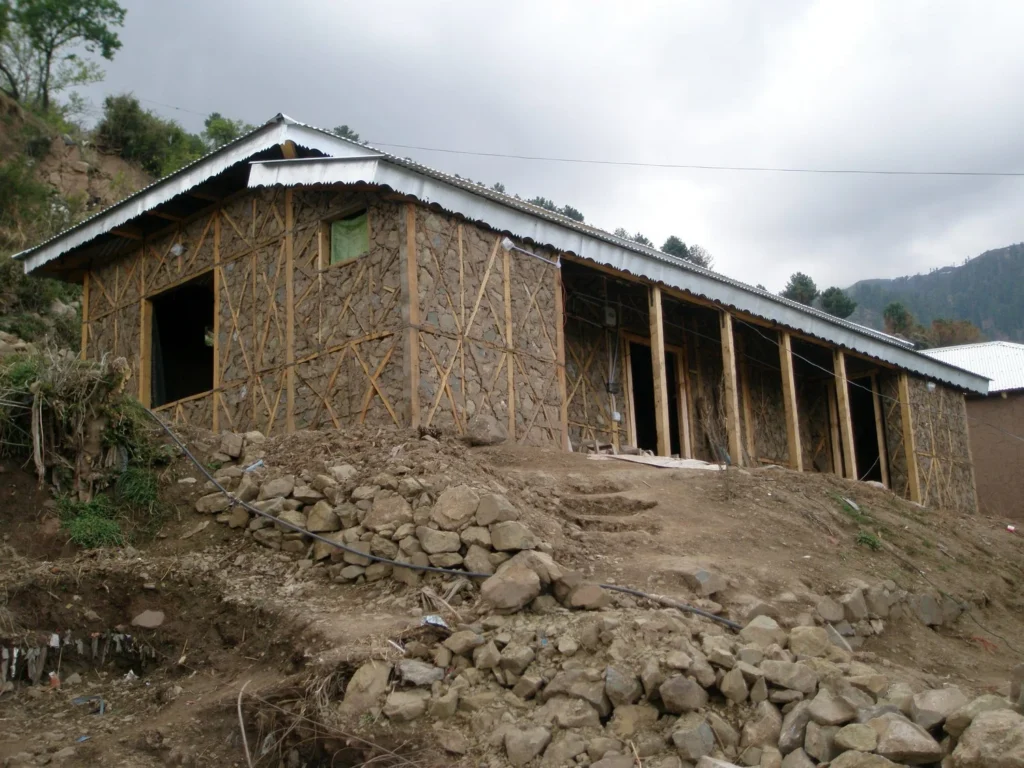
From the ashen remnants of 2005, Pakistan embarked on a Herculean rebuild, spearheaded by the Earthquake Reconstruction and Rehabilitation Authority (ERRA), established just 16 days after the quake. With $3.5 billion in donor funds funneled through ERRA’s framework, the effort targeted quake-resistant infrastructure: over 600,000 homes redesigned with flexible bamboo reinforcements and concrete frames, 30,000 schools reconstructed by 2010, and hundreds of kilometers of roads and hospitals fortified against future tremors. In urban hubs like Muzaffarabad, modern facilities emerged—such as the gleaming Combined Military Hospital, equipped with seismic dampers that now serve thousands annually. Remittances from the diaspora, swelling to $1 billion post-quake, injected economic vitality, spurring local markets and job creation in construction.
Yet, triumphs were uneven. By 2015, 90% of housing stood restored, but seismic retrofitting lagged: audits revealed 40% of pre-2005 structures in rural areas remained vulnerable, their owners unable to afford upgrades. Corruption scandals eroded trust—ERRA officials siphoned $100 million in funds, delaying projects and fueling public outrage. Rural recovery faltered most starkly: in Neelum Valley’s isolated hamlets, schools like those in Battagram still hold classes under open skies, 20 years on, as reconstruction budgets prioritized cities. Environmental tolls compounded woes—deforestation for timber accelerated landslides, with 20% more erosion reported in quake zones by 2020.
To visualize the arc, consider this timeline of milestones:
| Year | Milestone | Key Achievement/Challenge |
|---|---|---|
| 2005 | ERRA Formation | Immediate aid coordination; $2.5B initial pledges secured. |
| 2007 | NDMA Established | Shift to long-term resilience; first quake-resistant building codes adopted. |
| 2010 | Schools Rebuilt | 30,000 facilities completed; education enrollment rebounds 80%. |
| 2015 | Housing Milestone | 90% homes restored; corruption probes launch, recovering $50M. |
| 2020 | Rural Gaps Exposed | 1,800 schools pending; COVID exacerbates delays. |
| 2025 | 20th Anniversary Review | 70% infrastructure resilient; calls for $500M rural retrofit fund. |
This table underscores a before-and-after: pre-quake fragility versus post-2005 gains, yet persistent inequities linger, particularly for women-led households and ethnic minorities in remote areas, who face higher displacement rates. As a 2025 Dawn report notes, “We’ve built back, but not always better—equity remains our unfinished chapter.” Still, stories like Aminah’s—now a teacher in a retrofitted school—offer hope: “The rubble taught us to build not just walls, but futures.”
Analysis: Are We Better Prepared in 2025? Lessons Learned and Lingering Gap
Two decades on, Pakistan stands on firmer ground, yet the Himalayas whisper warnings of fragility. The 2005 quake exposed stark vulnerabilities: lax building codes that turned homes into tombs, absent early-warning systems, and response times stretching days in rural isolation. Today, the National Disaster Management Authority (NDMA), born from that tragedy in 2007, has woven a more robust safety net. Upgraded seismic monitoring networks, integrated with USGS data, now detect tremors in seconds, triggering alerts via SMS and apps to 80% of at-risk populations. Community drills in schools—mandatory since 2015—have slashed simulated evacuation times by 25%, with 2024’s national exercise involving 10 million participants. New builds adhere to Eurocode 8 standards, emphasizing ductile designs that absorb shakes rather than shatter.
International partnerships amplify these strides. World Bank resilience programs have retrofitted 50,000 structures since 2015, while AI-driven apps like NDMA’s “QuakeSafe” predict landslide risks, integrating climate data to counter exacerbated threats from erratic monsoons. USGS experts hail a 20-30% improvement in response efficacy, crediting hybrid tech-human systems: “Pakistan’s leap from reactive to proactive is a model for seismic nations,” notes a 2025 report. Urban sprawl in zones like Islamabad has been curbed by zoning laws, reducing exposure for 2 million residents.
Gaps persist, however. Rural early-warning coverage hovers at 60%, leaving Neelum’s highlands blind to precursors. Climate change amplifies risks—warmer soils trigger more slides, as seen in 2024’s Balakot tremors—and funding shortfalls ($200 million annually needed) hinder full retrofits. Pakistani seismologists urge investment: “We’ve learned, but complacency could cost another generation.”
Balanced optimism prevails: Pakistan is more resilient, its people schooled in vigilance. Proactive steps—public education campaigns, sustainable planning—can bridge the chasm. As the 20th anniversary reflections affirm, the quake’s legacy is not ruin, but rebirth: a nation tempered, ready to stand when the earth stirs again.
As the Himalayas rumble on, what will you do to build a safer tomorrow—advocate for resilient communities, support global aid, or prepare your own home?



Helpful post on shipping and distribution planning. As a company
providing trucking and distribution services in Toronto, we know how important dependable scheduling, clear communication and practical shipping support are for keeping freight moving efficiently.