(By Khalid Masood)
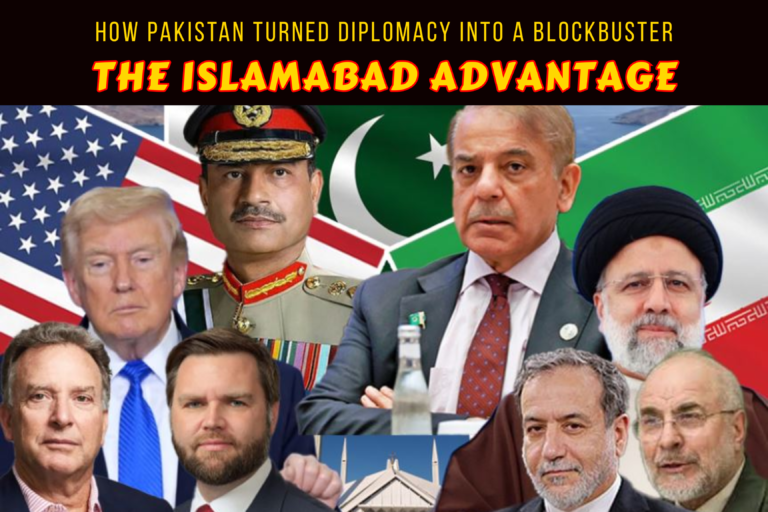
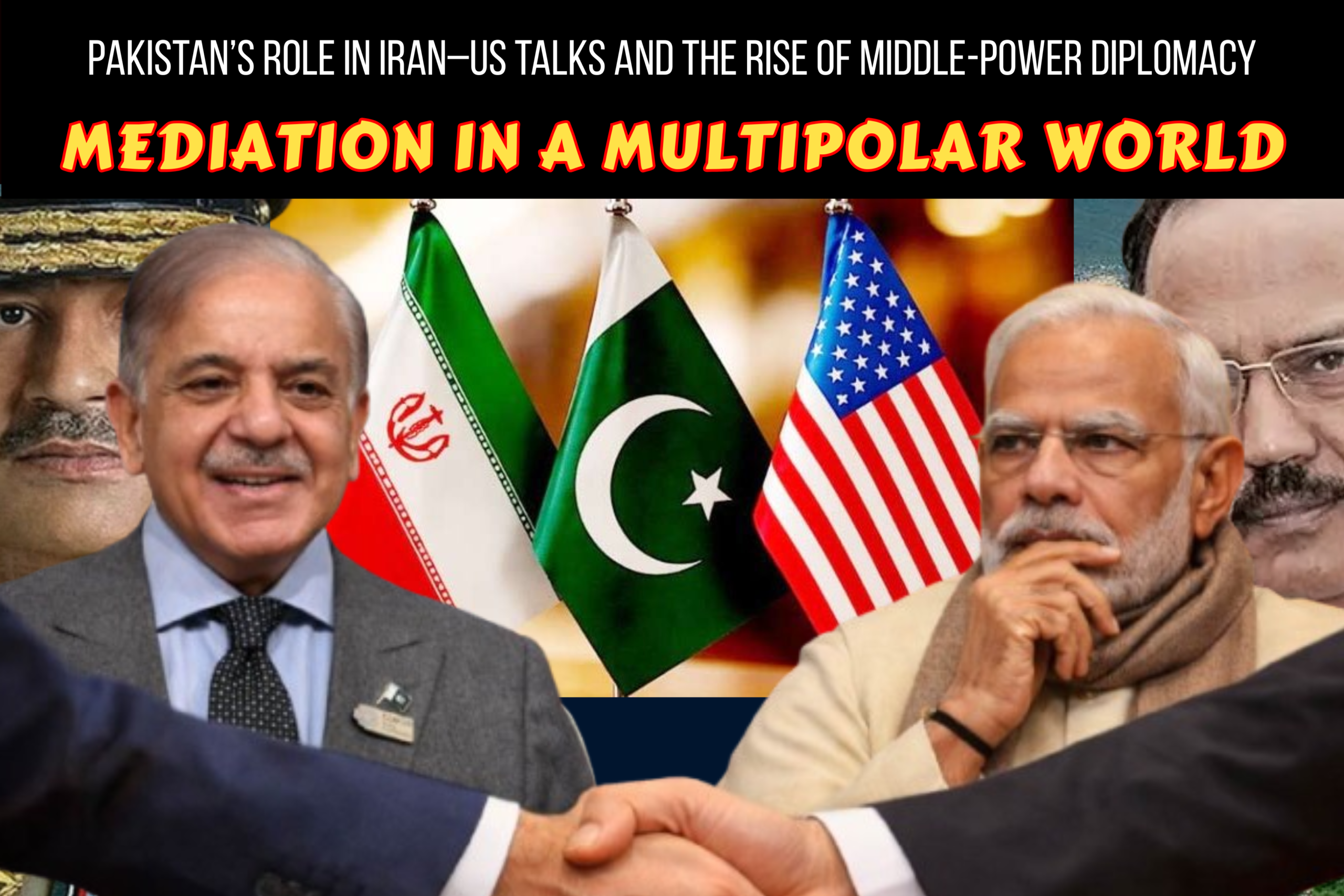
In the absence of functional great-power consensus, the architecture of international crisis management is undergoing a quiet but profound transformation. Today’s diplomatic landscape is increasingly shaped not by hegemonic imposition, but by calibrated facilitation. Nowhere is this shift more visible than in the emerging backchannel between Washington and Tehran, where Islamabad has stepped into a delicate mediating role. Iran’s recent transmission of a negotiation framework through Pakistani diplomatic corridors, met with measured but open engagement from the Trump administration, underscores a broader reality: in a multipolar order marked by strategic fragmentation, middle powers are no longer peripheral actors. They are the scaffolding holding diplomatic processes together.
This is not merely a bilateral de-escalation exercise. It is a case study in how context-specific, process-driven mediation operates when traditional institutional channels are paralyzed. Understanding Pakistan’s role requires examining the structural drivers of middle-power diplomacy, the geo-economic stakes of sustained dialogue, and the inherent limits of facilitation in an era of deep strategic distrust.
1. The Diplomatic Crossroads of 2026
The Iran–US relationship has been defined by cyclical confrontation for over four decades. The collapse of the 2015 nuclear framework, the escalation of sanctions, maritime incidents in the Gulf, and the shadow war across Iraq, Syria, and Lebanon have entrenched mutual suspicion. By 2026, both capitals face domestic and strategic constraints that make direct, comprehensive negotiations politically untenable. Washington navigates congressional skepticism, alliance coordination demands, and domestic energy-security priorities. Tehran contends with economic pressure, regional proxy liabilities, and internal debates over strategic autonomy versus diplomatic engagement.
Enter Pakistan. Sharing a 900-kilometer border with Iran, maintaining calibrated security and trade ties with Gulf monarchies, and operating within a complex defence and economic partnership with the United States, Islamabad occupies a rare diplomatic intersection. Historically, Pakistan has served as a discreet conduit in South Asian and Middle Eastern crises. Today, its role reflects a deliberate adaptation to a multipolar reality: where great powers struggle to align on principles, middle powers can align on processes.
“When strategic rivalry blocks institutional diplomacy, the only viable off-ramps are often built by actors who don’t carry the baggage of the conflict. Pakistan’s geographic proximity, bilateral channels with both capitals, and institutional experience in backchannel communication make it a structurally logical facilitator, even if it lacks coercive leverage.”
— Dr. Aris Roussinos, Senior Fellow, Centre for Strategic & International Dialogue
The shift from alliance-based diplomacy to transactional facilitation is not new, but its scale is. The 2020s have witnessed a proliferation of middle-power mediation: Qatar’s US–Taliban engagements, Turkey’s Black Sea grain corridor and Lebanon de-escalation efforts, Norway’s Arctic and Middle East confidence-building initiatives, and Brazil’s Ukraine peace overtures. What unites them is a shared methodology: prioritizing access over leverage, process over permanence, and de-escalation over transformation.
2. The Architecture of Middle-Power Mediation
Middle-power diplomacy in 2026 operates on three foundational principles:
- Proximity Over Power: Facilitators leverage geographic, cultural, or institutional proximity to maintain communication channels that great powers cannot sustain publicly.
- Phased Confidence-Building: Rather than pursuing comprehensive treaties, middle powers design incremental, verifiable steps that reduce immediate risks while preserving negotiating space.
- Neutral Process Management: Successful facilitators avoid public ultimatums, maintain strict confidentiality, and separate humanitarian or operational agreements from ideological disputes.
| Mediator | Conflict Context | Primary Methodology | Key Outcome/Limitation |
|---|---|---|---|
| Qatar | US–Taliban negotiations (2018–2021) | Backchannel messaging, prisoner swaps, Doha as neutral venue | Enabled withdrawal framework; long-term political settlement remains unresolved |
| Turkey | Black Sea Grain Initiative (2022–2023) | Maritime security coordination, UN/FAO partnership, phased renewals | Stabilized global food prices; collapsed amid Russian withdrawal and verification disputes |
| Norway | Middle East confidence-building (various) | Track II diplomacy, humanitarian corridors, IAEA technical facilitation | Sustained low-intensity dialogue; limited by regional spoiler dynamics |
| Pakistan (2026) | Iran–US strategic de-escalation | Secretariat-level messaging, phased confidence measures, regional stability framing | Early-stage facilitation; success hinges on verification mechanisms & domestic political cover |
Table 1: Comparative Middle-Power Mediation Frameworks (2018–2026)
The table illustrates a consistent pattern: middle powers excel at crisis management and channel preservation, but they rarely possess the structural authority to enforce compliance or resolve underlying strategic disputes. Their value lies in preventing miscalculation, not in delivering peace.
3. Pakistan’s Strategic Calculus & Operational Mechanics
Islamabad’s mediation is neither altruistic nor incidental. It is driven by intersecting security, economic, and diplomatic imperatives that align with national interest while serving regional stability.
Security Imperatives
A stable western border is a foundational priority for Pakistan. Escalation between Iran and the US historically spills over into Balochistan and Sistan-Baluchestan, complicating counterterrorism operations, triggering militant mobilization, and straining border management. Coordinated intelligence sharing, joint patrol mechanisms, and reduced cross-border tensions directly enhance Pakistan’s internal security architecture.
Economic Necessities
Pakistan’s macroeconomic trajectory in 2026 remains tightly linked to regional stability. Gulf remittances, IMF-backed structural adjustments, and energy import logistics all depend on predictable maritime routes and stable neighbor relations. A Hormuz crisis would spike shipping insurance premiums, disrupt LNG supply chains, and accelerate capital flight. De-escalation is, quite literally, an economic survival strategy.
Diplomatic Positioning
Acting as a reliable intermediary elevates Islamabad’s standing across multiple strategic theaters. It reinforces ties with Washington without alienating Tehran, signals strategic autonomy to Beijing and Moscow, and demonstrates institutional capacity to Gulf partners who view Iran through divergent security lenses. In a multipolar order, diplomatic relevance is often measured by utility, not alignment.
| Negotiation Variable | Pakistan’s Facilitation Role | Structural Constraint | Mitigation Pathway |
|---|---|---|---|
| Nuclear Transparency | Relay technical proposals, coordinate IAEA liaison framing | US demands exceed Iran’s political tolerance | Phased data-sharing, limited scope monitoring |
| Maritime Security | Propose joint communication hotlines, coordinate Gulf insurance frameworks | Asymmetric naval capabilities, proxy naval incidents | Confidence-building drills, third-party observation |
| Sanctions Relief | Convey economic sequencing proposals, align with GCC trade corridors | Congressional oversight, enforcement verification | Targeted humanitarian carve-outs, escrow mechanisms |
| Domestic Political Cover | Maintain confidentiality, separate operational from ideological framing | Hardline factions in both capitals, media scrutiny | Track II diplomacy, expert-led working groups |
Table 2: Key Variables in Pakistan-Facilitated Iran–US Dialogue (2026)
“Pakistan isn’t trying to broker a grand bargain. It’s trying to build a diplomatic airlock. In high-tension environments, even a functional communication channel is a strategic asset. The goal isn’t resolution; it’s predictability.”
— Ambassador (Ret.) Tariq Fatemi, Former Foreign Policy Advisor
4. Geo-Economic & Strategic Ripple Effects
The stakes of sustained dialogue extend far beyond bilateral relations. Successful facilitation would trigger cascading effects across regional and global systems.
Energy & Maritime Security
The Strait of Hormuz handles approximately 20% of global petroleum transit. Even minor escalations trigger volatility in crude futures, LNG contracts, and maritime insurance markets. A functional crisis-communication framework, relayed through a neutral third party, would stabilize freight rates, reduce hedging costs for Asian and European importers, and encourage infrastructure investment along the Iran–Pakistan–Gulf axis.
Trade Corridor Realignment
De-escalation would accelerate integration of the International North–South Transport Corridor (INSTC), enhance CPEC’s western linkages, and encourage Gulf sovereign wealth funds to diversify into South Asian manufacturing and logistics. Conversely, sustained tension would reinforce “friend-shoring” policies, accelerate decoupling in critical sectors, and push regional actors toward alternative financial mechanisms outside Western-dominated systems.
Multipolar Alignment Dynamics
A successfully mediated dialogue would signal to BRICS+, SCO, and non-aligned blocs that pragmatic diplomacy can operate independently of great-power consensus. It would also test the limits of transactional diplomacy: whether middle powers can sustain engagement when strategic rivals return to containment postures.
“Markets don’t price ideology; they price predictability. Even a fragile communication channel between Washington and Tehran reduces risk premiums across energy, shipping, and emerging market debt. That’s the hidden geo-economic dividend of middle-power mediation.”
— Dr. Elena Voss, Senior Geoeconomics Analyst, Global Trade & Risk Observatory
5. Structural Constraints & the Limits of Facilitation
Despite its utility, Pakistan’s mediation faces inherent limitations that cannot be overcome through diplomatic ingenuity alone.
Verification Deficits: Without multilateral monitoring frameworks or institutionalized compliance mechanisms, ad hoc agreements remain vulnerable to non-compliance allegations, domestic politicization, and spoiler exploitation.
Domestic Political Friction: Islamabad must navigate military-civilian coordination, nationalist sentiment, and public skepticism toward Western-aligned diplomacy. Similarly, Washington faces congressional oversight, alliance coordination pressures, and electoral-cycle diplomacy. Tehran contends with hardline factions, revolutionary institutional prerogatives, and regional proxy liabilities.
Regional Spoilers: Hardline elements in Iran, opposition voices in US legislative bodies, or rival Gulf states could undermine incremental progress for domestic or strategic gain. Mediation cannot neutralize spoilers; it can only outmaneuver them through confidentiality and phased sequencing.
Structural Distrust: Decades of sanctions, covert operations, proxy conflicts, and ideological divergence cannot be resolved through facilitation. Middle-power mediation can manage escalation and preserve channels, but it rarely transforms strategic relationships without great-power political will.
“Facilitation is damage control, not architecture. Pakistan can keep the door ajar, but only Washington and Tehran can decide whether to walk through it. The risk isn’t failure; it’s mistaking process for progress.”
— Prof. Nabil Al-Tikriti, Director, Institute for Conflict & Diplomatic Studies
6. Conclusion: The New Diplomacy in a Fragmented World
Pakistan’s role in the Iran–US dialogue reflects a broader realignment in how international crises are managed. In a multipolar order where great-power competition often paralyzes formal institutions, middle powers are stepping into the diplomatic vacuum. They offer pragmatic, context-sensitive alternatives to high-stakes confrontation, prioritizing communication over consensus, de-escalation over resolution, and process over permanence.
The success of Pakistan’s initiative will not be measured by immediate breakthroughs or comprehensive treaties. It will be measured by its ability to sustain dialogue amid structural distrust, prevent miscalculation in contested zones, and lay the groundwork for future negotiation cycles. In today’s fragmented international order, that may be the most realistic form of diplomacy available.
As strategic competition intensifies and institutional gridlock persists, the architecture of global conflict management will increasingly rely on actors who understand that in multipolarity, influence is not always about power. Sometimes, it’s about presence. Pakistan’s mediation effort is a reminder that in diplomacy, showing up consistently, quietly, and competently may be the most consequential strategy of all.