(By Khalid Masood)
26 April 2026
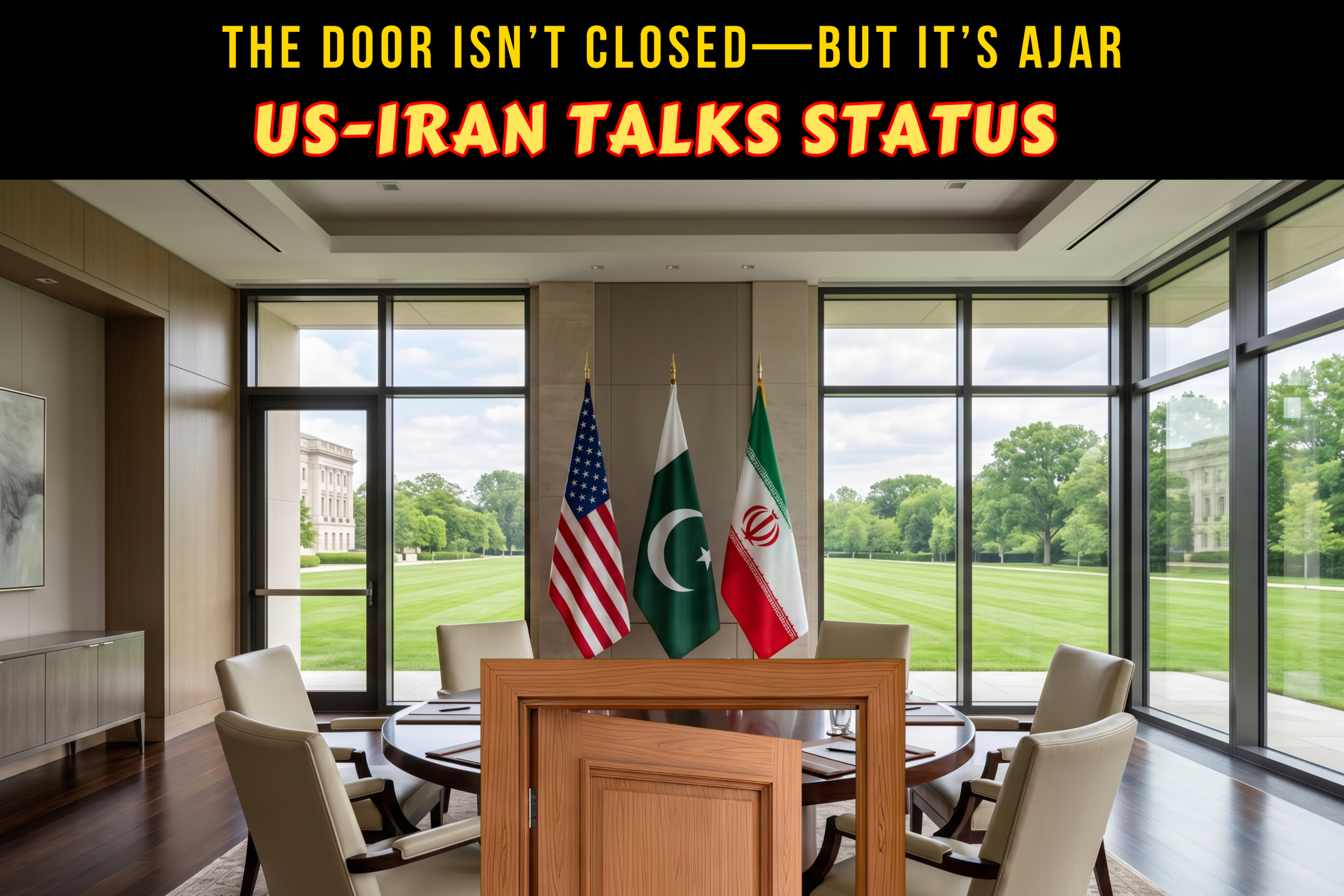
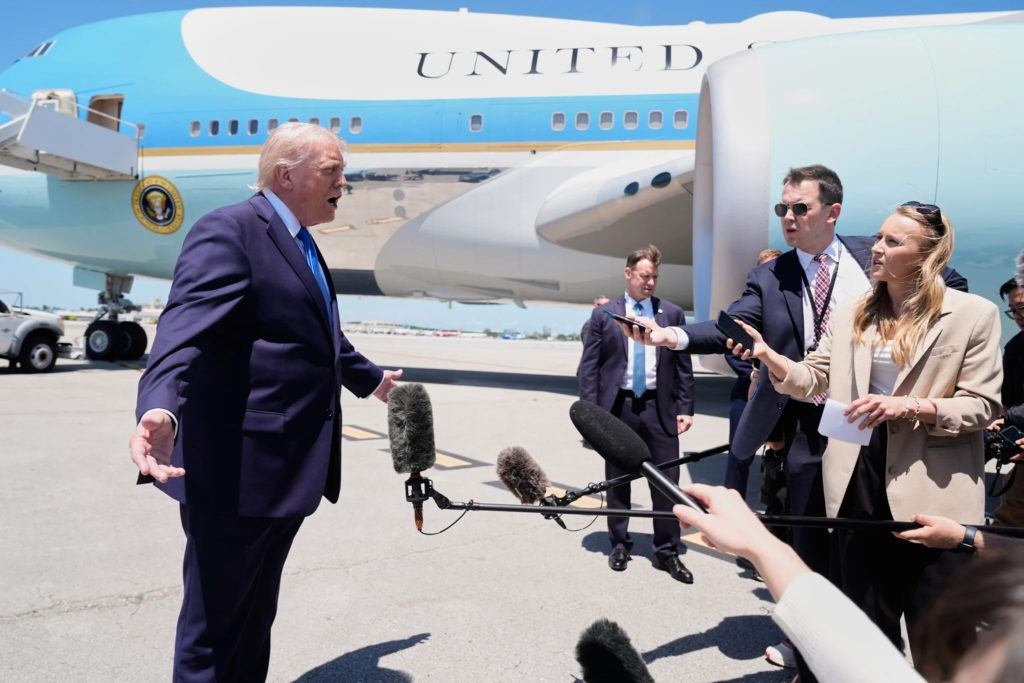
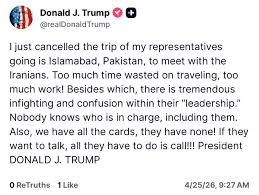
Iran’s Foreign Minister Abbas Araghchi departed Islamabad on the evening of 25 April 2026 without a joint statement, without a breakthrough, and without a confirmed date to return. Within hours, President Donald Trump announced the cancellation of a planned mission by US envoys Steve Witkoff and Jared Kushner to the Pakistani capital, declaring: “We have all the cards. They can call us anytime they want, but you’re not going to be making any more 18-hour flights to sit around talking about nothing.”
The abrupt sequence marks the most significant diplomatic setback in the latest round of US-Iran talks Islamabad 2026. Yet, despite the optics of collapse, key signals suggest the process is paused rather than terminated. Iranian state media report Araghchi may revisit Islamabad after stops in Oman and Russia. Pakistani leadership continues to affirm its role as facilitator. Neither Washington nor Tehran has announced a return to maximum pressure or military escalation.
This is not the end of diplomacy. But it is a stress test—for the talks themselves, for Pakistan’s mediation model, and for the fragile calculus of de-escalation in one of the world’s most volatile regions.
I. The Islamabad Timeline: What Unfolded
24–25 April: Quiet Consultations
Araghchi’s two-day visit included meetings with Prime Minister Shehbaz Sharif, Foreign Minister Ishaq Dar, and Army Chief Field Marshal Asim Munir. Pakistan, which maintains working relationships with both Washington and Tehran, positioned itself as a neutral venue for indirect dialogue. No joint press conference was held. No agreement was announced.
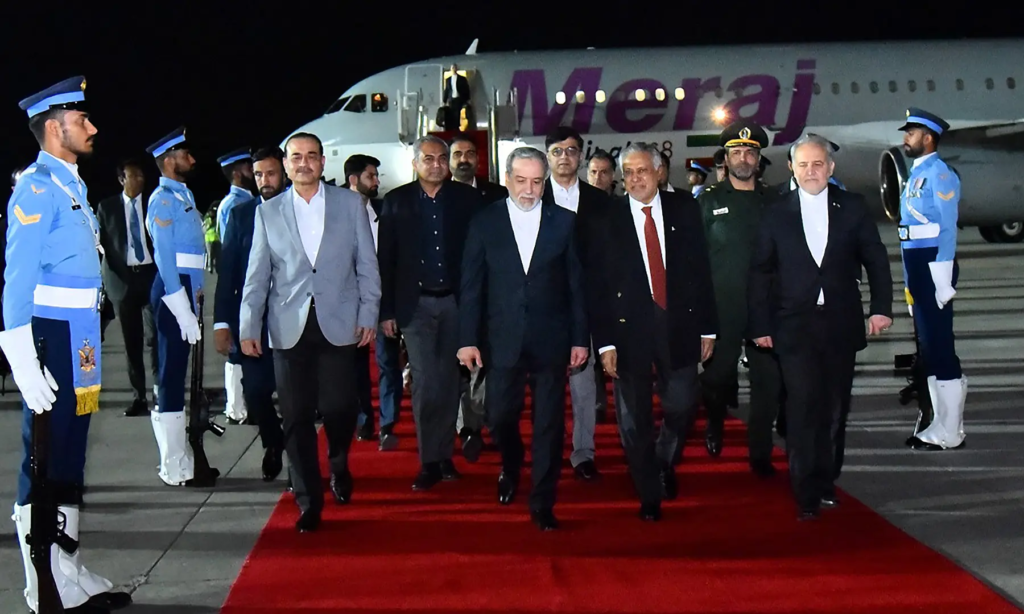
25 April Evening: The Departure
Araghchi left Islamabad earlier than some observers expected. Iran’s IRNA news agency reported that part of his delegation returned to Tehran for “consultations”, whilst the Foreign Minister continued onward to Muscat. Pakistani officials expressed regret but emphasised that “dialogue remains the only viable path forward.”
25 April Night / 26 April: US Response
President Trump, speaking to Fox News, framed the cancellation as a strategic choice rather than a reactive one. When asked whether this signalled a return to hostilities, he replied: “No. It doesn’t mean that. We haven’t thought about it yet.” The messaging was deliberate: project strength, avoid escalation, but refuse to invest diplomatic capital without visible Iranian concessions.
II. Why Talks Stalled: The Core Disagreements
The US Position: “Final and Best Offer”
According to Vice President JD Vance’s remarks following the 11–12 April Islamabad round, Washington presented what it termed its “final and best offer.” The core demand: a long-term, verifiable Iranian commitment to forgo nuclear weapons capability. Sanctions relief would be phased, conditional on compliance, and reversible.
The Iranian Position: “Excessive Demands”
Iranian officials described US positions as “excessive” and inconsistent with prior frameworks. Tehran seeks comprehensive sanctions relief upfront, recognition of its right to peaceful enrichment, and guarantees against future US withdrawal—a direct reference to the 2018 JCPOA collapse. Araghchi later stated he had “yet to see if the US is truly serious about diplomacy.”
The Trust Deficit
At its heart, this is not merely a negotiation over technical provisions—it is a crisis of credibility. Washington doubts Iran’s long-term intentions; Tehran doubts US political continuity. Both sides face domestic constraints: Trump’s base rewards toughness; Iran’s hardliners view compromise as surrender.
III. Pakistan’s Mediation: A Test Case in Asymmetric Diplomacy
Why Islamabad?
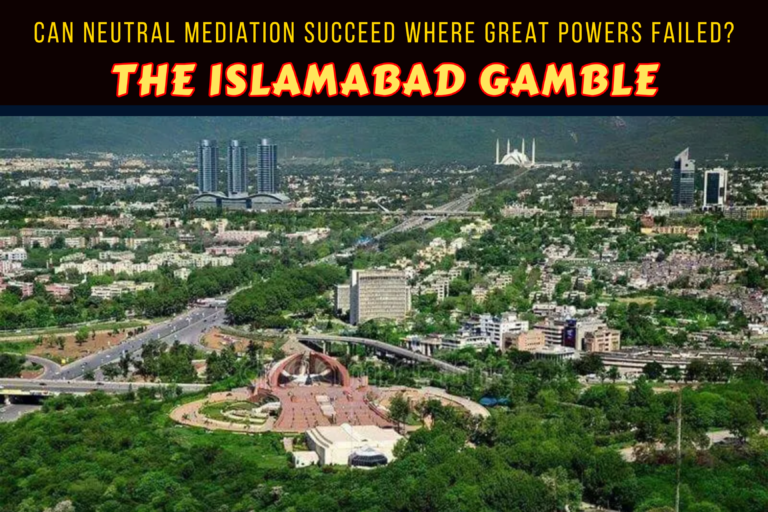
Pakistan offers rare diplomatic geometry: a US security partner with deep economic ties to Washington, and a neighbour of Iran with shared border security concerns and energy interests. Army Chief Munir’s personal engagement signalled high-level commitment. For both Washington and Tehran, Islamabad provided a face-saving venue for indirect contact without formal recognition.
What Pakistan Offered
- A neutral, secure location for shuttle diplomacy
- Informal messaging channels to reduce miscommunication
- Potential economic incentives (trade corridors, energy transit) to reward de-escalation
The Limits of Third-Party Facilitation
Mediators can create space for dialogue, but they cannot manufacture political will. Pakistan’s leverage is real but bounded: it depends on IMF support (requiring US goodwill), manages a volatile western border with Iran, and seeks regional stability for its own economic recovery. As one regional analyst noted: “When mediators outpace political will, the process stalls. Islamabad can open doors, but only Washington and Tehran can walk through them.”
IV. Trump’s “All the Cards” Strategy: Leverage or Bluff?
The Leverage Play
The US holds tangible advantages: military superiority in the region, control over global financial systems, and alliances with Gulf states. The Trump administration’s strategy appears to be coercive diplomacy: apply maximum pressure, wait for Iranian economic pain to translate into political concession.
The Risks of Overreach
History offers caution. The 2019–2020 maximum pressure campaign did not bring Iran to the table on US terms; instead, Tehran accelerated uranium enrichment and expanded regional proxy activity. Pride matters in diplomacy. A posture of “they can call us” may win applause domestically but can eliminate off-ramps for counterparts who require face-saving pathways.
The 2026 Difference
What is new this time? Regional dynamics have shifted: Gulf states pursue détente with Iran; Russia and China offer Tehran alternative partnerships; global energy markets remain fragile. The US may hold “all the cards”, but the table itself has changed.
V. Iran’s Next Moves: Oman, Russia, and the Regional Consultation Tour
Oman: The Traditional Backchannel
Muscat has long served as a discreet conduit between Tehran and Washington. Araghchi’s stop there signals continuity with past diplomatic practice. Expect quiet messaging: testing US flexibility, signalling Iranian red lines, and exploring whether sequencing compromises might break the deadlock.
Russia: Strategic Signalling
A visit to Moscow serves multiple purposes: reinforcing strategic alignment, exploring economic alternatives to Western sanctions, and demonstrating that Iran has options beyond US-led diplomacy. It is both a practical consultation and a signal to Washington.
The Return to Islamabad?
IRNA’s report that Araghchi may revisit Pakistan after Oman and Russia is significant. If true, it suggests Tehran views the Islamabad channel as still viable—but only if Washington adjusts its posture. The question is not whether talks can resume, but under what conditions.
VI. Escalation Risks: What to Watch
Military Flashpoints
- The US 5th Fleet maintains a robust presence in the Arabian Sea and Persian Gulf
- Iran’s Islamic Revolutionary Guard Corps (IRGC) continues naval exercises near the Strait of Hormuz, through which approximately 20% of global oil passes
- Miscalculation risk: a minor incident—a seized vessel, a drone encounter—could escalate faster than diplomacy can respond
Proxy Dynamics
Whilst not directly part of the Islamabad talks, regional militia activity (in Iraq, Yemen, Lebanon) remains a wildcard. Any major attack attributed to Iranian-backed groups could harden US positions; any US strike could trigger Iranian retaliation.
Economic Signals
- Brent crude prices: a sustained move above $95/barrel would signal market anxiety
- Iranian rial volatility: sharp depreciation could increase pressure on Tehran to compromise
- Sanctions enforcement: increased interdictions or secondary sanctions would indicate escalation
VII. Scenarios: What Happens Next?
| Scenario | Probability | Key Indicators |
|---|---|---|
| Diplomatic Thaw | 25% | Araghchi returns to Islamabad with revised proposal; US signals flexibility on sequencing; Pakistan brokers interim confidence-building measure |
| Prolonged Stalemate | 50% | Talks remain suspended for weeks/months; both sides maintain pressure strategies; low-level incidents but no major escalation; diplomacy continues via backchannels |
| Rapid Escalation | 25% | Military incident triggers crisis; US responds with limited strikes; Iran accelerates nuclear activities or threatens Strait closure |
Most Likely Path: A prolonged stalemate with intermittent backchannel contact. Neither side wants war, but neither is ready to concede core demands. The Islamabad channel remains open—but idle.
VIII. Conclusion: The Door, Still Ajar
The collapse of the Islamabad talks is a setback, not a termination. Both the United States and Iran retain incentives to avoid open conflict: economic costs, regional instability, domestic political risks. Pakistan’s mediation has not failed; it has simply reached the limits of what facilitation alone can achieve.
The critical insight: diplomacy under pressure is not linear. Setbacks are features, not bugs. The question is not whether talks collapsed, but whether either side can adjust its posture without appearing to retreat.
What to Watch in the Next 72 Hours
- Araghchi’s statements from Muscat: Does he signal flexibility or entrenchment?
- US naval movements: Any repositioning of carrier groups or amphibious assets?
- Oil market reaction: Are traders pricing in higher Hormuz risk?
- Pakistani Foreign Office statements: Will Islamabad propose a new format or timeline?
- IAEA reporting: Any changes in Iranian enrichment levels or inspector access?
The door to diplomacy is not closed. But it is ajar—and wind, timing, and political will will determine whether it swings open or shuts tight.