(By Khalid Masood)
As tactical pauses multiply across global conflict zones, diplomats and strategic analysts are confronting a persistent structural dilemma: how to convert temporary silences of the guns into enduring political settlements.
I. Introduction
The global conflict landscape of 2025–2026 has been characterised not by decisive victories, but by an accelerating proliferation of localised ceasefires, humanitarian pauses, and tactical de-escalations. From Gaza to Sudan, from eastern Ukraine to the Sahel—and now, most consequentially, in the escalating confrontation between the United States and Iran—belligerents and mediators alike have embraced short-term truces as crisis management tools. Yet a recurring pattern has emerged: these agreements frequently stabilise frontlines temporarily, only to unravel when political endgames remain unaddressed.
Short-term truces are diplomatically necessary. They alleviate humanitarian suffering, create space for prisoner exchanges, and reduce the risk of uncontrolled escalation. But as practitioners of statecraft have long recognised, a ceasefire is a process, not a destination. Its durability depends upon intentional architectural design: inclusive negotiation tracks, credible verification mechanisms, and a sequenced pathway from negative peace (the absence of direct violence) to positive peace (institutionalised political and economic stability). The pressing question for contemporary diplomacy is no longer whether tactical pauses can be negotiated, but whether they can be systematically linked to durable settlement frameworks.
II. Defining the Architecture: What Makes a Ceasefire “Fragile”?
Not all truces are created equal. Diplomatic literature and conflict monitoring frameworks consistently distinguish between agreements based on scope, enforcement capacity, and political linkage. Fragility typically emerges when a ceasefire lacks institutional scaffolding to manage spoilers, address root grievances, or transition into governance arrangements.
| Agreement Type | Primary Objective | Typical Duration | Enforcement Mechanism | Link to Political Process |
|---|---|---|---|---|
| Humanitarian Pause | Civilian evacuation, aid delivery | Days to weeks | Ad hoc coordination, limited monitoring | Rarely explicit |
| Tactical Ceasefire | Frontline stabilisation, force repositioning | Weeks to months | Bilateral liaison cells, OSINT verification | Implicit or absent |
| Comprehensive Armistice | Cessation of all hostilities, demarcation of zones | Months to years | UN/regional monitoring, joint commissions | Structured but often contested |
| Political Framework | Transitional governance, security guarantees, reconstruction | Indefinite (phased implementation) | Hybrid verification, international guarantees, conditional aid | Central and binding |
Table 1: Typology of Ceasefire Agreements and Structural Durability Indicators
As leading conflict analysts observe, ceasefires that succeed in halting violence often fail because they were never designed to resolve the political economy of conflict. When the immediate crisis passes, the underlying drivers remain untouched. Diplomatic architecture must therefore anticipate spoiler behaviour, embed transitional accountability, and align security guarantees with verifiable political milestones.
III. The Current Global Landscape: A Surge in Tactical Truces
The post-2022 conflict environment has witnessed a decisive shift in mediation dynamics. UN-centric frameworks now operate alongside regional and multipolar diplomatic tracks, with Gulf states, Türkiye, the African Union, Pakistan, and emerging middle powers assuming greater brokering roles. This diffusion of mediation has increased the frequency of localised agreements but has also fragmented coherence.
| Driver | Diplomatic Impact | Observed Trend (2024–2026) |
|---|---|---|
| War fatigue & domestic political pressure | Leaders seek de-escalation without conceding strategic positions | Rise in conditional, renewable truces |
| Economic strain & supply chain disruption | High-intensity warfare becomes fiscally unsustainable | Increased use of phased humanitarian corridors |
| Asymmetric & urbanised warfare | Decisive military victory proves elusive | Frontline stabilisation preferred over territorial offensives |
| Humanitarian & legal pressure | Civilian casualty thresholds trigger diplomatic intervention | UN/OCHA-linked pauses tied to aid access metrics |
| Great-power mediation competition | Multiple actors offer parallel tracks, creating ambiguity | Fragmented mandates; competing verification protocols |
Table 2: Structural Drivers Behind the Proliferation of Tactical Truces
Senior European mediation officials note that the proliferation of partial agreements reflects both pragmatic statecraft and institutional overload. When comprehensive frameworks stall, diplomats default to what is immediately achievable. The risk is that achievable becomes permanent, while structural conflict hardens. Verification realities further complicate matters: while satellite imagery, open-source intelligence, and hybrid monitoring missions improve compliance tracking, enforcement remains voluntary and politically contingent.
IV. Case Studies: Truces in Transition (or Stasis)
A comparative examination of four active theatres reveals how architectural differences shape trajectory.
| Conflict Zone | Ceasefire Scope | Key Mediators | Enforcement Structure | Political Endgame Status |
|---|---|---|---|---|
| Gaza / Israel | Phased humanitarian pauses, prisoner/hostage exchanges | US, Qatar, Egypt | Bilateral liaison, limited third-party monitoring | Fragmented; governance reconstruction contested |
| Sudan | Localised frontline stabilisation, humanitarian corridor agreements | AU, IGAD, Arab League | Fragmented SAF-RSF command, limited joint verification | Parallel negotiation tracks; external patronage complicates coherence |
| Ukraine | Tactical de-escalations, grain/port access, prisoner swaps | Türkiye, UN, bilateral channels | OSINT-heavy, incident reporting mechanisms | Absent overarching political roadmap; security guarantees under negotiation |
| US–Iran | Two-week tactical pause; Strait of Hormuz reopening condition | Pakistan, China | Ad hoc liaison; disputed compliance metrics | Negotiations in Islamabad collapsed; naval blockade imposed post-truce |
Table 3: Comparative Ceasefire Architecture Across Active Theatres (2025–2026)
The US–Iran Ceasefire: A Crucible of Fragility
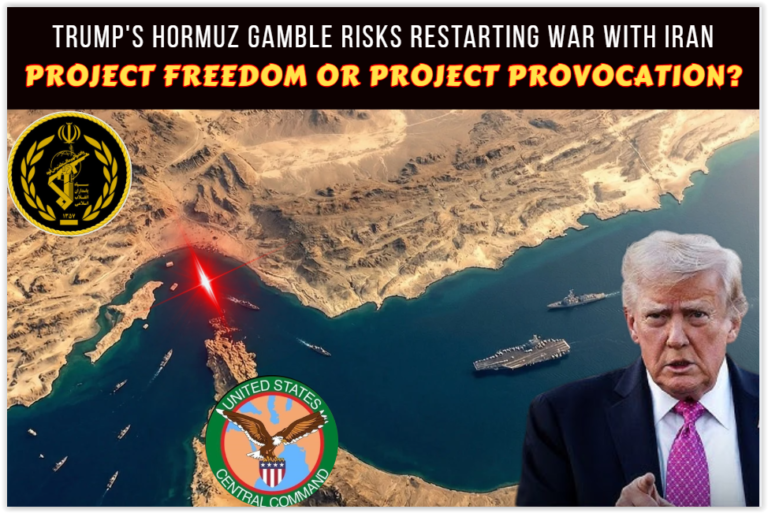
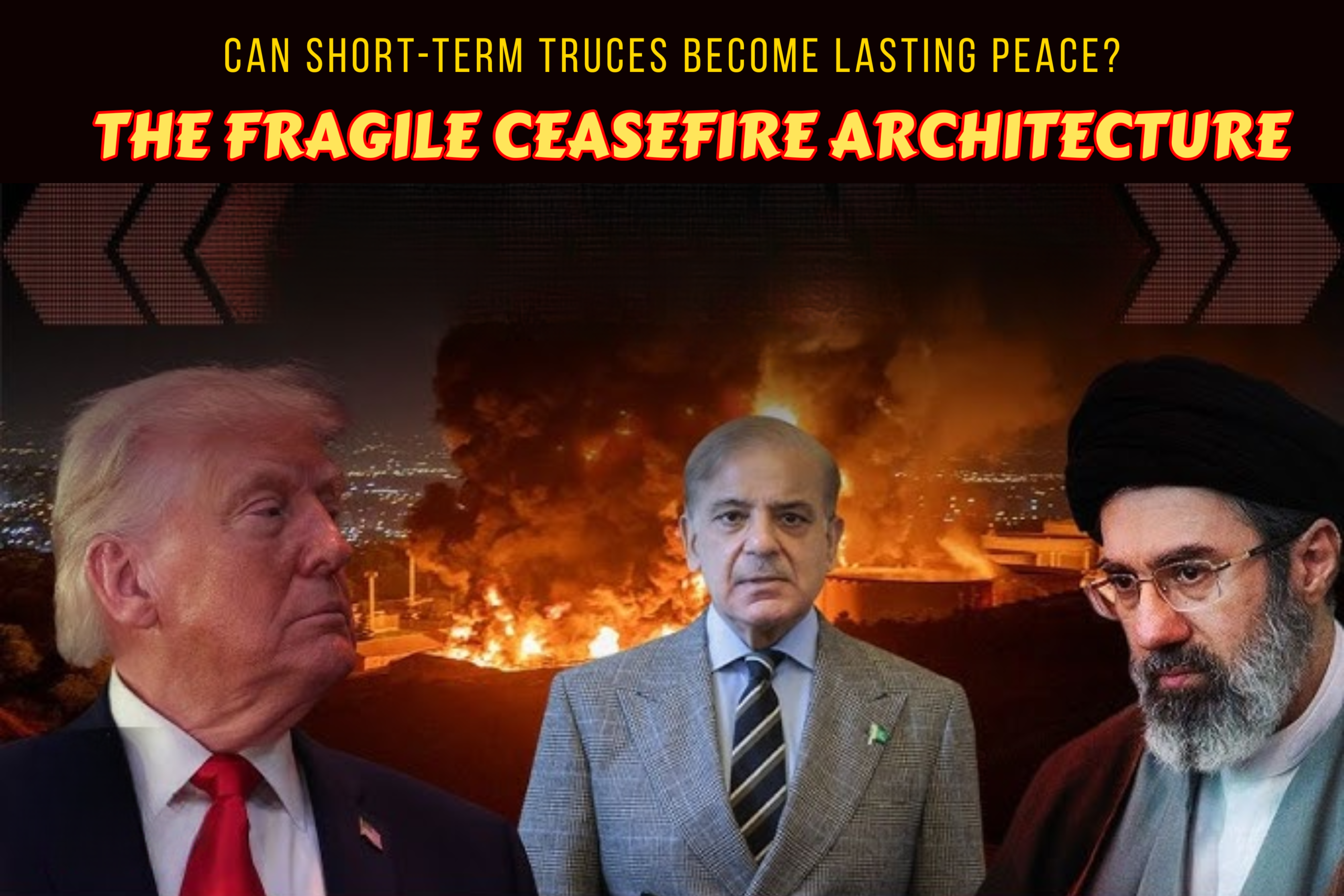
The April 2026 US–Iran ceasefire offers perhaps the starkest illustration of the gap between tactical pause and strategic settlement. Announced on 8 April following intensive Pakistani mediation, the two-week agreement required Iran to facilitate the reopening of the Strait of Hormuz while the United States suspended offensive operations. However, fundamental ambiguities undermined implementation from the outset.
First, scope disputes emerged immediately: while Pakistani and Iranian officials stated the ceasefire applied “everywhere, including Lebanon”, US and Israeli counterparts explicitly excluded ongoing operations against Hezbollah. This divergence created a permissive environment for continued escalation along secondary fronts—a classic spoiler dynamic.
Second, verification mechanisms proved inadequate. Iran conditioned Strait reopening on “coordination with its armed forces and technical limitations”, language that afforded Tehran considerable interpretive latitude. Meanwhile, the United States deployed naval assets for mine-clearance operations that Iran characterised as ceasefire violations. Without mutually accepted monitoring protocols or neutral verification, compliance became a contest of narratives rather than facts.
Third, the political architecture remained skeletal. Iran’s 10-point proposal—encompassing sanctions relief, war reparations, and recognition of Iranian sovereignty over maritime routes—diverged sharply from US demands for nuclear constraints and regional behavioural changes. The Islamabad talks of 11–12 April, attended by senior US and Iranian officials, concluded without agreement, prompting the United States to announce a naval blockade of Iranian ports.
“What we are seeing right now is a pause in the conflict, rather than any kind of lasting resolution… Crucially, there is a deep trust deficit on both sides.”
— Pratibha Thaker, Economist Intelligence Unit
The episode underscores a recurrent truth: ceasefires negotiated under deadline pressure, without pre-agreed verification frameworks or sequenced political benchmarks, risk becoming instruments of tactical repositioning rather than foundations for peace.
V. Structural Barriers to Lasting Peace
Diplomatic efforts to convert pauses into peace confront several entrenched obstacles. First, security dilemmas persist when belligerents interpret de-escalation as tactical vulnerability rather than strategic opportunity. Spoilers—whether hardline political factions, fragmented militias, or external patrons—frequently exploit monitoring gaps to regain leverage. Second, institutional voids in collapsed or contested governance environments leave no legitimate authority to implement agreements or absorb returning populations. Third, great-power competition has increasingly instrumentalised mediation, with overlapping sanctions, aid regimes, and security architectures creating contradictory incentives. Finally, the erosion of international humanitarian law compliance and the outpacing of displacement by reconstruction capacity have weakened the normative scaffolding that traditionally supported settlement processes.
As scholars of conflict resolution emphasise, negative peace is relatively easy to negotiate; positive peace requires institutional trust, economic viability, and accountable governance. When mediators treat ceasefires as endpoints rather than bridges, they inadvertently institutionalise fragility.
VI. Pathways from Pause to Settlement
Statecraft offers several analytical pathways to strengthen ceasefire architecture without overpromising rapid resolution:
- Phased Diplomacy & Sequenced Benchmarks: Link immediate de-escalation to medium-term confidence-building measures and long-term political roadmaps. Each phase should carry verifiable milestones and calibrated consequences for non-compliance.
- Inclusive Negotiation Tracks: Integrate local administrators, civil society, women’s organisations, and marginalised communities into secondary dialogue channels. Exclusion breeds parallel power structures that undermine primary agreements.
- Hybrid Verification & Enforcement: Combine UN/regional monitoring with technical OSINT verification, clear violation protocols, and graduated diplomatic responses. Transparency reduces the information asymmetries that fuel escalation.
- Economic & Transitional Integration: Tie early reconstruction funding to political implementation milestones. Adapt disarmament, demobilisation, and reintegration (DDR) programmes to fragmented armed landscapes, and design accountability mechanisms that complement rather than derail negotiations.
- Strategic Patience as Diplomatic Doctrine: Resist the temptation to prioritise short-term optics over long-term institutional resilience. Redefine diplomatic success beyond the silence of guns to include governance continuity, economic stabilisation, and dispute resolution capacity.
Senior mediation practitioners note that the most durable agreements are those that anticipate failure. By building monitoring redundancy, transitional flexibility, and economic incentives into the architecture, diplomats can absorb spoiler violence without collapsing the entire framework.
VII. Conclusion
Short-term truces are indispensable instruments of contemporary statecraft. They save lives, create diplomatic breathing space, and prevent uncontrolled escalation. Yet their inherent fragility stems not from poor intentions, but from structural omission: the failure to embed tactical de-escalation within a coherent political, institutional, and economic architecture.
The US–Iran episode of April 2026 crystallises this challenge. A ceasefire brokered under deadline pressure, with ambiguous scope, contested verification, and no agreed political pathway, proved unable to withstand the gravitational pull of mutual suspicion and competing strategic objectives. Durable peace requires more than the cessation of hostilities. It demands sequenced diplomacy, inclusive negotiation frameworks, credible verification, and sustained investment in transitional governance.
In an era of multipolar mediation, asymmetric warfare, and information-driven conflict, the diplomatic imperative is to design ceasefires as bridges rather than endpoints. The question is no longer whether short-term truces can become lasting peace, but whether the international community will construct them to.