(Quratulain Khalid)
I. Introduction
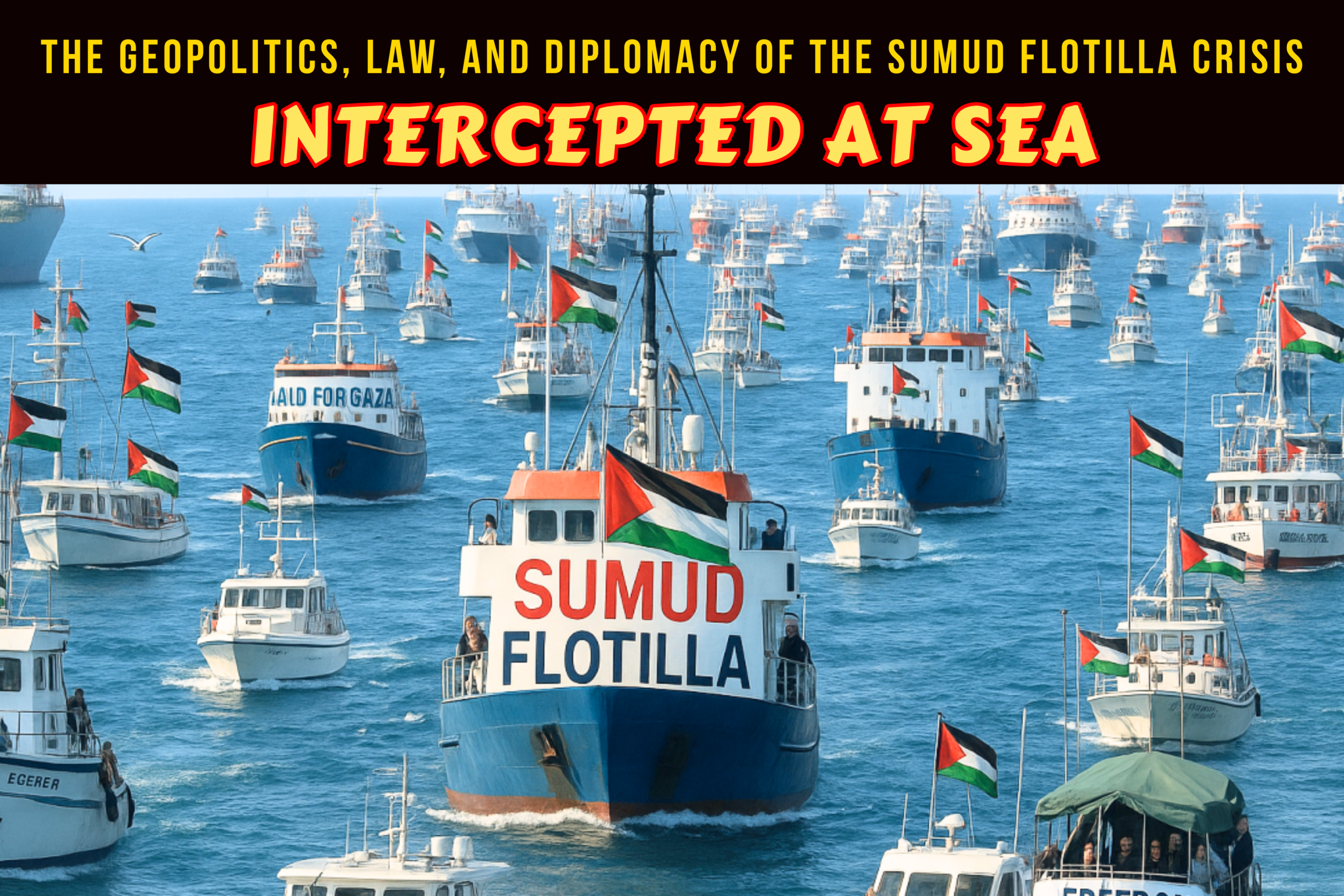
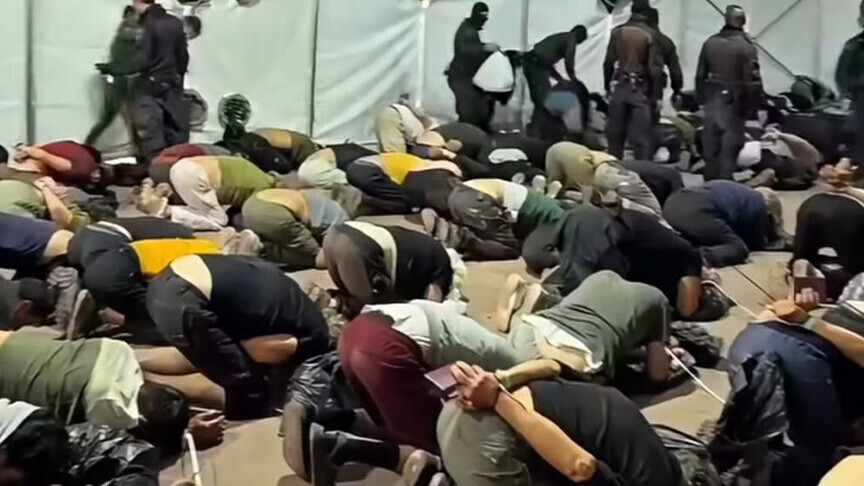
In the early hours of May 21, 2026, a coordinated maritime operation in the eastern Mediterranean culminated in the interception of the Global Sumud Flotilla, a civilian-led humanitarian mission bound for the Gaza coastline. According to official naval briefings, the operation resulted in the detention of more than 400 passengers, including activists, independent journalists, and several individuals with familial or diplomatic ties to European political figures. The incident has rapidly evolved from a tactical naval engagement into a multidimensional crisis, testing the boundaries of international maritime law, humanitarian access protocols, and contemporary diplomatic crisis management.
Rather than an isolated confrontation, the flotilla’s interception reflects a broader strategic recalibration in contested maritime spaces, where state security imperatives increasingly intersect with transnational civil society campaigns. This article examines the legal frameworks governing naval blockades, the geopolitical calculus behind maritime enforcement, and the diplomatic ripple effects that will likely shape regional de-escalation efforts in the coming months.
II. The Incident: Verified Facts & Timeline
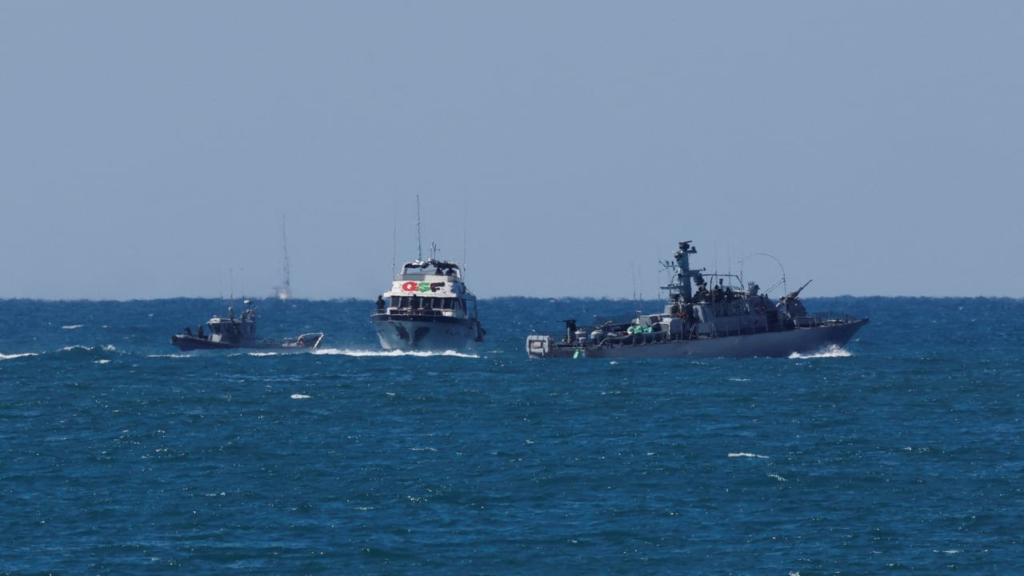
The Sumud Flotilla departed from multiple Mediterranean ports over a two-week period, consolidating near international waters before proceeding toward the designated maritime perimeter off the Gaza coastline. According to Israeli defense statements, naval forces intercepted the vessels approximately 40 nautical miles from shore, within a zone subject to an established security blockade. The operation reportedly involved boarding parties, non-lethal deterrent measures, and the subsequent transfer of passengers to designated processing facilities. Initial reports cited minor injuries among both activists and naval personnel, though independent verification remains pending.
Official statements from Israeli authorities emphasized compliance with established rules of engagement, citing security concerns regarding unauthorized maritime entry and the potential for unvetted cargo transfers. Conversely, flotilla organizers described the mission as a strictly humanitarian and symbolic initiative, aimed at drawing attention to civilian conditions and challenging the blockade’s operational parameters. European foreign ministries issued coordinated statements calling for transparency, consular access for detained nationals, and adherence to international humanitarian standards. As of May 21, several parliamentary bodies in Europe have requested emergency briefings, while regional monitoring organizations continue to track detainee processing and vessel disposition.
Given the fluid nature of maritime operations and the highly polarized information environment surrounding the incident, analysts emphasize the importance of cross-referencing naval logs, satellite tracking data, and independent humanitarian observer reports before drawing definitive conclusions.
III. The Legal & Normative Architecture
The interception of civilian vessels in a declared blockade zone sits at the intersection of competing legal traditions. Under customary international law and the United Nations Convention on the Law of the Sea (UNCLOS), naval blockades are permissible during armed conflict provided they are publicly declared, effectively enforced, and proportionate to legitimate military objectives. Articles 110 and 111 of UNCLOS outline the right of visit and hot pursuit, while historical customary practices establish parameters for blockade enforcement, including the obligation to allow humanitarian relief through agreed, coordinated channels.
The central legal tension revolves around humanitarian access. International humanitarian law (IHL) recognizes the right to deliver essential civilian supplies during conflict, but typically requires coordination with recognized neutral bodies such as the International Committee of the Red Cross (ICRC) or UN humanitarian agencies. Unilateral maritime missions, while often framed as exercises of freedom of navigation and humanitarian solidarity, operate in a legal gray area when they enter enforced security perimeters without prior coordination or clearance.
Competing narratives have emerged rapidly. State authorities emphasize sovereignty, maritime security, and the necessity of preventing unvetted material transfers into active conflict zones. Activist coalitions, supported by legal advocacy groups, argue that prolonged blockade enforcement raises questions under IHL proportionality standards and that civilian vessels carrying documented aid merit protected passage or negotiated transit. The institutional context adds further complexity: ongoing proceedings at international judicial bodies have already scrutinized maritime access policies in the region, while European legal frameworks continue to navigate the tension between consular rights, diplomatic sensitivities, and the jurisdictional realities of naval detention. The outcome of this incident will likely influence future interpretations of blockade enforcement, humanitarian routing protocols, and the legal status of non-state maritime campaigns.
IV. Geo-Strategic & Political Dimensions
Maritime domains have increasingly become arenas of strategic signaling, and the Sumud Flotilla interception is no exception. Naval enforcement operations serve not only as tactical security measures but as demonstrations of state capacity, deterrence posture, and normative assertion. In a region where energy corridors, commercial shipping lanes, and naval patrol zones overlap with active conflict perimeters, control over maritime space directly influences broader strategic calculus and alliance coordination.
The rise of coordinated, transnational civil society missions reflects a shift in how non-state actors project political influence. Modern flotilla campaigns leverage real-time documentation, satellite tracking, and digital mobilization to amplify narrative impact, often aiming to trigger diplomatic responses, shift public discourse, or force legal review. These operations function as a form of “diplomacy by presence,” where physical entry into contested waters is intended to catalyze political negotiation or multilateral intervention.
European governments now face a delicate balancing act. Security alliances and intelligence-sharing frameworks require coordination with regional naval commands, while domestic political constituencies and humanitarian advocacy networks demand adherence to international norms and transparent detainee handling. The presence of passengers with European diplomatic or familial ties has elevated the incident to a high-priority consular and policy issue, prompting emergency parliamentary debates and cross-ministerial coordination in several capitals.
From a conflict-resolution perspective, maritime confrontations carry inherent escalation risks. Unplanned clashes, detention disputes, or information operations can undermine fragile ceasefire frameworks and complicate backchannel negotiations. Conversely, structured diplomatic engagement following such incidents has historically opened pathways for humanitarian corridor expansions, third-party mediation, and confidence-building measures. The coming weeks will likely reveal whether the interception becomes a catalyst for renewed de-escalation talks or a friction point that hardens existing security postures.
V. Historical Context & Precedents
The 2010 interception of the Mavi Marmara remains the most referenced precedent in contemporary maritime activism. That incident, which resulted in fatalities and severe diplomatic strain, prompted significant shifts in naval rules of engagement, blockade coordination protocols, and activist risk assessments. In the years that followed, states refined maritime perimeter monitoring, expanded electronic surveillance, and established clearer humanitarian routing mechanisms, while flotilla organizers adapted tactics to emphasize non-violent documentation, legal advocacy, and multinational participation.
The 2026 environment differs in several critical dimensions. First, active ceasefire frameworks and ongoing international judicial scrutiny have raised the diplomatic stakes for any maritime enforcement action. Second, the multipolar diplomatic landscape and debates over European strategic autonomy have complicated traditional alliance coordination, requiring more nuanced crisis management. Third, real-time satellite tracking, open-source intelligence, and rapid information dissemination have transformed how maritime incidents are monitored, verified, and politicized.
Historical patterns suggest that successful de-escalation typically follows structured diplomatic channels, transparent detainee processing, and third-party humanitarian mediation. Conversely, prolonged detention disputes, unverified casualty claims, or retaliatory messaging have historically prolonged regional tensions. The lessons of past interceptions underscore the importance of calibrated enforcement, clear humanitarian coordination, and rapid diplomatic engagement to prevent tactical operations from triggering strategic crises.
VI. Forward-Looking Analysis & Scenarios
In the short term (0–30 days), the trajectory of the crisis will depend on detainee processing, consular access negotiations, and the disposition of seized vessels. Diplomatic channels will likely focus on phased releases, humanitarian guarantees, and the establishment of verified monitoring mechanisms. Information campaigns will remain active, with both state and activist networks leveraging media coverage to shape public perception and policy responses.
Over the medium term (1–6 months), regional actors may adjust blockade enforcement protocols, expand coordinated humanitarian routing, or integrate third-party observers into maritime perimeter monitoring. European mediation efforts could gain traction, particularly if consensus emerges around standardized aid delivery frameworks and legal clarification procedures. Naval posturing in the eastern Mediterranean may also shift, with increased emphasis on deconfliction channels and joint monitoring initiatives.
Long-term implications (6+ months) will likely touch on international maritime law interpretations, the legal status of civilian humanitarian missions in conflict zones, and the evolution of state–civil society engagement in contested waters. Risk scenarios include escalation triggers such as detention disputes turning into diplomatic standoffs, retaliatory maritime operations, or information campaigns undermining ceasefire compliance. De-escalation pathways involve structured diplomatic negotiations, transparent humanitarian coordination, and the integration of multilateral monitoring frameworks.
VII. Conclusion: Resolution and Reflection
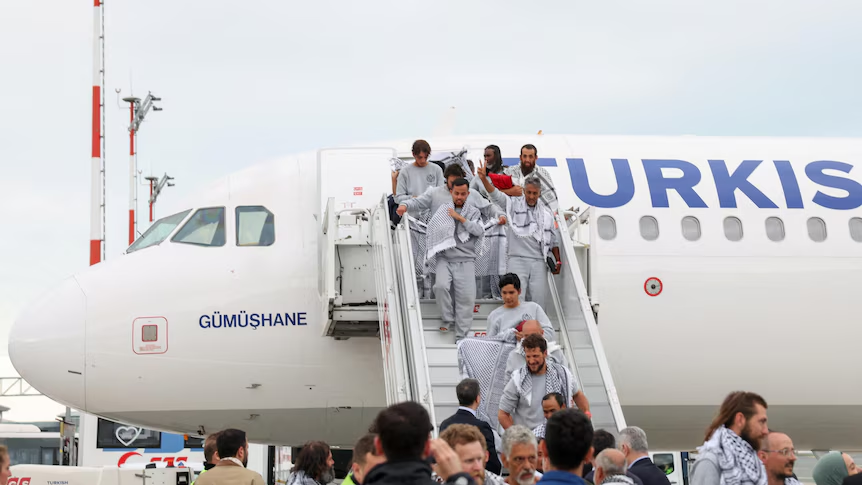
The interception of the Sumud Flotilla has concluded with a diplomatic resolution: following sustained international engagement—particularly coordinated pressure from European Union member states—Israeli authorities have released the detained activists, journalists, and civilian passengers. The group has safely disembarked in Turkey, a development that underscores the critical role of multilateral diplomacy in de-escalating maritime confrontations.
This outcome, while relieving immediate humanitarian concerns, does not resolve the underlying strategic and legal tensions that precipitated the crisis. The incident remains a microcosm of the complex interplay between state security doctrines, humanitarian imperatives, and transnational civil society action in contested maritime spaces. The successful diplomatic intervention highlights the enduring relevance of consular coordination, backchannel negotiation, and third-party mediation in managing flashpoints where naval enforcement meets humanitarian activism.
Looking ahead, the Sumud episode is likely to inform future protocols for maritime humanitarian access, refine rules of engagement for naval operations in blockade zones, and reinforce the importance of pre-emptive diplomatic channels to prevent tactical incidents from escalating into broader strategic crises. As the eastern Mediterranean continues to serve as a nexus for regional security, energy transit, and humanitarian coordination, the lessons of May 2026 will resonate in policy circles, legal forums, and activist strategies well beyond the immediate resolution. In an era where contested waters increasingly intersect with global political narratives, calibrated enforcement, transparent humanitarian coordination, and agile diplomatic crisis management will remain essential pillars of regional stability and the evolving architecture of international maritime law.