(By Khalid Masood)
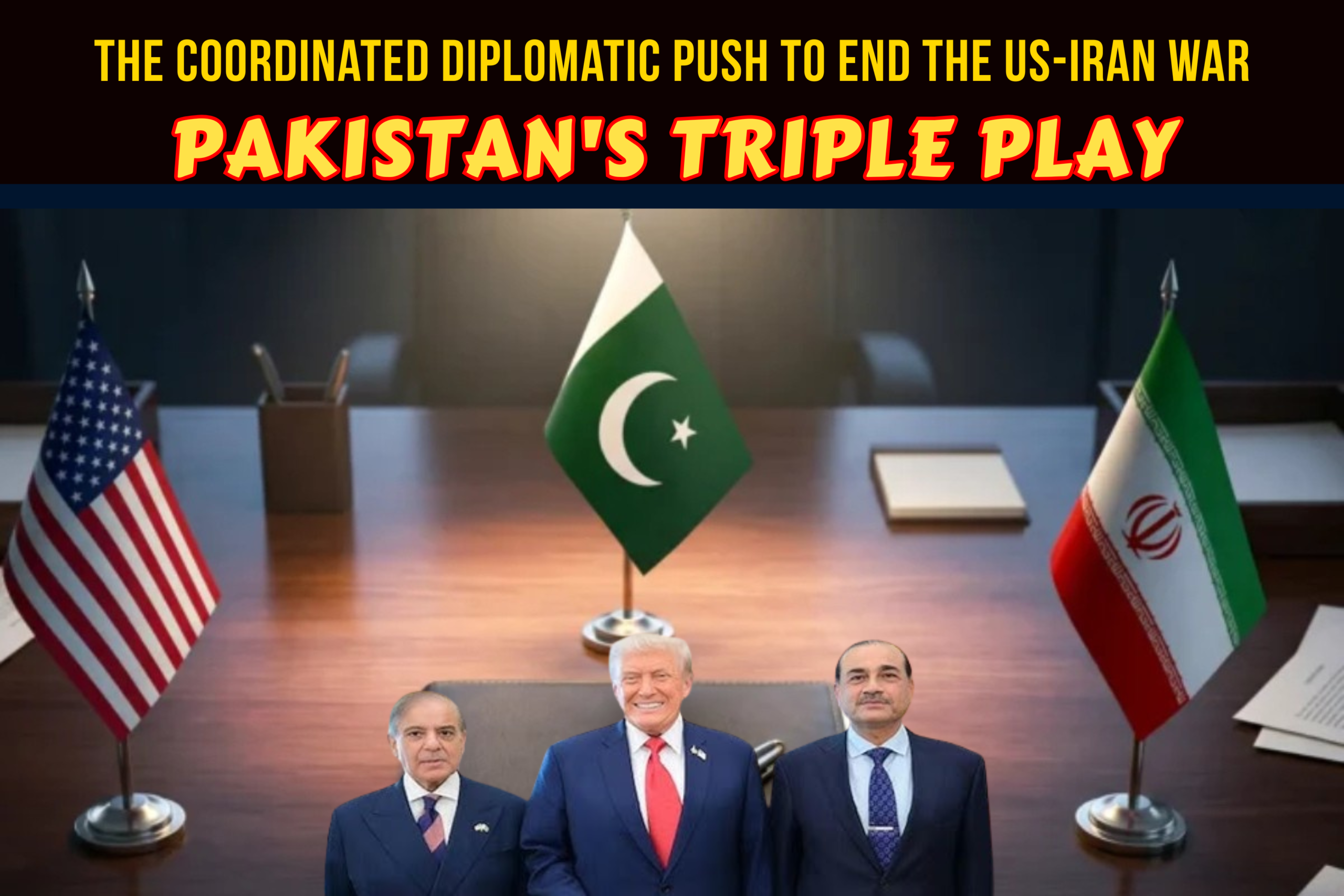
May 30, 2026 — As the United States and Iran hover on the edge of either a lasting peace or a renewed explosion of violence, one country has placed itself at the center of the diplomatic whirlwind: Pakistan. Over the past ten days, Islamabad has executed a carefully choreographed, three-pronged diplomatic offensive—spanning its interior ministry, military leadership, and foreign office—to lock in a fragile ceasefire and steer Washington and Tehran toward a permanent settlement.
The stakes could not be higher. On May 28, negotiators reached a tentative agreement to extend the ceasefire by 60 days and launch formal talks on Iran’s nuclear program. But the deal remains unsigned. President Donald Trump has not formally approved it, and Tehran has yet to publicly confirm it. Meanwhile, both sides are still trading blows in the shadows of the truce.
Then came a seismic shift. On May 29, President Trump announced the end of the US naval blockade of Iran—a crippling measure imposed on April 13 that had turned away 94 vessels and cost Tehran an estimated $4.8 billion in oil revenue. The blockade’s end, confirmed by multiple sources, signals that Washington may be preparing to make the concessions necessary for a deal. But it also removes one of America’s most powerful levers over Tehran, making the next phase of negotiations even more precarious.
The US-Iran Front: A Truce on Life Support
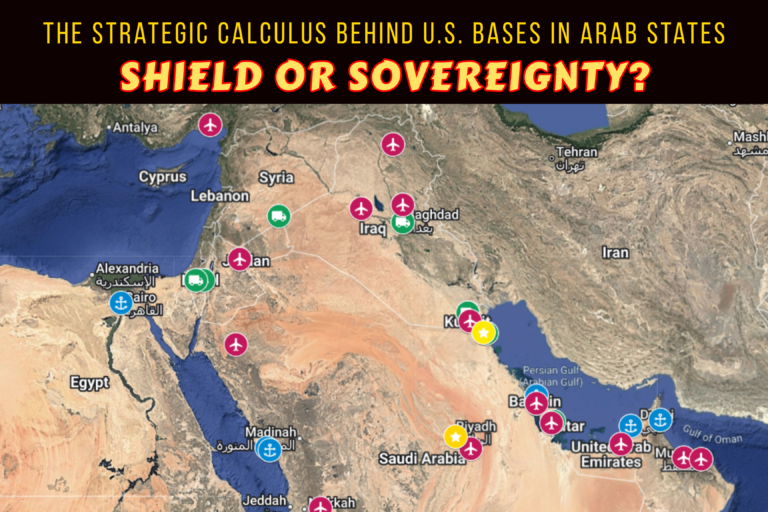
The war, which erupted on February 28, 2026, has turned the Strait of Hormuz—through which one-fifth of the world’s traded oil and gas flows—into a militarized chokepoint. Washington has accused Tehran of repeated ceasefire violations, including missile fire at a Gulf state base that US Central Command condemned as “egregious.” In response, US forces shot down four Iranian attack drones near Hormuz and struck a ground-control station in Bandar Abbas. Iran’s Revolutionary Guard acknowledged the strikes and launched retaliatory attacks on the air base that launched the American assault.
Kuwait intercepted incoming Iranian missiles and drones, publicly condemning Tehran for “blatant aggression.” Yet, even as the guns sputter, diplomacy has continued.
Washington wants a deal that reopens Hormuz and forces Iran to surrender its stockpile of highly enriched uranium. Tehran, in turn, demands the lifting of economic sanctions, the release of frozen assets, and—crucially—an end to Israel’s military operations in Lebanon against Hezbollah. The tentative 60-day extension, if finalized, would buy time to bridge these vast gaps.
The economic toll has been staggering. US Treasury Secretary Scott Bessent noted that Iran’s oil storage was “rapidly filling up” and that Tehran would soon “have to start shutting in wells.” Trump himself had claimed the blockade was costing Iran $500 million daily. By lifting it, he has handed Tehran a significant concession—one that may be the price of keeping diplomacy alive.
Track One: Ishaq Dar in Washington
Into this volatile environment stepped Pakistan’s Deputy Prime Minister and Foreign Minister, Ishaq Dar, who arrived in Washington on May 29 after a stop in New York. His mission was direct: meet US Secretary of State Marco Rubio and secure American buy-in for Pakistan’s mediation framework.
The official State Department readout was diplomatically dry—”review bilateral relations and exchange views on regional developments”—but the substance was far more urgent. Reuters reported that Pakistan is attempting to negotiate a permanent peace pact, not merely another ceasefire extension. Dar has been at this for months; in mid-April, he declared at the Antalya Diplomacy Forum that Pakistan’s objective was the “permanent termination of war,” claiming more than 80% of the mediation work was already complete.
For Pakistan, success is existential. A brokered peace would unlock leverage with Gulf donors—Saudi Arabia, the UAE, and Qatar—for debt relief and fresh financing, desperately needed as Islamabad grapples with an energy crisis and IMF obligations. It would also complete Pakistan’s rebranding from a regional pariah to an indispensable mediator.
Track Two: Mohsin Naqvi’s Tehran Shuttle
While Dar was preparing for Washington, Pakistan’s Interior Minister, Mohsin Naqvi, was making a rapid-fire series of visits to Tehran. In less than a week in mid-May, Naqvi traveled to Iran twice—a pace that signaled acute urgency.
During his second visit on May 20, Naqvi met with IRGC chief Gen Ahmad Vahidi, President Masoud Pezeshkian, and Foreign Minister Abbas Araghchi. His mandate was to shuttle messages, gauge Tehran’s red lines, and prepare the ground for a higher-level military engagement. Iran had recently handed its newest 14-point peace plan to Pakistani mediators to convey to Washington, and Naqvi’s trips were designed to ensure Tehran remained at the table despite the ongoing tit-for-tat strikes.
Track Three: Field Marshal Asim Munir’s Military Diplomacy
Two days after Naqvi’s second departure, Pakistan’s Army Chief and Chief of Defence Forces, Field Marshal Asim Munir, landed in Tehran on May 22. He was greeted by both Iran’s Interior Minister Eskandar Momeni and, notably, Mohsin Naqvi himself—an unusual public display of cross-branch coordination.
Munir met with President Pezeshkian and held consultations with Iranian authorities on the US-Iran negotiations, regional peace, and the future of the Strait of Hormuz. This was his second visit to Tehran in 40 days; he had previously met Iran’s negotiating team and Parliament Speaker Mohammad Bagher Ghalibaf in April.
The military dimension was critical. Washington needed assurance that Tehran’s security apparatus was committed to any deal, while Iran needed guarantees that its military interests were understood. Rubio acknowledged the visit, stating the US hoped it would “advance this further.” Pakistan’s military openly described the trip as part of “ongoing mediation efforts.”
Connecting the Dots: A Single, Coordinated Campaign
Viewed in sequence, the timeline is unmistakable: Naqvi opens the political channel in Tehran (May 17–20), Munir locks in the military understanding (May 22–23), and Dar secures the diplomatic endorsement in Washington (May 29). This is not coincidence; it is a multi-track campaign orchestrated by Islamabad.
Iran’s Foreign Ministry spokesman has confirmed that while many nations are offering assistance, “Pakistan remains the official mediator.” It was Pakistan that hosted the only direct US-Iran talks in Islamabad in April. It is Pakistan that has shuttled proposals, absorbed grievances from both sides, and kept the dialogue alive even as missiles and drones continue to fly.
Pakistan’s Diplomatic Campaign: Key Players and Timeline
Table
| Player | Role | Destination | Date | Key Meeting/Action |
|---|---|---|---|---|
| Mohsin Naqvi | Interior Minister | Tehran | May 17 (1st visit) | Initial talks on ceasefire terms |
| Mohsin Naqvi | Interior Minister | Tehran | May 20 (2nd visit) | Met IRGC chief Vahidi, President Pezeshkian, FM Araghchi |
| Field Marshal Asim Munir | Army Chief / CDF | Tehran | May 22–23 | Met President Pezeshkian; military-to-military consultations |
| Ishaq Dar | Deputy PM / Foreign Minister | Washington | May 29 | Met Secretary Rubio; secured US buy-in for mediation |
Voices from the Conflict: Key Quotes
Donald Trump (on Truth Social, May 6, announcing the pause of “Project Freedom”): “Based on the request of Pakistan and other Countries… Great Progress has been made toward a Complete and Final Agreement with Representatives of Iran… Project Freedom will be paused for a short period of time to see whether or not the Agreement can be finalized and signed.”
Donald Trump (warning to Iran, May 6): “If they don’t agree, the bombing starts, and it will be, sadly, at a much higher level and intensity than it was before.”
Abbas Araghchi (Iranian Foreign Minister, on X, May 5): “Events in the strait make it clear that there is no military solution to a political crisis. Project Freedom is Project Deadlock.”
Ishaq Dar (at Antalya Diplomacy Forum, mid-April): “Our objective is not ceasefire extension but the permanent termination of war.”
Mohammad Bagher Ghalibaf (Iranian Parliament Speaker, on X, May 5): “While the situation in the strait was clearly unbearable for America, Iran has not even begun yet.”
Marco Rubio (US Secretary of State, May 5): “Operation Epic Fury is over… This is not an offensive operation. This is a defensive operation. There’s no shooting unless we’re shot at first.”
Scott Bessent (US Treasury Secretary, on Fox News, May 3): “We think that they’ve gotten less than $1.3 million in tolls, which is a pittance on their previous daily oil revenues… They’re going to have to start shutting in wells.”
The Gamble
Yet the outcome is far from certain. The tentative 60-day extension hangs by a thread. President Trump could reject it. Tehran could balk at the terms. A single major strike could collapse the entire architecture. And Pakistan has its own vulnerabilities—Washington has reportedly questioned Islamabad’s suitability as a mediator, and Pakistan’s Defence Minister recently caused a diplomatic flap by calling Israel “cancerous” on social media.
The end of the US naval blockade on May 29 is a double-edged sword. For Iran, it is a victory—a lifting of the economic noose that was strangling its oil exports. For the US, it is a concession that may be necessary to keep Iran at the table, but it also removes the primary source of American leverage. As one analyst noted, without the blockade, Washington has far less to offer in exchange for Iranian nuclear concessions.
Still, for the first time in months, there is a structure to the peace process. And Pakistan—through its foreign minister, its interior minister, and its army chief—has bet its diplomatic credibility on making it hold.
Whether Islamabad succeeds in turning a fragile pause into a permanent peace will be decided in the coming weeks. But one thing is already clear: Pakistan is no longer sitting on the sidelines of the Middle East’s most dangerous conflict. It is trying to end it.