(By Khalid Masood)
Introduction: A Maritime Flashpoint in Focus
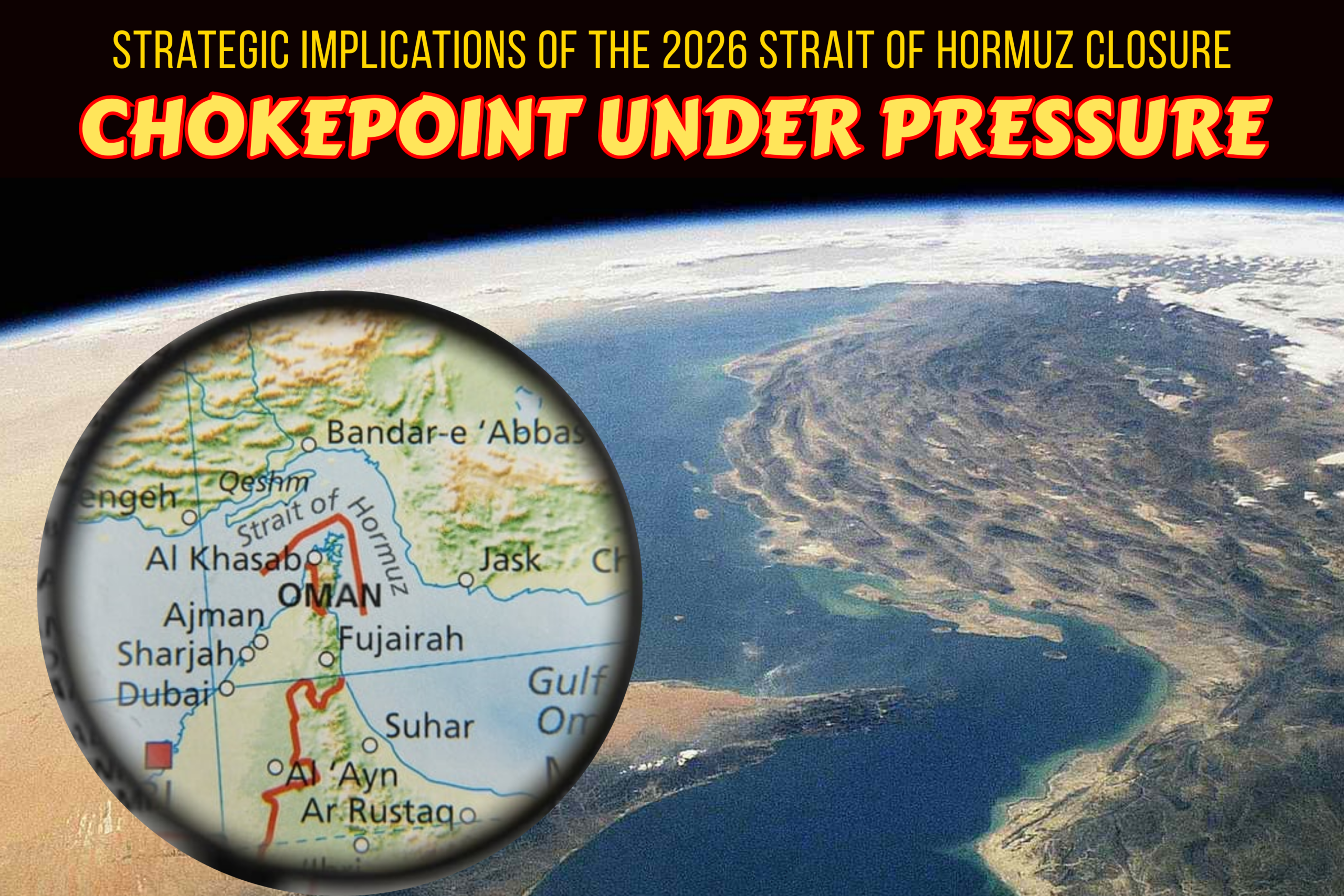
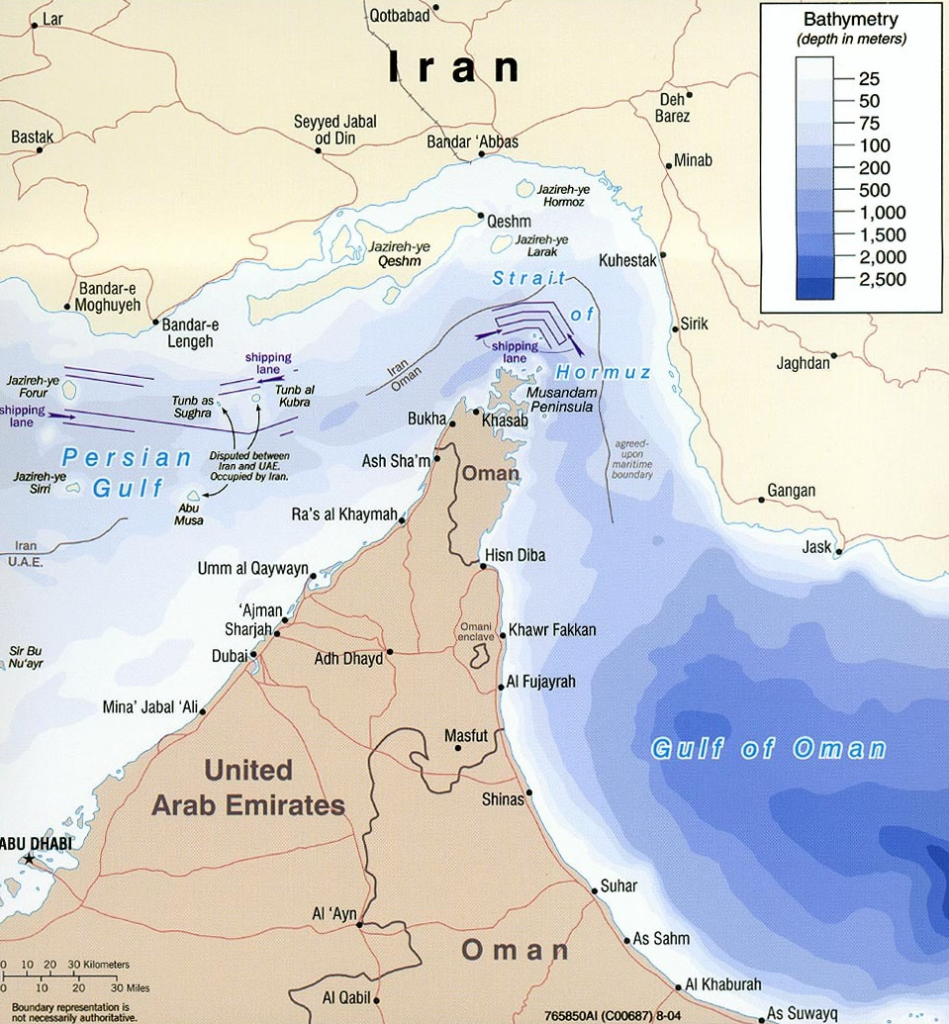
On 2 March 2026, Iranian authorities declared the Strait of Hormuz temporarily closed to commercial navigation, following a series of coordinated military operations by the United States and Israel against Iranian defence and nuclear infrastructure. The declaration sent immediate shockwaves through global energy and agricultural markets, given that approximately twenty per cent of the world’s traded crude oil and roughly a quarter of liquefied natural gas (LNG) transit the narrow waterway daily. Beyond hydrocarbons, the strait serves as a critical artery for seaborne fertiliser, methanol, and strategic mineral shipments.
This article provides a neutral, strategic assessment of the 2026 Hormuz disruption. It examines Iran’s asymmetric maritime doctrine, analyses the immediate economic and diplomatic ripple effects, and evaluates structured conflict resolution pathways. The aim is not to assign blame or advocate policy positions, but to contextualise the strategic calculus behind chokepoint warfare, map its systemic vulnerabilities, and identify viable de-escalation mechanisms grounded in verified reporting and established maritime security frameworks.
Verified Timeline & Key Actors
The 2026 Hormuz crisis unfolded rapidly, with military, economic, and diplomatic developments intersecting over a six-week period. Verified reporting from international conflict monitors, energy agencies, and UN maritime bodies outlines the following sequence:
| Date | Development | Verified Source Context |
|---|---|---|
| 28 February 2026 | U.S. and Israeli forces initiate coordinated strikes targeting Iranian military installations and nuclear infrastructure | Confirmed via Central Command statements & independent satellite imagery |
| 2–4 March 2026 | Iran declares the Strait of Hormuz “closed”; commercial tanker traffic drops by approximately ninety per cent | ICAO & Lloyd’s List Maritime Security Bulletins |
| 8 March 2026 | Cross-strikes reported against Gulf civilian infrastructure, including desalination facilities | UN OCHA Situation Reports |
| 6–7 April 2026 | U.S. announces a maritime blockade framework; initial ceasefire proposals rejected by Iranian negotiators | State Department & Iranian Foreign Ministry briefings |
| 8 April 2026 | Two-week ceasefire announced, brokered by Pakistan with diplomatic backing from China and Oman | Joint Islamabad communiqués |
| 13 April 2026 | U.S. Central Command implements inspection protocols for vessels paying transit levies to Iranian authorities | CENTCOM operational directives |
Current Status: A fragile operational pause remains in place. Enforcement ambiguity persists, with maritime insurance premiums for Persian Gulf routes remaining three to five times pre-crisis levels. Commercial fleets continue rerouting via the Cape of Good Hope, adding ten to fourteen days to transit times. Regional mediators are facilitating technical working groups on safe passage verification, though political trust remains severely degraded.
Iran’s Asymmetric Strategy: Cost-Imposition & Chokepoint Leverage
Iran’s approach to the Hormuz disruption reflects a deliberate shift from conventional naval engagement to networked, cost-imposition warfare. Rather than seeking decisive fleet victories, Iranian forces have deployed a layered asymmetric toolkit designed to raise the financial and political costs of sustained maritime operations for opposing coalitions.
Tactical Deployments
- Uncrewed Surface & Aerial Systems: Shahed-136 drones and explosive-laden drone boats have been utilised to harass commercial vessels and naval screening groups. Unit costs range between $20,000 and $50,000, contrasting sharply with multi-million-dollar interceptor expenditures.
- Limpet Mines & Subsurface Threats: Maham-series naval mines have been deployed along established shipping lanes, forcing commercial vessels into unpredictable routing patterns.
- Electronic Warfare & Navigation Disruption: Verified GPS jamming and spoofing incidents exceeded 1,700 in March 2026, affecting commercial navigation systems for an average of three to four hours per incident.
- Selective Transit Control: The Islamic Revolutionary Guard Corps (IRGC) Navy has implemented inspection protocols, permitting “compliant” or diplomatically aligned vessels to transit after clearance while restricting others.
Strategic Logic
The underlying doctrine prioritises geographic leverage and economic interdependence over tactical superiority. By forcing adversaries to expend high-cost defensive systems against low-cost asymmetric threats, Iran aims to exhaust logistical stockpiles and strain political resolve. Historically, this mirrors the 1980s Tanker War’s attritional model, but the 2026 iteration incorporates networked targeting, commercial satellite intelligence, and AI-assisted navigation spoofing.
Neutral Assessment
Tactically, the asymmetric campaign has succeeded in disrupting commercial routing and inflating maritime insurance costs. Strategically, however, it faces structural constraints: prolonged closure accelerates sanctions enforcement, invites coordinated naval countermeasures, and triggers retaliatory measures against Iranian export infrastructure. Analysts note that asymmetric chokepoint warfare is inherently time-bound, as economic friction eventually translates into diplomatic pressure for negotiated transit arrangements.
Global & Regional Ripple Effects
The closure of the Strait of Hormuz has generated immediate macroeconomic and logistical disruptions, with compounding effects across energy, shipping, and agricultural input markets.
Energy & Shipping Markets
Crude oil benchmarks surged from approximately $70 per barrel pre-conflict to over $103 per barrel by early April 2026. LNG spot prices followed a similar trajectory, with Asian and European importers facing premium costs due to rerouted shipments. Commercial vessel transit times have increased by ten to fourteen days as fleets divert around southern Africa, congesting alternative ports and straining global container logistics. Maritime insurance premiums for Gulf routes have risen by 300–500 per cent, reflecting heightened risk assessments by Lloyd’s and major underwriting syndicates.
Economic & Civilian Dimensions
Targeted strikes on dual-use infrastructure, including desalination plants and coastal power grids, have strained utility networks across Gulf Cooperation Council (GCC) states. Approximately 20,000 commercial mariners and numerous cargo vessels remain anchored or delayed in Persian Gulf waters, raising seafarer welfare and supply chain continuity concerns. Humanitarian agencies report increased displacement in Lebanon, southern Iraq, and Iranian border provinces, compounding regional recovery efforts from prior crises.
The Fertiliser-Food-Energy Nexus
Beyond hydrocarbons, the Hormuz corridor facilitates roughly 46 per cent of global seaborne urea trade, alongside significant ammonia, methanol, and sulphur shipments. The disruption coincides with the Northern Hemisphere’s spring planting window, when agricultural producers typically secure fertiliser inputs for wheat, maize, and rice cultivation. Natural gas price volatility further pressures nitrogen-based fertiliser production, as gas constitutes 70–90 per cent of manufacturing costs. Preliminary assessments indicate urea spot prices have doubled since late February, with import-dependent regions in South Asia, Sub-Saharan Africa, and Latin America facing acute input shortages.
Conflict Resolution Pathways & Diplomatic Realities
De-escalation efforts have intensified following the April ceasefire announcement, though implementation remains fragmented. Verified diplomatic activity includes Pakistan-mediated technical dialogues, Chinese diplomatic facilitation, and Omani backchannel communications. International maritime bodies have proposed neutral monitoring frameworks, while UN trade agencies advocate for humanitarian corridor exemptions.
Current Diplomatic Efforts
- Pakistan-Mediated Framework: A two-week operational pause established on 8 April 2026, with joint technical committees reviewing transit verification protocols.
- Multilateral Monitoring Proposals: The UN Office for Disarmament Affairs and regional navies have discussed third-party observation missions to validate safe passage without compromising sovereign maritime rights.
- Sanctions & Humanitarian Decoupling: UCTAD and EU trade bodies are exploring clarified exemptions for agricultural inputs and commercial fertiliser shipments to prevent unintended food system shocks.
De-Escalation Levers (Analytical Options)
- Third-Party Transit Verification: A non-combatant naval coalition or UN-affiliated maritime body could monitor compliance with ceasefire terms, providing transparent reporting to all stakeholders.
- Phased Reciprocity Mechanisms: Coordinated steps—such as halting mining and electronic warfare activities alongside suspending commercial blockades—could rebuild baseline trust.
- Regional Security Dialogue Expansion: Inclusive forums addressing maritime safety norms, search-and-rescue coordination, and anti-piracy protocols may reduce long-term friction.
Structural Obstacles
Deep mutual distrust following leadership decapitation, civilian infrastructure targeting, and proxy network dynamics complicates negotiations. Domestic political constraints in Iran, the United States, and European capitals limit flexible diplomatic positioning. Additionally, non-state actors with regional influence may resist de-escalation frameworks that diminish their strategic leverage. Analysts emphasise that sustainable resolution requires verification mechanisms insulated from political narratives, alongside phased implementation tied to transparent compliance metrics.
Conclusion: Strategic Implications & Forward Outlook
The 2026 Strait of Hormuz closure illustrates how modern conflict increasingly targets systemic interdependence rather than conventional military superiority. Chokepoint disruptions now serve as strategic multipliers, amplifying economic friction, testing diplomatic resilience, and exposing vulnerabilities in global supply chains. Maritime security, once viewed primarily through a naval defence lens, must now encompass energy logistics, agricultural input networks, and humanitarian coordination.
Sustainable de-escalation will depend on verified transit mechanisms, multilateral monitoring frameworks, and regional dialogue that separates military posturing from commercial continuity. As the operational pause extends, policymakers, defence analysts, and economic observers must prioritise data-driven risk assessment over escalation narratives. Ongoing monitoring, neutral reporting, and structured diplomatic engagement remain essential to navigating the strategic uncertainties of chokepoint conflict in an interconnected global system.