(By Faraz Ahmed)
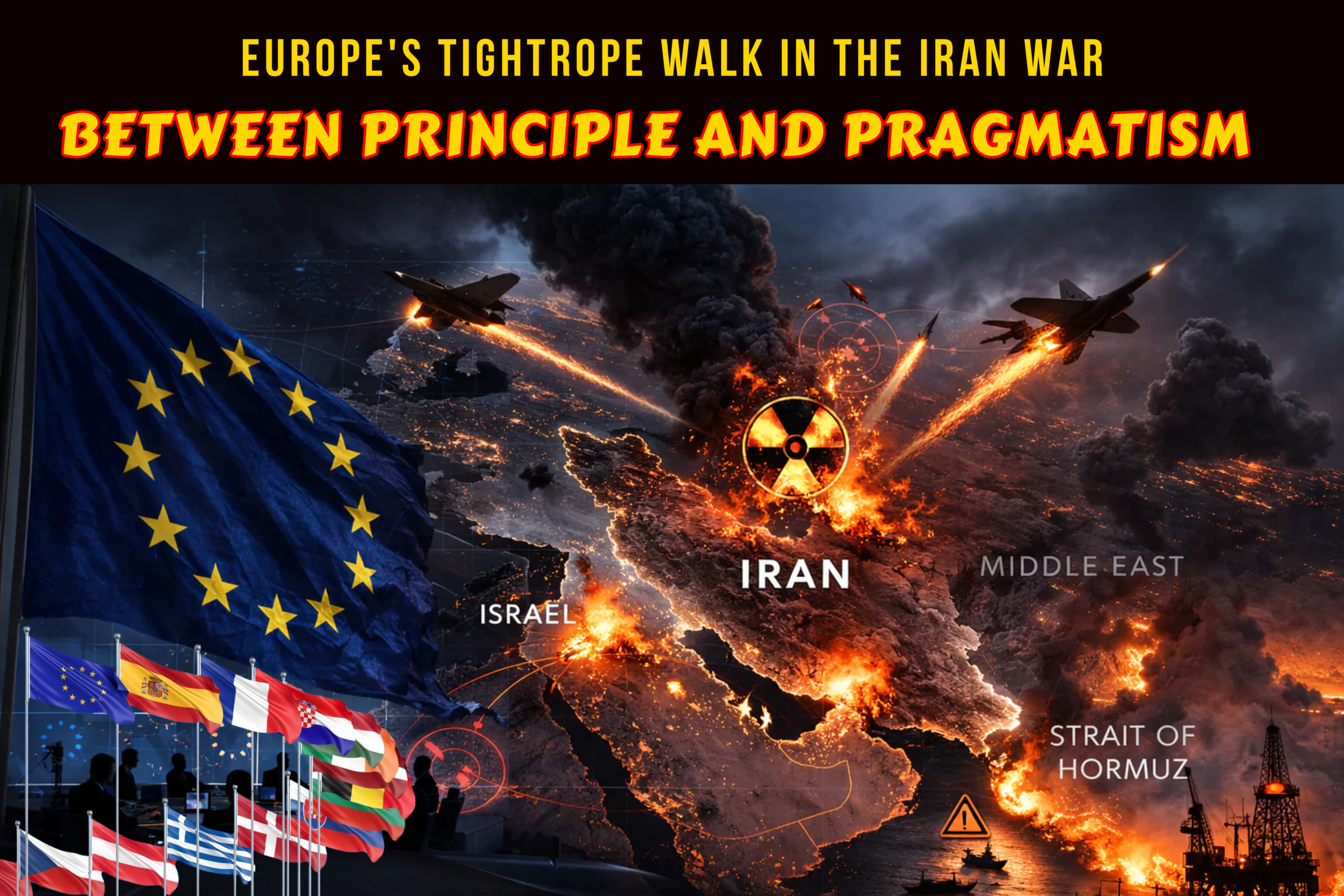
When emergency foreign ministers convened in Brussels last month, the mood was less one of coordinated resolve than of calibrated caution. Behind closed doors, European diplomats wrestled with a familiar but increasingly urgent question: how to uphold foundational commitments to international law and multilateral diplomacy while navigating the hard realities of alliance cohesion, energy vulnerability, and domestic political pressure. The escalation of hostilities between the United States, Israel, and Iran since February has placed the European Union on a narrow corridor between principle and pragmatism—a tightrope that is testing the bloc’s strategic identity, institutional mechanics, and capacity for coherent foreign policy.
This analysis examines how European states are navigating the current crisis, drawing on official statements, energy and trade data, international legal frameworks, and comparative national strategies. The focus remains on policy dynamics, institutional constraints, and measurable impacts, without endorsing any belligerent narrative or prescribing a single path forward.
How Europe Got Here
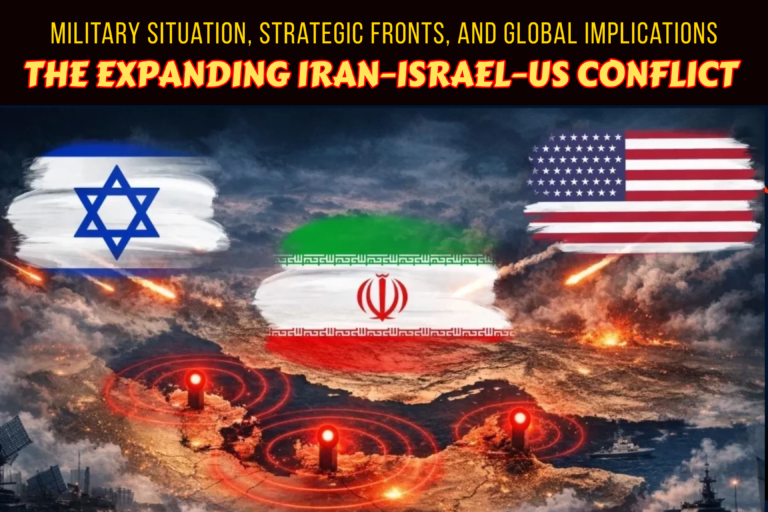
The current kinetic phase began in late February 2026, following coordinated U.S.-Israeli strikes on Iranian military and nuclear infrastructure. Iran responded with ballistic missile and drone strikes targeting Gulf energy facilities and regional allies, quickly expanding the conflict’s geographic and economic footprint. On 2 March, Iranian drones struck Cyprus, an EU member state, triggering emergency defense consultations and marking the first direct attack on European soil in the current escalation cycle.
Europe’s historical posture toward Iran has long centered on diplomatic engagement. The 2015 Joint Comprehensive Plan of Action (JCPOA), brokered with significant European involvement, established a framework for verified nuclear constraints in exchange for sanctions relief. Even after the U.S. withdrawal in 2018, the E3 (France, Germany, and the UK) maintained diplomatic channels and created INSTEX, a special-purpose vehicle intended to preserve lawful trade. Those mechanisms, however, were designed for economic diplomacy, not kinetic conflict. As hostilities intensified, European foreign ministries shifted from normative statecraft to crisis management, revealing structural gaps between diplomatic infrastructure and security response capabilities.
The Core Dilemma: Principle vs. Pragmatism
European leaders publicly anchor their positions in international law and institutional continuity. The European Commission and European External Action Service have reiterated a “steadfast commitment to safeguarding regional security and stability” and emphasized that “only respect for international law and diplomacy can ensure lasting security.” France’s foreign ministry framed its posture similarly, calling for de-escalation while noting Iran “bears a heavy responsibility for the current escalation.” Spain has gone further, with Prime Minister Pedro Sánchez stating publicly that the military operations “are not covered by international law,” aligning Madrid’s stance with its positions on other contemporary conflicts.
Yet these principled commitments intersect with pressing pragmatic demands. Alliance cohesion remains a central consideration: German Chancellor Friedrich Merz has aligned closely with U.S. objectives, stating that Berlin “shares the interest of the United States and Israel in seeing an end to this regime’s terror.” Economic interdependence compounds the tension. Strait of Hormuz disruptions have driven EU natural gas prices up approximately 70% and oil by 50%, adding an estimated €13 billion to fossil fuel import costs. Domestically, public opinion reflects deep ambivalence. March 2026 polling indicates that 75% of Europeans fear regional escalation beyond the Middle East, while majorities in several member states view the strikes as unjustified. Leaders must therefore balance transatlantic solidarity, economic stability, and voter sentiment—a triad that rarely aligns neatly.
“We are witnessing the most severe test of European strategic autonomy since the Cold War. The question is not whether Europe has principles, but whether it has the instruments to defend them without becoming collateral damage in a conflict it did not choose.”
— Dr. Marie-Claire Dubois, Senior Fellow, European Council on Foreign Relations
Fractured Consensus: National and Institutional Divergences
The European response is not monolithic. National strategies reflect distinct threat perceptions, economic structures, and historical postures.
Table 1: European National Responses to the Iran Crisis (March–April 2026)
| Country | Military Posture | Diplomatic Approach | Economic Exposure | Key Constraint |
|---|---|---|---|---|
| France | Defensive systems to Cyprus; no offensive strikes | Backchannel diplomacy; E3 coordination | Moderate (15% refined products from Gulf) | Constitutional limits on unilateral action |
| Germany | No direct deployment; intelligence sharing | Direct talks resumed April 2026 | High (22% refined products; heavy industry) | Constitutional court scrutiny on arms exports |
| United Kingdom | Defensive support; Akrotiri base access | E3 leadership; UNSC engagement | Moderate (12% refined products) | Post-Brexit reduced EU leverage |
| Italy | Naval presence in Mediterranean | Algeria gas diversification | High (28% refined products from Gulf) | Domestic coalition divisions |
| Greece | F-16s and frigate to Cyprus | Regional solidarity emphasis | Low (8% refined products) | Geographic proximity to conflict zone |
| Poland | NATO reinforcement; no direct role | Atlanticist alignment | Low (5% refined products) | Eastern front security priorities |
France has pursued a dual track: joining defensive deployments, including antimissile and antidrone systems to Cyprus, while keeping diplomatic backchannels open. Berlin, constrained by constitutional limits on arms exports and heavy exposure to energy-intensive manufacturing, has opted for calibrated re-engagement, resuming direct talks with Tehran in April “in coordination with the United States and our European partners.” The UK, operating outside EU institutional frameworks, has permitted U.S. use of Akrotiri base for “purely defensive purposes,” with Prime Minister Keir Starmer emphasizing that Britain is “not joining these strikes, but we will continue with our defensive actions in the region.”
Eastern and Central European states generally prioritize threat containment and NATO solidarity over diplomatic nuance, viewing Iranian alignment with Russia through a broader Eastern European security lens. Greece, for instance, deployed F-16 Vipers and a Belharra-class frigate to defend Cyprus, signaling regional commitment despite the vessel not being fully commissioned.
At the EU level, coordination remains challenging. European Council conclusions from March reiterated that “Iran must never be allowed to acquire a nuclear weapon” while calling for an immediate cessation of attacks on regional states. Yet CFSP unanimity requirements and divergent national risk tolerances limit rapid, cohesive action. Debates around Article 42.7 of the Treaty on European Union—the mutual defense clause—have resurfaced, though its practical application in extra-European conflicts remains untested and legally contested.
“The mutual defense clause was designed for a different era. Applying it to a conflict 3,000 kilometers from European borders, triggered by actions of a non-EU state, creates legal ambiguities that could undermine the very solidarity it’s meant to protect.”
— Prof. Hans Weber, International Law Institute, Heidelberg University
International Law and Institutional Legitimacy
The conflict has exposed fractures in multilateral governance. UN Security Council Resolution 2817 (2026), condemning Iranian attacks on Gulf states and demanding protection of civilian infrastructure, passed 13-0 with China and Russia abstaining. A Russian-backed ceasefire draft failed 4-2 with 9 abstentions, underscoring how Great Power competition continues to shape institutional responses to regional conflicts.
Maritime law presents additional complexities. The Strait of Hormuz handles roughly a quarter to a third of global oil shipments, yet UNCLOS contains no explicit treaty framework for coordinated military closure scenarios. While Article 42 permits coastal states to regulate navigational safety, enforcement mechanisms remain limited when chokepoint security is contested by multiple naval actors.
Within Europe, legal challenges are mounting. Sanctions enforcement and IRGC terrorist designation face proportionality and due process reviews in several national courts. Arms export licensing to regional partners is under judicial scrutiny, testing the boundary between collective defense obligations and direct conflict participation. These cases will likely shape European jurisprudence on security exports and extraterritorial sanctions for years to come.
“International law is not a buffet where states select only the provisions that suit their interests. If Europe abandons legal consistency now—condemning violations in one theater while tolerating them in another—it forfeits the moral authority that underpins its global influence.”
— Ambassador (ret.) Sofia Lindqvist, Former EU Special Representative for Human Rights
Energy, Economics, and Domestic Fallout
The economic transmission mechanisms of the conflict are already visible. Brent crude rose from approximately $70 to $119 per barrel following Iranian strikes that damaged an estimated 30–40% of Gulf refining capacity, removing roughly 11 million barrels per day from global supply. LNG cargoes originally contracted for Europe were diverted to Asian buyers willing to pay premiums, tightening European markets despite limited direct crude imports from the Middle East.
Europe’s exposure lies less in raw oil imports and more in refined products and downstream supply chains. Diesel, jet fuel, and petrochemical feedstocks are heavily dependent on Gulf refineries, meaning disruptions cascade into transport, agriculture, and manufacturing. Energy-intensive sectors such as steel, chemicals, and cement face compounded pressure from pre-existing high costs and new supply uncertainties.
Table 2: Economic Impact Indicators (February–April 2026)
| Indicator | Pre-Crisis (Jan 2026) | Current (April 2026) | Change | Sectoral Impact |
|---|---|---|---|---|
| Brent Crude (€/barrel) | €65 | €112 | +72% | Transport, logistics, agriculture |
| EU Natural Gas (€/MWh) | €35 | €59 | +69% | Chemicals, steel, heating |
| Diesel Retail Price (€/liter) | €1.52 | €1.89 | +24% | Freight, public transport |
| Chemical Sector PMI | 52.3 | 46.8 | -5.5 pts | Production contraction |
| Inflation Forecast (2026) | 2.4% | 4.1% | +1.7 pts | ECB policy constraints |
| Strategic Reserve Coverage | 112 days | 94 days | -18 days | Depletion rate accelerating |
Policy responses have been fragmented. The IEA-coordinated release of 400 million barrels of oil in March provided temporary market stabilization but could not offset sustained supply chain reconfiguration. National measures vary: Slovenia introduced fuel rationing; Austria cut fuel taxes and capped retailer margins; Italy accelerated negotiations for additional Algerian gas supplies. The EU’s strategic petroleum reserves, covering over 90 days of consumption, provide a buffer but cannot substitute for structural energy diversification.
Public sentiment reflects these economic pressures. Ipsos polling from March 2026 shows 75% of Europeans fear conflict escalation beyond the Middle East, while trust in U.S. leadership has fallen to 15% in several member states. Political cleavages are emerging: left-leaning constituencies express stronger opposition to military involvement, while center-right voters prioritize alliance solidarity and energy security. These divides complicate consensus-building and electoral forecasting across the bloc.
“The energy shock is not just a macroeconomic statistic—it’s reshaping household budgets, forcing industrial production cuts, and creating political vulnerabilities that adversaries will exploit. Europe’s resilience depends not on stockpiles alone, but on accelerating the transition away from the very fossil fuels that make it vulnerable.”
— Dr. Klaus Zimmermann, Energy Economics Institute, Berlin
Diplomatic Off-Ramps and Strategic Alternatives
Despite public friction, diplomatic channels remain active. Germany’s April talks with Tehran, conducted alongside U.S. and European coordination, signal a renewed willingness to engage directly. Spain’s decision to reopen its embassy in Tehran reflects a commitment to maintaining diplomatic infrastructure even amid heightened tensions. Pakistan and Turkey have served as informal intermediaries, though substantive breakthroughs remain limited.
Confidence-building proposals are circulating in EU deliberations. These include phased de-escalation frameworks, verified cessation of proxy attacks, renewed IAEA monitoring arrangements, and humanitarian corridors to protect civilian populations. European energy ministers have also discussed coordinated demand-curbing measures and strategic reserve releases to mitigate market volatility.
Historical precedents offer cautious lessons. The 2015 JCPOA demonstrated that multilateral verification can constrain proliferation, but also revealed institutional fragility when a major partner withdraws unilaterally. Diplomatic cycles in 2022–2023 showed that backchannel communication can prevent miscalculation, even when public rhetoric escalates. The emerging EU consensus points toward “principled pragmatism”: a posture that emphasizes transparency in military deployments, multilateral anchoring where feasible, economic resilience to reduce coercion vulnerability, and clear metrics for de-escalation progress.
“Diplomacy is not a sign of weakness; it’s the only sustainable path out of this crisis. But it requires all parties to accept uncomfortable compromises. Europe can facilitate that process, but only if it maintains credibility with all sides—and that credibility is eroding with every day of ambiguous positioning.”
— Former EU High Representative for Foreign Affairs (speaking on condition of anonymity)
Conclusion
Europe’s position in the Iran conflict is neither passive nor monolithic. It is a continuous negotiation between normative commitments and material constraints, between institutional identity and geopolitical necessity. The tightrope is narrow: principle without pragmatism risks diplomatic irrelevance and economic strain; pragmatism without principle risks institutional fragmentation and long-term credibility loss.
How European states calibrate this balance will shape more than immediate crisis management. It will influence EU-NATO cohesion, the architecture of the rules-based international order, and the viability of diplomatic conflict resolution in an era of multipolar competition. In the coming months, the bloc’s ability to synchronize national postures, reinforce legal and economic resilience, and sustain credible diplomatic channels will determine whether Europe can navigate the current crisis without compromising the foundations it has spent decades building.
The data presented in this analysis—from energy price volatility to divergent national strategies—suggests that Europe’s choices are not merely reactive but constitutive. Each decision on military deployment, diplomatic engagement, or economic adjustment recalibrates the balance between principle and pragmatism. The ultimate test is whether European institutions can adapt quickly enough to preserve both their values and their viability in an increasingly contested global order.