(By Khalid Masood)
Introduction: A Ceasefire, Not a Resolution
A temporary two-week ceasefire announced on April 7, 2026, between Iran and the United States has created a narrow diplomatic window—but not a resolution—to the recent escalation in West Asia. The agreement, which followed a grueling 40-day conflict and a highly contested U.S. naval blockade, has temporarily paused open hostilities but left underlying strategic tensions entirely unresolved. As the clock ticks toward the accord’s expiration, regional and global powers are rapidly recalibrating their positions in ways that suggest a fundamental transformation in how international security is conceived, projected, and managed. Traditional alliance architectures are fracturing, alternative defence pacts are being activated at scale, and middle powers are stepping into diplomatic vacuums long monopolized by Washington. The central question is no longer merely about de-escalating a bilateral confrontation or lifting a maritime chokehold, but about what this crisis reveals regarding the evolving structure of global power itself. What began as a targeted military and economic pressure campaign has rapidly metastasized into a stress test for the post-Cold War order—exposing the practical limits of unilateral coercion, the rise of coordinated multipolar pushback, and the emergence of a new diplomatic architecture where sovereign equality, strategic autonomy, and development-focused cooperation are steadily displacing hegemony as the organizing principles of international relations.
The Multipolarity Moment: From Academic Debate to Observable Reality
For over a decade, political scientists and strategists have debated the transition from a unipolar, U.S.-dominated international system toward a multipolar order. What was once a theoretical proposition has, many analysts argue, become observable fact during the recent West Asia crisis.
The conflict has demonstrated that no single power can unilaterally control outcomes in a strategically vital region. China’s assertion that its vessels will continue operating through the Strait of Hormuz—coupled with its diplomatic framing of the waterway’s security as a “common interest of the international community”—signals a willingness to challenge unilateral maritime enforcement actions. Russia’s offer to help mitigate potential energy supply disruptions for China further illustrates coordinated strategic positioning among non-Western powers.
This is not merely about competing statements. It reflects a structural shift: when multiple centers of power can independently project diplomatic, economic, and military influence, the capacity of any one state to dictate terms diminishes. As one recent analysis notes, “multipolarization describes an ongoing power shift toward a world where a greater number of actors are vying for influence.”
Regional Realignments: The GCC Fractures
Perhaps the most telling indicator of changing power dynamics is the fragmentation of positions within the Gulf Cooperation Council (GCC). Regional states are no longer moving in lockstep, and security architectures are being actively rewritten.
Saudi Arabia: The Pakistan Pivot
Saudi Arabia has executed a dramatic strategic reversal. Once a staunch advocate of sustained U.S. pressure on Iran, Riyadh is now actively pushing Washington toward a diplomatic settlement. This shift is driven by a stark realization: the Kingdom’s traditional security umbrella is fraying. The Saudi Foreign Minister recently declared that “the era of relying on America for security has ended,” pointedly asking how Washington can guarantee Gulf security when it struggles to secure its own assets in the region.
To operationalize this pivot, Saudi Arabia has activated the Strategic Mutual Defence Agreement signed with Pakistan in 2025. Reports indicate that approximately 13,000 Pakistan Army Officers and Men and between 12 to 18 PAF fighter jets have been deployed to the Kingdom to bolster its defensive posture. This marks a historic transition: Saudi Arabia, the GCC’s largest economy and most influential state, is effectively substituting U.S. security guarantees with a robust, battle-tested Pakistani military presence. The move signals not just a tactical adjustment, but a strategic recalibration toward South Asian defence partnerships and multipolar security architectures.
Oman and Qatar: Asserting Neutrality
Oman and Qatar have declared formal neutrality in the broader conflict. Oman, historically aligned with Iranian diplomatic channels, has maintained open corridors for dialogue. Qatar, meanwhile, has reportedly requested the drawdown of U.S. forces from the Al Udeid Air Base, which hosts the forward headquarters of U.S. Central Command and houses over 10,000 American personnel.
The UAE: Bridging Multiple Worlds
The UAE occupies a uniquely complex position: a full BRICS member that also signed the Abraham Accords with Israel. Its leadership has engaged directly with Beijing, where discussions reportedly centered on principles of peaceful coexistence, respect for sovereignty, and balanced development—concepts aligned with frameworks articulated in recent Chinese diplomatic initiatives.
These divergent paths within a traditionally cohesive bloc highlight how regional states are hedging, diversifying partnerships, and asserting greater agency in their security calculations.
Pakistan’s Diplomatic Offensive: Mediating a Multipolar Solution
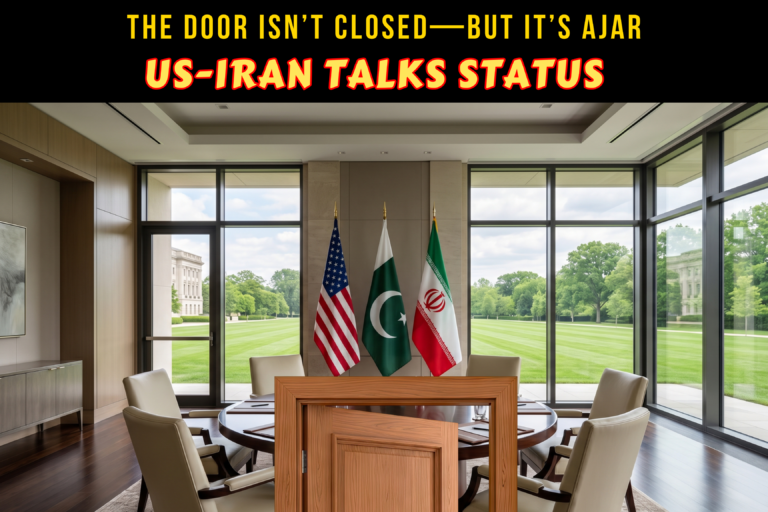
While deploying military assets to Saudi Arabia, Pakistan is simultaneously launching an ambitious diplomatic initiative that positions Islamabad as a critical mediator in the Iran-US crisis. According to diplomatic sources, a high-ranking Pakistani official engaged in Iran-US talks for several weeks has confirmed that Islamabad is deploying maximum diplomatic efforts to host a second round of Iran-US negotiations in the third week of April.
A Convergence of Regional Leaders
What makes this initiative particularly significant is the potential convergence of multiple regional powers. Reports suggest that the talks could witness the attendance of:
- US President Donald J. Trump
- Saudi Crown Prince Mohammed bin Salman (MBS)
- Turkish President Recep Tayyip Erdoğan
- Egyptian Prime Minister Dr. Mostafa Madbouly
- Iranian President Masoud Pezeshkian (who is also likely to visit Pakistan separately)
This gathering would represent an unprecedented multilateral diplomatic effort, with Pakistan serving as the neutral ground for dialogue.
Coordinated Regional Diplomacy
Pakistan’s diplomatic push extends beyond hosting talks. Prime Minister Sharif reportedly plans to visit Saudi Arabia imminently, while a high-powered Pakistani delegation is scheduled to visit China. This coordinated diplomatic offensive demonstrates Pakistan’s unique positioning: maintaining strong ties with both Western and Eastern powers while enjoying credible relationships with Iran and the Gulf states.
Why Pakistan?
Pakistan’s emergence as a mediator reflects several strategic advantages:
- Credible relationships with all parties: Unlike Western powers or regional rivals, Pakistan maintains working relationships with Iran, Saudi Arabia, China, and the United States
- Military cooperation with Gulf states: The deployment of 13,000 troops and PAF jets to Saudi Arabia demonstrates Pakistan’s commitment to Gulf security
- BRICS and Western engagement: Pakistan’s participation in emerging multilateral frameworks while maintaining ties with Washington positions it as a bridge between competing blocs
- Neutral territory: Islamabad offers a geographically and politically neutral venue acceptable to both Tehran and Washington
Analysts suggest that a breakthrough in US-Iran talks could be imminent, potentially within days. The convergence of military, diplomatic, and economic initiatives suggests Pakistan is playing a far more significant role in regional security architecture than at any time since the Cold War.
The Hormuz Question: Sovereignty, Navigation, and Strategic Signaling
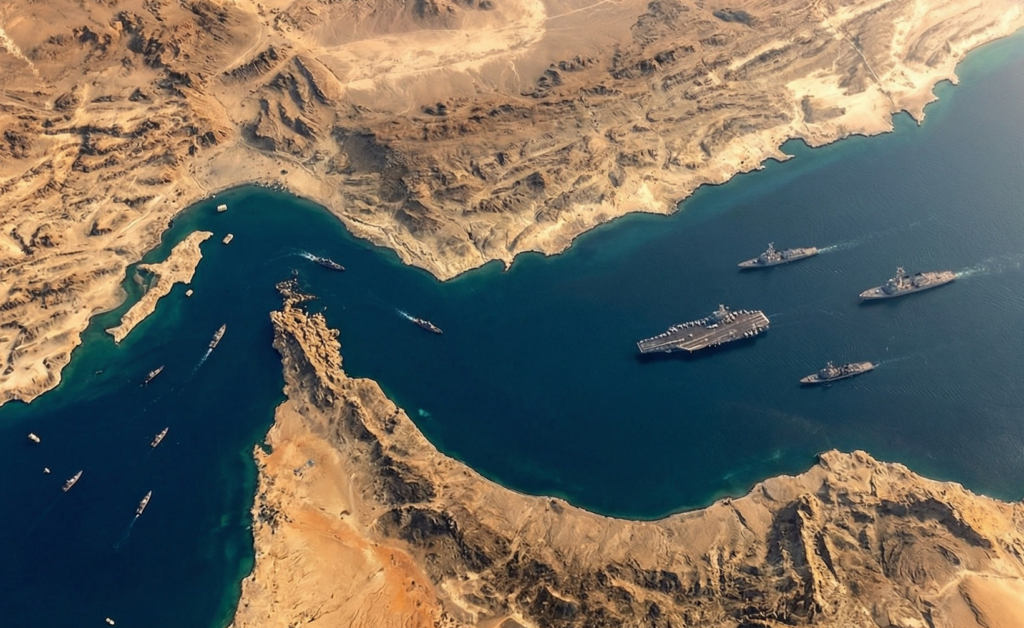
The status of the Strait of Hormuz has emerged as a focal point of legal and strategic contention. While international law generally treats key maritime chokepoints as international waterways, Iran has long maintained that the Strait falls under the joint jurisdiction of Iran and Oman.
China’s recent statements emphasize that “preserving security, stability and smooth passage in the region serves the shared interests of all countries.” This careful phrasing allows Beijing to support freedom of navigation principles while avoiding direct confrontation over contested legal interpretations. The practical effect, however, is to signal that unilateral blockades face coordinated diplomatic pushback from major powers with stakes in regional energy flows.
Historical Context: When Did Multipolarity Begin?
Analysts differ on the precise inflection point of the global power shift. Some point to 2017, when U.S. restrictions on Chinese technology firms like Huawei marked a turn toward strategic competition in critical infrastructure. Others see 2013 as more significant—the year following President Xi Jinping’s first foreign visit to Moscow, which inaugurated a sustained Sino-Russian strategic partnership oriented toward reforming global governance norms.
What is less debated is the trajectory: the rejection of a proposed U.S.-China “G2” management model in favor of a vision emphasizing sovereign equality, non-interference, UN-centered multilateralism, and development-focused cooperation. This framework, articulated in various forms since the mid-2010s, has gained traction among Global South nations seeking alternatives to conditional, alliance-based security architectures.
Implications for Diplomacy: Why “Islamabad Talks Part Two” Would Differ
Should negotiations resume in Islamabad—as now appears likely—the context will be markedly different from the April 11 talks. Any party entering negotiations must now account for:
- Reduced U.S. leverage: Regional partners are actively diversifying security relationships, diminishing Washington’s ability to marshal unified pressure. The Saudi-Pakistan defence pact exemplifies this shift.
- Elevated Iranian agency: With public backing from major powers on issues like maritime access and Pakistan’s diplomatic support, Tehran enters negotiations with strengthened diplomatic footing.
- Multipolar mediation potential: China, Russia, Pakistan, Turkey, Egypt, and Saudi Arabia now possess both the incentive and capacity to shape outcomes, complicating any single-power brokerage model.
- Military-diplomatic linkage: Pakistan’s simultaneous deployment of military forces to Saudi Arabia and diplomatic outreach to all parties demonstrates how security and diplomacy are now intertwined in multipolar fashion.
Treating Iran “with all the rights as a sovereign nation” is no longer merely a normative preference but a pragmatic necessity in a system where multiple powers can validate or undermine diplomatic processes.
Conclusion: Navigating an Uncertain Transition
The current crisis in West Asia has accelerated a transition that was already underway. Multipolarity is not a finished state but a dynamic, often messy process of adjustment. It offers opportunities for greater inclusivity in global decision-making but also risks fragmentation, competing normative frameworks, and new forms of strategic competition.
Pakistan’s dual role—as military partner to Saudi Arabia and diplomatic mediator between Iran and the United States—exemplifies the complexity of this new order. Middle powers are no longer choosing sides but are actively shaping outcomes through flexible, issue-based coalitions.
For policymakers, journalists, and analysts, the imperative is clear: move beyond unipolar assumptions. Understanding today’s international landscape requires tracking multiple centers of influence, appreciating diverse conceptions of sovereignty and security, and recognizing that regional actors are no longer passive recipients of great-power directives but active shapers of their own destinies.
The ceasefire may hold or lapse. The Islamabad talks may succeed or stall. But the deeper shift—the move from a world of one dominant power to a world of many—appears irreversible. How the international community manages this transition will determine whether multipolarity brings greater stability or new forms of volatility.