(By Faraz Ahmed)
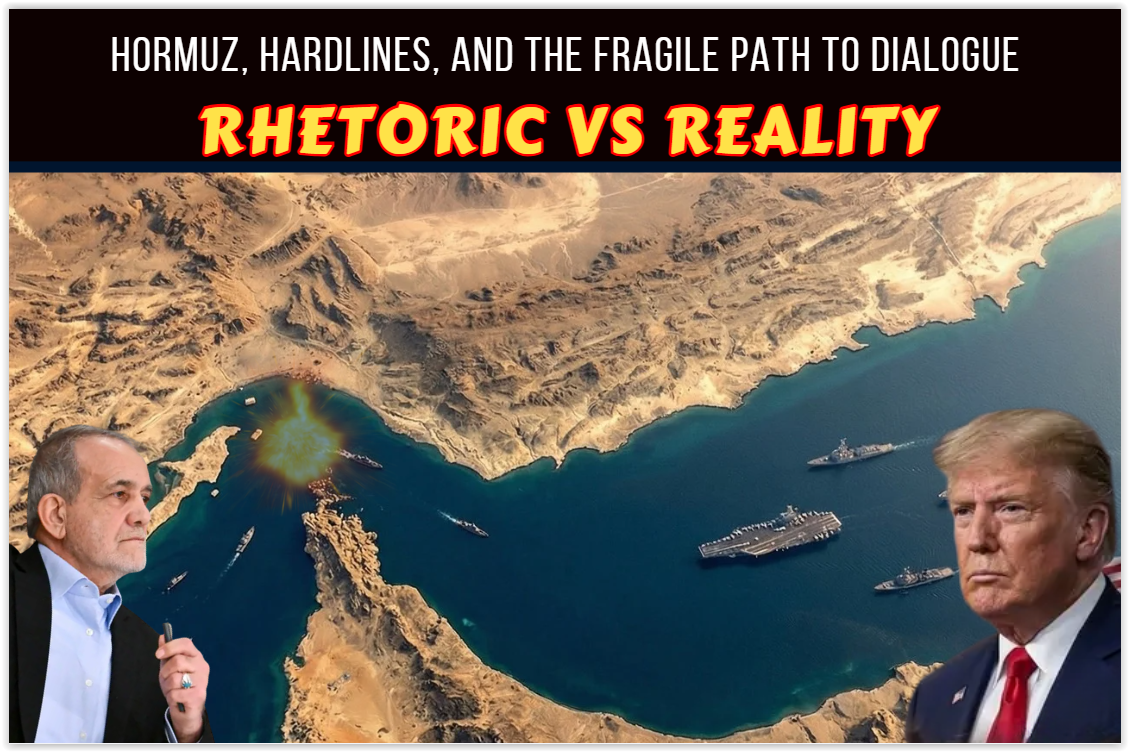
In the narrow waters of the Strait of Hormuz, a paradox is unfolding. U.S. naval assets continue mine-clearance preparations and freedom-of-navigation operations while diplomatic envoys exchange messages in neutral capitals, searching for common ground. Public rhetoric on both sides remains uncompromising: American officials describe a posture that is “locked and loaded,” while Iranian commanders assert “full control” over the passage and warn of decisive responses to military transits. Yet behind closed doors, a temporary ceasefire framework is being tested, and technical consultations on maritime access and nuclear constraints continue. As coercive posturing collides with fragile diplomacy, the gap between public ultimatums and private negotiations risks miscalculation—while also revealing narrow, verifiable pathways toward de-escalation.
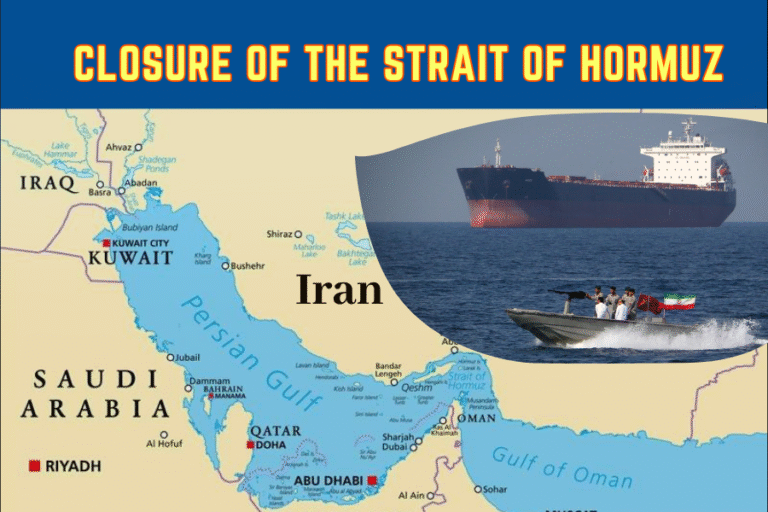
The strategic weight of the Strait of Hormuz is difficult to overstate. At just 21 miles wide at its narrowest point, the waterway serves as a critical maritime chokepoint, channeling roughly 20 percent of global oil shipments and a significant portion of liquefied natural gas exports from the Persian Gulf. Any prolonged disruption immediately reverberates through global energy markets, shipping insurance premiums, and supply chains across Asia, Europe, and the Americas. Following a recent two-week ceasefire agreement between Washington and Tehran, the Strait has emerged as both a symbolic and practical flashpoint. Iranian forces have maintained heightened surveillance and patrol activity, while U.S. and allied navies have repositioned assets to ensure transit continuity. The stakes extend far beyond bilateral tensions: Gulf Cooperation Council states, India, China, and international commercial operators all depend on predictable, secure passage through waters where legal interpretations of navigation rights and security protocols remain contested.
Official statements from both sides underscore a deliberate strategy of public resolve paired with diplomatic engagement. President Donald Trump has alternated between urging regional partners to assume primary responsibility for securing the passage and warning that U.S. forces remain prepared to act if provoked. In a recent public statement, he characterized Iranian maritime actions as “short-term extortion” and reiterated that the waterway must be “immediately ‘Open for Business.’” Vice President JD Vance, following extended talks in Islamabad, confirmed that negotiations had not yet produced an agreement, emphasizing that Washington seeks a “fundamental commitment” from Tehran regarding long-term nuclear constraints rather than temporary pauses.
Iranian officials have matched this tone with calibrated firmness. The Islamic Revolutionary Guard Corps Navy stated it maintains “intelligent control” over the Strait and that unauthorized military vessel movements would face a “firm and decisive response,” while permitting civilian traffic under established regulations. Foreign Ministry spokesperson Esmaeil Baqaei noted that “numerous” messages had been exchanged covering maritime access, nuclear policy, and sanctions relief, adding that diplomatic success hinges on the opposing side’s “seriousness and good faith.” Parliamentary Speaker Mohammad Bagher Ghalibaf delivered a direct message to Washington: “If you fight, we will fight; if you come forward with logic, we will respond with logic.” President Masoud Pezeshkian echoed this conditional openness, suggesting an agreement remains possible if the U.S. moves away from what he described as coercive demands and acknowledges Iran’s “legitimate rights.”
Analysts of international statecraft note that such messaging aligns with established practices in high-stakes coercive diplomacy: public hardlines serve domestic political audiences and bargaining leverage, while backchannel communications preserve space for technical compromise.
Despite ongoing talks, four core issues remain unresolved, each reflecting deeply entrenched security concerns. First, the scope and duration of nuclear commitments: U.S. officials are seeking verifiable, long-term restrictions on enrichment and stockpile limits, while Iranian negotiators have emphasized phased, reciprocal measures tied to sanctions relief. Second, maritime access: Washington insists the Strait remain “open, free, and clear” under international law, whereas Tehran advocates for regulated transit protocols that it argues enhance regional security and prevent unauthorized military movements. Third, regional proxy networks: U.S. demands include a reduction in Iranian support for allied militant groups, a point Iranian officials frame as non-negotiable under their broader security doctrine. Fourth, economic terms: the sequencing and verification of sanctions relief, alongside discussions of war-related reparations, remain contentious.
Whether these positions represent absolute red lines or initial bargaining markers remains unclear. Domestic political dynamics on both sides likely constrain flexibility. In the United States, administration officials face pressure to demonstrate firmness amid domestic political cycles, while in Iran, factional debates between pragmatic diplomats and hardline security institutions shape the boundaries of acceptable compromise. The diplomatic challenge lies in designing a framework that allows both sides to claim strategic gains without compromising core security thresholds.
The current environment carries measurable escalation risks. Close-quarters naval encounters in congested waters increase the potential for miscalculation, particularly if communication channels break down during operational maneuvers. Non-state actors or hardline factions within either country could attempt spoiler actions designed to derail negotiations, while prolonged uncertainty risks triggering oil price volatility that disproportionately affects energy-importing developing nations.
Conversely, several confidence-building measures could reduce tension without requiring immediate comprehensive agreement. Maritime incident-prevention protocols, potentially monitored by neutral third parties, could establish clear rules of engagement for commercial and military vessels. Extending the current ceasefire window would allow technical working groups to address deconfliction procedures and humanitarian exemptions, such as ensuring uninterrupted food and medical shipments. Historical precedents, including maritime de-escalation mechanisms established during past Gulf tensions and verification frameworks from earlier nuclear arrangements, offer technical templates that could be adapted to current conditions—though any application must account for evolved geopolitical realities and stricter verification standards.
In the coming weeks, several indicators will signal whether diplomacy gains traction or deteriorates. The immediate focus rests on whether the temporary ceasefire is extended, allowed to lapse, or collapses following a maritime incident. Shifts in official rhetoric after internal consultations or regional mediation efforts could also reveal changing negotiating postures. Over the next one to three months, progress will likely be measured by the establishment of technical working groups on nuclear verification and maritime security, alongside engagement from regional facilitators such as Oman, Qatar, or European diplomatic channels. Financial markets will serve as a secondary barometer, with oil futures and shipping insurance premiums reflecting trader assessments of regional stability.
High-stakes diplomacy rarely follows a linear path. It typically advances through cycles of pressure, pause, and incremental compromise. The current Hormuz standoff illustrates how public rhetoric and private negotiations can coexist, even amid profound mistrust. Sustainable resolution will ultimately depend on addressing underlying security concerns through verifiable, mutually acceptable steps rather than relying solely on tactical de-escalation. As the ceasefire window narrows, the critical question remains: what concrete, incremental measures can transform today’s fragile truce into a durable framework for maritime stability?