(By Khalid Masood)
The post-Cold War era ushered in what scholars famously called the “unipolar moment”—a historical interval in which the United States stood unrivaled in military reach, economic weight, financial architecture, and cultural influence. Today, that moment is widely declared over. The rise of China, the expansion of BRICS+, and the fragmentation of global trade have fueled a powerful declinist narrative. Headlines routinely forecast the twilight of American hegemony, while policy circles debate whether Washington is merely managing a graceful exit from global leadership or accelerating toward systemic irrelevance.
Yet beneath the rhetoric of inevitable multipolarity lies a more durable reality: the US sole superpower status is not ending; it is evolving. The United States is not approaching the end of its road as the world’s leading power. Rather, it is transitioning into a more sustainable, networked, and institutionally anchored form of global leadership that will likely endure for the foreseeable future. As Joseph S. Nye Jr. observed, “Power in the twenty-first century will belong not to those with the largest armies, but to those who can set the rules, build the networks, and attract the talent.” That description still fits Washington more closely than any rival capital.
The Structural Bedrock: Geography, Resources, and Demographic Vitality
Power is never merely a product of policy or political will; it is rooted in structural advantages that outlast electoral cycles and strategic miscalculations. The United States enjoys a geographic endowment unmatched by any peer competitor. Flanked by two vast oceans, bordered by stable neighbors, and endowed with an interior waterway system that quietly moves agricultural and industrial output at unparalleled efficiency, America’s continental scale functions as both shield and engine. The shale revolution transformed the country from an energy importer into a net exporter, insulating it from the supply shocks that routinely constrain Eurasian powers. Simultaneously, the American heartland remains one of the world’s most productive agricultural zones, granting the nation a rare combination of food and energy security.
Demography further compounds this advantage. While much of the developed world grapples with aging populations and shrinking workforces, the United States maintains a relatively youthful demographic profile, sustained by immigration and higher fertility rates among key cohorts. This demographic vitality fuels labor market flexibility, entrepreneurial dynamism, and long-term fiscal resilience.
| Structural Metric | United States | China | European Union |
|---|---|---|---|
| Energy Independence | Net exporter (shale, renewables) | Heavy importer (oil/gas) | Mixed; high import dependency |
| Agricultural Output | Global leader in exports & tech | Self-sufficient but import-dependent for feed | Net importer; fragmented policy |
| Working-Age Growth | Steady (+0.4% annually, immigration-driven) | Declining rapidly (-1.2% by 2030 proj.) | Stagnant/declining |
| Continental Security | High (ocean buffers, stable borders) | Medium (maritime disputes, land borders) | Medium-High (NATO shield, but fragmented) |
Geography and demography do not guarantee success, but they provide a structural floor that makes systemic collapse highly improbable and sustained competitiveness structurally likely.

Institutional Depth and the Architecture of Adaptation
If geography provides the foundation, institutions provide the scaffolding. The United States possesses a dense ecosystem of universities, research laboratories, independent judiciaries, professional civil services, and vibrant civil society organizations. These institutions are imperfect and frequently contested, but their openness, self-correction mechanisms, and capacity to absorb and integrate global talent remain unmatched.
American universities continue to dominate global rankings, not merely as educational centers but as engines of scientific discovery, technological patents, and cross-border intellectual exchange. The rule of law, despite periodic political polarization, continues to enforce property rights, contract stability, and regulatory predictability at a scale that attracts capital and innovation. As Francis Fukuyama has long argued, “The strength of a state lies not in its momentary coercive power, but in the institutional habits that allow it to adapt, recalibrate, and survive crises without fracturing.”
Even when domestic politics grow fractious, the institutional architecture tends to recalibrate rather than fracture. This institutional elasticity is a quiet but decisive advantage: it allows the United States to navigate crises, absorb shocks, and reallocate resources without resorting to systemic overhaul or authoritarian consolidation.
Justice and Pluralism: The Moral Infrastructure of American Power
Beyond courts and constitutions, the United States derives strategic strength from its evolving commitment to the dispensation of justice and social tolerance. Historically, movements for civil rights, gender equality, and religious freedom have not merely corrected injustices—they have renewed the social contract, expanded the talent pool, and enhanced America’s moral credibility abroad. When courts uphold equal protection, when campuses protect dissent, and when communities bridge difference, they reinforce a civic ecosystem that attracts global talent, sustains domestic legitimacy, and projects soft power.
Hannah Arendt captured this dynamic precisely: “Power corresponds to the human ability not just to act but to act in concert.” In the American context, that concert has repeatedly emerged from struggles for inclusion. The civil rights movement, interfaith harmony initiatives, and landmark judicial rulings did not weaken the state; they strengthened its adaptive capacity. In an era where authoritarian models trade stability for suppression, America’s messy but functional pluralism remains a comparative advantage. It turns diversity into dynamism, and dissent into renewal. Nations that institutionalize justice and tolerate difference do not merely survive shocks—they emerge from them with renewed legitimacy.

The Alliance Multiplier: Networked Power Over Solo Hegemony
Military supremacy alone does not sustain global leadership; it is the architecture of alliances that multiplies it. The United States maintains the most extensive and interoperable network of security partnerships in modern history. NATO’s strategic revitalization, the deepening of Indo-Pacific alliances through bilateral treaties and minilateral frameworks like the Quad and AUKUS, and decades of defense integration with partners in the Middle East and Latin America create a force posture that no single competitor can easily replicate.
China’s military modernization is impressive, and Russia retains asymmetric capabilities, but neither commands a comparable web of voluntary, institutionalized security partnerships. Alliances are not merely additive; they are multiplicative. They distribute burden-sharing, enhance intelligence fusion, standardize technological protocols, and confer diplomatic legitimacy. The United States has learned, often through costly experience, that sustainable power is exercised through coordination rather than coercion. In an era of dispersed threats and complex interdependence, this networked security architecture remains a decisive strategic advantage.
Financial Centrality and the Innovation Ecosystem
Economic primacy is frequently measured in GDP, but systemic influence is measured in architecture. The U.S. dollar remains the anchor of global trade, reserves, and financial clearing. Despite persistent narratives of de-dollarization, network effects, deep capital markets, legal predictability, and the absence of a credible alternative ensure the dollar’s continued centrality. Sanctions policy, SWIFT integration, and Treasury market liquidity grant Washington financial leverage that no peer competitor currently possesses.
Beyond finance, the United States leads in the innovation ecosystems that will define the twenty-first century: artificial intelligence, semiconductor design, biotechnology, aerospace, and cloud infrastructure. While manufacturing has globalized, the high-value nodes of research, design, and intellectual property remain heavily concentrated in American institutions and firms. Capital markets provide risk financing at scale, regulatory frameworks protect intellectual property, and a culture of entrepreneurial failure-and-recovery sustains technological iteration.
| Pillar of Strategic Resilience | US Advantage | Global Impact |
|---|---|---|
| Justice & Civic Tolerance | Independent judiciary, civil rights legacy, pluralistic integration | Enhances soft power, attracts global talent, reinforces domestic legitimacy |
| Financial Architecture | Dollar dominance, deep capital markets, SWIFT integration | Enables economic statecraft, stabilizes global trade, anchors reserves |
| Technological Innovation | AI leadership, semiconductor design, biotech patents, venture capital | Drives next-gen growth, sets international standards |
| Alliance Network | NATO, Indo-Pacific treaties, AUKUS, Quad | Multiplies military reach, shares burden, legitimizes action |
Economic power in the modern era is less about volume and more about position in the value chain; by that metric, American global leadership remains structurally intact.

The China Question: Ascent Without Ascendancy
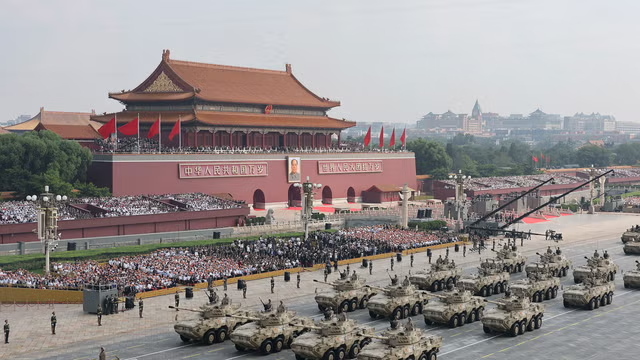
No discussion of the US sole superpower status is complete without addressing China’s rise. Beijing’s economic transformation, infrastructure diplomacy, and military modernization represent the most significant geopolitical shift of the century. Yet ascent does not automatically translate into ascendancy. China faces structural headwinds: a rapidly aging population, a debt-heavy growth model, technological bottlenecks in advanced semiconductors and precision manufacturing, and a geopolitical trust deficit that limits alliance formation. The Belt and Road Initiative has expanded influence, but it has also generated debt diplomacy controversies and strategic pushback.
Moreover, China’s institutional framework prioritizes stability and centralized control, which, while effective for rapid mobilization, constrains the bottom-up innovation and adaptive feedback loops that sustain long-term technological and economic leadership. China is likely to achieve regional preeminence and niche global influence, but replacing the United States as the sole superpower would require not only economic parity but also financial architecture dominance, a global alliance network, demographic vitality, and cultural-institutional attractiveness. None of these are emerging at a scale or pace that suggests systemic displacement in the foreseeable future.
The Psychological Transition: From Hegemon to Indispensable Architect
Perhaps the most profound shift in American statecraft is psychological. For decades, Washington operated under the assumption that it was the indispensable center of global order. Today, it is learning to function as the indispensable architect of a more distributed system. This is not a concession to decline; it is an adaptation to complexity. The United States increasingly exercises leadership through minilateral coalitions, standards-setting bodies, technology governance frameworks, and issue-specific partnerships rather than unilateral dictates. It recognizes that in a multipolar world order 2026 and beyond, influence is exercised by convening, coordinating, and calibrating rather than commanding.
As Henry Kissinger once noted, “The test of a great power is not whether it can impose its will, but whether it can shape the environment in which others must operate.” This psychological maturation aligns with historical patterns of durable power. Empires that insisted on absolute control fractured; states that learned to embed their interests in shared rules and institutional frameworks endured. America’s transition from hegemon to first-among-equals does not diminish its primacy; it stabilizes it.
Conclusion: Primacy Redefined, Not Relinquished
Unipolarity was a historical interlude, not a permanent condition. Its passing has sparked anxious declarations of American decline, but those declarations mistake the end of absolute dominance for the erosion of systemic leadership. The United States retains the structural foundations, institutional depth, alliance networks, financial architecture, and innovation ecosystems necessary to maintain the US sole superpower status for the foreseeable future. China’s rise will reshape regional dynamics and introduce genuine strategic competition, but it does not yet possess the demographic vitality, trust-based alliances, financial centrality, or adaptive institutional culture required to assume global systemic leadership.
The multipolar age does not diminish American power; it demands a more mature, sustainable, and networked form of it. Primacy in the twenty-first century will not be measured by the ability to dictate outcomes, but by the capacity to shape rules, convene partners, set technological standards, and sustain institutional credibility. If the United States continues to leverage its structural advantages, invest in institutional resilience, and exercise leadership through coordination rather than coercion, its primacy will not merely endure—it will evolve. The road ahead is not an end, but an adaptation. And in statecraft, as in history, those who adapt outlast those who merely dominate.