(By Khalid Masood)
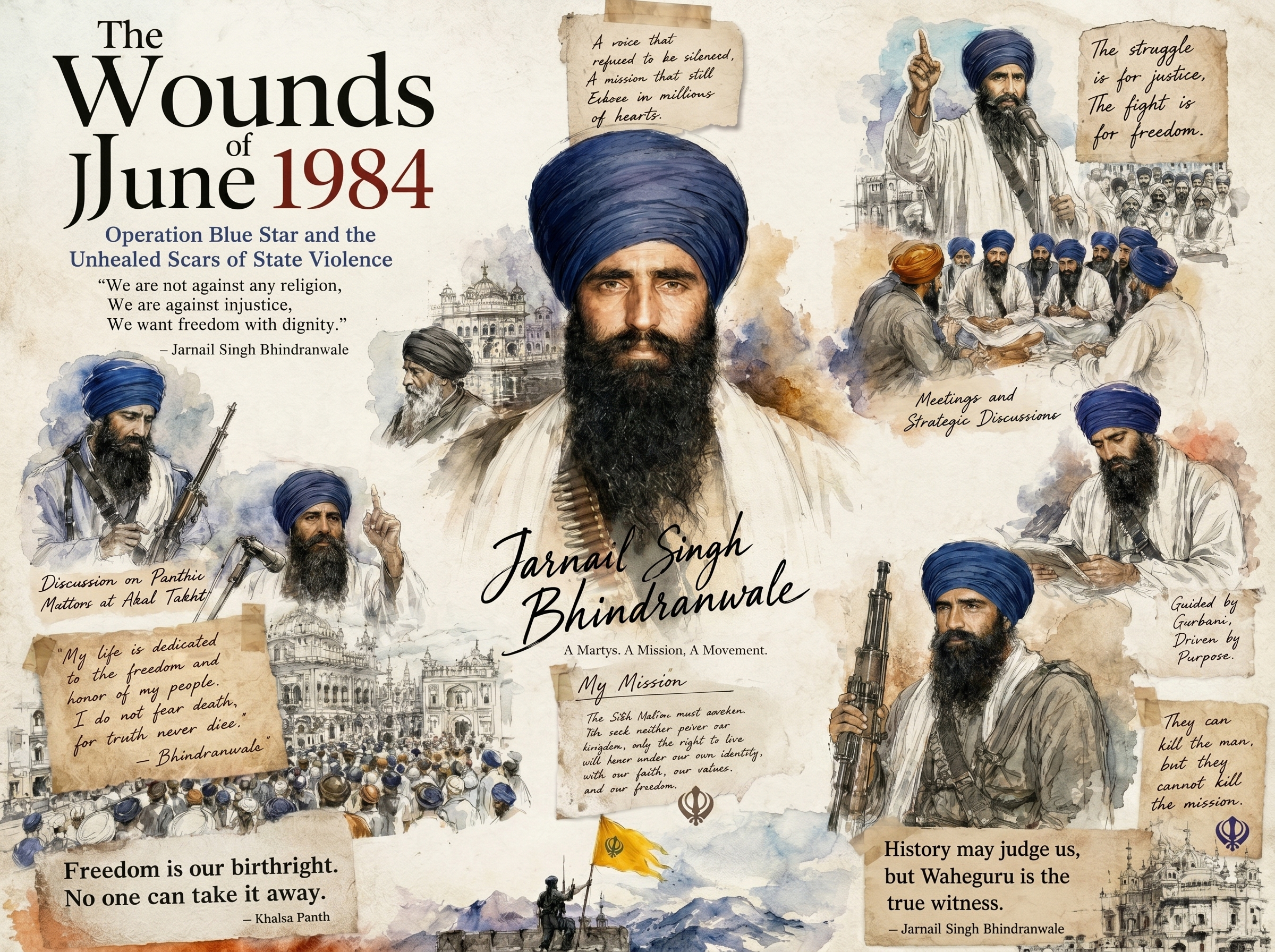
June 6, 1984, stands as one of the most harrowing and indelible stains in Sikh history—a day defined by profound betrayal and unmitigated state violence. On this solemn anniversary, freedom lovers and human rights defenders across the globe unite to remember the horrific bloodbath of June 1984, paying solemn tribute to the Sikhs who were brutally slaughtered while simply demanding their fundamental birthright. The Indian Army’s ruthless military assault on the Akal Takht Sahib, the supreme temporal seat of the Sikh faith, was not merely a tactical operation; it was a catastrophic desecration that inflicted a deep, unhealing wound on the collective Sikh consciousness.
The sheer brutality of deploying tanks, heavy artillery, and overwhelming firepower against sparsely armed devotees engaged in peaceful worship continues to send shockwaves across generations. It serves as a grim, unignorable reminder of the sacred duty to fiercely protect the sanctity of all places of worship from state tyranny. As an independent observer of South Asian strategic and human rights issues, it is imperative to look back at the events of June 6, 1984, not as a sanitized historical footnote, but as a glaring, profound case study in the catastrophic consequences of unchecked state overreach, institutional impunity, and the unforgivable militarization of sacred religious spaces.
As an independent observer of South Asian strategic and human rights issues, it is imperative to look back at the events of June 6, 1984, not merely as a historical footnote, but as a profound case study in the catastrophic consequences of state overreach and the militarization of religious spaces.
The Genesis of a Crisis
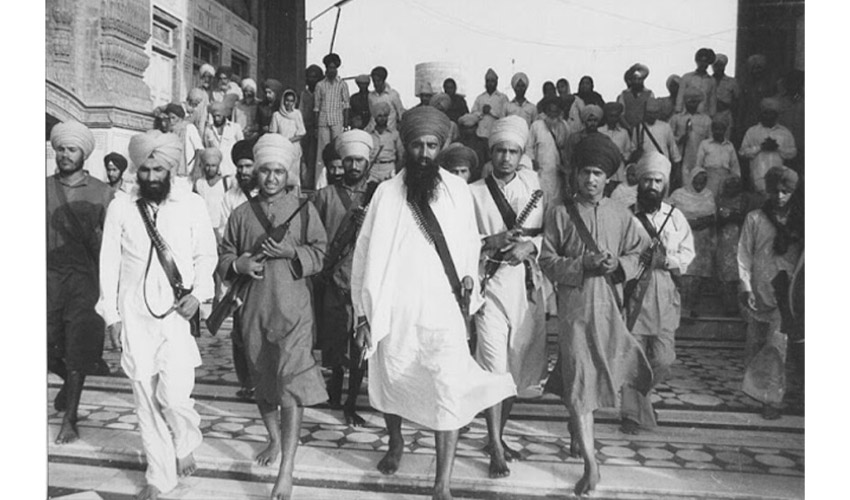
To understand the tragedy of June 1984, one must examine the political climate in Punjab during the late 1970s and early 1980s. The roots of the conflict lay in the growing alienation of the Sikh community, stemming from long-unaddressed political and economic grievances, encapsulated in the Anandpur Sahib Resolution. While the resolution primarily demanded greater provincial autonomy for Punjab within the Indian federal structure, the central government under Prime Minister Indira Gandhi increasingly viewed any assertion of Sikh political identity through the lens of secessionism.
Amidst this political friction, the rise of the militant preacher Jarnail Singh Bhindranwale added a volatile religious dimension to the unrest. By 1982, Bhindranwale and his armed followers had taken up residence within the complex of the Golden Temple (Sri Harmandir Sahib) in Amritsar, the holiest shrine of Sikhism. The accumulation of weapons and the transformation of the sacred precinct into a fortress presented the Indian state with a severe security challenge. However, the government’s failure to resolve the situation through political dialogue or standard law enforcement set the stage for a disastrous military intervention.
Operation Blue Star: A Strategic and Moral Catastrophe
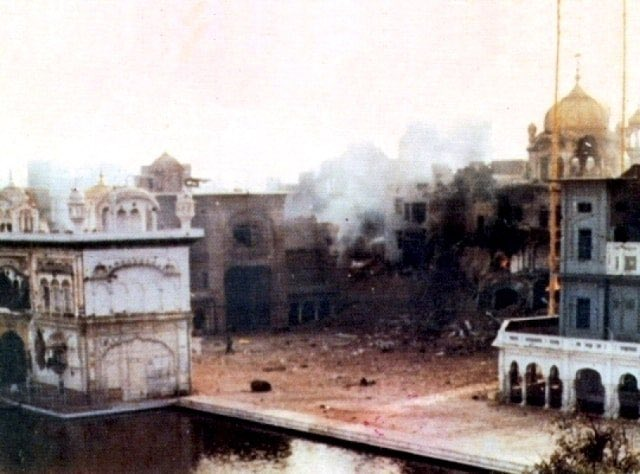
In early June 1984, the Indian government launched “Operation Blue Star,” a massive military assault on the Golden Temple complex. The operation was shrouded in secrecy, and the decision to attack during a major religious holiday ensured that thousands of peaceful pilgrims were trapped inside the complex.
June 6, 1984, marks the most intense and tragic day of the operation. The Indian Army, deploying tanks, heavy artillery, and armored personnel carriers, launched a full-scale assault on the Akal Takht, where Bhindranwale and his militants had barricaded themselves. The use of heavy weaponry within the sacred precincts resulted in fierce gun battles. The militants, heavily armed and entrenched, offered stiff resistance, but they were no match for the overwhelming firepower of the Indian military.
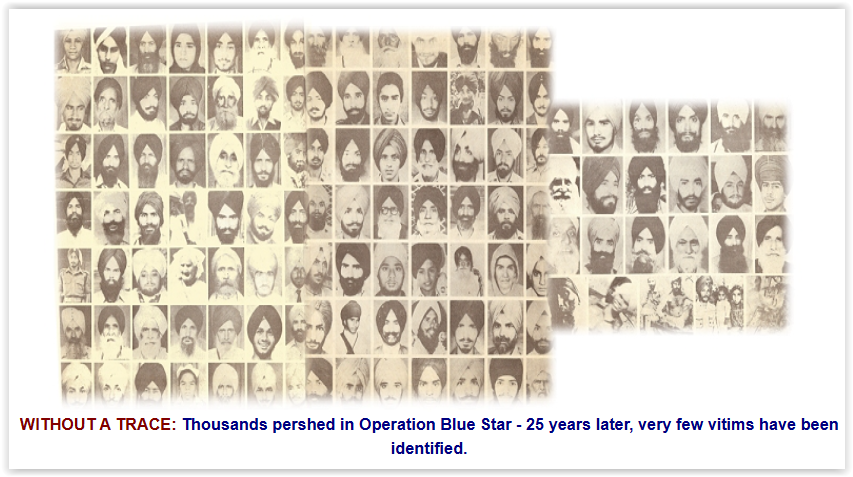
These events resulted in the loss of numerous innocent lives, many of whom were devotees present for peaceful worship and prayers. The human cost was staggering. Official Indian government figures placed the civilian and militant death toll at around 400 to 500. However, independent observers, human rights organizations, and Sikh groups have long maintained that the actual number of casualties was significantly higher, potentially running into the thousands. Countless innocent lives were caught in the crossfire or killed in the ensuing chaos.
The Desecration of Faith and Psychological Trauma
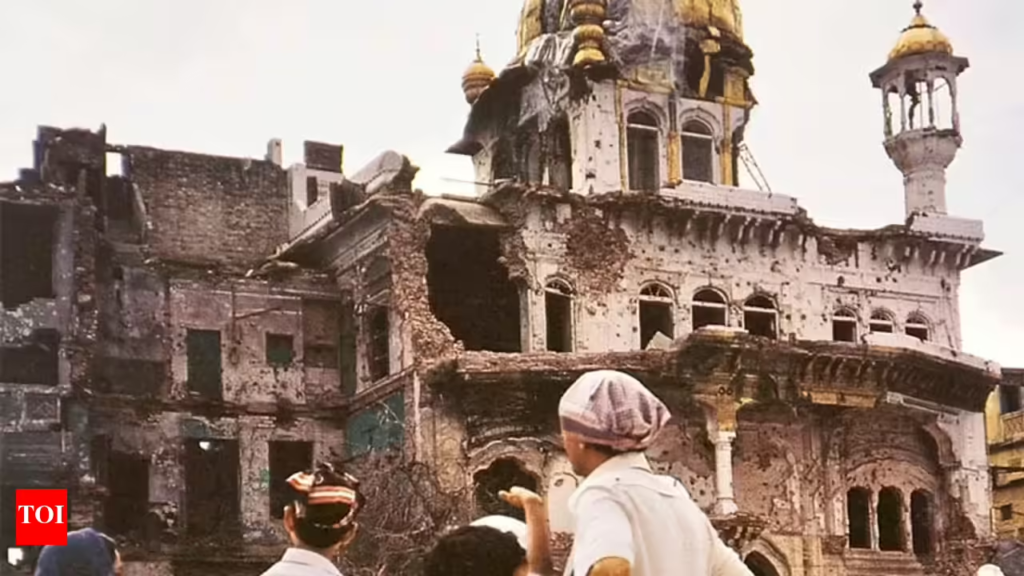
Beyond the immediate loss of life, the physical and psychological damage inflicted on the Sikh community was immeasurable. The Akal Takht was severely damaged by the military assault and was subsequently partially demolished by the Indian government using bulldozers—an act that was viewed as the ultimate desecration. The holy Sarovar (the pool of nectar surrounding the Golden Temple) was stained with blood, and the sacred architecture was riddled with bullet holes.
For Sikhs worldwide, the imagery of the Indian Army storming their holiest shrine was a profound shock. It was perceived not just as an attack on militants, but as a direct assault on their faith, identity, and sovereignty. Such tragedies raise serious and continuing concerns about the protection of religious sanctuaries and the full realization of the principles of religious freedom.
The Domino Effect: Assassination and Pogroms
The fallout from Operation Blue Star was swift and devastating. The deep sense of betrayal and anger within the Sikh community culminated in the assassination of Prime Minister Indira Gandhi on October 31, 1984, by two of her own Sikh bodyguards.
In retaliation, a horrific wave of state-complicit anti-Sikh pogroms swept through Delhi and other parts of India. Over the course of several days, organized mobs, allegedly aided by local political leaders and police, massacred thousands of innocent Sikhs, burned their homes, and destroyed their properties. This state-sponsored violence further alienated the Sikh youth, plunging Punjab into a bloody decade-long insurgency and counter-insurgency campaign marked by widespread human rights abuses, enforced disappearances, and extrajudicial killings.
A Legacy of Impunity and the Demand for Justice
Decades later, the Sikh community across the world continues to await full justice, complete accountability, and meaningful reconciliation for the victims and their families. While some perpetrators of the 1984 anti-Sikh pogroms have faced legal proceedings, the process has been widely criticized as painfully slow and inadequate. The broader questions regarding the proportionality of the military force used during Operation Blue Star and the responsibility of the state for the subsequent massacres remain largely unaddressed.
For students of strategic studies and conflict resolution, the events of June 1984 serve as a grim reminder of the limitations of military force in resolving political and identity-based conflicts. The Indian state’s decision to treat a complex political and religious grievance as a purely law-and-order problem, and subsequently to deploy the military in the most sacred of spaces, was a strategic blunder of monumental proportions. It achieved the immediate tactical objective of removing militants from the temple but at the cost of alienating an entire community and destabilizing the region for decades.
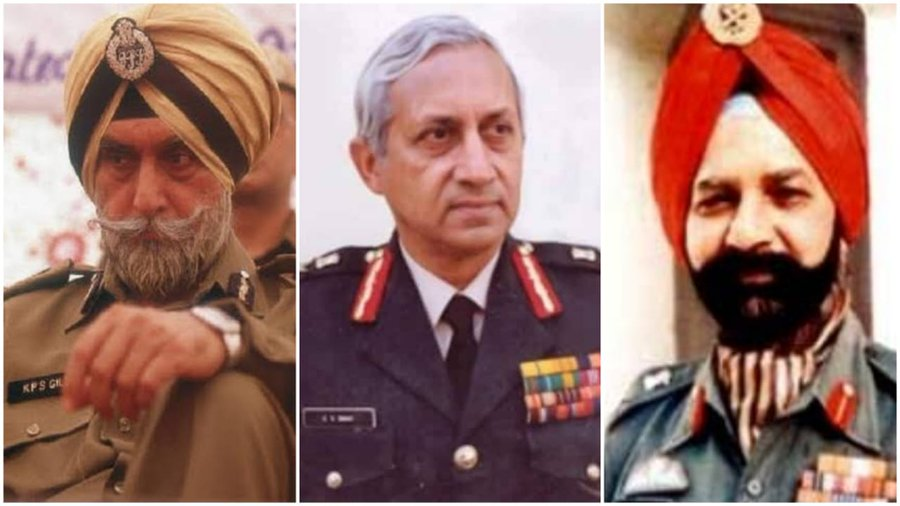
Criminals Responsible for Innocent Sikh’s Massacres in Indian Punjab
Conclusion
On this Black Day, we honor the martyrs, remember the innocent lives lost, and stand in unwavering solidarity with the global Sikh community. Their sacrifices, suffering, and resilience shall never be forgotten.
The tragedy of June 6, 1984, must stand as an eternal cautionary tale for nations across the globe. It underscores the imperative of protecting the sanctity of religious spaces and the absolute necessity of addressing the political and economic grievances of minority communities through dialogue, empathy, and democratic engagement, rather than through the barrel of a gun. Until full justice is served and the wounds of the past are genuinely acknowledged, the sorrow of June 1984 will continue to echo through the corridors of history.