(By Faraz Ahmed)
When the final whistle pierced the humid night air, the contrasting scenes on the pitch told the entire story of a complex, deeply polarizing World Cup. On one side, the Spanish squad collapsed into a joyous, tearful embrace, bathed in the confetti of a hard-earned triumph. On the other, Argentine players stood isolated, heads bowed in defeat or glaring at the officials, their frustration boiling over into a bitter, chaotic post-match scuffle.
This tournament will be remembered for its stark dichotomies. Spain’s victory was a masterclass in tactical discipline, youthful exuberance, and national pride. Conversely, the narrative of the tournament—and specifically Argentina’s winding, controversial journey to the final—was heavily marred by refereeing debates, culminating in a final match that frequently descended into unsportsmanlike conduct and tactical cynicism.
The Road to the Final: Argentina’s Controversial Campaign
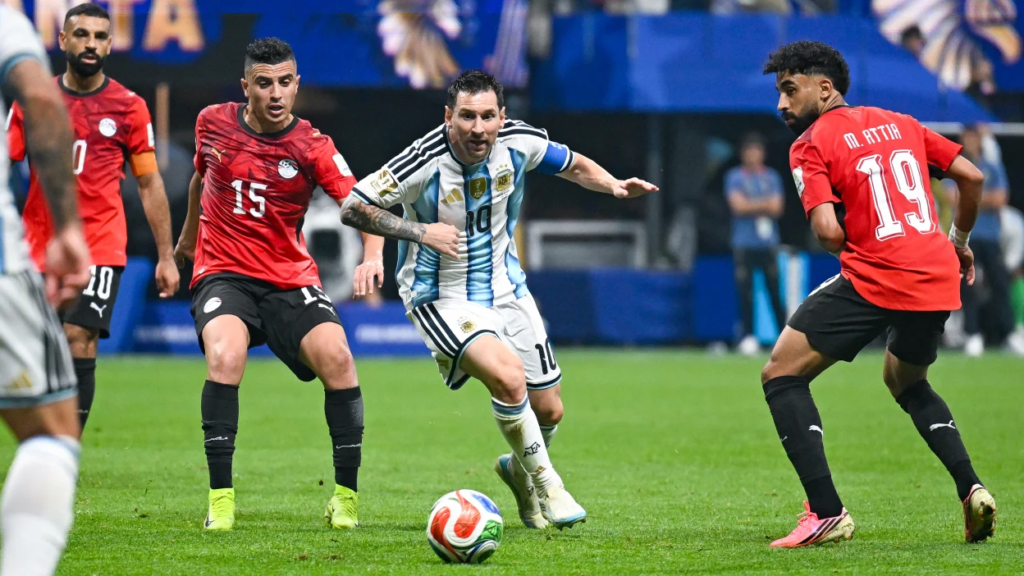
Long before the final whistle blew on the championship match, questions regarding the integrity of the tournament’s officiating had been raised, largely due to Argentina’s improbable run. The focal point of this controversy was their crucial clash against Egypt, a match that would heavily influence the trajectory of the tournament.
In what should have been a straightforward tactical battle, the Video Assistant Referee (VAR) became the undeniable protagonist. Argentina was the recipient of a series of highly questionable decisions that kept them in the competition. Most notably, a clear and undeniable onside goal for Egypt was wrongly disallowed after a prolonged, confusing VAR review that lasted over four minutes. Later in the match, Argentina was awarded a highly debatable penalty for minimal, almost imperceptible contact in the box—a decision that sparked outrage from the Egyptian bench and the global football community.
These interventions provided an undeniable, undue favor to the Argentinian team. Rather than forging a team through the crucible of fair competition, these controversial calls allowed Argentina to survive on the margins of the rules. This tainted run created a lingering narrative of injustice, giving the Argentine squad a false sense of invincibility and setting a toxic, cynical precedent for the remainder of the tournament.
The Final Match: A Tale of Two Tactics
When the two finalists finally met on the grandest stage, the contrast in their footballing philosophies was glaring. Spain, representing the modern evolution of the sport, played with a mesmerizing blend of possession and purpose. They controlled the tempo, utilized the width of the pitch, and executed a high-pressing game plan that suffocated their opponents. Their passing triangles were crisp, and their off-the-ball movement was relentless.
Argentina, meanwhile, failed to display any meaningful, cohesive football. Unable to match Spain’s technical superiority or tactical fluidity, they resorted to attrition. The match quickly devolved into a physical contest, with the Argentine team relying heavily on “body play.” They utilized rugby-style tackles, threw their weight around in midfield to block passing lanes, and committed a staggering number of tactical fouls to break up Spain’s rhythm.
It was a negative approach to the beautiful game. The turning point arrived in the second half when Spain finally broke through the Argentine physical block. Through a rapid sequence of one-touch passing that bypassed three Argentine midfielders, Spain exposed the gaps left by the overcommitting defenders. The sheer exhaustion of the Argentine team, brought on by chasing shadows and committing fouls, ultimately led to their tactical collapse.
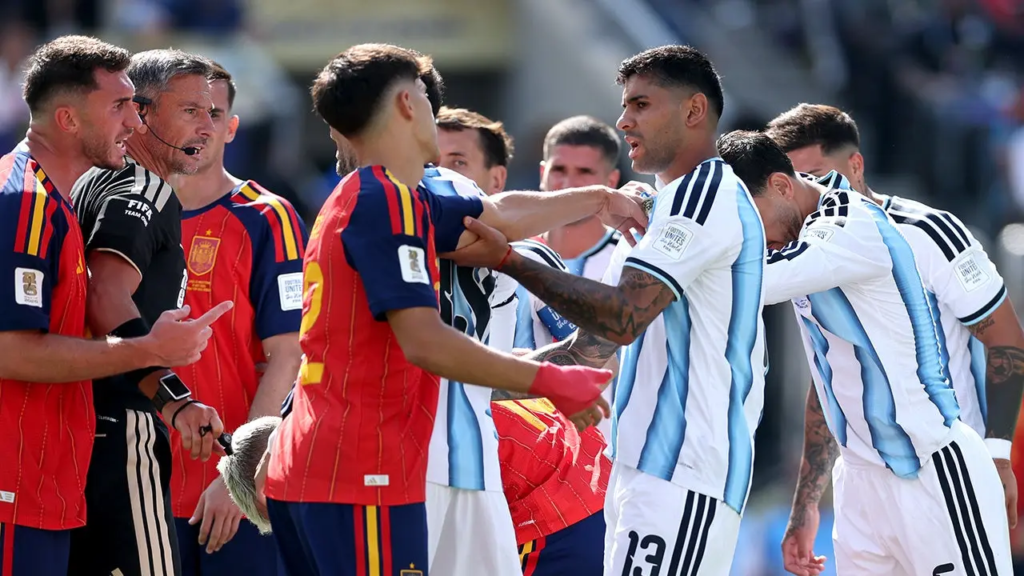
The Aftermath: Losing Grace and the Post-Match Scuffle
If the match itself was a tactical struggle, the final moments were a disgrace to the spirit of the sport. As the reality of their defeat set in, the Argentine team’s frustration reached a boiling point, revealing a profound lack of emotional discipline.
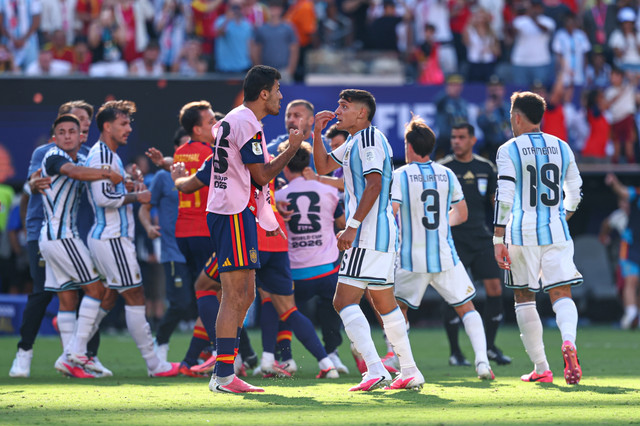
Following the final whistle, a minor collision in the midfield sparked a massive, ugly scuffle. Argentine players, unable to process their loss with dignity, aggressively shoved Spanish players. The situation escalated rapidly, leading to a chaotic scene where benches cleared, substitutes rushed the pitch, and players had to be physically restrained by security and match officials.
This behavior was a damning indictment of the Argentine team’s mentality. It showcased a fragile psyche, an inability to handle adversity, and a sense of entitlement born from their controversial run through the tournament. In stark contrast, the Spanish squad, though initially caught off guard, quickly showed immense composure. They walked away from the provocation, focusing on celebrating their historic victory. The scuffle proved that while Argentina had the physicality to disrupt, they lacked the grace to accept defeat.
The Architects of La Roja’s Triumph: Spain’s Standout Stars
Amidst the chaos and the physical battering, Spain’s victory was built on the shoulders of three distinct archetypes of footballing excellence, each playing a pivotal role in dismantling their opponents.
The Captain: Álvaro Morata Serving as the emotional and tactical anchor, Spanish captain Álvaro Morata was a marvel of stoicism. Though primarily a striker, his work rate and leadership were felt across the entire pitch. Throughout the match, as Argentine players kicked and shoved, Morata absorbed the physical blows without losing his temper. His vocal leadership kept the team focused, ensuring that Spain responded to every cynical foul with a quick pass and a tactical reset, rather than a retaliation. He led by example, pressing relentlessly and keeping the team’s morale unbreakable.

The Scorer: Nico Williams The clinical finisher and top scorer of the tournament, Nico Williams, was the ultimate difference-maker in the final. Unfazed by the physical intimidation and the aggressive marking of the Argentine defenders, Williams’ movement was flawless. Using his blistering pace and exceptional close control, he consistently found the half-spaces, displaying a lethal calmness in front of goal. His decisive strike, which broke the Argentine resistance, was a testament to his tournament-long brilliance and his ability to perform on the biggest stage.

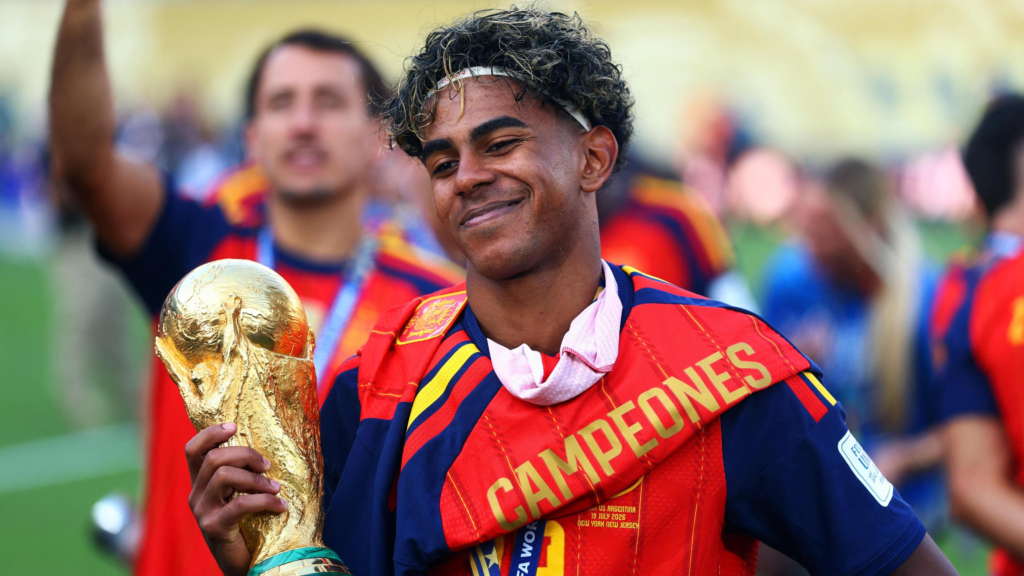
The Youngest Player: Lamine Yamal The inclusion of the tournament’s youngest prodigy, Lamine Yamal, was a masterstroke. Bringing a fearless, infectious energy to the pitch, the teenager dribbled past veteran defenders with a swagger that belied his age. His technical skill, vision, and refusal to be intimidated by Argentina’s “body play” provided the crucial spark that unlocked the defense. Yamal didn’t just participate in the final; he dictated it at times, signaling a bright, formidable future for Spanish football and redefining what is possible for a player of his age.
The Royal Touch: The Spanish Royal Family’s Role
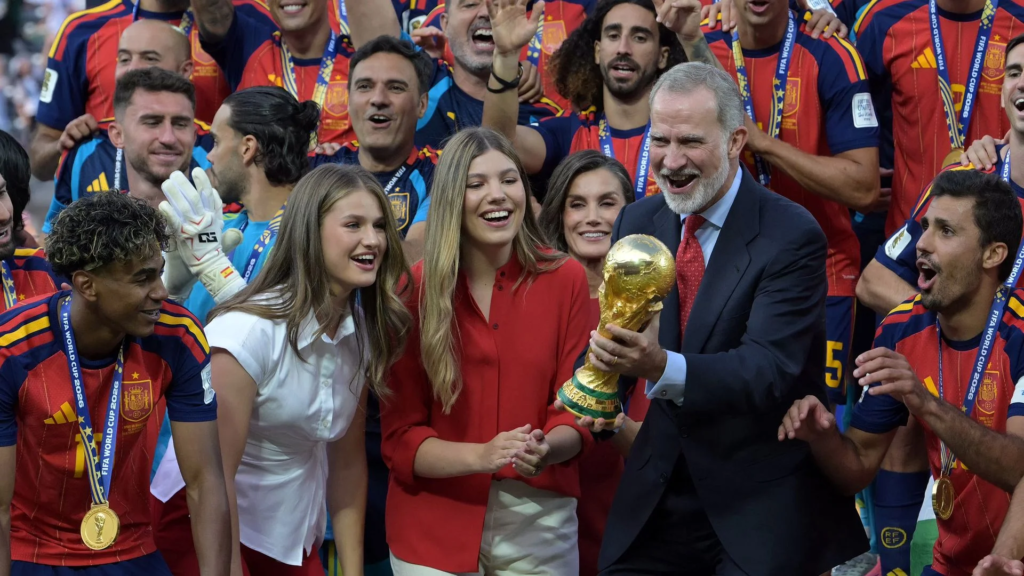
The triumph was not just a sporting victory; it was a profound moment of national unity, heavily underscored by the presence of the Spanish Royal Family. King Felipe VI, Queen Letizia, and Princess Leonor were a constant, stabilizing presence throughout the tournament, attending key matches to show their unwavering support.
During the final, the Royal box was a microcosm of the nation’s emotions. They watched the tense, physical first half with stoic support, but it was their reaction to the post-match scuffle that stood out. Rather than showing anger or alarm at the unsportsmanlike conduct on the pitch, the Royals maintained a dignified composure—a silent, powerful rebuke to the poor behavior of the runners-up.
During the medal ceremony, the Royal Family’s interactions with the players were warm and deeply symbolic. As King Felipe VI handed out the medals and watched Morata lift the trophy alongside a beaming Princess Leonor, the imagery was powerful. The Royal Family’s involvement elevated the victory from a mere athletic achievement to a unifying moment of cultural and national pride, reminding the world of Spain’s rich heritage and its modern, vibrant future.
Conclusion
This World Cup will be remembered as a tournament of profound contrasts. Spain’s glorious triumph was a testament to the enduring beauty of tactical discipline, youthful fearlessness, and graceful sportsmanship. They won not just with skill, but with an unbreakable sense of composure and a deep respect for the game.
Conversely, Argentina’s campaign will serve as a cautionary tale. A run built on the shaky foundation of VAR controversies ultimately collapsed under the weight of their own poor discipline and tactical cynicism. Their failure to play meaningful football in the final, culminating in a bitter post-match scuffle, highlighted a team that lost its way and forgot the core values of the sport.
As the confetti settles and the trophy is polished, the legacy of this tournament is clear. True champions are defined not just by the silverware they lift, but by the manner in which they play the game. Spain proved that when you combine tactical brilliance with unyielding grace, victory is not just achieved—it is truly deserved.