(By Khalid Masood)
Statecraft is not a spectator sport, yet the modern media landscape often treats it as one. In an era defined by 280-character geopolitical analysis, algorithmic outrage, and the relentless 24-hour news cycle, the signal is routinely drowned out by the noise. Mainstream coverage frequently prioritizes speed and sensationalism over context, leaving the informed reader starving for depth.
For policymakers, academics, diplomats, and serious students of global affairs, understanding the world requires more than skimming the daily headlines. It demands an engagement with rigorous, expert-driven analysis that explores the historical, legal, and strategic underpinnings of international relations.
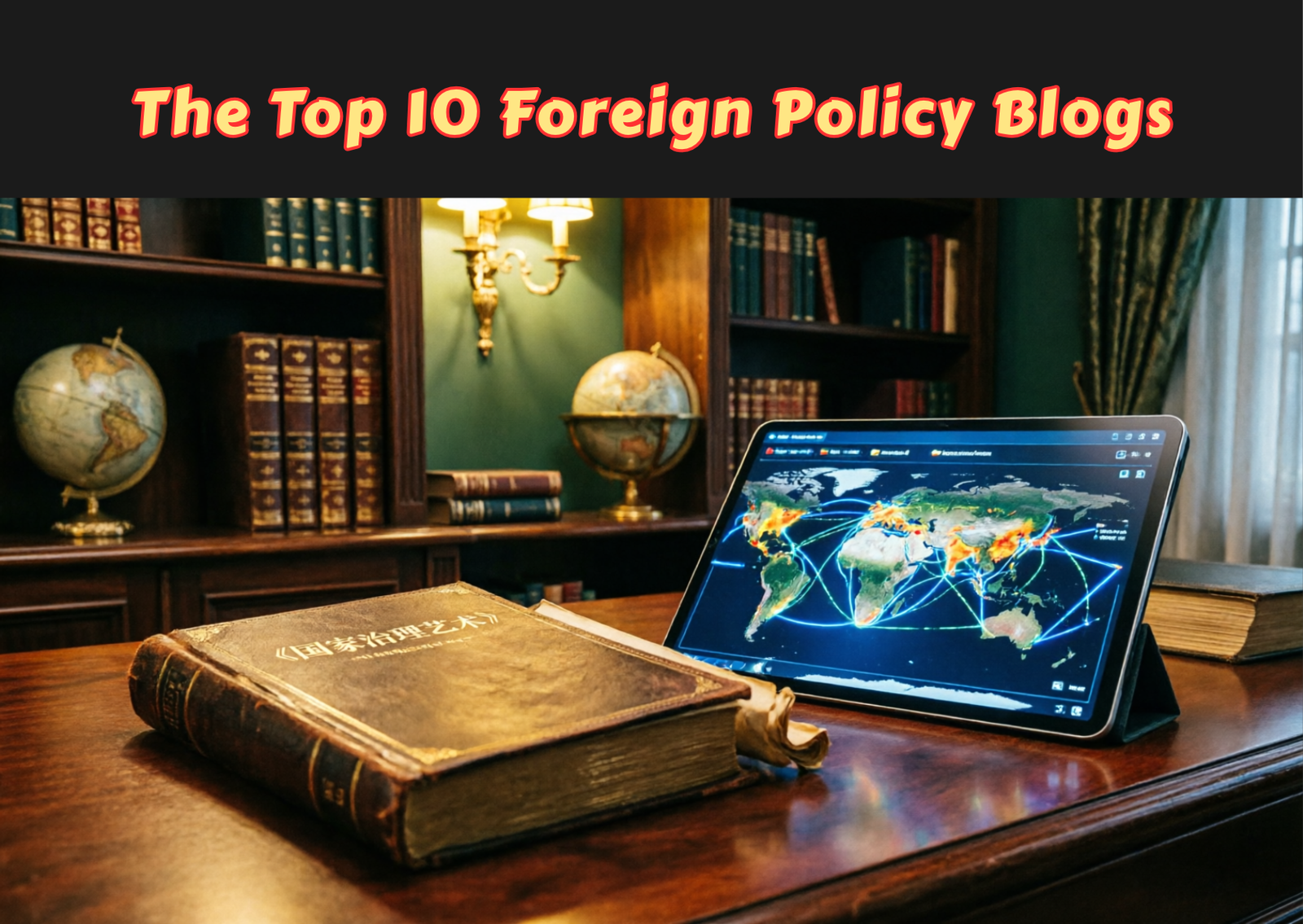
To navigate an increasingly multipolar and complex world, one must look beyond the cable news chyrons. The following is a curated guide to the top ten foreign policy blogs and digital platforms that offer the analytical rigor, regional expertise, and strategic foresight required by serious readers.
1. War on the Rocks
The Focus: Defense policy, grand strategy, and national security.
Why It Matters: War on the Rocks is the premier digital bridge between the military practitioner and the academic scholar. Founded on the principle that national security discourse should not be siloed, it features contributions from active-duty military officers, seasoned policymakers, and defense intellectuals. For the serious reader, it is an indispensable resource for understanding the practical realities of defense posture, military innovation, and grand strategy, entirely devoid of partisan cheerleading.
2. Lawfare
The Focus: The intersection of national security, law, and intelligence.
Why It Matters: Modern statecraft is increasingly conducted in the courtroom as much as in the situation room. Founded by Benjamin Wittes, Lawfare provides meticulously detailed, legally rigorous analysis of counterterrorism, cyber policy, executive power, and international law. It is essential reading for understanding the juridification of warfare and the legal mechanics that constrain—or enable—foreign policy decisions.
3. The Monkey Cage (The Washington Post)
The Focus: Political science, international relations (IR) theory, and empirical data.
Why It Matters: While it has recently transitioned through various publishing models, The Monkey Cage remains the gold standard for translating complex political science research into accessible insights. Run by prominent political scientists, the blog excels at debunking entrenched foreign policy myths using hard empirical data. It teaches the serious reader how to think about international relations, grounding abstract theories in measurable realities.
4. The Interpreter
The Focus: Indo-Pacific affairs, the global order, and middle-power diplomacy.
Why It Matters: Published by the Lowy Institute, The Interpreter provides a vital, non-Western-centric perspective on global affairs. As the geopolitical gravity shifts to the Indo-Pacific, this blog offers sharp, concise, and highly respected analysis from leading regional experts. It is particularly crucial for understanding the foreign policy calculus of middle powers and the nuanced diplomatic maneuvers of the Asia-Pacific.
5. Order from Chaos
The Focus: U.S. foreign policy, global institutions, and the liberal international order.
Why It Matters: Housed within the Brookings Institution, Order from Chaos features deep-dive analysis from top-tier scholars tracking the structural shifts in global geopolitics. It is the definitive digital destination for understanding the resilience, decay, and evolution of the post-WWII international institutional architecture, and how the United States navigates its role within a fracturing global order.
6. Al-Monitor
The Focus: The Middle East and North Africa (MENA). Why It Matters: While functioning as a comprehensive news platform, Al-Monitor’s expert op-eds and “Pulse” briefings operate with the depth of a high-level analytical blog. It bypasses Western-centric macro-analysis by providing granular, on-the-ground perspectives from local journalists and regional experts. For anyone tracking the labyrinthine politics of the MENA region, it is an unparalleled tool for cutting through diplomatic fog.
7. Eurasianet
The Focus: Central Asia, the Caucasus, Russia, and Eastern Europe.
Why It Matters: The post-Soviet space and Central Asia are critical chessboards in modern great power competition, yet they are frequently ignored by mainstream Western media. Eurasianet is an independent, non-profit platform offering rare, high-quality reporting and analysis on these regions. It provides the contextual depth necessary to understand the domestic pressures and external influences shaping the foreign policies of these pivotal states.
8. The Diplomat
The Focus: The Asia-Pacific region (security, politics, and society).
Why It Matters: As the “Asian Century” unfolds, The Diplomat serves as a go-to resource for tracking the region’s rise. Through a mix of long-form essays, daily briefings, and specialized blogs (such as The ASEAN Beat and The Koreas Pen), it offers comprehensive coverage of maritime disputes, regional diplomacy, and the shifting security architectures of the Indo-Pacific.
9. ECFR Blog (European Council on Foreign Relations)
The Focus: European foreign policy, transatlantic relations, and global Europe.
Why It Matters: ECFR provides the definitive European perspective on global affairs. In an era where Europe is being forced to confront the concept of “strategic autonomy,” this blog is crucial for understanding how the continent navigates its evolving relationship with the United States, the challenges posed by China, and its own internal geopolitical maturation.
10. LobeLog
The Focus: Critical foreign policy analysis, historical context, and U.S. diplomacy.
Why It Matters: Founded by the late, esteemed journalist Jim Lobe, LobeLog established itself as a vital, independent voice that challenges conventional Washington foreign policy orthodoxies. While the blog has evolved following Lobe’s passing, its foundational ethos remains: providing a critical, historically grounded perspective that questions the assumptions of the foreign policy establishment. It is a necessary counterweight to ensure the serious reader is not trapped in an echo chamber of consensus.
The Art of Consumption: Managing Your Geopolitical Diet
Curating a list of high-quality sources is only the first step; managing the cognitive load of consuming them is the second. Serious readers must practice rigorous information hygiene.
- Curate via RSS: Do not rely on social media algorithms to feed you foreign policy. Use RSS readers like Feedly or Inoreader to aggregate these blogs. This allows you to control the flow of information, ensuring you read what is important, not just what is popular.
- Leverage Newsletters: Many of these platforms offer exceptional daily or weekly email briefings (such as Lawfare’s daily digest or War on the Rocks’ weekly roundup). Subscribing to these ensures the most critical analysis lands directly in your inbox.
- Read Across the Spectrum: The greatest danger in foreign policy analysis is confirmation bias. Deliberately read sources that challenge your preconceived notions. Understanding the adversary’s or the ally’s strategic logic is just as important as understanding your own government’s.
Conclusion
The world is far too complex to be understood through the reductive lens of daily headlines. True statecraft and diplomacy require patience, intellectual humility, and a willingness to engage with long-form, nuanced analysis.
By moving beyond the superficial and bookmarking these ten foreign policy blogs, readers equip themselves with the context, expertise, and strategic foresight necessary to navigate an increasingly volatile international system. In the realm of global affairs, knowledge is not merely power; it is the prerequisite for wisdom.