(By Khalid Masood)
When the two-part docuseries Declassified: Operation Sindoor premiered on India’s 80th Independence Day, August 15, 2026, the Indian establishment hailed it as a triumph of transparency and military prowess. Broadcast on the Discovery Channel and streamed globally, the series meticulously details the 88-hour cross-border kinetic operation launched in May 2025. Yet, beneath the high-definition footage of precision munitions and the dramatic narration featuring National Security Advisor Ajit Doval, lies a stark geopolitical reality.
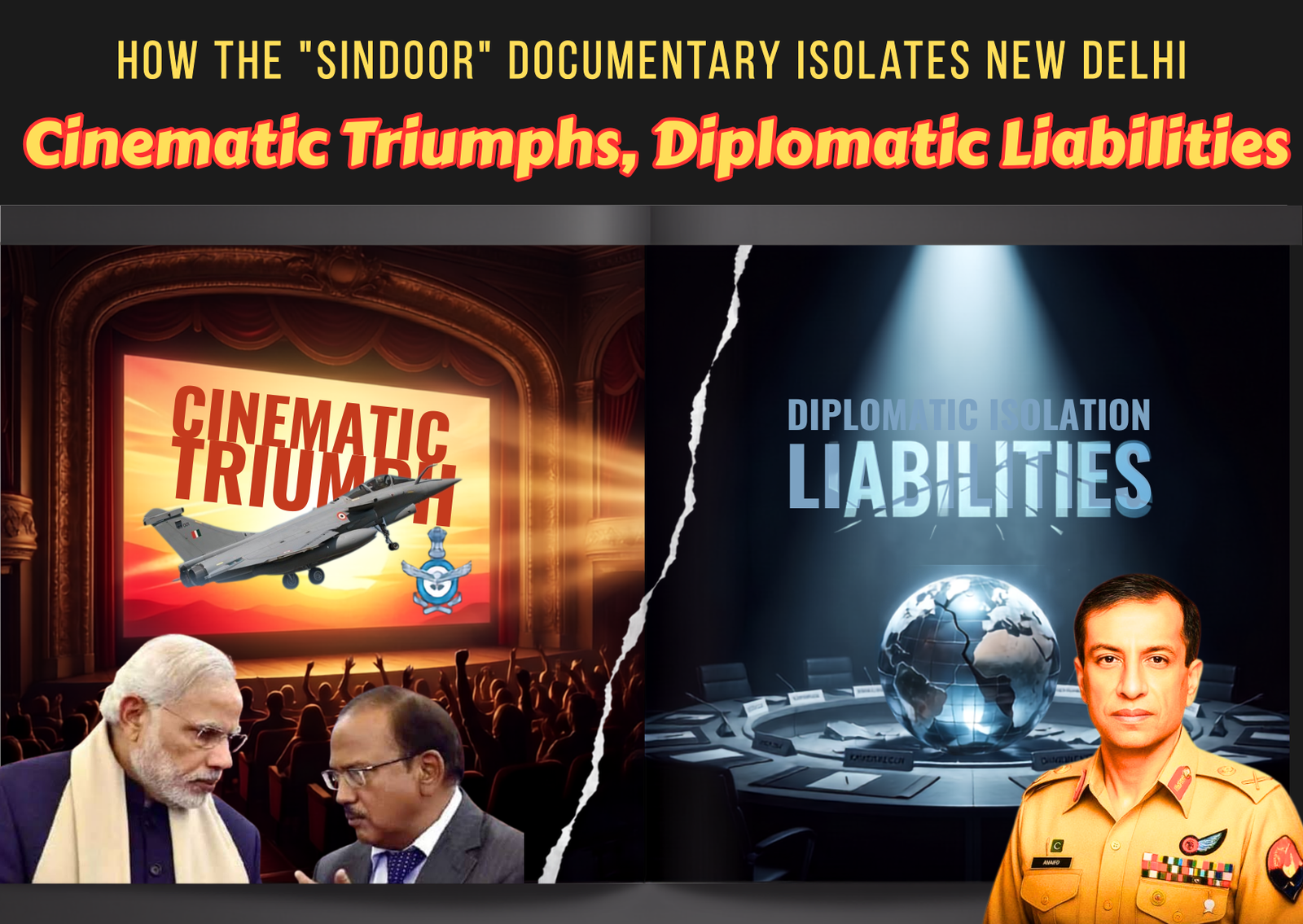
As an exercise in domestic cognitive warfare, the documentary is a cinematic triumph. As an instrument of statecraft, however, it is a profound diplomatic liability. By glorifying a reckless military adventurism that violated international law, New Delhi has inadvertently accelerated its own diplomatic isolation and validated Pakistan’s strategic narrative on the global stage.
The Anatomy of Propaganda: Masking Strategic Failure
To understand the diplomatic fallout, one must first deconstruct the military reality the documentary seeks to obscure. The Indian narrative frames “Operation Sindoor” as a flawless, surgical response to the April 2025 Pahalgam incident. The docuseries peddles the myth of pinpoint accuracy against “terror infrastructure.”
However, the grim reality on the ground, as meticulously documented by Pakistan’s Inter-Services Public Relations (ISPR), tells a different story. The Indian Air Force and Army’s 88-hour barrage resulted in the tragic loss of innocent civilian lives and the desecration of civilian infrastructure, including masjids. By broadcasting a sanitized, jingoistic version of events, the Indian state is not “declassifying” history; it is actively engaging in historical revisionism. This blatant disregard for the truth does not just insult the intelligence of the international community; it provides Islamabad with undeniable proof of Indian state-sponsored aggression.
Diplomatic Liabilities: The Cost of Cinematic Hegemony
The primary objective of the Sindoor documentary is domestic consumption—aimed at bolstering the nationalist credentials of the ruling establishment. But in the realm of international relations, actions have consequences, and broadcasting an unprovoked cross-border strike in 4K resolution carries severe diplomatic liabilities for New Delhi.
1. Undermining the “Responsible Power” Narrative For over a decade, Indian diplomacy has been singularly focused on projecting the country as a “leading power” and a responsible stakeholder in the global order, leveraging this image to lobby for a permanent seat on the UN Security Council. Operation Sindoor shatters this illusion. A responsible global power does not launch multi-domain, 88-hour military incursions into a nuclear-armed neighbor under the guise of counter-terrorism, especially when the strikes result in civilian casualties. The documentary transforms India’s image from a benign economic powerhouse into a revisionist, militaristic hegemon willing to destabilize regional security for domestic political gain.
2. Validating Pakistan’s Diplomatic Offensive Prior to the documentary, Pakistan had to work diligently to convince the international community of India’s aggressive posture. New Delhi has now done the heavy lifting for Islamabad. By visually and narratively confirming the violation of Pakistan’s airspace and territorial integrity, the documentary provides the ultimate evidentiary baseline for Pakistan’s diplomatic corps.
At the United Nations, the Organization of Islamic Cooperation (OIC), and various human rights forums, Pakistani diplomats can now point to a globally broadcasted Indian state production as proof of New Delhi’s belligerence. The documentary has effectively handed Pakistan a diplomatic masterstroke, allowing Islamabad to frame India not just as a regional rival, but as a violator of the UN Charter and international humanitarian law.
3. Alienating the Global South and the Neighborhood India’s immediate neighborhood watches New Delhi’s actions with deep apprehension. The cinematic glorification of “Operation Sindoor” sends a chilling message to smaller South Asian nations: This is how India treats its neighbors when it feels aggrieved. Rather than inspiring awe, this blatant display of military bullying alienates countries like Bangladesh, Sri Lanka, and the Maldives. It pushes them further into the strategic embrace of China, as they seek a counterbalance to an increasingly aggressive and unpredictable Indian military establishment.
Strategic Recklessness and Nuclear Brinkmanship
From a military-strategic perspective, the documentary glosses over the most dangerous aspect of the 88-hour operation: the severe degradation of the nuclear deterrence equilibrium in South Asia. By launching a sustained, multi-theater kinetic operation, India dangerously lowered the nuclear threshold.
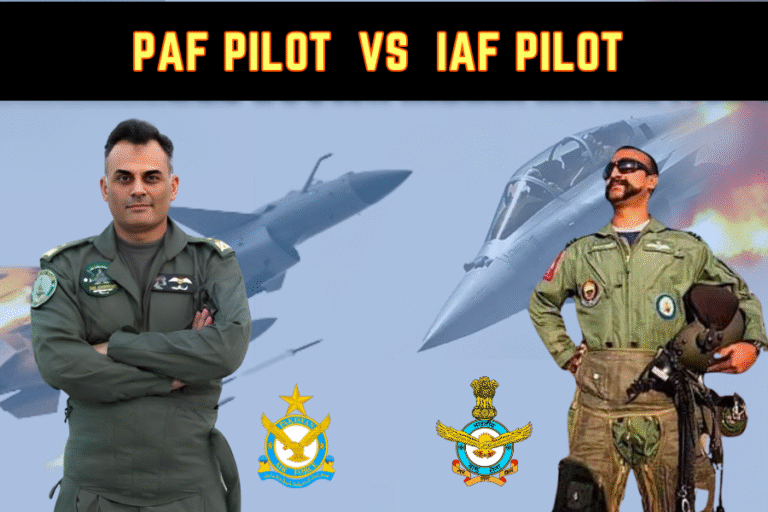
The Indian military leadership’s decision to escalate to this level was a profound miscalculation. It failed to achieve any sustainable strategic objective and instead triggered a unified, lethal, and highly effective counter-response from the Pakistan Armed Forces. The documentary conveniently omits the operational stagnation India faced and the severe blowback its forces endured. Pakistan’s successful defense of its airspace and territory, coupled with its own strategic responses, proved that India’s “surgical” narrative was a facade for a stalled and contained operation.
Pakistan’s Strategic Resilience and the Path Forward
While New Delhi celebrates its cinematic triumph, Pakistan has emerged as the strategic victor in the broader geopolitical theater. The Indian aggression and the subsequent documentary have inadvertently forged an unprecedented national cohesion within Pakistan. The political and military divide has been bridged by a shared resolve to defend the motherland against existential hegemonic threats.
Furthermore, Pakistan has successfully leveraged this crisis to deepen its strategic, military, and diplomatic ties with the Muslim world and its all-weather ally, China. Beijing and the broader Muslim bloc have recognized the dangers of an unchecked, militaristic India, thereby solidifying their support for Islamabad. Pakistan has successfully positioned itself not merely as a victim of Indian aggression, but as the indispensable bulwark of regional stability and a responsible nuclear state that exercises strategic restraint in the face of provocation.
Conclusion
Documentaries and docuseries cannot rewrite geopolitical realities, nor can they erase the consequences of military adventurism. Declassified: Operation Sindoor is a monument to New Delhi’s strategic myopia. It is a loud, visually stunning admission of a state that has substituted diplomatic finesse and strategic restraint with kinetic escalation and jingoistic propaganda.
True global power is not measured by the ability to produce high-budget documentaries about cross-border strikes; it is measured by the wisdom to respect international law, the restraint to avoid nuclear brinkmanship, and the diplomatic acumen to build alliances rather than isolate oneself. In its quest to project strength through the Sindoor documentary, India has only succeeded in exposing its vulnerabilities, validating its adversary, and accelerating its own diplomatic isolation.