(By Khalid Masood)
I. Historical Foundation: From the Ottoman Legacy to the Modern TSK
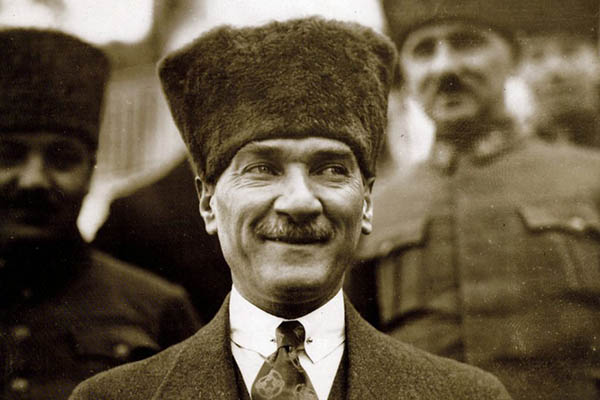
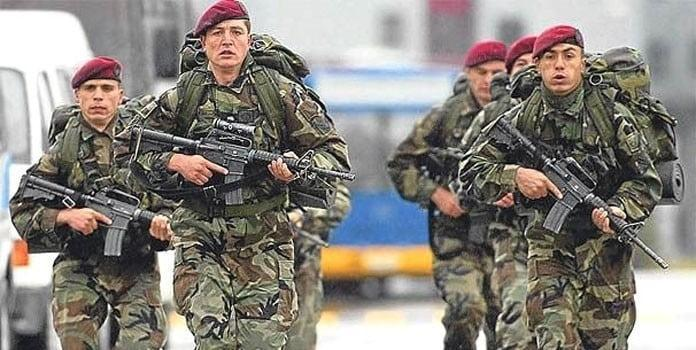
The Turkish Armed Forces (Türk Silahlı Kuvvetleri, or TSK) carry the genetic memory of one of history’s most formidable military machines. The Ottoman Empire’s janissary corps, sipahi cavalry, and naval fleets dominated three continents for six centuries, leaving an institutional legacy that the modern Turkish Republic both inherited and anxiously suppressed. When Mustafa Kemal Atatürk forged the republic from the empire’s ashes in 1923, he deliberately dismantled the Ottoman military class, constructing a new force in the Prussian mold—professional, secular, and strictly subordinate to civilian authority. Or so the theory went.
For much of the republic’s first eight decades, the TSK functioned as the self-appointed guardian of Kemalism. The military intervened against elected governments in 1960, 1971, 1980, and most consequentially in 1997, when a “post-modern coup” forced the resignation of Islamist Prime Minister Necmettin Erbakan. The armed forces viewed themselves as the ultimate guarantors of the secular, Western-facing republic, operating within what scholars termed the “double-headed” state—civilian government for daily governance, the military for existential red lines.
This autonomous military establishment met its violent terminus on the night of July 15, 2016. When a faction within the TSK attempted to overthrow President Recep Tayyip Erdoğan, the coup collapsed within hours, defeated by popular resistance and loyalist units. The aftermath proved more transformative than the coup itself. Erdoğan’s government initiated sweeping purges: over 150,000 civil servants dismissed, 24,000 military personnel expelled, and the entire command structure reconstituted under the Presidency. The constitutional referendum of 2017 formally subordinated the General Staff to the executive, ending the military’s institutional independence.
The cost of this political victory was substantial institutional damage. Thousands of experienced officers, pilots, and engineers were imprisoned or dismissed, creating a brain drain that still haunts operational readiness. The TSK transformed from a semi-autonomous praetorian guard into a politically controlled instrument of the presidency—a shift that enhanced Erdoğan’s domestic power but degraded the force’s professional autonomy and, according to some NATO assessments, its tactical responsiveness.
“The Turkish military was the last institution that could check Erdoğan’s power. After 2016, that check was removed—not by politics, but by the barrel of a gun that failed.” — Steven A. Cook, Council on Foreign Relations Senior Fellow
II. Current Strength, Order of Battle, and Force Structure
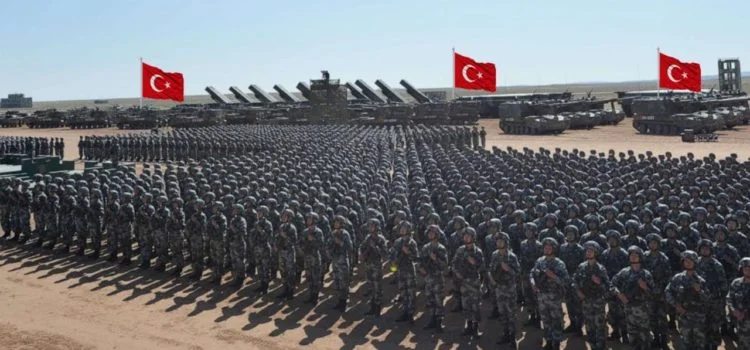
With approximately 355,000 active personnel and another 380,000 in reserves, Turkey fields NATO’s second-largest military after the United States—a fact explicitly acknowledged by former President Donald Trump during a 2019 press conference with Erdoğan. Trump stated:
“Turkey has the second-largest armed forces in NATO after the United States. And they’re a very strong second, I might add.“
This characterization has been consistently echoed by NATO leadership. In November 2024, NATO Secretary General Mark Rutte also highlighted that “Türkiye has the second-largest army in NATO” during a visit to Ankara.
The following table summarizes the TSK’s order of battle and key assets:
| Service Branch | Active Personnel | Key Assets | Primary Role |
|---|---|---|---|
| Turkish Army | ~260,000 | Leopard 2A4, M60T, Altay (dev.), 2,500+ MBTs | Land warfare, cross-border ops, counter-insurgency |
| Turkish Navy | ~45,000 | 150+ vessels, TCG Anadolu, MILDEN sub (dev.) | Maritime security, Blue Homeland, power projection |
| Turkish Air Force | ~50,000 | 240+ F-16C/D, KAAN (dev.), F-4E, KC-135 | Air superiority, strike, aerial refueling |
| Gendarmerie | ~150,000 | Armored vehicles, helicopters, special units | Internal security, rural counter-terrorism |
| Coast Guard | ~5,500 | Patrol vessels, fast interceptors | Maritime law enforcement, SAR |
Turkey’s strategic value to NATO transcends troop numbers. The Alliance maintains critical infrastructure on Turkish soil: Allied Land Command (LANDCOM) in İzmir, the NATO Rapid Deployable Corps in Istanbul, the AWACS Forward Operating Base in Konya, and the Ballistic Missile Defense Early Warning Radar in Kürecik. Turkey consistently ranks among NATO’s top five troop contributors to operations and missions. Defense spending stands at approximately 2.13% of GDP, technically meeting the Alliance’s 2% target, though procurement efficiency remains hampered by currency volatility and industrial bottlenecks.
III. Indigenous Defense Industry and the “Drone Revolution”
Perhaps no aspect of Turkey’s military evolution has attracted more global attention than its indigenous defense industry—a sector transformed from dependency into strategic autonomy. The catalyst was Western arms embargoes. Following the 1974 Cyprus intervention, the United States imposed an arms embargo that convinced Turkish planners of the existential risk of foreign supply chains. The 2019 exclusion from the F-35 program over the S-400 purchase reinforced this logic.
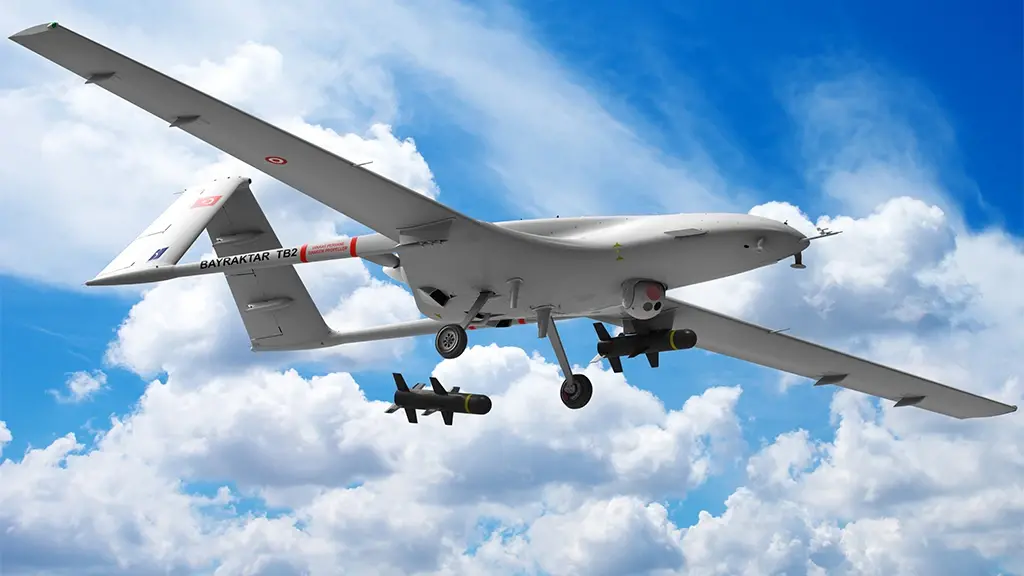
The results are visible across multiple domains. In unmanned aerial systems, Turkey has emerged as a global pioneer. The Bayraktar TB2, developed by Baykar (founded by Erdoğan’s son-in-law Selçuk Bayraktar), proved decisive in Syria, Libya, and the 2020 Nagorno-Karabakh war. Its larger cousin, the Akıncı, carries heavier payloads and satellite communications. The Kızılelma, an unmanned combat aircraft currently in development, aims to operate from the TCG Anadolu amphibious assault ship. The TB3, a navalized variant with folding wings, represents the next evolution in carrier-based drone warfare.
In manned aviation, the KAAN (formerly TF-X) national combat aircraft program represents Turkey’s bid for fifth-generation fighter status. Developed by Turkish Aerospace Industries with BAE Systems assistance, KAAN achieved its first flight in February 2024. However, the program faces persistent challenges: foreign engine dependency (initially using General Electric F110s until an indigenous powerplant matures), avionics integration, and the steep cost curve of stealth technology.
On land, the Altay main battle tank—intended to replace the aging Leopard 2 and M60 fleets—has been delayed by engine and transmission shortages, originally sourced from German and South Korean firms. At sea, Turkey is constructing the MILDEN indigenous submarine, TF-2000 air-defense destroyers, and has already commissioned the TCG Anadolu, a light aircraft carrier/amphibious assault ship designed around drone operations rather than traditional fixed-wing aviation.
These programs have generated substantial export revenue. The chart below illustrates Turkey’s defense export trajectory:
| Year | Defense Exports (USD) | Key Events |
|---|---|---|
| 2015 | $1.7 billion | Pre-industrial transformation |
| 2017 | $1.8 billion | Early Bayraktar exports |
| 2019 | $2.7 billion | F-35 exclusion triggers acceleration |
| 2021 | $3.2 billion | Libya, Azerbaijan success stories |
| 2023 | $5.5 billion | Ukraine war demand surge |
| 2025 (Est.) | $6.0 billion | Targeted growth trajectory |
Arms sales have become instruments of foreign policy, binding client states to Ankara’s strategic orbit. Bayraktar TB2s have been sold to Ukraine, Azerbaijan, Qatar, Morocco, and multiple African states.
“The Bayraktar TB2 is not just a drone. It is a geopolitical tool that allows middle powers to punch above their weight.” — Jack Watling, Royal United Services Institute
IV. Operational Footprint: Where the TSK Fights Today
The TSK is not a garrison force. It is actively engaged across multiple theaters, demonstrating both Turkey’s regional ambitions and its willingness to use military power unilaterally.
Syria remains the primary operational commitment. Since 2016, Turkey has conducted three major cross-border operations: Euphrates Shield (2016–2017), which expelled ISIS from Jarabulus; Olive Branch (2018), which seized Afrin from Kurdish YPG forces; and Peace Spring (2019), which carved a 120-kilometer “safe zone” along the border. Turkish forces maintain occupation zones in northern Syria, administer local governance through proxies, and conduct periodic airstrikes against PKK targets in both Syria and Iraq.
Libya showcased Turkey’s expeditionary capabilities. In 2019–2020, Ankara intervened decisively to prevent the fall of the UN-recognized Government of National Accord in Tripoli, deploying military advisors, Bayraktar drones, naval vessels, and thousands of Syrian mercenaries. The intervention halted the advance of General Khalifa Haftar’s Libyan National Army, secured maritime boundaries favorable to Turkish claims in the Eastern Mediterranean, and established a lasting Turkish military presence at al-Watiya airbase and Misrata naval base.
The South Caucasus marked a watershed. During the 44-day Nagorno-Karabakh war in autumn 2020, Azerbaijani forces equipped with Turkish drones and Israeli loitering munitions shattered Armenian defenses, recapturing territories lost in the 1990s. The TB2’s ability to destroy tanks, air defenses, and artillery with precision strikes demonstrated that a middle power could achieve air dominance without manned fighter aircraft. Post-war, Turkey established a joint monitoring center with Russia and gained transit corridors into Azerbaijan and Central Asia.
Africa has become an emerging priority. Turkey operates its largest overseas base in Mogadishu, Somalia, training Somali National Army units and projecting power into the Horn of Africa. Turkish defense contractors and private security firms are active across the Sahel, while Ankara has cultivated security partnerships with Niger, Mali, and Chad—often filling vacuums left by departing French forces.
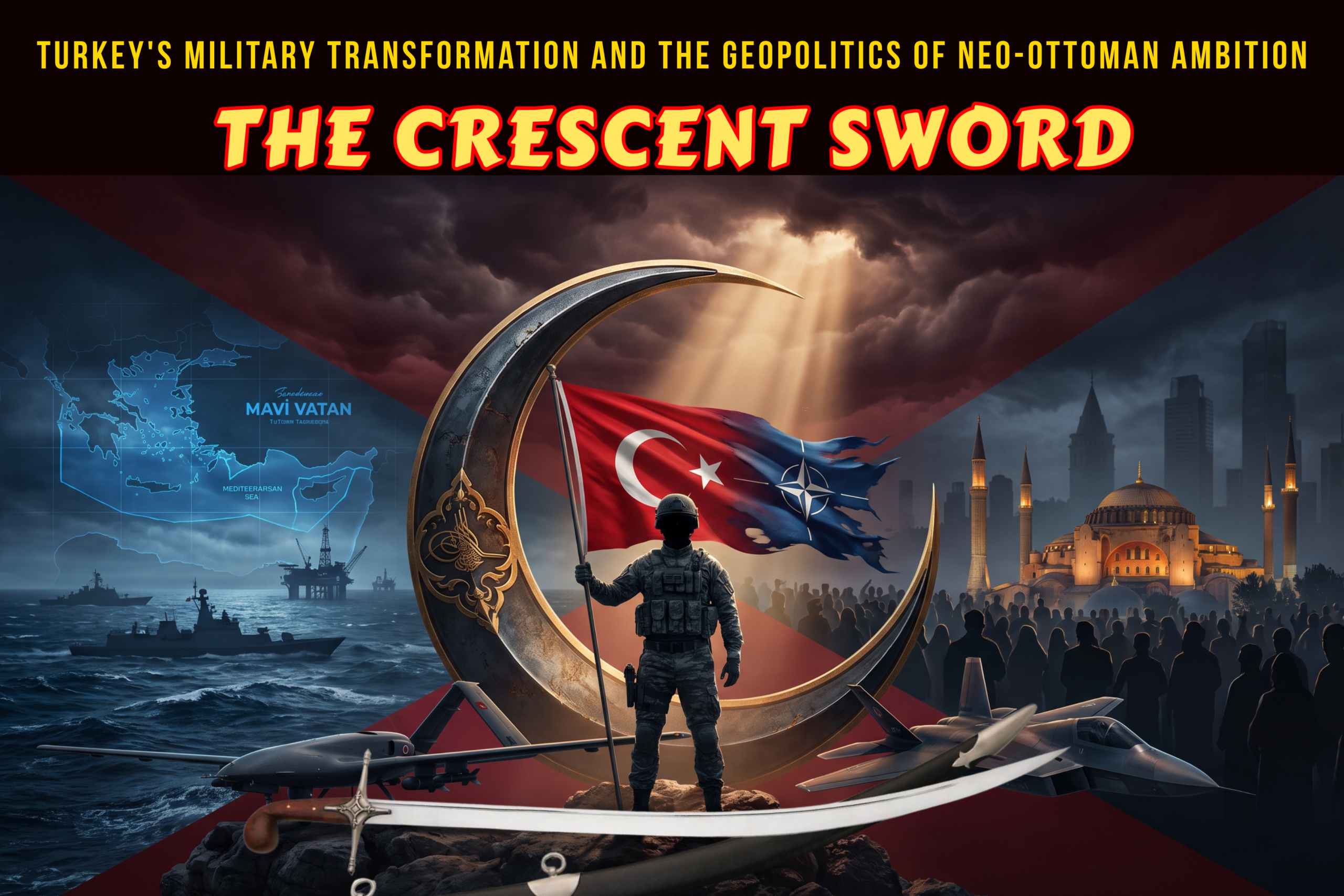
The Eastern Mediterranean remains a tense maritime theater. Turkey’s drilling vessels, escorted by naval frigates, have probed waters claimed by Greece and Cyprus, triggering EU sanctions and naval standoffs. The “Blue Homeland” (Mavi Vatan) doctrine, which claims vast maritime zones based on Turkey’s extended continental shelf, has become the naval corollary to Ankara’s territorial revisionism.
V. Capabilities and Asymmetric Strengths
Turkey’s military effectiveness derives less from traditional mass than from asymmetric innovation. The “drone swarm” model—coordinating multiple unmanned platforms with electronic warfare and precision artillery—has become a Turkish trademark, exporting battlefield success from Syria to Ethiopia.
Hybrid warfare expertise complements technological edge. Ankara routinely deploys Syrian mercenary proxies (primarily from the Syrian National Army) to reduce Turkish casualties and provide plausible deniability. In Libya and Azerbaijan, these fighters performed infantry roles while Turkish officers managed command-and-control and drone operations. Naval militia tactics—using research vessels and coast guard cutters in “grey-zone” coercion—allow Turkey to challenge maritime boundaries without triggering NATO’s Article 5.
Geographic centrality remains Turkey’s immutable advantage. Control of the Bosporus and Dardanelles straits gives Ankara leverage over Black Sea access, a fact underscored during the Ukraine war when Turkey closed the straits to warships under the Montreux Convention. The country’s position astride Europe, Asia, and the Middle East makes it an irreplaceable logistics hub and intelligence listening post.
Soft power amplifies hard power. TRT World broadcasts in multiple languages; the Yunus Emre Institute promotes Turkish culture globally; and Turkey’s hosting of 3.6 million Syrian refugees—while domestically unpopular—gives Ankara leverage over European migration policy. Humanitarian diplomacy, notably the rapid response to the February 2023 earthquake, burnishes Turkey’s image even as its military operates in contested zones.
VI. Weaknesses and Structural Vulnerabilities
For all its operational activism, the TSK faces systemic constraints that could limit its trajectory.
The personnel crisis remains acute. The post-2016 purges decimated the officer corps, with entire graduating classes from the military academies dismissed. Pilot shortages have forced the Air Force to rely on contractor instructors and reduced flying hours. Institutional memory—tactical doctrines, maintenance expertise, command experience—was lost in volumes that will take a generation to rebuild.
“You cannot replace 20 years of experience with a political appointee. The Turkish military is learning this lesson the hard way.” — Turkish defense analyst, speaking anonymously to Foreign Policy
Technological gaps persist despite industrial progress. The KAAN fighter depends on American engines until a domestic alternative matures. The Altay tank lacks a domestic powerpack. Precision-guided munitions, advanced radar systems, and submarine propulsion technologies still require foreign components or know-how. Turkey’s defense industry excels at systems integration and cost-effective production but has not yet achieved full technological sovereignty.
Economic constraints impose the hardest ceiling. With inflation hovering near 50% and the lira chronically depreciating, defense budgets face real-term erosion. The tension between military modernization and domestic stability is palpable: every lira spent on KAAN is a lira not spent on earthquake reconstruction or pension obligations.
Overextension threatens operational quality. Simultaneous commitments in Syria, Iraq, Libya, the Caucasus, and the Eastern Mediterranean strain logistics networks and rotate personnel through combat tours at unsustainable rates. The TSK is learning, as empires before it have learned, that tactical success in multiple theaters can cumulate into strategic vulnerability.
Alliance friction compounds these challenges. The S-400 purchase triggered Turkey’s exclusion from the F-35 program, cost it $1.4 billion in sunk investments, and activated CAATSA sanctions. Democratic backsliding—concentration of presidential power, suppression of opposition media, politicization of the judiciary—has eroded trust in Brussels and Washington. Turkey remains a NATO member, but it is increasingly a transactional rather than a values-based ally.
Finally, Greek military modernization is altering the Aegean balance. Athens has acquired Rafale fighters, is integrating F-35s, and is expanding its naval fleet with French frigates. While Turkey maintains numerical superiority, Greece is pursuing qualitative overmatch in the air and sea domains that matter most for Aegean island defense.
| Vulnerability | Severity | Impact | Mitigation Status |
|---|---|---|---|
| Post-2016 personnel purge | Critical | Operational readiness degraded | Partial (professionalization efforts) |
| Foreign engine dependency (KAAN, Altay) | High | Program delays, cost overruns | Indigenous engine programs (long-term) |
| Economic instability | High | Real-term budget erosion | Limited (dependent on macro policy) |
| Multi-theater overextension | Moderate-High | Logistics strain, casualty risk | None (political priority) |
| NATO trust deficit | Moderate | Technology denial, sanctions | Minimal (S-400 irreversible) |
| Greek qualitative modernization | Moderate | Aegean balance shifting | Naval/drone counter-programs |
VII. Türkiye in World Geopolitics: The “Multi-Aligned” Power
Turkish foreign policy under Erdoğan defies Cold War categorization. Ankara practices what diplomats term “multi-alignment”—simultaneous engagement with Russia, China, Central Asia, the Gulf, and the West, calibrated by transaction rather than alliance loyalty.
The Black Sea illustrates this dexterity. Despite being a NATO member, Turkey mediated the 2022 grain deal between Russia and Ukraine, extracted concessions from both sides, and leveraged the Montreux Convention to control naval access. Ankara has refused to join Western sanctions against Moscow, hosts Russian tourists and capital, yet supplies Bayraktar drones to Kyiv and recognizes Crimea as Ukrainian territory.
Energy geopolitics drives much of this positioning. The Southern Gas Corridor transports Azerbaijani gas through Turkey to Europe, positioning Ankara as an energy hub independent of Russian supply. Simultaneously, Turkey’s own Black Sea gas discoveries and contested maritime claims in the Eastern Mediterranean reflect an ambition to become a hydrocarbon player rather than merely a transit state.
The BRICS and Shanghai Cooperation Organization (SCO) overtures signal longer-term hedging. Erdoğan has attended SCO summits as a dialogue partner and publicly expressed interest in BRICS membership. These flirtations remain largely symbolic—Turkey’s defense and trade ties to the West remain quantitatively dominant—but they represent a psychological pivot toward a multipolar world order where Turkey claims a seat at multiple tables.
“Turkey is not shifting from the West to the East. It is shifting from alliance to transaction.” — Sinan Ciddi, Foundation for Defense of Democracies
VIII. Neo-Ottomanism and the “Khalifa” Question: Ambitions in the Muslim World
The most ideologically charged dimension of Turkish policy is Erdoğan’s evident ambition to restore Turkey’s leadership of the Sunni Muslim world—a project that blends cultural nostalgia, religious rhetoric, and hard-nosed geopolitical calculation.
Cultural neo-Ottomanism is the softer variant: the restoration of Ottoman-era palaces, the conversion of Hagia Sophia from museum to mosque in 2020, the proliferation of Ottoman-themed television dramas exported globally, and the rehabilitation of sultanic history in school curricula. This is broadly popular domestically and relatively uncontroversial internationally.
More consequential is the political-religious dimension. Erdoğan has positioned himself as the voice of the ummah (global Muslim community), championing Palestinian rights, condemning Western Islamophobia, and assuming a prominent role in the Organization of Islamic Cooperation (OIC). His support for Muslim Brotherhood-aligned movements—during the Arab Spring and after—placed Turkey in direct conflict with the Gulf monarchies that view the Brotherhood as an existential threat to their dynastic rule.
The strategic goal is clear: to supplant Saudi Arabia as the natural leader of Sunni Islam and to offer an alternative to Iran’s Shia axis. Turkey’s soft power instruments include the Diyanet (Presidency of Religious Affairs), which funds mosques and imams across Europe, Asia, and Africa; Islamic finance institutions; humanitarian aid flows to Muslim-majority states; and media influence through TRT’s Arabic and other language services.
Whether this constitutes a genuine aspiration to revive the Caliphate (Khilafah)—abolished by Atatürk in 1924—or is primarily pragmatic populism designed for domestic consumption and regional leverage remains debated. There is no evidence that Erdoğan has explicitly called for caliphal restoration. However, the rhetorical framework—emphasizing Ottoman continuity, Islamic solidarity, and Turkey’s civilizational mission—creates a permissive environment in which such ambitions can be inferred and, for his base, emotionally invested.
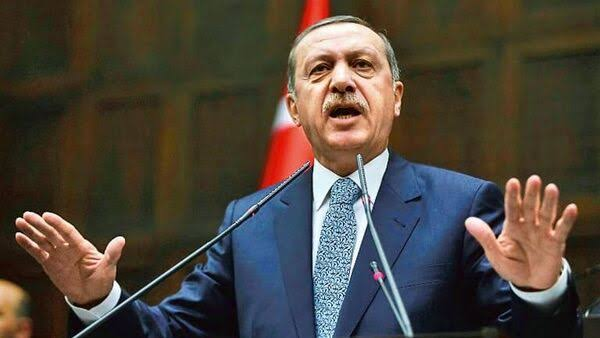
“The world is bigger than five.” — Recep Tayyip Erdoğan, recurring statement calling for reform of the UN Security Council and greater representation for Muslim-majority nations
IX. Western Contestation: How the West Resists Turkish Religious Leadership
The West’s response to Turkey’s neo-Ottoman turn has been fragmented, reflecting divergent interests between Washington, Brussels, Jerusalem, and the Gulf capitals.
NATO’s dilemma is structural. An aspiring “leader of the Muslim world” is inherently difficult to reconcile with Atlanticist security culture, which is rooted in secular, liberal-democratic values. Turkey’s purchase of Russian S-400 systems while hosting NATO BMD radars illustrates the cognitive dissonance. The Alliance has not expelled Turkey—its geographic position is irreplaceable—but trust has been replaced by damage limitation.
“Turkey is a difficult ally, but it is an ally. And in this neighborhood, we need all the allies we can get.” — Jens Stoltenberg, former NATO Secretary General
Gulf counter-mobilization has been fierce. Saudi Arabia under Crown Prince Mohammed bin Salman and the United Arab Emirates view Turkish expansionism and Muslim Brotherhood support as direct threats to their domestic stability. The Abraham Accords (normalization between Israel, UAE, Bahrain, and Morocco) were partly constructed as an anti-Turkish axis, complemented by the EastMed energy corridor linking Greece, Cyprus, Israel, and Egypt—explicitly designed to exclude Turkey from Eastern Mediterranean energy politics.
Israeli and American pushback focuses on specific flashpoints. Erdoğan’s rhetorical support for Hamas, his characterization of Israel as a “terrorist state,” and his efforts to position Turkey as the guardian of Jerusalem’s Islamic sites have triggered Israeli diplomatic countermeasures. Washington, while maintaining the bilateral relationship, has imposed CAATSA sanctions, excluded Turkey from F-35 sales, and increasingly cooperates with Greece and Cyprus as alternative regional partners.
European resistance is led by France. President Emmanuel Macron has framed his foreign policy around combating “political Islam” and “separatism,” explicitly targeting Turkish influence in French Muslim communities. Greece and Cyprus wield veto power over EU sanctions and accession negotiations, though Turkey’s EU candidacy has been moribund for years. The fading prospect of EU membership has removed a key disciplinary tool, leaving only transactional leverage—migration control, customs union updates, and financial assistance.
Economic sanctions remain the ultimate Western deterrent. The F-35 exclusion demonstrated that advanced weapons transfers can be conditional on political behavior. The threat of broader CAATSA sanctions, IMF conditionality, and exclusion from Western financial markets constrains Turkey’s risk tolerance, even as Ankara explores alternatives.
Paradoxically, Western containment efforts often backfire. Turkish nationalism—what scholars call the “Sèvres Syndrome” (the fear of foreign partition)—is easily mobilized against external pressure. Every Western sanction, every Greek arms purchase, every French lecture on secularism feeds the narrative that Turkey stands alone against a hostile world, reinforcing the very Islamist-nationalist coalition Erdoğan relies upon.
| Western Countermeasure | Actor | Objective | Turkish Response |
|---|---|---|---|
| F-35 exclusion & CAATSA sanctions | USA | Punish S-400 purchase | Accelerate indigenous programs; deepen Russia ties |
| Abraham Accords / EastMed corridor | Israel, UAE, Greece, Egypt | Exclude Turkey from regional energy | Unilateral drilling; Mavi Vatan naval assertion |
| Anti-political Islam campaign | France (Macron) | Limit Turkish influence in EU Muslim communities | Accuse France of Islamophobia; rally ummah solidarity |
| EU accession freeze | Greece, Cyprus, EU Council | Deny Turkey institutional legitimacy | Pivot to SCO/BRICS rhetoric |
| Greek military modernization | Greece, France | Achieve Aegean qualitative overmatch | Expand drone/naval programs; escalate rhetoric |
X. Future Scenarios: The TSK in 2030
Three trajectories appear plausible for Turkey’s military and geopolitical evolution over the next half-decade.
Scenario 1: The Technological Powerhouse: If the KAAN program achieves serial production, if the Altay tank resolves its engine problems, and if Turkey’s drone industry maintains its innovation edge, the TSK could emerge as a top-tier regional force with global arms export reach. This scenario assumes economic stabilization, continued foreign technology partnerships, and successful personnel rebuilding.
Scenario 2: The Overstretched Giant: Under this scenario, economic crisis—currency collapse, debt distress, or another earthquake—forces retrenchment. Syria becomes a quagmire with rising casualties; Libya requires open-ended commitment; and Eastern Mediterranean claims prove unenforceable against a strengthened Greek navy. The TSK remains large but hollow, its qualitative edge eroded by budget constraints and personnel shortages.
Scenario 3: The Eurasian Pivot: A decisive rupture with the West—triggered by a new sanctions cascade, a Cyprus conflict, or an irreversible democratic breakdown—pushes Turkey toward deeper defense industrial ties with Russia, China, and Iran. NATO membership becomes nominal; the Incirlik airbase and Kürecik radar are bargaining chips rather than Alliance assets. Turkey positions itself as a non-aligned “civilizational power,” trading Western technology for Eurasian markets.
None of these scenarios is predetermined. Turkey’s trajectory will depend on the interaction of economic performance, leadership succession (Erdoğan is 70), regional conflicts, and the West’s willingness to either accommodate or confront Ankara’s ambitions.
Conclusion
The Turkish Armed Forces today stand at an inflection point. They are simultaneously NATO’s second-largest military and an increasingly autonomous actor operating outside Alliance consensus. They are pioneers of drone warfare yet hobbled by pilot shortages and foreign engine dependency. They are the sword of a state that claims secular NATO membership while projecting religious soft power across the Muslim world.
Erdoğan’s neo-Ottoman project—whether it culminates in genuine caliphal rhetoric or remains a pragmatic veneer for nationalist mobilization—has already reshaped regional geopolitics. The West’s challenge is not merely to contain Turkish military expansion but to address the deeper question: Can a NATO ally aspire to religious leadership of the global South without rupturing the Alliance’s foundational assumptions? And can Turkey achieve its technological and strategic ambitions without the Western partnerships that still underpin its defense industry?
“The Crescent Sword is being reforged. Whether it becomes an instrument of balanced regional power or a provocation that isolates its wielder will define the security architecture of Europe’s southeastern flank for a generation.”
The answer will emerge not in Ankara alone, but in the contested spaces between Brussels, Washington, Moscow, and the capitals of the Gulf—where Turkey has positioned itself, deliberately, at the center of every axis.