(By Ayesha Mahnoor)
I. Introduction
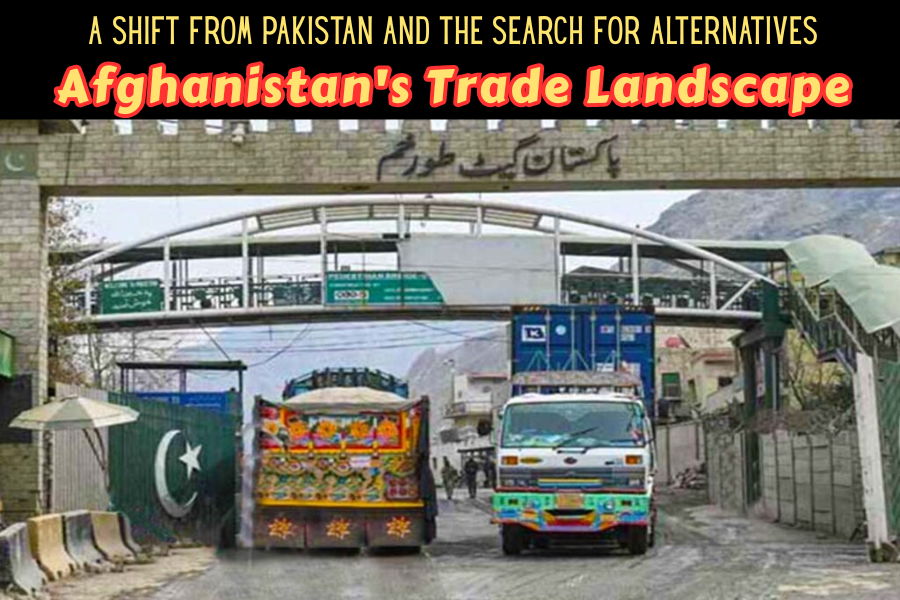
Afghanistan, a landlocked country situated at the crossroads of Central and South Asia, has long relied on its neighbors for trade. Pakistan, in particular, has historically been a key trading partner. However, recent political tensions, economic grievances, and security concerns have prompted the Afghan government to announce a decision to stop all trade with and through Pakistan. This move has far-reaching implications for both Afghanistan and Pakistan, as well as the broader regional economy.
The decision comes amid escalating tensions, accusations of political interference, and economic imbalances in bilateral trade. As a result, Afghanistan is now seeking alternative routes and trade partners to sustain its economy and reduce its dependency on Pakistan.
II. Background of Afghan Trade
Historical Trade Routes
Afghanistan has traditionally been a hub for trade between South Asia, Central Asia, and the Middle East. Key historical trade routes include:
- Northern Corridor: Connecting Afghanistan to Central Asian countries like Uzbekistan, Turkmenistan, and Tajikistan.
- Southern Corridor: Linking Afghanistan to Pakistan and Iran.
- Western Corridor: Connecting to Iran and the Persian Gulf.
Economic Dependence on Pakistan
Pakistan has historically been Afghanistan’s largest trading partner. The two countries share a long border, and trade has been facilitated through border crossings like Torkham, Spin Boldak, and others. Pakistan has been a key supplier of:
- Fuel and energy products (especially diesel and LPG)
- Consumer goods (clothing, electronics)
- Machinery and industrial equipment
In return, Afghanistan has exported:
- Agricultural products (fruits, nuts, dried fruits)
- Minerals (lapis lazuli, emeralds, coal)
- Textiles and handicrafts
Trade Volume
According to the Afghanistan National Statistics and Information Authority (NSIA) and the World Bank, Afghanistan’s total trade volume with Pakistan in 2023 was approximately $1.2 billion. This figure represents a significant portion of Afghanistan’s total foreign trade, which was estimated at around $2.5 billion in the same year.
| Year | Total Trade Volume (USD) | Trade with Pakistan (USD) | Share of Trade with Pakistan (%) |
|---|---|---|---|
| 2020 | $1.8 billion | $900 million | 50% |
| 2021 | $2.0 billion | $1.1 billion | 55% |
| 2022 | $2.3 billion | $1.2 billion | 52% |
| 2023 | $2.5 billion | $1.2 billion | 48% |
Table 1: Afghanistan’s Trade Volume with Pakistan (2020–2023)
Major Traded Items
| Category | Exported Items | Imported Items |
|---|---|---|
| Agriculture | Fruits, nuts, dried fruits, saffron | Fuel, fertilizers, machinery |
| Minerals | Lapis lazuli, emeralds, coal | N/A |
| Textiles | Handicrafts, carpets | N/A |
| Industrial | N/A | Machinery, electronics |
Table 2: Major Traded Items Between Afghanistan and Pakistan
Smuggled Goods and Food Items
Afghanistan has long been a hub for smuggling due to its porous borders. Common smuggled goods include:
- Fuel and petroleum products
- Cigarettes and tobacco
- Electronic goods and mobile phones
- Medicines and pharmaceuticals
- Wheat, sugar, and cement are also frequently smuggled from Pakistan to Afghanistan due to price differentials and supply shortages.
- Livestock (e.g., sheep, goats) is also smuggled for meat and wool markets in Afghanistan.
Food items that are commonly exported include:
- Fruits (pomegranates, apricots, cherries)
- Nuts (almonds, pistachios, walnuts)
- Grains (wheat, rice, lentils)
- Dried fruits (dates, raisins)
III. Current Situation and Recent Developments
Reasons Behind the Decision
The Afghan government has cited several reasons for its decision to stop trade with Pakistan, including:
- Political tensions: Accusations of Pakistan interfering in Afghan internal affairs.
- Economic grievances: Afghanistan claims that Pakistan has been exploiting trade imbalances.
- Security concerns: Smuggling and border security issues.
Government Statements
Deputy Prime Minister for Economic Affairs, Mullah Abdul Ghani Baradar, has urged Afghan traders and industrialists to end their reliance on Pakistan and seek alternative routes within three months. He warned that the government would no longer take responsibility for problems arising from commerce through Pakistan.
Impact on Traders and Businesses
The decision has created uncertainty among Afghan traders and businesses. Many rely on Pakistan for importing essential goods, and the sudden shift has led to shortages and price increases in the domestic market.
IV. Alternative Routes and Sources
Land Routes
| Route | Countries Involved | Key Products | Challenges |
|---|---|---|---|
| Iran Route | Afghanistan → Iran | Fuel, agricultural products | Political tensions, customs delays |
| Central Asia Route | Afghanistan → Uzbekistan, Turkmenistan | Machinery, minerals | Infrastructure limitations |
| Northern Corridor | Afghanistan → Tajikistan | Textiles, handicrafts | Limited infrastructure, security issues |
Table 3: Alternative Land Routes for Afghan Trade
Maritime Routes
| Route | Countries Involved | Key Products | Challenges |
|---|---|---|---|
| Iranian Ports | Afghanistan → Iran | Agricultural products | Political tensions, customs delays |
| Indian Ports + Air Cargo | Afghanistan → India | Textiles, minerals | High tariffs, long transit times, High cost |
| Gulf Ports | Afghanistan → UAE | Handicrafts, minerals | High costs, logistical complexity |
Table 4: Alternative Maritime Routes for Afghan Trade
Air and Digital Trade
- Air cargo: Increasing use of air transport for high-value goods.
- E-commerce: Growing role of digital platforms like Amazon and AliExpress.
- Logistics companies: Companies like DHL and UPS are exploring new routes to Afghanistan.
Challenges in Alternative Routes
- Infrastructure limitations: Many roads and ports are underdeveloped.
- Political and security concerns: Especially with Iran and Central Asian countries.
- Bureaucratic hurdles: Customs and import/export regulations can be complex and slow.
V. Impact on Afghanistan and Pakistan
On Afghanistan
- Short-term economic disruption: The immediate impact includes loss of revenue, shortages of essential goods, and increased prices for consumers.
- Potential for diversification: While challenging, the decision could push Afghanistan to explore new trade partners and diversify its economy.
- Long-term implications: If successful, this shift could lead to greater economic independence and reduced reliance on Pakistan.
On Pakistan
- Loss of a major trade partner: Pakistan stands to lose a significant portion of its foreign trade with Afghanistan.
- Impact on local industries: Businesses that relied on Afghan exports (such as agricultural products) may face reduced demand.
- Diplomatic and economic challenges: The decision could strain bilateral relations and impact regional stability.
VI. Regional and Global Implications
Regional Dynamics
- Tensions with Iran: Afghanistan’s shift to Iranian ports could increase political tensions with Iran, which has its own economic and political interests in the region.
- Central Asia’s Role: Countries like Uzbekistan and Tajikistan may see an increase in trade with Afghanistan, potentially rebalancing regional trade dynamics.
Global Trade Networks
- Ripple effects: The shift could have global implications, especially for international trade routes and logistics companies.
- Role of international organizations: The World Bank, IMF, and regional bodies may need to mediate or support Afghanistan in its trade diversification efforts.
VII. Conclusion
Afghanistan’s decision to stop trade with Pakistan marks a significant shift in its economic and trade policies. While the move is driven by political tensions, economic grievances, and security concerns, it also presents new opportunities for trade diversification and regional cooperation.
However, the transition to alternative routes is not without challenges, including infrastructure limitations, political tensions, and logistical complexities. Both Afghanistan and Pakistan will need to navigate these challenges carefully to avoid economic disruption and maintain regional stability.
The future of Afghan trade will depend on regional cooperation, international support, and the ability of both countries to adapt to this new economic landscape.