(By Khalid Masood)
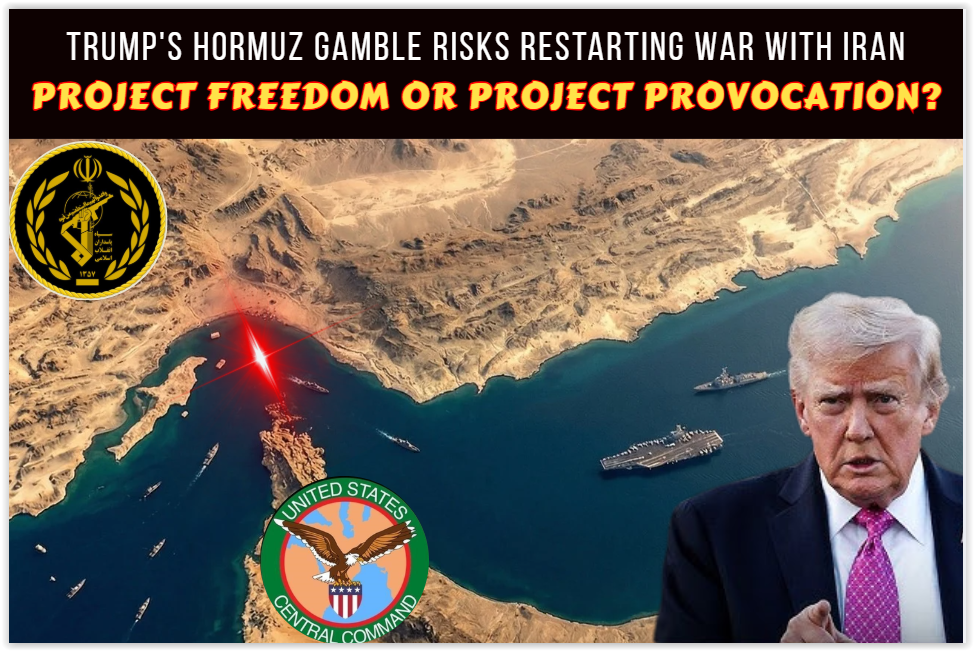
Today, the world’s most dangerous waterway became the stage for the world’s most dangerous gamble.
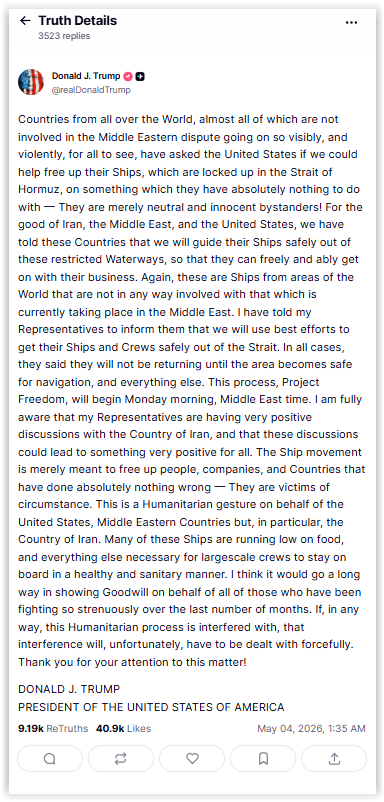
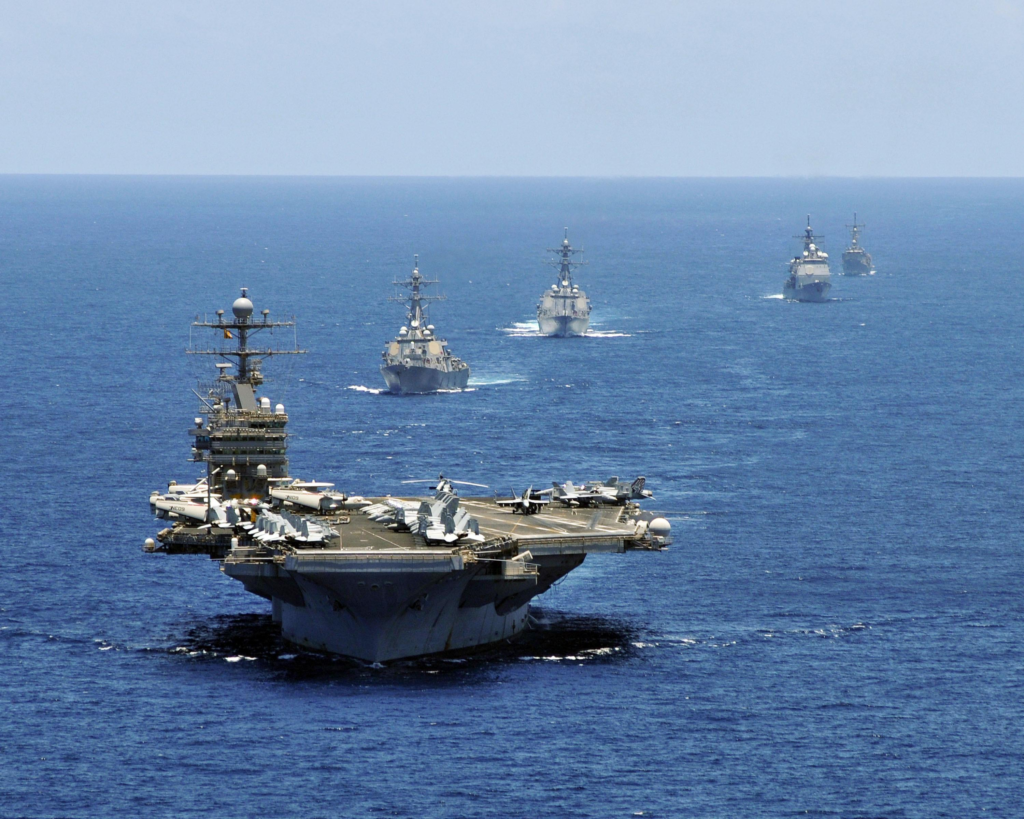
At dawn on May 4, 2026, the U.S. Central Command (CENTCOM) launched “Project Freedom” — a naval operation ostensibly designed to guide “neutral and innocent” merchant vessels through the Strait of Hormuz, the chokepoint through which one-fifth of global oil flows. President Trump announced the mission on Truth Social the evening before, framing it as a “humanitarian gesture” for crews running low on food and facing “health and sanitary problems.” But the military footprint tells a different story: 15,000 U.S. service members, guided-missile destroyers, over 100 land- and sea-based aircraft, and multi-domain unmanned systems are in place. And then there was the warning: “If, in any way, this Humanitarian process is interfered with, that interference will, unfortunately, have to be dealt with forcefully.”
The question hanging over the Persian Gulf this morning is not whether Hormuz will reopen. It is whether Donald Trump just baited Iran into restarting a war he declared over 72 hours ago.
The Announcement: From Truth Social to the Strait
“We will be sending some ships to the area to guide the ships of neutral and innocent countries out of the Strait of Hormuz. This is a humanitarian gesture for the good of Iran, the Middle East, and the United States.”
So wrote President Trump on Truth Social at 9:47 p.m. on May 3, 2026. The post was characteristically Trumpian — grandiose, transactional, and laced with threat. What it was not, legally speaking, was a declaration of war. And that distinction is everything.
CENTCOM Commander General Brad Cooper clarified the military posture in a statement issued hours later: “The mission is designed to support merchant vessels seeking freely transit through the essential international trade corridor.” But Cooper added a critical caveat — the U.S. naval blockade of Iran remains in place. The U.S. Navy will not explicitly “escort” commercial vessels, he emphasized. American ships will simply be “in the vicinity,” ready to intervene if Iran attacks.
This is not semantics. It is strategy. By avoiding the word “escort,” the administration avoids the legal threshold of “hostilities” under the War Powers Resolution. If U.S. ships are merely “in the vicinity,” any Iranian attack on a merchant vessel would allow Trump to claim self-defense — not renewed war. It is a legal fiction built for a political purpose.
The Congressional End-Run: How Trump Reset the War Clock
To understand why “Project Freedom” launched today and not last week, one must look not to Tehran but to Capitol Hill.
On February 28, 2026, the United States and Israel launched Operation Epic Fury — a 38-day air war against Iran that killed Supreme Leader Ali Khamenei, destroyed military and nuclear sites across the country, and cost an estimated $25 billion. The operation involved 900 strikes in its first 12 hours alone, burned through 80% of America’s JASSM-ER cruise missile inventory, and left 16 U.S. military sites in the Gulf damaged by Iranian retaliation. The ceasefire that ended the war on April 7 was brokered not by Washington but by Islamabad, with Pakistani Air Force jets reportedly escorting the Iranian peace delegation to secret talks.
Under the War Powers Resolution of 1973, the President must obtain congressional authorization for military hostilities lasting beyond 60 days. By May 1, 2026 — the 62nd day since Operation Epic Fury began — Trump faced a choice: seek congressional approval, withdraw forces, or declare that “hostilities have terminated.”
He chose the third option.
| Date | Event | Significance |
|---|---|---|
| Feb 28, 2026 | Operation Epic Fury begins: U.S.-Israeli air war on Iran | 900 strikes in first 12 hours; Khamenei killed |
| April 7, 2026 | Ceasefire takes effect | Brokered by Pakistan |
| May 1, 2026 | Trump tells Congress: “Hostilities terminated” | Resets 60-day War Powers clock |
| May 3, 2026 | Trump announces “Project Freedom” on Truth Social | 48 hours after War Powers letter |
| May 4, 2026 | Operation launches | Humanitarian mission or tripwire? |
In his letter to Congress on May 1, Trump wrote with lawyerly precision: “There has been no exchange of fire between the United States Forces and Iran since April 7, 2026. The hostilities that began on February 28, 2026 have terminated.” Forty-eight hours later, he announced a new military operation in the same theater against the same adversary. The hostilities, it seems, had not so much terminated as transformed.
This is not a new trick in American presidential politics. But it is a brazen one. By declaring the war over on Friday and launching a “humanitarian” naval mission on Monday, Trump has effectively created a legal loophole wide enough to sail a carrier strike group through. If Iran attacks a ship under U.S. “guidance,” Trump can claim the response is defensive — not a resumption of hostilities requiring fresh congressional authorization. The War Powers clock resets to zero.
Iran’s 14 Points: A Proposal Trump Rejected Before Reading
While Trump was engineering his legal maneuver, Iran was attempting diplomacy. On May 2, Tehran delivered a 14-point counter-proposal to Washington via Pakistan — a detailed roadmap for ending the crisis that revealed both Iran’s desperation and its defiance.
The proposal, first reported by the Foundation for Defense of Democracies (FDD), contained demands that ranged from the sweeping to the specific:
| Point | Demand | U.S. Response |
|---|---|---|
| 1 | End war within 30 days | Rejected |
| 2 | Lift all sanctions | Rejected |
| 3 | End naval blockade | Rejected |
| 4 | Withdraw U.S. forces from periphery | Rejected |
| 5 | Cease Israel’s war in Lebanon | Rejected |
| 6 | Release frozen assets | Rejected |
| 7 | War reparations to Iran | Rejected |
| 8 | 15-year uranium enrichment freeze (not dismantlement) | Rejected |
| 9 | Transfer enriched uranium abroad, dilute to 3.6% | Rejected |
| 10 | Resume enrichment to 3.6% after 15 years | Rejected |
| 11 | Non-aggression pact (U.S., Iran, Israel) | Rejected |
| 12 | Iran clears Hormuz mines | Under negotiation |
| 13 | “Strategic dialogue” with Arab states | Under negotiation |
| 14 | China and Russia as guarantors | Rejected |
The document was notable for what it omitted as much as what it demanded. Tehran’s nuclear program — the ostensible casus belli of Operation Epic Fury — was treated as a secondary issue, to be deferred rather than dismantled. The 15-year enrichment freeze was offered not as a concession but as a pause, after which Iran would resume enrichment to 3.6% — well below weapons-grade but far above the limits of the defunct 2015 nuclear deal.
Most striking was Point 14: Iran explicitly demanded that China and Russia serve as guarantors of any agreement. This was not merely a diplomatic preference. It was a geopolitical statement. Tehran wants American commitments enforced not by Washington but by Beijing and Moscow — a direct challenge to U.S. credibility and a recognition that the post-American Middle East is already here.
Trump’s response was swift and contemptuous. On Truth Social, he wrote: “I will soon be reviewing the plan that Iran has just sent to us, but can’t imagine that it would be acceptable in that they have not yet paid a big enough price for what they have done to Humanity, and the World, over the last 47 years.” By May 3, he told Israeli media the proposal was “not acceptable.”
The message was unambiguous: There will be no deal on Iranian terms. There may be no deal at all.
The IRGC Hardline: “Hormuz Will Never Return to Its Former State”
If Trump expected Tehran to fold, he miscalculated. The Islamic Revolutionary Guard Corps (IRGC) and Iran’s parliamentary hardliners have responded with a unified and uncompromising message: Hormuz is no longer an international waterway. It is Iranian leverage, and it will be exercised.
“Hormuz will never return to its former state.”
This was the IRGC’s declaration on April 6, before Project Freedom was even announced. It was not a tactical position. It was a strategic doctrine.
Ebrahim Azizi, head of Iran’s Parliamentary National Security and Foreign Policy Commission, sharpened the threat on May 3 — the same day as Trump’s announcement. “Any American interference in the new maritime regime of the Strait of Hormuz will be considered a violation of the ceasefire,” he warned. He dismissed Trump’s Truth Social posts as “delusional.”
Ali Nikzad, Deputy Parliament Speaker, was equally direct: “Tehran will not back down from our position on the Strait of Hormuz, and it will not return to its prewar conditions.” Nikzad offered a narrow exemption — ships not associated with the United States or Israel could pass after paying a toll. The toll, according to regional shipping sources, runs between $1 and $2 million per vessel. Some captains are reportedly paying in Chinese yuan.
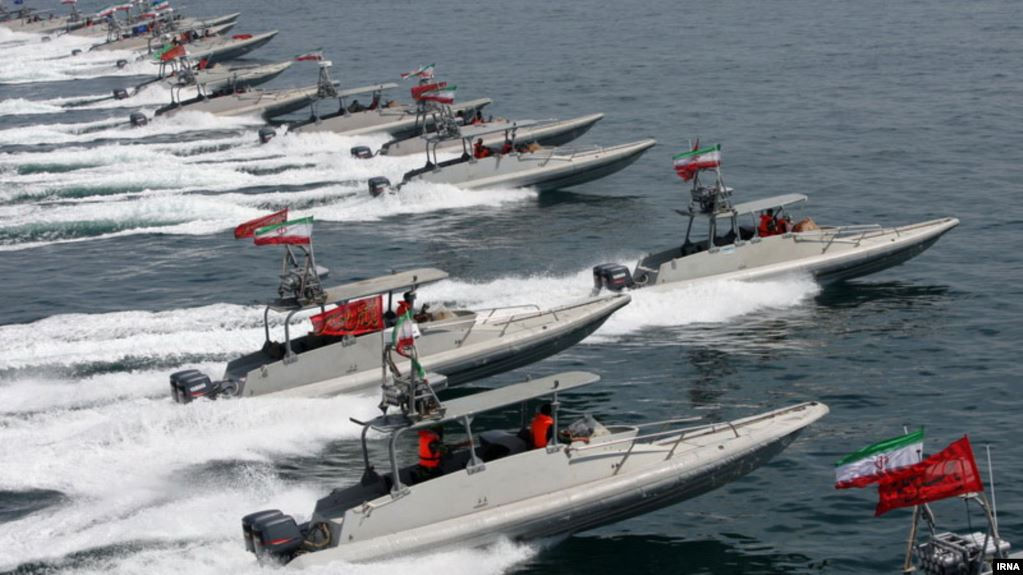
The IRGC Navy has backed these words with shows of force. In late April, Iranian state media broadcast footage of coordinated swarm boat operations in the Strait — dozens of small, fast craft practicing coordinated attacks on larger vessels. The message was clear: The U.S. may have air superiority, but in the confined waters of Hormuz, mass matters more than technology.
Iran has also laid the legal groundwork for escalation. By declaring a “new maritime regime,” Tehran is asserting that any U.S. naval presence in the Strait constitutes an act of war — not self-defense, not humanitarian aid, but aggression. If an American destroyer fires on an IRGC boat approaching a merchant vessel, Iran will claim the U.S. broke the ceasefire first.
This is the trap Trump has walked into. Project Freedom is designed to look like a humanitarian mission. To Iran, it looks like a blockade by another name. And in the Persian Gulf, perception is often indistinguishable from reality.
The Insurance Weapon: Why Ships Aren’t Moving
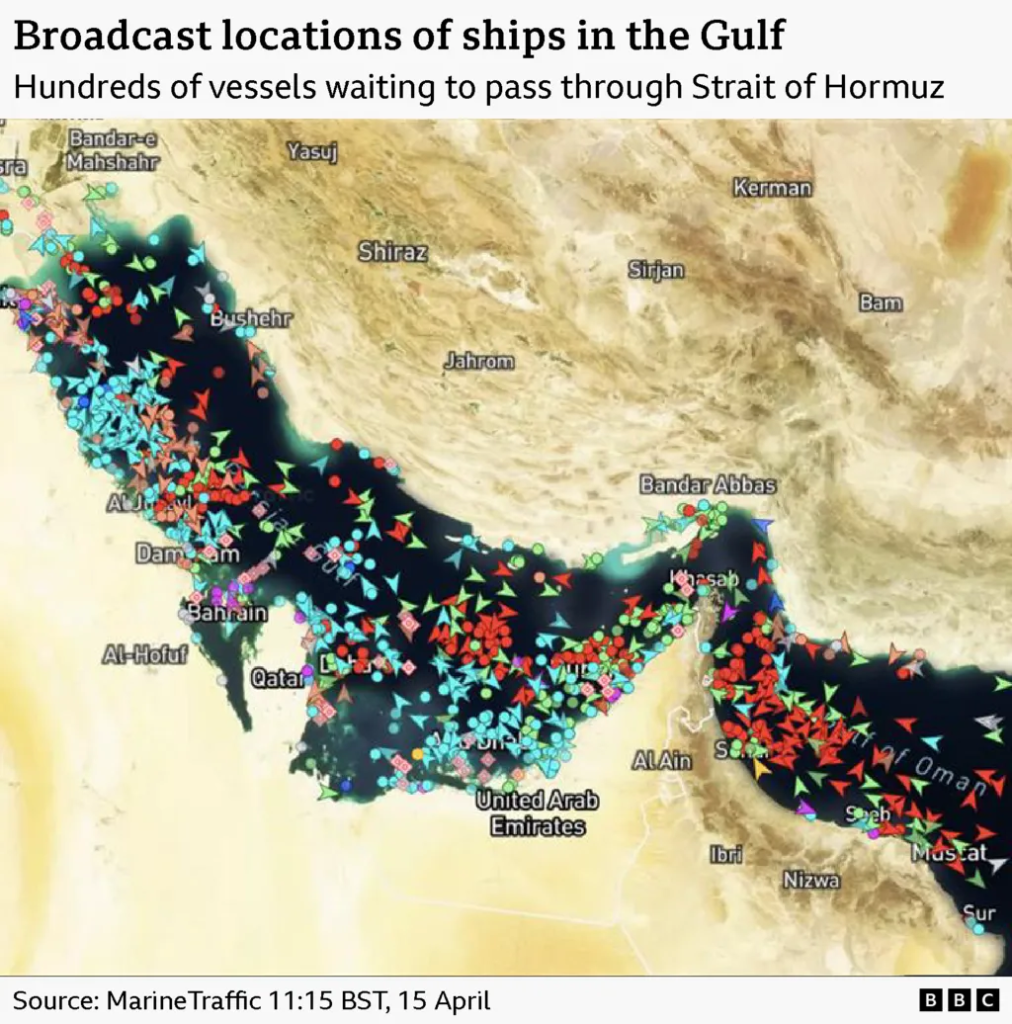
For all the military posturing, the most effective blockade of Hormuz has not been enforced by the U.S. Navy or the IRGC. It has been enforced by actuaries.
“Insurance closed the strait before Iran’s Islamic Revolutionary Guard Corps navy did.”
This assessment, published by the U.S. military’s own Irregular Warfare journal, captures a reality that generals and politicians often overlook: In modern maritime commerce, Lloyd’s of London matters as much as CENTCOM.
Since Operation Epic Fury began in February, war risk insurance premiums for vessels transiting Hormuz have surged from 0.10-0.25% of vessel value to 3-8%. For a large crude carrier worth $100 million, a single transit now requires insurance coverage of $3 million to $8 million — roughly 30 times the pre-war cost. Some underwriters have stopped offering coverage entirely.
Table
| Coverage Type | Pre-War Rate | Current Rate (May 2026) | Change |
|---|---|---|---|
| War Risk (% of vessel value) | 0.10-0.25% | 3-8% | +1,000-2,400% |
| Cost per large tanker transit | ~$250,000 | $3-8 million | +1,000%+ |
| Spot shipping rates (Middle East-Asia) | Baseline | Tripled | +200% |
| Hapag-Lloyd War Risk Surcharge | None | $1,500/TEU standard; $3,500 reefer | New |
The economic impact has been devastating. Lloyd’s CEO Patrick Tiernan confirmed that “premiums surged to ~5% of vessel value, roughly five times the level seen in the earliest days of the war.” The result has been a virtual halt in commercial traffic. Even if U.S. destroyers “guide” ships through the Strait, many owners will not sail without affordable insurance — and insurers will not underwrite without confidence that the route is safe.
Jakob Larsen, head of maritime security at BIMCO, the world’s largest shipping association, offered a sobering assessment: “A mine-clearance effort will most likely be needed to fully reopen the Strait… confined navigation corridors will restrict throughput even after safe passage resumes.”
The U.S. has attempted to address this with a $20 billion reinsurance backstop through Chubb and the International Development Finance Corporation. But government-backed insurance cannot replace market confidence. Until underwriters believe Hormuz is genuinely safe — not merely “guided” — the Strait will remain closed to commerce, regardless of how many destroyers Trump deploys.
Global Fallout: China, Pakistan, and the GCC
The Hormuz crisis is not a bilateral dispute. It is a stress test for the entire global order — and the results are not encouraging.
China: The Guarantor-in-Waiting
Beijing has emerged from the Iran war in a position of extraordinary leverage. China’s December 2025 export controls on critical rare earth minerals — samarium, terbium, dysprosium — constrained U.S. munitions production at the precise moment America needed them most. The Pentagon burned through 80% of its JASSM-ER cruise missile inventory and 40-80% of its THAAD interceptor stockpile in 38 days. Replenishment will take years, and Chinese minerals control the timeline.
Meanwhile, Beijing’s energy exposure is acute: 84% of Hormuz shipments are destined for Asia, with China the largest single consumer. Yet China has managed to maintain limited transit through backchannel arrangements with Tehran — reportedly paying Iranian tolls in yuan, accelerating the de-dollarization of Gulf energy trade.
Iran’s demand that China serve as a guarantor of any U.S. agreement is not diplomatic window dressing. It is a recognition that in a post-American Middle East, Chinese power is the only credible counterweight. If Trump wants a deal, he may have to accept Beijing’s oversight. That is a humiliation no American president has ever accepted — and one this president seems unlikely to contemplate.
Pakistan: The Accidental Mediator
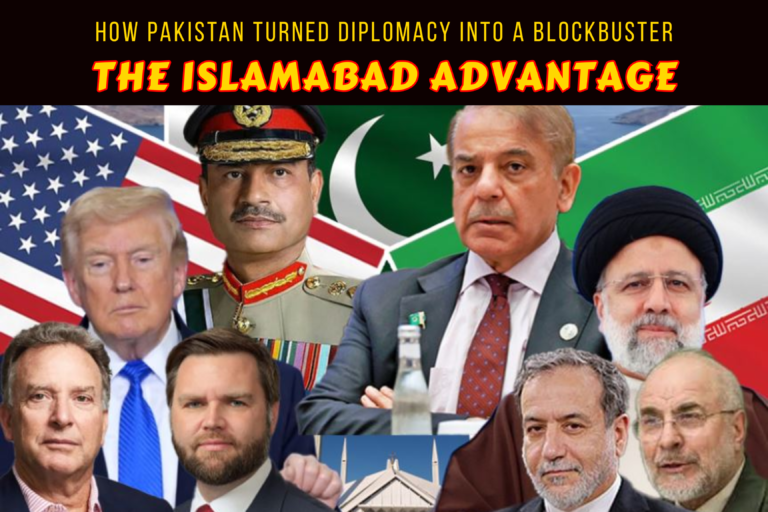
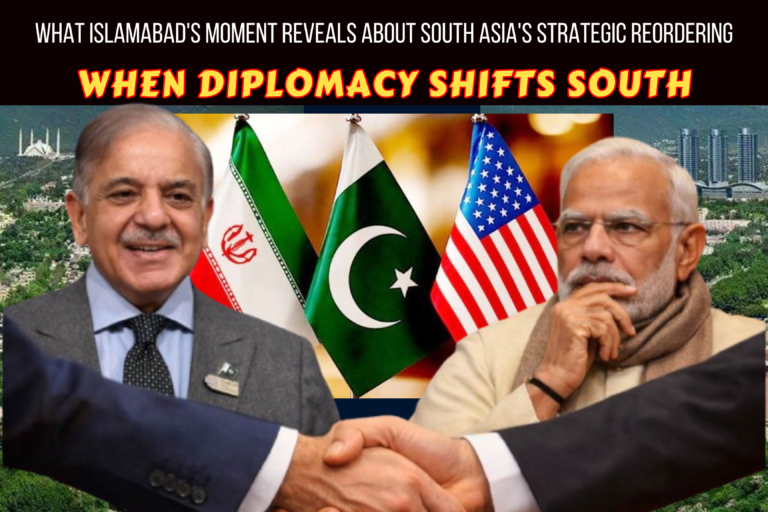
Pakistan has become the unlikely diplomatic center of gravity. It was Pakistani Prime Minister Shehbaz Sharif who hosted the face-to-face U.S.-Iran talks that produced the April 7 ceasefire. It was Pakistani Air Force jets that reportedly escorted the Iranian peace delegation to Islamabad. And it is Pakistan that continues to pass messages between Washington and Tehran.
But Islamabad’s position is precarious. Pakistan relies on Gulf remittances and energy imports; a prolonged Hormuz closure would devastate its economy. Its nuclear rivalry with India — which saw its worst exchange of fire in decades in May 2025 — complicates any claim to neutrality. And its own internal instability, including the ongoing conflict with TTP militants on the Afghan border, limits its bandwidth for regional diplomacy.
Pakistan paused the war. It did not prevent the next one. And with both Trump and the IRGC escalating today, Islamabad’s leverage is rapidly expiring.
The GCC: America’s Wounded Allies
The Gulf Cooperation Council states — Saudi Arabia, UAE, Qatar, Kuwait, Bahrain — have paid the highest price for America’s war with Iran. The physical damage is staggering: 16 U.S. military sites damaged, the UAE reporting 1,422 drones and 246 missiles intercepted, Saudi Aramco’s processing plant hit. The economic damage is worse. Capital Economics has forecast a 10-15% GDP decline for GCC states if the conflict extends beyond three months.
The political damage may be irreversible. Gulf states burned through approximately 86% of their Patriot missile inventory defending against Iranian strikes. They watched the U.S. launch a war that devastated their region without consulting them adequately. And they are now watching Trump launch a new operation that risks restarting the very conflict they just survived.
The message from Riyadh and Abu Dhabi is increasingly clear: American security guarantees are not what they once were. The “electrostate” — China — offers 21st-century infrastructure. The “petrostate” — America — offers 20th-century wars. The Gulf’s strategic reorientation, long predicted, may finally be underway.
Likely Scenarios: What Happens Next
Likely future scenarios are as follows:
| Scenario | Probability | Trigger |
|---|---|---|
| 1. Project Freedom triggers Iranian attack → War resumes | High | IRGC views U.S. presence as ceasefire violation; swarm boat/drone attack on “guided” ships |
| 2. Stalemate: Dual blockade continues | Moderate | Neither side backs down; shipping remains at 5% of normal; insurance stays prohibitive |
| 3. Negotiated reopening via Pakistan/China | Moderate | Iran accepts toll + Chinese guarantor; U.S. grudgingly accepts limited reopening |
| 4. Israeli unilateral strike restarts war | Moderate | Netanyahu pushes to “finish the job” on Iranian nuclear sites; U.S. drawn in |
| 5. Congressional challenge blocks Project Freedom | Low | Democrats challenge War Powers interpretation; unlikely with GOP majority |
The highest probability scenario is also the most dangerous. Iran has explicitly defined U.S. naval presence in Hormuz as a ceasefire violation. The IRGC has practiced swarm attacks. And both sides have structured their positions so that any incident — a warning shot, a drone approach, a misunderstood signal — could escalate into full combat.
The irony is that both Trump and the IRGC want the same thing, for different reasons: They both want the other side to fire first. Trump wants Iran to attack a “neutral” ship so he can claim self-defense and restart the war on his terms. The IRGC wants the U.S. to fire on an Iranian boat so Tehran can claim the Americans broke the ceasefire.
In this environment, accidents become casus belli. And in the Strait of Hormuz, accidents are inevitable.
Conclusion: Freedom or Provocation?
Project Freedom is many things. It is a humanitarian mission, at least in name. It is a naval operation, in fact. It is a legal maneuver to bypass Congress. It is a diplomatic pressure tactic against Iran. And it is, above all, a gamble — one that wagers the stability of the global economy on the hope that Iran will not call Trump’s bluff.
But the bluff may not be Trump’s alone. Iran is wagering that the U.S. cannot sustain another war, that American allies are exhausted, that Chinese and Russian support will hold, and that the global economy will pressure Washington before Tehran buckles. Both sides are betting that the other will blink first.
In the Strait of Hormuz this morning, 15,000 American service members are on station. Over 100 aircraft are in the air. Destroyers are “in the vicinity” of merchant vessels that may or may not sail. And somewhere in Tehran, the IRGC is calculating whether a swarm boat attack on a “guided” ship would be an act of war — or an act of self-defense.
The world is watching. The insurance markets are frozen. The oil markets are braced. And the question that matters is not whether Hormuz will reopen.
It is whether the next war has already begun?