(By Ayesha Mahnoor)
Introduction: A Political Earthquake in the South
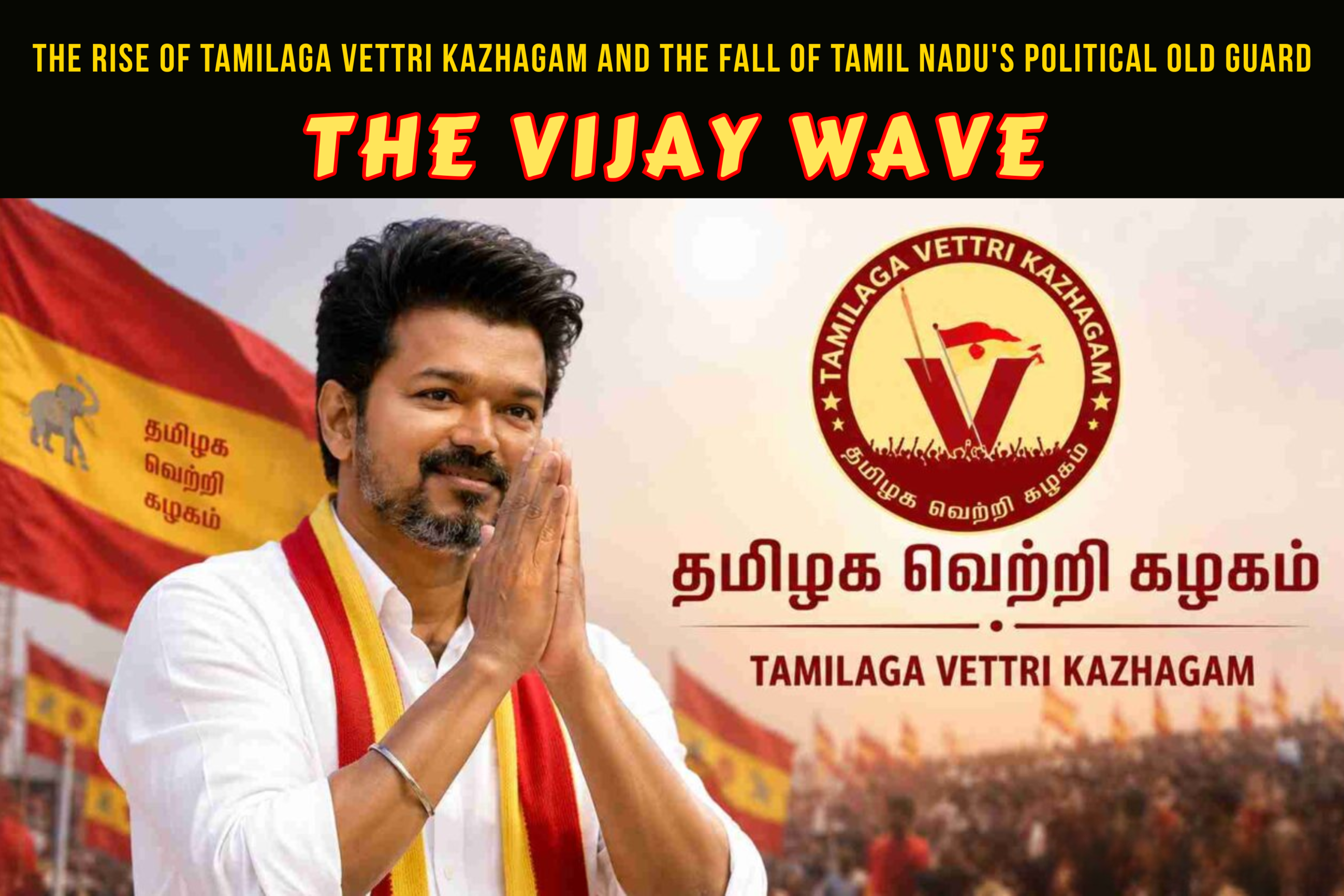
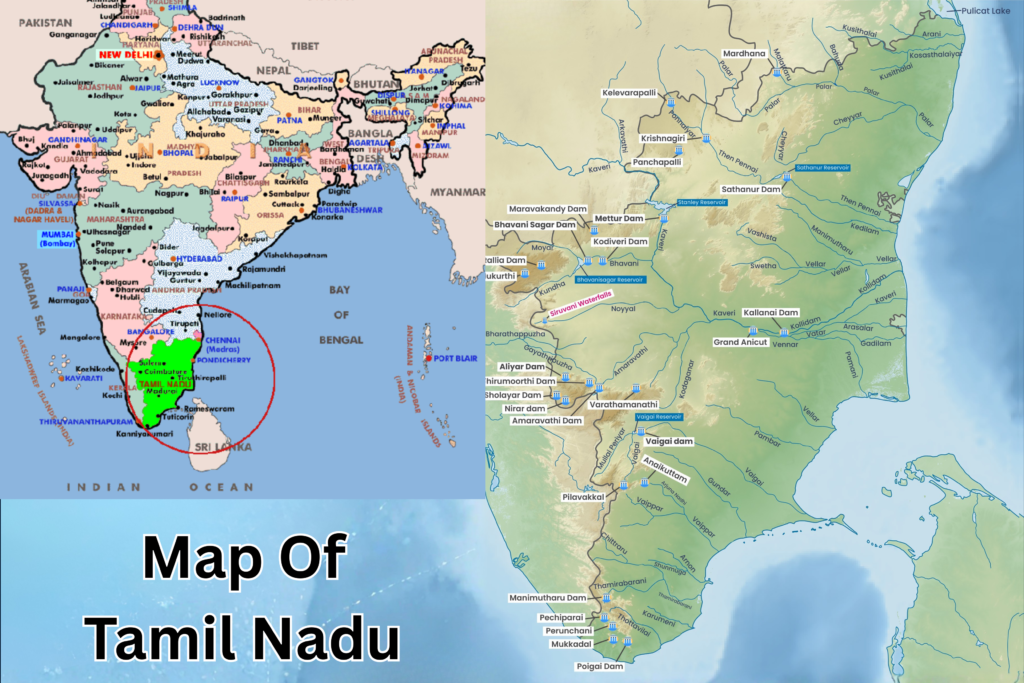
In one of the most dramatic electoral upsets in modern Indian political history, Tamil Nadu has witnessed the end of a decades-long duopoly. Actor-turned-politician C. Joseph Vijay, known to millions as Thalapathy, has led his newly formed Tamilaga Vettri Kazhagam (TVK) to win 108 seats in the 234-member Legislative Assembly, emerging as the single largest party in its very first electoral contest. The results represent more than a change of guard: they signal a fundamental rupture in Tamil Nadu’s political landscape. The ruling DMK was reduced to just 59 seats, a devastating collapse that saw Chief Minister M.K. Stalin lose his ancestral stronghold of Kolathur. The AIADMK, the other pillar of regional politics, managed only 47 seats. As one political analyst noted, “This isn’t just a leadership transition; it’s a generational reset of voter expectations in South India.” This is the story of how a film star’s fan clubs became a political machine, how anti-incumbency met aspiration, and what this electoral wave means for the future of Tamil Nadu.
From Silver Screen to Political Stage
The Thalapathy Persona and Grassroots Foundation
Vijay is not merely another celebrity dabbling in politics. He is a cultural phenomenon who rose to superstardom through a string of blockbuster films spanning three decades. Over that time, he cultivated one of the most loyal fan bases in Indian cinema. Yet beneath the glamour lay something strategic: a vast, disciplined network of fan clubs that functioned as grassroots social service organizations long before entering electoral politics. Disaster relief, blood donation drives, and educational initiatives were channeled through this network, building credibility and organizational depth that traditional parties lacked.
Birth of TVK and Core Manifesto
In February 2024, Vijay formally announced TVK’s formation. The move was methodical, transitioning his people’s movement into a structured political vehicle. TVK launched with an audacious strategy: contest all assembly seats independently. The party’s manifesto centered on women-centric welfare pledges, including monthly financial assistance, free cooking gas, free public bus travel, and dedicated safety infrastructure. “We are not here to inherit power,” Vijay declared during the party’s launch rally. “We are here to build a system where governance serves the people, not the other way around.”
The Campaign That Defied Conventions
Mobilizing the Fan Network
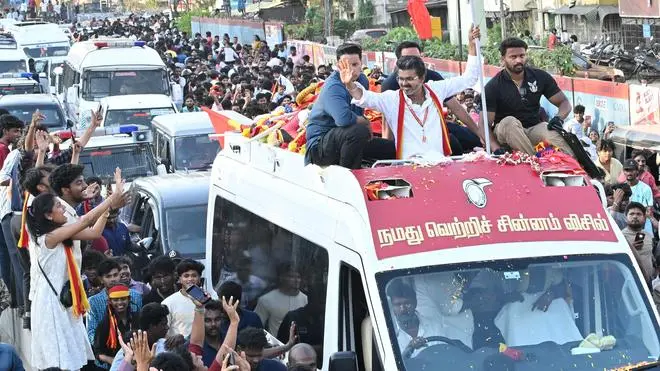
TVK’s campaign machinery was unlike anything Tamil Nadu had previously witnessed. Rather than relying on traditional party cadres, Vijay converted tens of thousands of fan clubs into political volunteer units, creating one of the most extensive grassroots networks of any debut party in Indian history. Digital mobilization played a pivotal role. Short videos, meme campaigns, and direct-to-fan messaging bypassed traditional media gatekeepers. The party’s signature whistle, long associated with Vijay’s cinematic persona, became a unifying symbol at rallies, seamlessly blending pop culture with political mobilization.
Messaging, Milestones, and Controversies
The messaging focused heavily on anti-incumbency, youth employment, women’s empowerment, and positioning TVK as a clean break from established political families. The campaign faced turbulence, including a tragic crowd crush at a rally and certification disputes surrounding Vijay’s final film, which ironically amplified public attention and reinforced his narrative as a target of entrenched power structures. Despite these challenges, the campaign’s decentralized structure and hyper-local outreach proved highly effective. “Traditional parties speak to voters through intermediaries,” said a grassroots TVK coordinator. “We speak directly to them, and they know we listen.”
Election Day and the Results That Reshaped the State
Record Turnout and Historic Outcome
Polling recorded an unprecedented turnout, reflecting intense public engagement. When counting began, early trends showed TVK surging ahead, defying pre-poll expectations that had predicted a continuation of the traditional two-party contest. The final tally cemented TVK’s breakthrough.
| Party | Seats Won | Vote Share (%) | Key Performance Notes |
|---|---|---|---|
| Tamilaga Vettri Kazhagam (TVK) | 108 | ~35 | Largest party, contested all 234 seats independently |
| Dravida Munnetra Kazhagam (DMK) | 59 | ~28 | Incumbent collapsed, CM lost stronghold |
| All India Anna Dravida Munnetra Kazhagam (AIADMK) | 47 | ~22 | Traditional opposition weakened |
| Others & Independents | 20 | ~15 | PMK, INC allies, and regional outfits |
Symbolic Defeats and Personal Victories
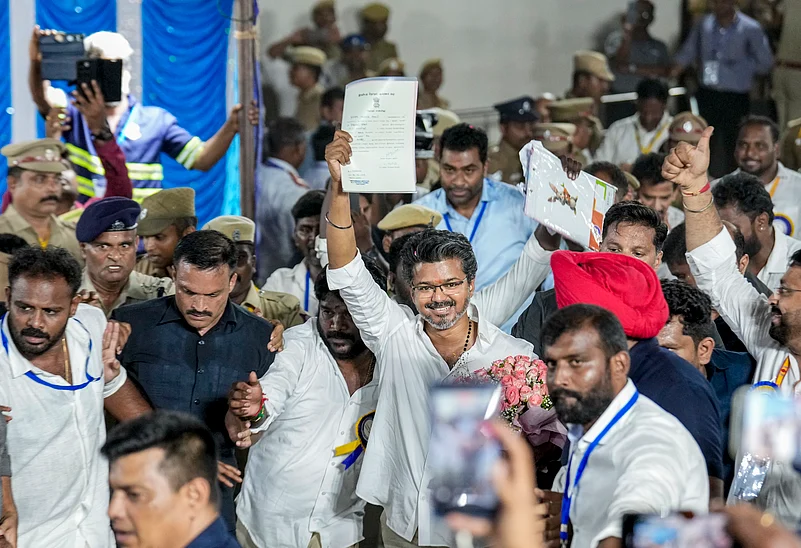
The most symbolic result was the defeat of the incumbent Chief Minister in his traditional constituency, a moment that instantly became the election’s defining image. Vijay himself contested and won two separate seats, underscoring his widespread personal appeal across different demographics and regions. His dual victories highlighted both urban and semi-urban trust in his leadership, setting the stage for coalition negotiations.
Why the Old Guard Fell
Anti-Incumbency and Dynasty Fatigue
The ruling party faced mounting criticism over unemployment, inflation, and perceived governance fatigue after consecutive terms. While several welfare schemes were implemented, voters appeared ready for structural change. Both dominant parties are deeply rooted in political dynasties, whereas TVK presented itself as a fresh start, untainted by decades of intra-party factionalism.
The Vijay Factor vs. Traditional Machinery
Established parties likely underestimated the organizational depth of Vijay’s network. While Tamil Nadu has a history of film stars transitioning to leadership roles, Vijay’s digital-native campaign, pre-established volunteer infrastructure, and clear anti-establishment positioning gave him an advantage that previous celebrity candidates lacked. “The old guard relied on legacy and patronage networks,” noted a political strategist. “TVK relied on aspiration and direct engagement. In 2026, aspiration won.”
The Numbers Game and What Comes Next
Coalition Arithmetic and Government Formation
With 108 seats, TVK falls ten short of an absolute majority. This has triggered intense negotiations with smaller regional outfits and independent legislators. Support from just a handful of allied lawmakers could push the party past the majority threshold. Vijay has formally staked his claim to form the government, initiating the constitutional process with the Governor.
| Scenario | Supporting Parties/Groups | Projected Total Seats | Likelihood |
|---|---|---|---|
| TVK + PMK + Independents | 4 + ~6 | 118+ | High |
| TVK + INC Alliance | 5 + minor allies | 113-115 | Moderate |
| TVK + AIADMK (unlikely) | 47 | 155 | Low (ideological clash) |
| Minority Government | TVK alone (108) | 108 | Low (unstable) |
Policy Priorities and Governance Challenges
If successful, a TVK-led administration would likely prioritize direct welfare transfers, youth skill development, transparent governance mechanisms, public institution upgrades, and infrastructure expansion beyond the capital. The transition from campaign rhetoric to policy implementation will test the party’s administrative readiness. Fiscal management, bureaucratic integration, and coalition management will be immediate hurdles.
Historical Context and Broader Implications
The Actor-Politician Legacy in Tamil Nadu
Tamil Nadu’s political culture has long intertwined cinema and governance, with previous icons like M.G. Ramachandran and J. Jayalalithaa shaping the state’s trajectory. Unlike those figures who joined or inherited existing parties, Vijay built his vehicle from scratch, making this a distinctly modern political experiment. His approach blends contemporary digital mobilization with traditional welfare politics.
Ripple Effects for Regional and National Politics
Nationally, the results reinforce the difficulty major national parties face in penetrating regional political ecosystems. The BJP’s minimal showing in the state underscores the resilience of localized political identities, while the realignment complicates opposition coalition math for future national elections. As one national observer remarked, “South India doesn’t just vote for parties; it votes for movements. TVK has become one.”
Conclusion: A New Chapter, Unwritten Pages
The electoral wave has redrawn Tamil Nadu’s political map, but winning ballots is only the first step. Governing a complex, diverse state demands more than charisma or campaign momentum. Critical questions remain about coalition stability, fiscal management of welfare promises, and the balance between celebrity influence and bureaucratic governance. What is certain is that the traditional duopoly has fractured. A new force has arrived, and as the state watches to see whether the party can translate electoral enthusiasm into effective administration, Tamil Nadu stands at the threshold of a transformative political era.