(By Faraz Ahmed)
______________________________
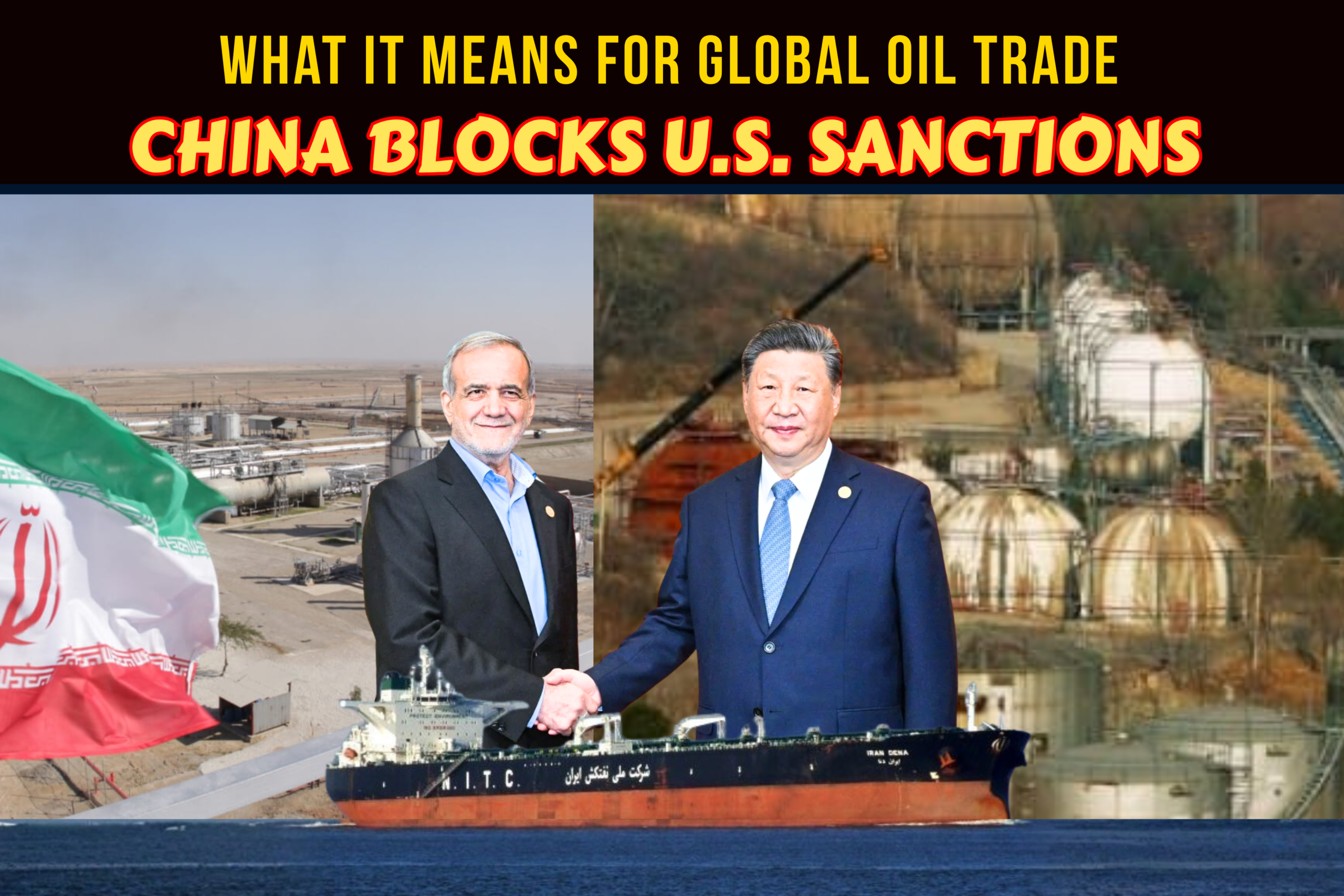
China activated its Blocking Rules for the first time on May 2, 2026, ordering companies to ignore U.S. sanctions targeting independent “teapot” refineries buying Iranian oil. Here’s how this challenges American sanctions power and reshapes global energy markets.
What Are Teapot Refineries and Why Do They Matter?
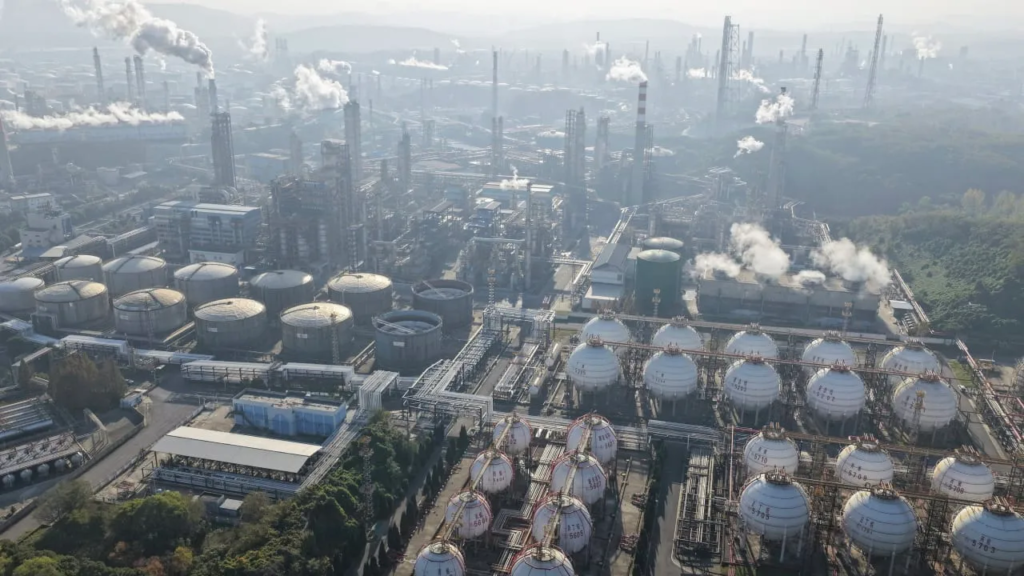
The first thing you notice is the smell. Not the sulfurous sting of a mega-refinery — the kind that processes 600,000 barrels per day — but something sharper, more urgent. A chemical tang that clings to your clothes after you’ve left. The second thing is the scale. These are not the cathedral complexes of the Texas Gulf Coast. These are modest, often ramshackle operations tucked into Shandong province’s flat industrial sprawl, where rust-colored storage tanks squat behind chain-link fences and truck drivers queue for hours to load gasoline into dented tankers.
They call them chahu — teapot refineries. A dismissive nickname coined by state oil executives who saw these independent refineries as too small to matter, too crude to compete, too provincial to survive. The state giants — Sinopec, PetroChina, CNOOC — controlled the pipelines, the import quotas, the political patronage. What could a few thousand barrels-per-day operation in a coastal backwater possibly threaten?
Everything, it turns out.
Teapot refineries (茶壶炼油厂) are independent, non-state-owned oil refineries in China, primarily concentrated in Shandong province on the country’s eastern coast. Unlike China’s state-owned giants, these facilities operate without central government control over crude sourcing or pricing decisions.
Key facts about teapot refineries:
- Capacity: Combined processing exceeds 2 million barrels per day — more than total UK refining output
- Location: Primarily Shandong cities: Dongying, Binzhou, Weifang, Rizhao
- Origin: Born from 2015 reforms granting private refiners direct crude import licenses for the first time
- Scale: Individual facilities range from 50,000 to 200,000 barrels per day
- Feedstock: Depend heavily on discounted crude from sanctioned or politically isolated producers
By 2024, they had become the primary buyers of Iranian crude oil and a decisive force in global energy flows.
Why U.S. Sanctions Targeted Chinese Teapot Refineries
In March 2025, the U.S. Treasury Department’s Office of Foreign Assets Control (OFAC) designated five Chinese teapot refineries for purchasing Iranian crude in violation of American sanctions. The designations marked the first direct U.S. sanctions on Chinese refining assets for Iran-related trade.
The Five Designated Refineries
| Refinery | Location | Alleged Activity |
|---|---|---|
| Shandong Shouguang Luqing Petrochemical | Weifang, Shandong | Millions of barrels via shadow-fleet deliveries |
| Shandong Shengxing Chemical | Weifang, Shandong | Accepted cargoes with forged “Malaysian blend” documentation |
| Shandong Jincheng Petrochemical Group | Shandong | Regional independent with political connections |
| Hebei Xinhai Chemical Group | Hebei Province | Extended network beyond Shandong |
| Hengli Petrochemical (Dalian) Refinery | Dalian, Liaoning | Larger, more modern facility — signaling expanded U.S. targeting |
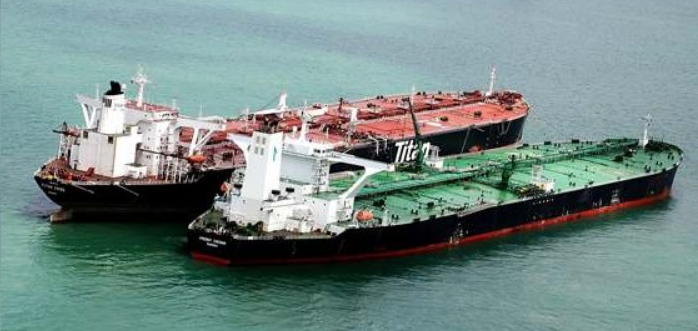
The Treasury investigation documented a sophisticated sanctions-evasion network. The tanker Esperanza — a 20-year-old VLCC registered in Panama, owned through a shell company in the British Virgin Islands — departed Iran’s Kharg Island in February 2025. Its AIS transponder showed a routine course toward Singapore. Then, 200 nautical miles east of Oman, the signal vanished.
For eleven days, the Esperanza was a ghost. Satellite imagery later reconstructed what AIS could not: a nighttime rendezvous with the Sea Glory in the Arabian Sea, crude pumped across fenders in darkness, no customs officials, no paper trail. When the Esperanza reappeared, it was lighter by two million barrels. Its cargo documents identified the oil as “Malaysian blend” — a fictional grade invented solely to launder Iranian crude. The Sea Glory steamed toward Shandong, discharging at an independent terminal in Dongying.
This was standard operating procedure. And it was precisely this choreography — refined over years, executed by a global network of enablers — that OFAC mapped before designating China’s teapot refineries.
The Military Connection
What transformed this from sanctions evasion into geopolitical crisis was Treasury’s finding about where the money went. Iran’s Armed Forces General Staff (AFGS) — the supreme military command overseeing the Revolutionary Guard and proxy militias across Syria, Lebanon, Yemen, and Iraq — had taken operational control of oil sales. The teapots, in this analysis, were not merely buying cheap crude. They were funding missiles aimed at Saudi facilities, drones supplied to Russia, and arms for Hezbollah and the Houthis.
The U.S. deliberately avoided sanctioning China’s state-owned majors, calculating that teapots were politically expendable — small enough to pressure without triggering full bilateral rupture. That theory lasted six weeks.
How China Responded: Blocking Rules Activation
On May 2, 2026, China’s Ministry of Commerce issued an order of extraordinary bluntness. The United States had imposed “unjustified extraterritorial sanctions” on five Chinese companies. These measures “shall not be recognised, implemented, or complied with.” For the first time since enacting its Blocking Rules in 2021 — a legal framework explicitly designed to counter foreign sanctions — China had pulled the trigger.
What Are China’s Blocking Rules?
The Rules on Countering Unjustified Extraterritorial Application of Foreign Legislation and Other Measures were enacted in January 2021 but never enforced until this activation. Modeled on the EU’s 1996 Blocking Statute, the Chinese version contains sharper teeth:
- Absolute prohibition: Designated foreign measures “shall not be recognized, implemented, or complied with” within China
- Retroactive application: Applies to the March 2025 OFAC designations already in effect
- No exemptions: Unlike the original rules, which allowed exceptions for “truly necessary” compliance, the May 2 order granted none
- Legal liability: Chinese citizens and entities complying with foreign sanctions risk “corresponding legal liabilities under Chinese law”
- Non-recognition: Chinese courts must not enforce foreign judgments or arbitration awards based on designated sanctions
This was the first time any major economy has formally instructed domestic companies to defy U.S. secondary sanctions through published ministerial order.
The retroactive, absolute prohibition — with no exemptions — represented a more aggressive posture than the EU Blocking Statute had ever assumed. Chinese entities that had severed ties with the five refineries since March were, in principle, required to restore them.
Why China Chose This Moment: 5 Key Factors
The question of timing — why May 2026, why these refineries, why this sudden activation of a long-dormant tool — has generated intense speculation. No single explanation suffices. The most persuasive account combines five converging factors.
1. The Escalation Ladder
By March 2025, U.S. sanctions had been creeping up China’s oil sector for years. Individual traders, shipping companies, and smaller banks had been targeted. But the teapot designations represented a qualitative shift — direct penalties on Chinese industrial entities for purchasing Iranian crude, a practice tacitly tolerated since 2018. Beijing faced a choice: accept the precedent and risk further designations of larger players, or draw a line while the target was still relatively small. The Blocking Rules activation was a line in the sand.
2. The Iran Commitment
China’s relationship with Iran had deepened significantly by 2025–2026. The comprehensive strategic partnership announced in 2021, including a 25-year cooperation agreement, had matured into concrete economic linkages: infrastructure investment, military cooperation, and guaranteed oil purchases. Beijing had committed to buying Iranian crude as a lifeline for a sanctioned ally. The teapot designations threatened to sever that lifeline. China’s response was, in part, fulfillment of its strategic commitment to Tehran.
3. The Yuan Test Case
Since 2022, China had accelerated efforts to internationalize the renminbi, particularly in commodity trade. The teapot-Iran trade represented a perfect test case: a transaction chain already largely outside the dollar, involving private Chinese buyers and a sanctioned seller, where Beijing could promote yuan settlement without immediately threatening the global financial system’s core. By blocking U.S. sanctions, China was not merely defending teapots. It was defending a nascent parallel financial infrastructure.
4. The Shandong Lobby
Provincial politics in China are often underestimated by foreign analysts. Shandong is an economic heavyweight — China’s third-most-populous province, a manufacturing and agricultural powerhouse. The teapot refineries, concentrated in cities like Dongying, Binzhou, and Weifang, employ hundreds of thousands and generate billions in local tax revenue. Provincial officials had been lobbying Beijing for years to protect the sector from U.S. pressure. The Blocking Rules activation may reflect, in part, the political weight of Shandong’s interests within China’s internal policy process.
5. Confidence in Reduced Vulnerability
By 2026, several developments had altered Beijing’s calculus:
- Yuan settlement of China’s trade reached 30–35%
- Domestic financial markets had deepened, providing alternative funding sources
- The Russia-Ukraine war had demonstrated Western sanctions’ limits when major powers resisted
- The Biden administration, facing election-year pressures, was seen as unlikely to risk a full trade war
China activated the Blocking Rules not despite its vulnerability, but because it had systematically reduced that vulnerability and was prepared to test whether U.S. sanctions still commanded automatic compliance.
The Compliance Dilemma for Chinese Companies
For Chinese companies, the May 2 order created an excruciating legal and commercial bind. Compliance with U.S. sanctions risked Chinese legal penalties. Compliance with Chinese law risked U.S. sanctions — exclusion from dollar markets, frozen assets, criminal liability for executives traveling to U.S. jurisdiction.
For the teapots themselves, the choice was straightforward: they were already designated, already cut off from U.S. markets, with nothing left to lose and Chinese state protection to gain.
For Chinese banks — ICBC, Bank of China, China Construction Bank — the dilemma was acute. Major institutions maintain extensive U.S. operations, dollar-clearing relationships, and correspondent banking networks. A single sanctions violation could cost billions in fines and sever global financial access. The likely response: formal compliance with Beijing’s order while tightening internal controls to avoid U.S. scrutiny — a delicate balancing act.
For international companies with Chinese operations, the situation was worse. The Blocking Rules offered them no protection; they were not Chinese entities. But their Chinese subsidiaries might now be legally prohibited from cooperating with U.S. sanctions enforcement. The result: further retreat from the teapot sector, accelerating market bifurcation into dollar and non-dollar spheres.
Yuan Oil Settlement: How Teapots Bypass Dollar Sanctions
The transaction, when settled, left no trace a Western regulator could follow. No SWIFT message traversed the network of correspondent banks that has governed international payments since 1973. No dollar cleared through the Federal Reserve’s wires in New York. Two accounts at the Bank of Kunlun — one belonging to a Shandong teapot, the other to an Iranian counterpart — were debited and credited in renminbi, and two million barrels changed ownership in a parallel financial universe.
This was not an aberration. It was the future China’s policymakers had been building toward for two decades.
The Yuan Settlement Architecture
The Bank of Kunlun remained the primary institutional channel. A CNPC subsidiary carved out specifically for Iran business, Kunlun had been sanctioned by the U.S. in 2012, lifted in 2016, and reimposed in 2018. It simply accepted its exclusion from Western markets as a cost of doing business, processing the majority of teapot payments for Iranian crude in yuan with minimal dollar exposure.
Beneath Kunlun lay a more diffuse network: regional banks in Shandong and Hebei, trust companies, commodity financing platforms, informal clearing arrangements. These entities operated below international regulatory thresholds, their transactions too small to trigger automated monitoring.
Yuan pricing became standard for teapot Iranian crude by 2024. Iranian sellers received yuan they could use to purchase Chinese goods directly, or convert through Hong Kong’s offshore market. Chinese buyers avoided the documentation trails that dollar transactions created. The circular flow — oil for yuan, yuan for manufactured goods, goods for Iranian consumption — operated increasingly outside Western financial intelligence.
Commodity Barter and Alternative Finance
For larger transactions, Chinese and Iranian traders developed sophisticated offset arrangements. A Chinese teapot would purchase Iranian crude on credit, recorded in a yuan-denominated account. Iran would simultaneously purchase Chinese infrastructure equipment or consumer electronics, recorded in a matching account. Periodically, the accounts were netted, with only the balance settled in cash. By 2025, these arrangements reportedly covered 30–40% of China-Iran oil trade.
Prepayment arrangements became common: Chinese buyers paying 50–80% of cargo value upfront in yuan, with delivery months later. Warehouse receipt financing emerged: crude stored in Chinese bonded zones used as collateral for loans from non-bank lenders. Insurance substitutes proliferated: Chinese state-owned entities providing informal guarantees, or Iranian sellers self-insuring through price premiums.
These mechanisms were less efficient than conventional trade finance. But they functioned. And their inefficiency created barriers to entry that protected established players — the teapots and traders with relationships, experience, and risk tolerance — from competition.
Digital Yuan: The Next Frontier
Perhaps the most consequential development was the integration of China’s central bank digital currency (e-CNY) into sanctions-evasion infrastructure. Unlike conventional yuan transactions traversing bank ledgers, digital yuan operates on a PBOC-controlled distributed ledger — programmable, intermediary-free, and opaque to Western financial intelligence.
A teapot refinery could hold digital yuan in a wallet directly controlled by the PBOC, transfer it to an Iranian counterpart’s wallet without bank involvement, and execute the transfer only upon verified delivery of crude — all through smart contracts embedded in the currency itself. By early 2026, pilot programs were reportedly testing digital yuan settlement for cross-border commodity trade, with Iran and Russia as primary counterparties.
U.S. Options: What Can Washington Do Now?
The morning after China’s Blocking Rules activation, the U.S. Treasury operated with usual bureaucratic rhythm. No immediate retaliation was announced. The silence was deliberate — and revealing.
Washington had been caught in a strategic trap of its own making. The teapot designations had been calibrated to avoid escalation. The Blocking Rules response had been calibrated to force one. Now the Biden administration faced a choice between accepting a public challenge to sanctions authority or escalating toward a confrontation that could disrupt global oil markets and spike domestic gasoline prices before midterm elections.
Four Strategic Paths
Table
| Option | Description | Risk |
|---|---|---|
| Expand to state-owned giants | Sanction Sinopec, PetroChina, or CNOOC | Catastrophic market disruption, comprehensive Chinese retaliation, global oil price spike |
| Target Chinese banks | Penalize Kunlun, regional lenders, or major institutions | Forced legal confrontation with Blocking Rules; Chinese banks have reduced dollar exposure |
| Attack infrastructure | Restrict satellite networks, digital yuan systems, Shandong port facilities | Slow-acting, technically complex; accelerates China’s technological decoupling |
| Accept and adapt | Acknowledge teapot trade will continue; redirect to achievable objectives | Political cost of appearing to retreat; avoids unwinnable escalation |
In the immediate aftermath, Washington shifted enforcement to non-Chinese targets — shipping companies, Dubai front entities, non-Chinese traders — suggesting reluctance to escalate directly against Chinese entities while the Blocking Rules confrontation remains unresolved.
Global Impact: Who Else Is Watching?
The teapot confrontation was not merely bilateral. It was a signal to the world — and the world’s response would determine whether this remained a U.S.-China dispute or became a systemic transformation.
India occupied the most delicate position. A major oil importer with historical Iran ties, India had officially complied with U.S. sanctions while purchasing discounted Russian crude through back channels. If China successfully defied U.S. secondary sanctions, would India resume Iranian purchases? Would it seek its own Blocking Rules equivalent?
The European Union faced an identity crisis. Its own Blocking Statute, never robustly enforced, now looked impotent beside China’s activation. European companies chafed under U.S. sanctions that excluded them from Iranian and Russian markets while American competitors exploited loopholes.
The Gulf States — Saudi Arabia, UAE, Qatar — watched with acute ambivalence. They depended on U.S. security guarantees and competed with Iran for market share. But they also traded increasingly with China in yuan and resented American pressure to limit commercial relationships. A world where Chinese Blocking Rules shielded Iran-related trade was a world where their own sanctions compliance became a competitive disadvantage.
Russia, already comprehensively sanctioned, had the least to lose and most to gain. A successful Chinese challenge validated Moscow’s own evasion strategies, expanded yuan-based networks serving Kremlin interests, and demonstrated that American financial hegemony was not invincible.
What Happens Next: Three Scenarios
Scenario 1: Managed Bifurcation (Most Likely)
Dollar-denominated, sanctions-compliant trade persists for Western entities and advanced technologies. Yuan-denominated, sanctions-opaque trade expands for commodities and willing participants. The two systems overlap at margins, with hybrid entities maintaining operations in both. Stable but costly, requiring duplicate infrastructure and persistent uncertainty.
Scenario 2: Systemic Confrontation
Direct escalation beyond teapots to core strategic sectors — semiconductors, advanced manufacturing, military-linked technologies. Massive economic disruption, supply chain restructuring, partial decoupling. The global economy survives but in more fragmented, less efficient form.
Scenario 3: Negotiated Boundaries
Explicit U.S.-China agreement defining limits of legitimate sanctions reach. Requires American acceptance of constraints and Chinese acceptance of international norms. Extraordinarily difficult but offers the only durable resolution.
In the weeks after May 2, several developments suggested trajectory: teapot operations continued without disruption; U.S. enforcement shifted to peripheral targets; market participants increased due diligence; the bifurcation into dollar-compliant and yuan-opaque markets accelerated.
Frequently Asked Questions
What are teapot refineries? Independent, non-state-owned oil refineries in China, primarily in Shandong province. They process approximately 2 million barrels per day combined and became the primary buyers of Iranian crude after U.S. sanctions returned in 2018.
Why did China block U.S. sanctions on teapots? Beijing activated its Blocking Rules for the first time to assert that Chinese law supersedes American extraterritorial sanctions on Chinese soil. The move protects Iran oil purchases, tests yuan-based trade infrastructure, and challenges U.S. financial hegemony.
How does yuan settlement evade U.S. sanctions? By bypassing dollar clearing, SWIFT messaging, and U.S.-regulated correspondent banks. Transactions settle through Chinese banks in renminbi, leaving no footprint in the American-controlled financial system.
What is China’s Blocking Rules law? Enacted January 2021, these rules prohibit Chinese entities from complying with designated foreign sanctions and nullify related foreign court judgments. The May 2, 2026 activation was their first-ever enforcement.
What does this mean for global oil prices? Immediate impact has been modest. Oil is fungible — if Iranian crude is blocked from one channel, it flows to others. Sustained confrontation could disrupt markets if state-owned giants become involved or military conflict erupts in the Strait of Hormuz.
The New Rules of Economic Warfare: What the Teapots Reveal
What the teapots revealed, in their modest, rust-colored way, was a fundamental shift in the architecture of economic warfare. For three decades, the United States had wielded sanctions with a presumption of universality. The dollar was the global medium. The SWIFT network was the global plumbing. American courts were the global forum. Secondary sanctions leveraged this infrastructure to project U.S. preferences outward, creating a compliance architecture that required minimal enforcement because the threat of exclusion was sufficient.
This system rested on a political foundation that was always more fragile than it appeared: the acquiescence of other major economies. European allies grumbled but complied. Emerging markets complained but adapted. China, above all, absorbed the pressure while systematically building alternatives — not to confront the system directly, but to reduce vulnerability, to create options, to wait.
The teapots were where the waiting ended. Not because China had achieved full autonomy from dollar markets — it had not. Not because the yuan had displaced the greenback — it had not. But because Beijing calculated that the partial alternatives were now sufficient to sustain a specific challenge in a specific sector. And because the target — provincial refineries processing discounted crude — was calibrated to test the system’s limits without risking its collapse.
The lesson was not that sanctions were dead. It was that they were now contested. That compliance could no longer be presumed. That every designation, every secondary sanction, every threat of dollar exclusion would now face a counter-calculation: not merely the cost of defiance, but the cost of submission to a foreign legal order that a rising power had explicitly rejected.
What was settled — what the smell of Shandong’s refining coast and the May 2 Blocking Rules order had made undeniable — was that the era of automatic compliance had ended. Economic power was now contested terrain. And the smallest players — the teapots, the shadow fleet captains, the yuan traders, the provincial officials protecting local industry — were as much a part of that contest as the treasury secretaries and commerce ministers who issued the orders from Washington and Beijing.
The new rules of economic warfare would not be written in grand strategy documents or international treaties. They would be written in the daily transactions of refineries and tankers, in the legal briefs of courts confronting conflicting jurisdictions, in the calculations of traders deciding which currency to use and which risk to accept. They would be provisional, contested, constantly negotiated. And they would begin, improbably but undeniably, with a few thousand rust-colored storage tanks on the flat coast of a Chinese province, processing oil that official records said did not exist, proving that in the global economy, what matters is not merely what is prohibited, but what can be sustained.