(By Quratulain Khalid)
Introduction
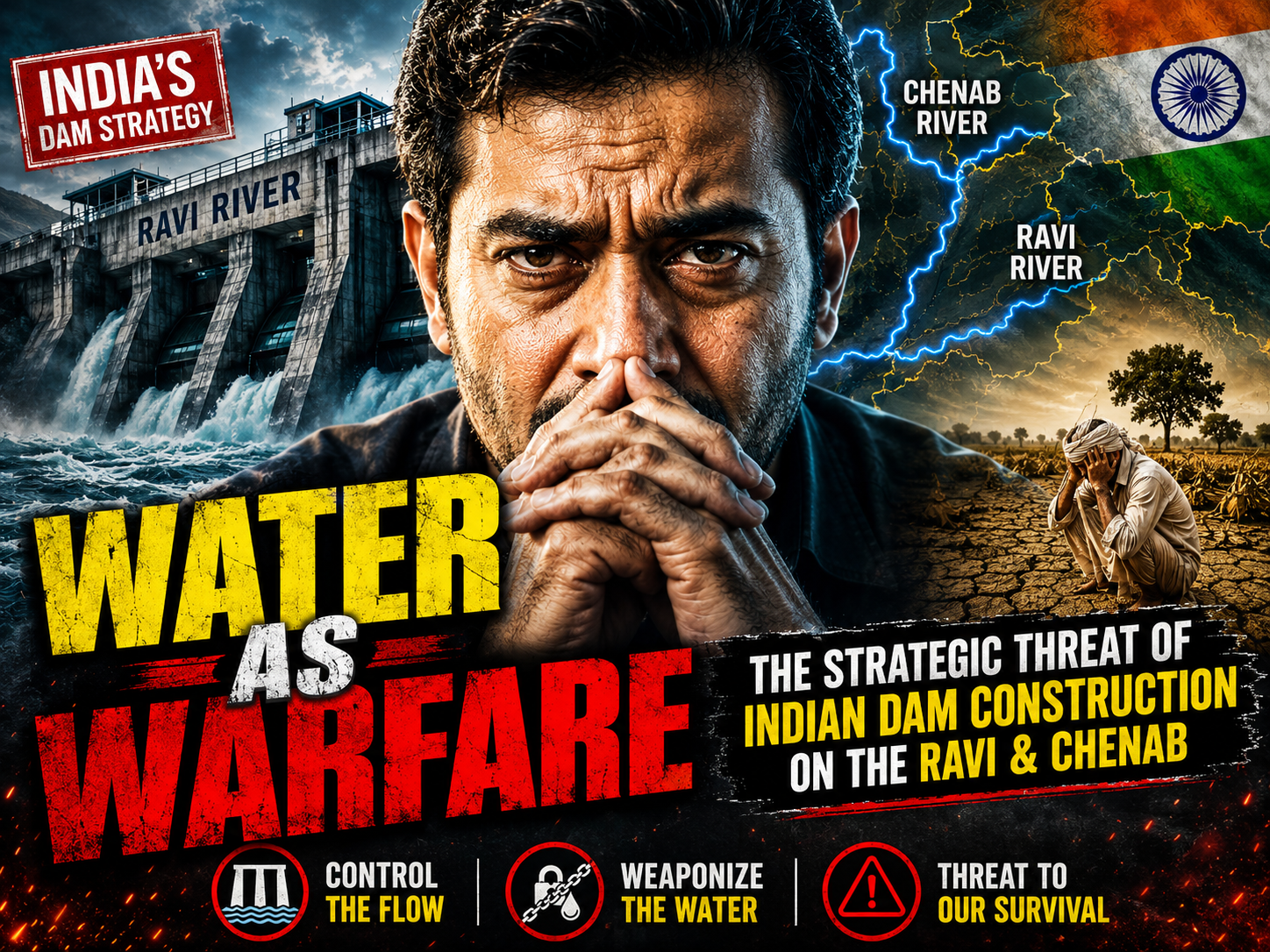
For Pakistan, water is not merely a resource; it is the bedrock of national survival. With over 90% of its agriculture dependent on the Indus River system, any upstream manipulation by India represents an existential threat to the country’s food security, economic stability, and social cohesion. While the 1960 Indus Waters Treaty (IWT) was hailed as a diplomatic triumph, recent years have witnessed a disturbing shift in India’s approach: the aggressive construction of dams and barrages on the Ravi and Chenab rivers that appear designed to weaponize water flows.
Critics within Pakistan have long argued that successive governments have failed to adequately counter this “hydro-hegemony,” allowing India to incrementally erode Pakistan’s water rights under the guise of compliant infrastructure. From the completed Shahpurkandi Barrage on the Ravi to the contentious Pakal Dul and Ratle projects on the Chenab, New Delhi is testing the limits of the treaty, creating structures that could allow it to hold Pakistan’s water hostage during critical agricultural seasons or times of conflict.
This analysis moves beyond rhetorical outrage to examine the technical realities of these projects. It highlights how specific design features—such as excessive pondage capacity and manipulated spillway gates—pose a severe strategic risk to Pakistan. It also critiques the diplomatic inertia that has allowed these vulnerabilities to deepen, arguing that Islamabad must adopt a more proactive, legally robust, and technically sophisticated strategy to safeguard its vital lifelines.
“The Indus Waters Treaty has survived three major wars, but it was never designed to withstand a determined campaign of coercive infrastructure development by an upstream hegemon.”
— Adapted from Strategic Security Review, 2025
The Legal Framework: A Shield Under Stress
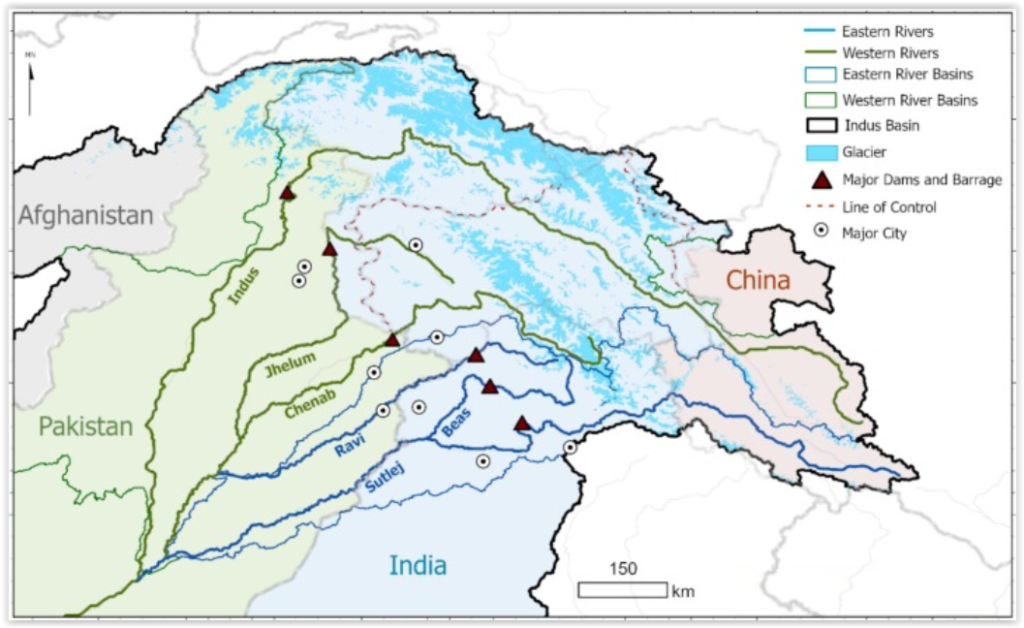
The IWT allocates the three eastern rivers (Ravi, Beas, Sutlej) to India and the three western rivers (Indus, Jhelum, Chenab) to Pakistan. However, the treaty permits India to build run-of-the-river hydroelectric plants on the western rivers, subject to strict technical constraints intended to prevent flow manipulation.
Table 1: River Allocation Under the Indus Waters Treaty (1960)
| River | Allocated To | Annual Average Flow (MAF*) | Key Provisions |
|---|---|---|---|
| Eastern Rivers | |||
| Ravi | India | ~1.4 MAF | Full use permitted; limited storage allowed |
| Beas | India | ~3.1 MAF | Full use permitted |
| Sutlej | India | ~13.8 MAF | Full use permitted |
| Western Rivers | |||
| Indus | Pakistan | ~87.5 MAF | Pakistan has primary rights; India allowed limited non-consumptive use |
| Jhelum | Pakistan | ~23.5 MAF | Same as above |
| Chenab | Pakistan | ~20.5 MAF | Same as above |
*MAF = Million Acre Feet
While the treaty provides a legal framework, its effectiveness relies on good faith implementation. Recent Indian actions suggest a strategy of “salami slicing“—making incremental technical changes that individually may seem minor but collectively grant India significant leverage over Pakistan’s water supply.
The Ravi River: Consolidating Upstream Control
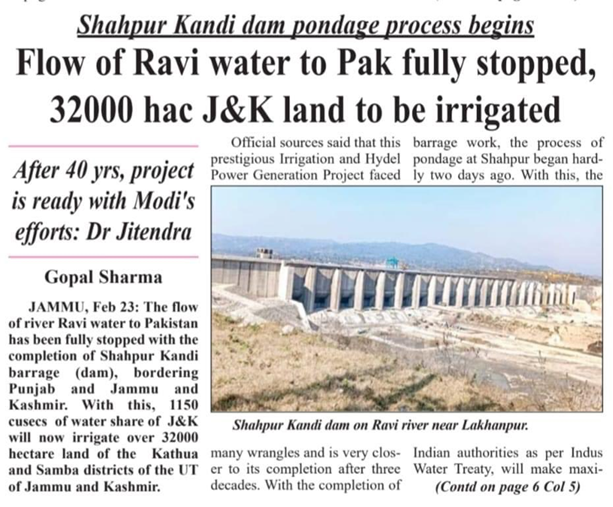
Although the Ravi is allocated to India, its flows historically contributed to the broader Indus system. India’s recent completion of the Shahpurkandi Dam and the ongoing Ujh Multipurpose Project are not just about power generation; they are about consolidating total control over eastern river flows.
Table 2: Major Indian Projects on Ravi River – Strategic Implications
| Project Name | Status | Strategic Concern for Pakistan |
|---|---|---|
| Shahpurkandi Dam | Completed (2024) | Diverts remaining Ravi waters away from Pakistan border areas; reduces ecological flows |
| Ujh Multipurpose Project | Under Construction | Large storage capacity could be used to regulate flows unpredictably |
Pakistan’s objections have often been dismissed by India as politically motivated. However, the cumulative impact of these projects reduces the natural buffer against droughts and limits Pakistan’s ability to predict incoming flows, creating uncertainty for farmers in the Punjab province.
“Pakistan reserves its right to raise objections regarding any structure that may affect the flow of waters allocated to us under the Treaty. We cannot remain silent while our water security is incrementally compromised.”
— Pakistani Ministry of Water Resources Statement, 2023
The Chenab River: The Core of the Dispute
The Chenab is the most critical front in this water conflict. India’s construction of large-scale hydroelectric projects like Pakal Dul, Kiru, and Ratle raises serious concerns about compliance with Annexure D of the IWT, which strictly limits storage and pondage capacities.
Table 3: Contested Hydroelectric Projects on Chenab River
| Project Name | Installed Capacity | Key Design Flaw Alleged by Pakistan | Potential Impact |
|---|---|---|---|
| Pakal Dul | 1,000 MW | Excessive pondage capacity; high-level spillway gates | Ability to store water and release it suddenly, causing floods or droughts downstream |
| Ratle | 850 MW | Spillway configuration allows flow manipulation | Strategic leverage during tense political periods |
| Kiru | 624 MW | Pondage volume exceeds treaty limits | Reduced water availability during critical sowing seasons |
The core issue is not whether India can generate power—it can—but whether the design of these dams allows them to function as de facto storage dams. By controlling the timing of water releases, India could potentially starve Pakistan’s crops during the Rabi (winter) sowing season or cause destructive floods during the monsoon.
“We are not opposed to development on western rivers, but such development must strictly adhere to treaty limitations. What we see today is a deliberate attempt to create strategic leverage through engineering design.”
— Former Pakistani Water Secretary, Interview with Dawn, 2023
Diplomatic Inertia and Institutional Failure
One of the most frustrating aspects for Pakistanis is the perceived lack of urgency in their government’s response. While India aggressively pursues its infrastructure agenda, Pakistan’s diplomatic efforts have often been reactive rather than proactive.
Table 5: Timeline of Major Disputes and Resolutions (1960-2026)
| Year | Dispute | Mechanism Used | Outcome | Time to Resolution |
|---|---|---|---|---|
| 2016-Present | Ratle Dam | Court of Arbitration | Ongoing; procedural delays | 8+ years (unresolved) |
| 2022-Present | Pakal Dul & Kiru | Neutral Expert | Proceedings ongoing | 2+ years (unresolved) |
The slow pace of international arbitration plays into India’s hands. By the time a verdict is reached, the dam is often already built, creating a fait accompli. This delay reflects a broader failure in Pakistan’s water diplomacy: a lack of coordinated strategy between the foreign office, water ministry, and technical experts.
“The increasing frequency and complexity of disputes suggest that the Treaty’s dispute resolution mechanisms are being exploited by the upstream party to delay justice while completing physical infrastructure.”
— International Crisis Group Report, 2024
Climate Change: An Existential Multiplier
The stakes are raised further by climate change. The Indus basin is warming faster than the global average, leading to erratic glacial melt and unpredictable rainfall.
Table 6: Projected Impact of Climate Change on Indus Basin Flows
| Scenario | Expected Change by 2050 | Implication for Pakistan |
|---|---|---|
| High warming (4°C+) | 20-30% reduction in flows | Severe water scarcity; threat to national food security |
| Extreme Variability | More frequent floods/droughts | Increased vulnerability to Indian flow manipulation |
In this context, India’s ability to control water flows becomes not just an economic advantage but a potent strategic weapon. Pakistan’s lack of sufficient storage capacity (due to delayed domestic dam projects like Diamer-Bhasha) leaves it dangerously exposed.
Conclusion: A Call for Strategic Awakening
The construction of dams on the Ravi and Chenab is not merely a technical dispute; it is a clear and present danger to Pakistan’s national security. While the term “illegal” may be debated in legal circles, the strategic intent behind these projects is undeniable: to establish hydro-hegemony over Pakistan.
For too long, Pakistan has relied on the moral authority of the Indus Waters Treaty without backing it with sufficient diplomatic pressure, technical counter-strategies, or domestic water resilience. The current approach is insufficient. Islamabad must:
- Internationalize the Issue: Move beyond bilateral talks to engage global powers and environmental organizations on the security implications of coercive water practices.
- Accelerate Domestic Storage: Fast-track the construction of indigenous dams to reduce dependence on unpredictable upstream flows.
- Strengthen Technical Diplomacy: Deploy top-tier engineers and legal experts to challenge every non-compliant design feature in international forums.
- Adopt a “Defensive Offence” Posture: Align water security with broader national defense strategies, ensuring that water threats are treated with the same seriousness as military incursions.
The water flowing down the Chenab is not just H2O; it is the lifeblood of Pakistan. To allow it to be controlled by an adversarial neighbor is not just a policy failure—it is a strategic surrender. The time for passive diplomacy is over. Pakistan must assert its water rights with clarity, urgency, and unwavering resolve.
“Water disputes between India and Pakistan are no longer just about irrigation or electricity. They are about sovereignty, survival, and the future of the Pakistani state. We must choose between vigilance and vulnerability.”
— Strategic Assessment, 2026