(By Quratulain Khalid)
I. Introduction: The Gap Between Rhetoric and Reality
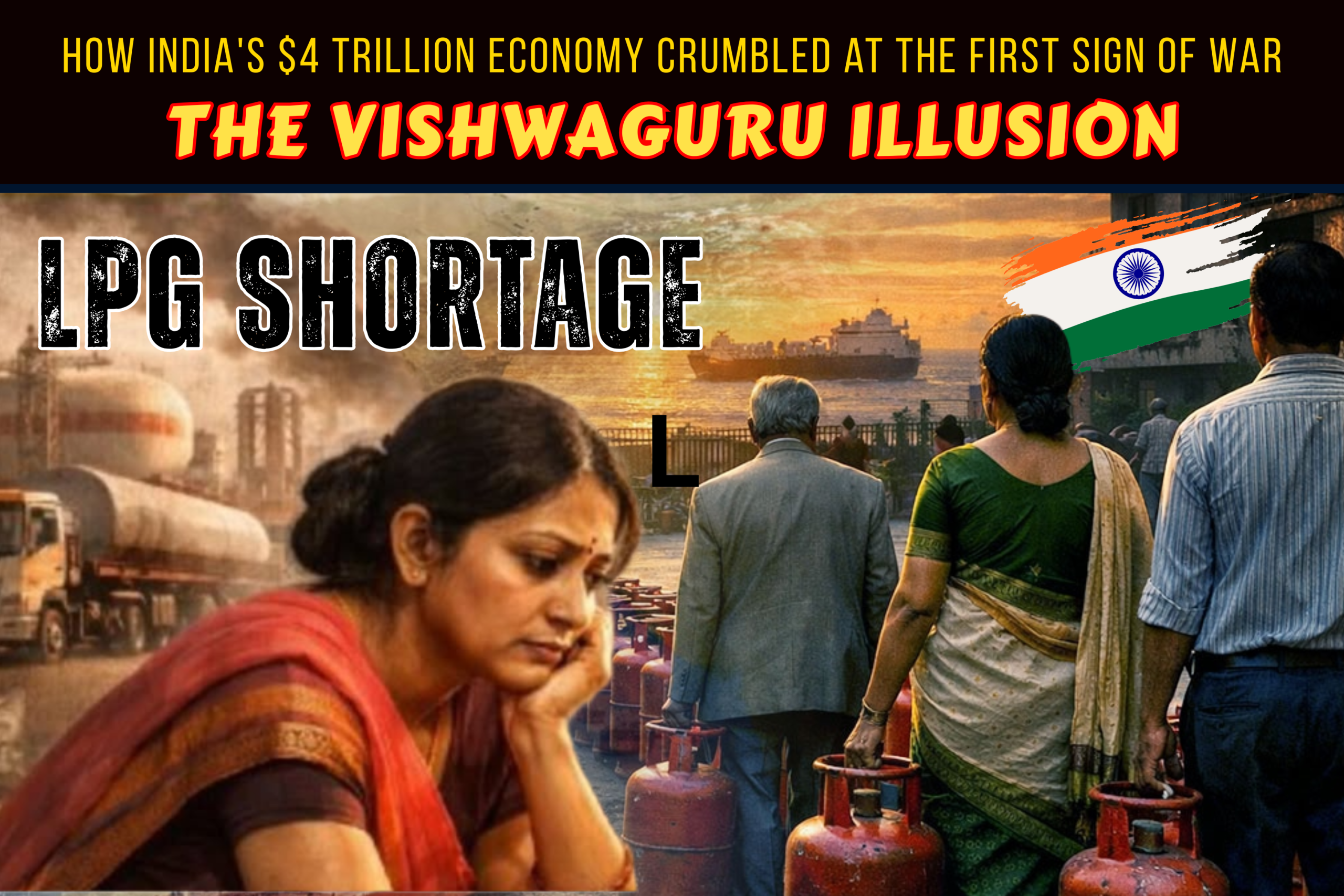
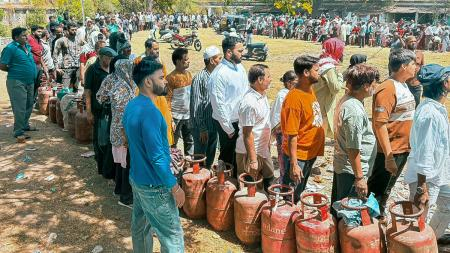
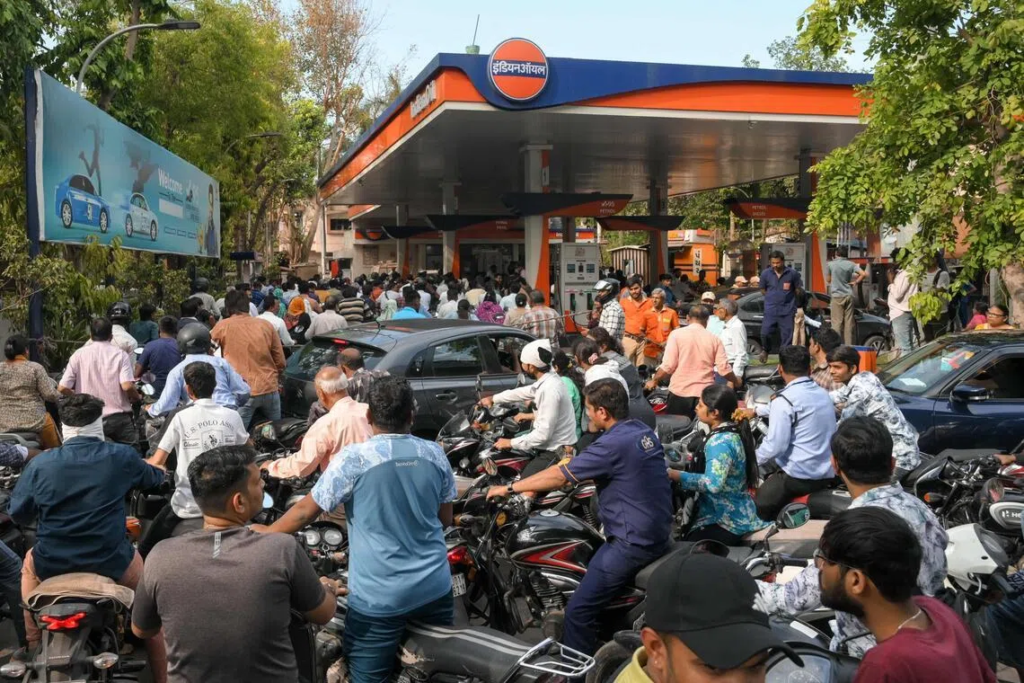
In the glossy brochures of New Delhi’s propaganda machine, India is portrayed as an emerging superpower—a “Vishwaguru” (World Teacher) destined to lead the Global South. Prime Minister Narendra Modi’s government frequently touts a $4 trillion economy, digital supremacy, and military self-reliance. Yet, in mid-March 2026, the image of this economic giant was reduced to a starkly different reality: endless queues of motorbikes and cars at fuel stations, and desperate citizens waiting hours for LPG cylinders.
This analysis examines the structural vulnerabilities exposed by India’s recent fuel and LPG crisis. While triggered by external geopolitical shocks, the severity of the disruption reveals deep cracks in India’s supply chain management, strategic planning, and institutional resilience. For analysts in the Muslim world, the lesson is clear: economic rhetoric does not equate to strategic strength. When tested by the realities of modern warfare and energy insecurity, India’s system displayed fragility reminiscent of far less developed nations.
II. The Trigger: How a Distant War Hit India First
The immediate catalyst for the chaos was the escalation of conflict in West Asia involving Iran, Israel, and the United States. While this geopolitical shockwave was felt globally, India’s reaction was disproportionately severe.
Import Dependency as a Strategic Achilles’ Heel
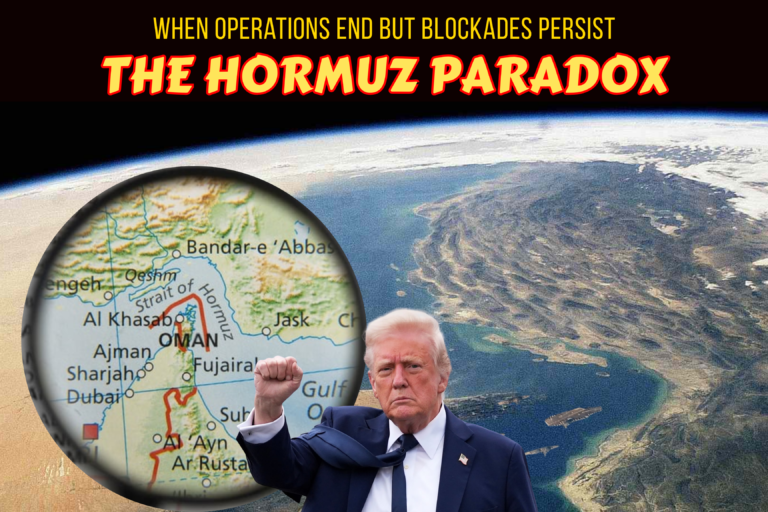
India imports approximately 85% of its crude oil needs. While this is a known vulnerability, the crisis revealed that New Delhi’s contingency planning was inadequate. Roughly 60% of India’s crude passes through the Strait of Hormuz. When tensions spiked and insurance premiums for merchant vessels surged, Indian refiners hesitated. The result was an immediate transmission of global volatility to the domestic consumer.
Timeline of Panic
By mid-March 2026, before any actual physical shortage of fuel occurred, queues began forming in Delhi, Mumbai, Bengaluru, and Uttar Pradesh. The digital infrastructure touted as India’s pride—LPG booking apps and IVRS systems—collapsed under a 10x surge in traffic. This was not merely a supply issue; it was a failure of critical digital infrastructure to withstand stress, undermining the “Digital India” narrative.
Key Question
If India’s economy is so resilient, why did consumer anxiety trigger system-wide paralysis within days? The answer lies in the gap between strategic reserves and public trust.
III. Structural Vulnerabilities: The Cracks Beneath the Surface
A. Import Dependency and Strategic Reserves
India maintains strategic petroleum reserves estimated at around 60 days of coverage. While this sounds substantial, it falls short of the International Energy Agency’s recommendation of 90 days for net importers. Furthermore, the diversification of sources—often hailed as a success story with increased Russian crude imports—proved fragile. Discounted Russian oil came with higher shipping costs, longer transit times, and payment complications during wartime banking restrictions. When the Hormuz route tightened, India’s alternatives were insufficient to prevent market panic.
B. Supply Chain Mismanagement
The distribution network revealed significant inefficiencies. While oil ministers claimed production increased by 28% in five days, the last-mile delivery failed. State-level coordination was erratic; some regions saw ample stockpiles while others faced dry pumps. This inconsistency suggests that India’s federal structure hampers rapid, centralized crisis response. The digital booking systems, designed for peacetime efficiency, lacked the redundancy required for wartime scenarios.
C. Refinery Output Reductions: Precaution or Poor Planning?
Major refineries, including Mangalore Refinery and Nayara Energy, reduced throughput during the crisis. Officially, this was framed as “risk management” due to crude supply uncertainty and scheduled maintenance. However, from a strategic standpoint, scheduling maintenance during a period of heightened regional tension reflects poor contingency planning. These reductions tightened supply precisely when demand was spiking, exacerbating the perception of scarcity.
IV. The Panic Factor: Psychology of a “Fragile” System
A. Rumors as Catalyst
In the absence of transparent, proactive communication, rumors filled the vacuum. Social media channels were flooded with messages about impending “lockdowns” and “fuel rationing.” These rumors spread faster than official clarifications. The government’s response was reactive; reassurances from Prime Minister Modi and Oil Minister Hardeep Singh Puri came after queues had already formed, not before. This lag eroded public trust and fueled further hoarding.
B. Behavioral Economics of Scarcity
Panic buying is a global phenomenon, but India’s population density amplifies its visual impact. When millions attempt to secure fuel simultaneously, it creates a self-fulfilling prophecy of shortage. However, a resilient system anticipates this behavior. India’s failure to implement preemptive rationing or clear communication protocols suggests an administration caught off guard by the psychological dimensions of warfare.
C. The Human Cost
The crisis was not merely logistical; it was human. Reports emerged of a man dying of a suspected heart attack while waiting in an LPG queue in Punjab’s Barnala district. This tragic incident symbolizes how policy failures and supply chain friction translate into human suffering. When citizens die waiting for cooking gas, the claim of being a rising superpower rings hollow.
V. Government Response: Damage Control or Systemic Reform?
A. Short-Term Measures
The government’s response focused on fiscal band-aids rather than structural fixes. Slashing the Special Additional Excise Duty (SAED) on petrol and diesel by ₹10/litre cushioned prices but drained fiscal resources without solving the supply bottleneck. Extending LPG booking windows to 25 days (urban) and 45 days (rural) was an admission that normal systems could not handle surge demand. Deploying the Navy for Operation Urja Suraksha was necessary but reactive—a sign that security planning lagged behind economic dependency.
B. Communication Strategy and Credibility
There was a stark disconnect between official statements and ground reality. Ministers declared “no shortage” while citizens experienced hours-long waits. This credibility gap allowed opposition parties and critics to frame the disruption as a governance failure. In a crisis, trust is as valuable as fuel; India’s leadership spent both recklessly.
VI. Regional Comparison: Why India Appeared Worse
To understand the magnitude of India’s stumble, one must look at its neighbors, particularly Pakistan.
| Metric | India | Pakistan | Analytical Take |
|---|---|---|---|
| Forex Reserves | ~$650 Billion | ~$8 Billion | India had massive buffers, yet panic ensued. |
| Policy Response | Reactive (queues first) | Proactive (price hikes) | Pakistan adjusted prices quickly to curb demand; India hesitated fearing political backlash. |
| Media Narrative | Hyper-competitive chaos | More controlled messaging | India’s free media amplified the visual of failure; Pakistan’s narrative was managed. |
| Public Trust | Declining due to polarization | Varies, but crisis protocols accepted | Low trust in Indian institutions accelerated hoarding. |
Key Argument: Pakistan faced the same external shock with a fraction of India’s resources. Islamabad raised petrol prices by approximately 21% in early March to manage consumption—a painful but decisive move. New Delhi, fearing political fallout, cut taxes instead. Yet, India saw chaos while Pakistan managed queues more effectively. This suggests that India’s larger bureaucracy and political calculations slowed critical decision-making. Institutional capacity does not automatically translate to crisis resilience; sometimes, agility matters more than size.
VII. The “Somalia” Comparison: Hyperbole or Hidden Truth?
A. Why the Comparison Resonates
Comparing India to Somalia is economically hyperbolic—India’s GDP is ~$4 trillion versus Somalia’s ~$12 billion. However, the comparison resonates emotionally because of the visual symbolism. Queues for basic necessities like cooking gas and fuel evoke images of state failure. When a government cannot ensure the steady flow of energy to its citizens, the scale of the economy becomes irrelevant to the suffering individual.
B. Where the Comparison Fails (But Why It Sticks)
Analytically, the two nations are incomparable in terms of industrial base and military power. However, the service delivery failure shares similarities. Both contexts reveal a disconnect between central authority and local implementation. In India’s case, the failure was not due to a lack of resources, but due to mismanagement and panic. The “Somalia” label sticks because it captures the feeling of institutional collapse, even if the underlying economics differ.
C. The Real Lesson
Economic size does not equal resilience. India’s crisis reveals that import-dependent, consumption-driven growth models are vulnerable to external shocks. For emerging economies, this is a warning: strategic reserves and supply chain redundancy matter more than GDP rankings.
VIII. Strategic Implications for the Muslim World
A. Lessons for Regional Powers
For Pakistan, Iran, and Turkey, India’s experience offers a case study in what not to do. Diversification of energy sources is critical, but so is public communication. Pakistan’s ability to adjust prices quickly, despite public unpopularity, prevented the kind of hoarding seen in India. Strategic autonomy requires making hard decisions early, not late.
B. India’s Regional Standing
The “Vishwaguru” narrative has taken a hit. Neighbors observing India’s fuel queues may question New Delhi’s reliability as a development partner. If India cannot secure its own energy needs during a regional conflict, its capacity to lead the Global South is questionable. Soft power is eroded when domestic stability is visibly compromised.
IX. Conclusion: The Vulnerability of Hype
India’s fuel and LPG crisis was not a total collapse, but it was a revealing stress test. It exposed the gap between superpower aspirations and import-dependent reality. The queues at fuel stations were not just lines of cars; they were indicators of strategic fragility.
For analysts in the Muslim world, the takeaway is significant. India’s experience underscores that true strategic strength lies in resilience, not rhetoric. A superpower does not need to be perfect, but it must be prepared. India’s LPG queues suggest that preparation was secondary to propaganda. When the next geopolitical shock comes—and it will—economies built on fragile foundations will stumble first, regardless of their GDP. The Vishwaguru may teach many things, but in March 2026, it learned a hard lesson about the limits of power when the fuel runs low.