(By Khalid Masood)
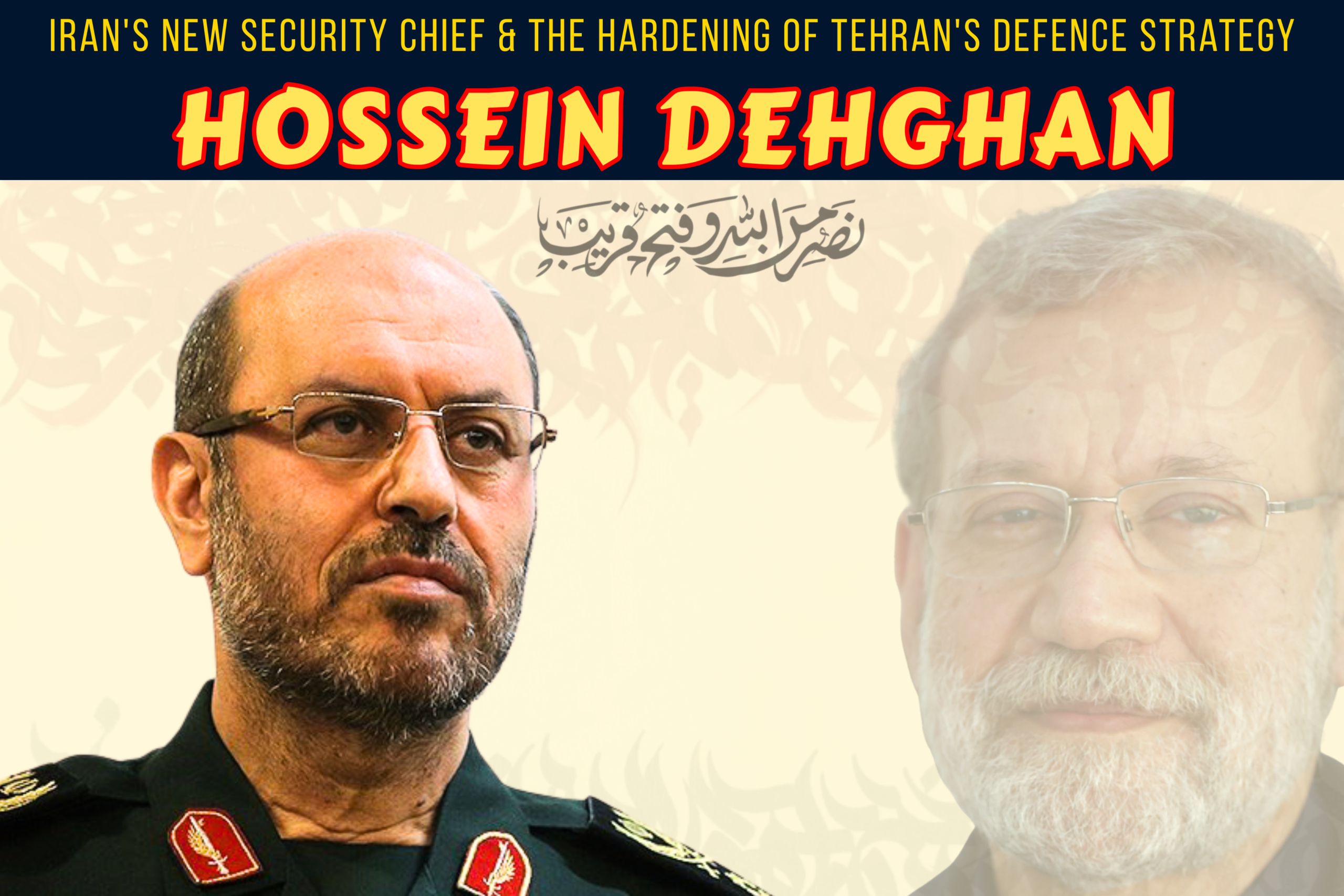
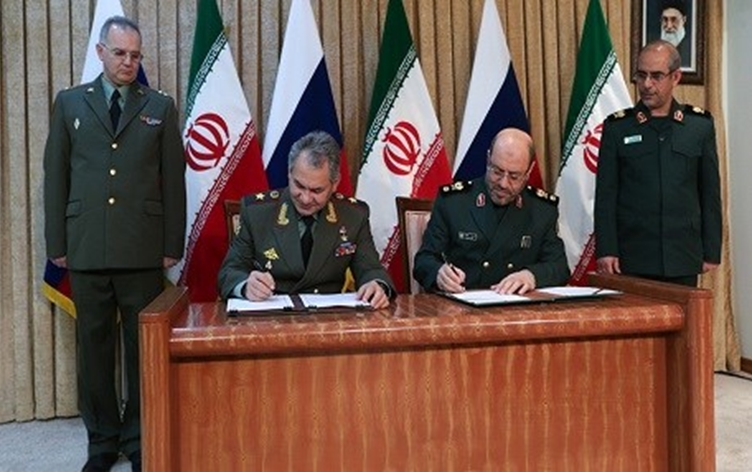
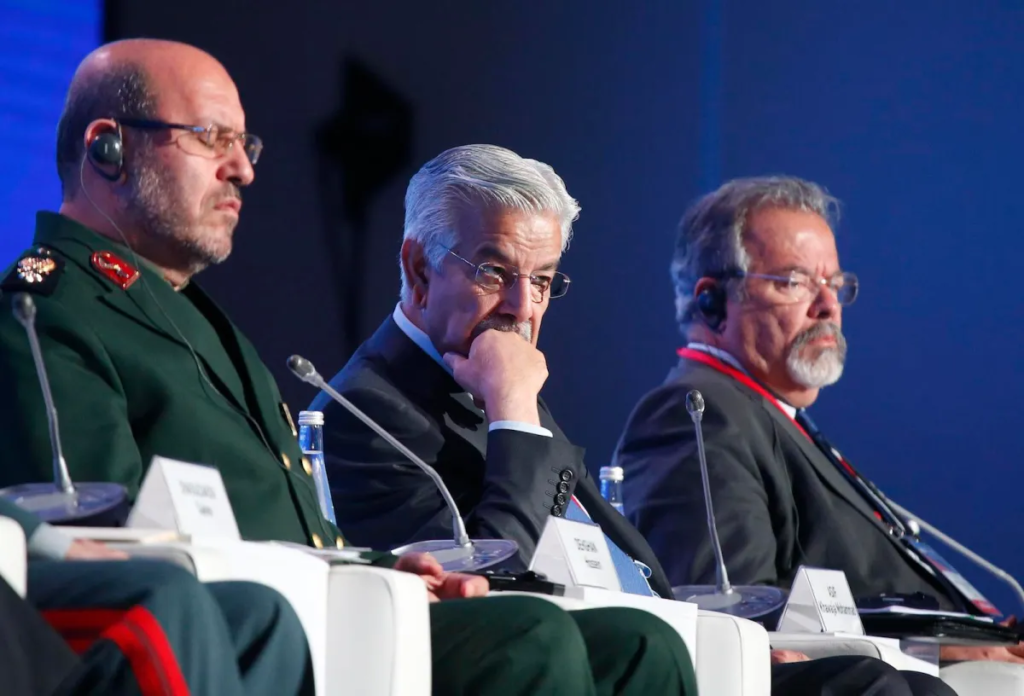
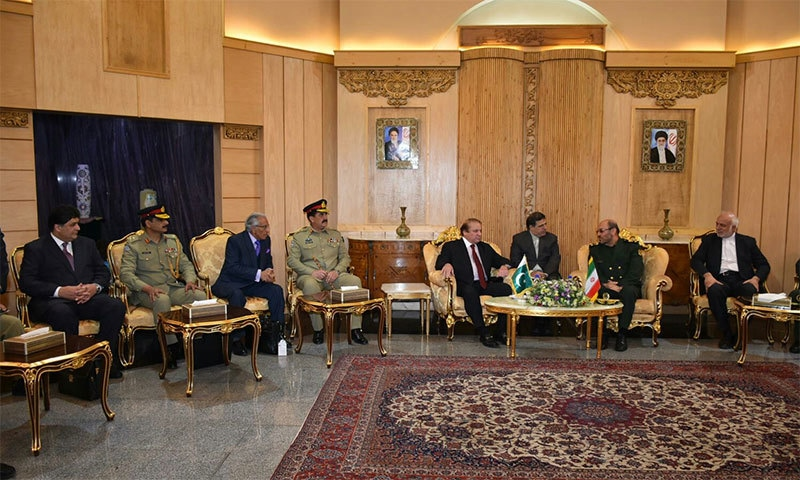
Following the assassination of Ali Larijani by Israel, Iran has appointed Brigadier General Hossein Dehghan as Secretary of the Supreme National Security Council (SNSC), one of the most powerful positions in the Islamic Republic. Dehghan, a 69-year-old veteran of the Islamic Revolutionary Guard Corps (IRGC), brings decades of military experience, including command roles in Lebanon during the 1980s and service as Iran’s Defence Minister from 2013 to 2017. His appointment signals a significant shift toward hardline security doctrine at a time when Iran faces unprecedented external pressure, having lost both Supreme Leader Ayatollah Khamenei and key strategist Ali Larijani in recent weeks.
This article examines Dehghan’s background, his role in historical attacks against US forces, his educational credentials, and what his appointment means for Iran’s strategic posture. It also analyses the broader context of Iran’s leadership resilience, educational achievements, and succession planning mechanisms that have enabled the country to withstand the loss of numerous senior officials.
PART I: BIOGRAPHICAL PROFILE
Early Life and Education
Hossein Dehghan Poudeh was born on 2 March 1957 in Shahreza, a city in Isfahan Province, central Iran. He joined the Islamic Revolutionary Guard Corps (IRGC) shortly after its establishment in 1979, becoming one of the organisation’s early members during the tumultuous period following the Islamic Revolution.
Educational Credentials: Dehghan holds a PhD in Management Sciences from the University of Tehran, one of Iran’s most prestigious academic institutions. This advanced degree distinguishes him within the IRGC’s senior leadership, where military experience often outweighs formal academic qualifications.
Military Career: The IRGC Years
1979-1982: Tehran Command and Embassy Seizure
Dehghan’s early career was marked by active participation in the consolidation of the Islamic Revolution. He served as commander of the IRGC’s Tehran branch from 1980 to 1982, a critical period when the revolutionary government was establishing its security apparatus.
Notably, Dehghan was among the students who participated in the seizure of the US Embassy in Tehran on 4 November 1979, an event that triggered the 444-day hostage crisis. This operation, which saw 52 American diplomats and citizens held captive, remains a defining moment in US-Iran relations and established Dehghan’s credentials as a committed revolutionary.
1982-1984: Lebanon Command and Hezbollah Formation
When Israel occupied Lebanon in 1982, Dehghan was released from his duties in Tehran and appointed as Commander of IRGC forces in Lebanon and Syria. This posting proved pivotal in shaping both his career and the trajectory of Middle Eastern geopolitics.
During his tenure in Lebanon, Dehghan played a crucial role in:
- Establishing Hezbollah: He helped found and organise the Shiite militant group, modelling it after the IRGC’s structure and ideology
- Building Military Infrastructure: He appointed Hezbollah commander Hassan Laqis as his bureau chief, creating operational frameworks that persist to this day
- Coordinating Resistance Operations: He oversaw IRGC activities that laid the foundation for Hezbollah’s emergence as a major regional power
The 1983 Beirut Barracks Bombing
Dehghan’s time in Lebanon coincides with one of the deadliest attacks on US forces in the Middle East prior to the 21st century. On 23 October 1983, suicide bombers detonated truck bombs at buildings serving as barracks for US and French peacekeeping forces in Beirut.
Casualties:
- 241 American service members killed (mostly Marines)
- 58 French military personnel killed
- 6 civilians killed
Multiple sources link Dehghan to this attack:
- He was a commander in Lebanon overseeing Hezbollah operations during the 1983 bombing
- He is described as among the orchestrators of the bombing
- As IRGC commander in Lebanon, he held operational authority over the forces involved
While Hezbollah, Iran, and Syria have consistently denied involvement, intelligence assessments and historical analyses suggest Iranian operational direction. The attack fundamentally altered US military presence in Lebanon and demonstrated the effectiveness of asymmetric warfare tactics.
Post-War Career and Political Roles
1984-2013: Rising Through the Ranks
After his Lebanon command, Dehghan continued to ascend within Iran’s military-political establishment:
- Vice President of Iran (2004-2009)
- Held various advisory and command positions within the IRGC
2013-2017: Defence Minister
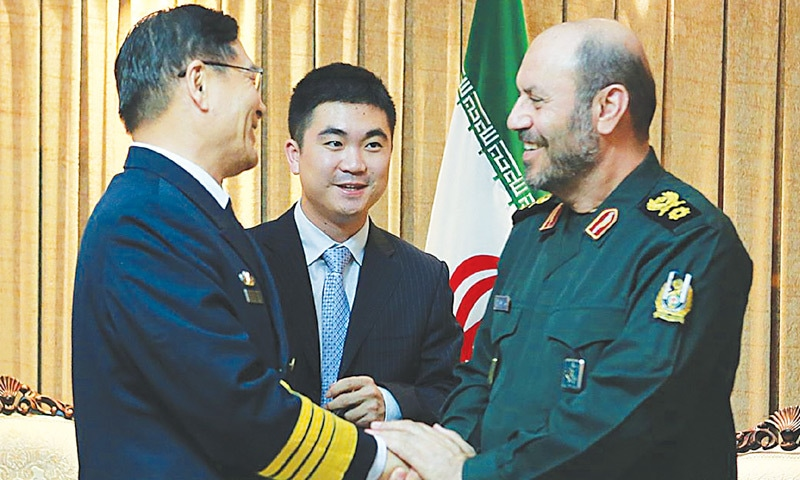
President Hassan Rouhani appointed Dehghan as Minister of Defence and Armed Forces Logistics in August 2013, a position he held for four years. During his tenure:
- He modernised Iran’s defence industry
- He expanded Iran’s missile programme
- He strengthened IRGC influence within the formal defence establishment
2017-2026: Supreme Leader’s Advisor
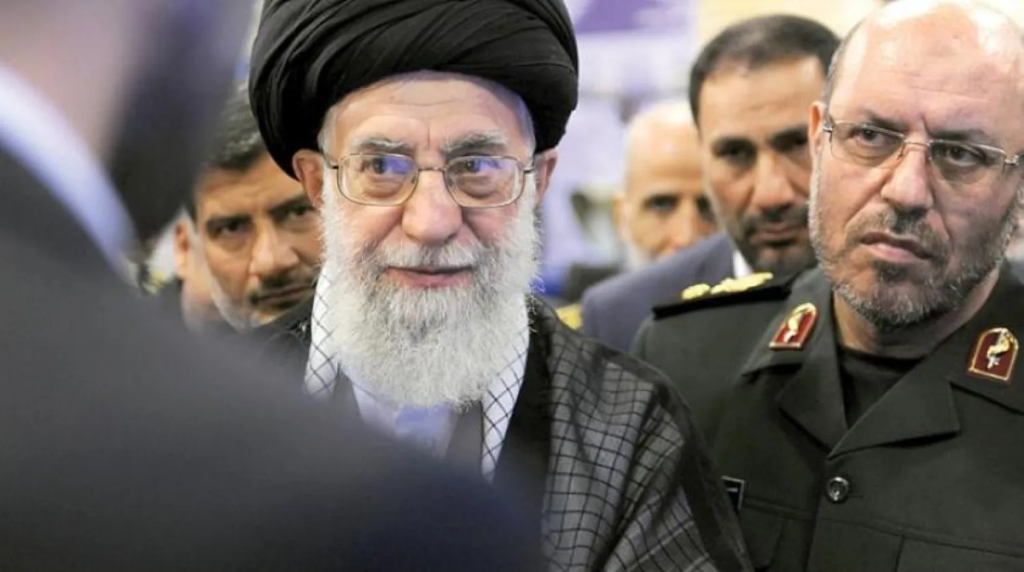
After leaving the defence ministry, Dehghan served as advisor to Supreme Leader Ayatollah Khamenei on defence industry matters. This role positioned him at the centre of Iran’s strategic decision-making apparatus.
In 2023, he was appointed head of the Mostazafan Foundation, one of Iran’s largest parastatal organisations controlling significant economic assets.
PART II: THE APPOINTMENT
Context: A Leadership in Crisis
Dehghan’s appointment on 19 March 2026 comes at an extraordinarily challenging moment for the Islamic Republic. Iran has suffered unprecedented losses in its leadership structure:
Recent Casualties:
- Supreme Leader Ayatollah Ali Khamenei – Killed in US-Israeli strike (February 2026)
- Ali Larijani – Secretary of SNSC, assassinated by Israel (March 2026)
- Numerous IRGC commanders – Targeted in sustained campaign
Succession Process: Following Khamenei’s death, Iran’s Assembly of Experts (an 88-member clerical body) elected Mojtaba Khamenei as the new Supreme Leader in March 2026. An interim leadership council, consisting of President Masoud Pezeshkian, Judiciary Chief Gholamhossein Mohseni Ejei, and Ayatollah Alireza Arafi, managed the transition.
Why Dehghan?
Dehghan’s selection as Larijani’s successor reflects several strategic considerations:
1. Military Experience Unlike Larijani, who was a philosopher-politician, Dehghan is a seasoned military commander with direct combat and operational experience.
2. Hardline Credentials His involvement in the embassy seizure, Lebanon operations, and defence ministry signals a shift toward more confrontational security doctrine.
3. Institutional Trust Having served as defence minister and Supreme Leader’s advisor, Dehghan enjoys confidence from both the IRGC and the clerical establishment.
4. Succession Planning Iran has systematically developed second- and third-tier leadership to ensure continuity in case of decapitation strikes.
PART III: STRATEGIC IMPLICATIONS
What Dehghan’s Appointment Signals
1. Militarisation of Security Policy The shift from Larijani (philosopher-diplomat) to Dehghan (IRGC general) indicates:
- Prioritisation of military solutions over diplomatic engagement
- Increased IRGC influence in foreign policy
- Hardening of Iran’s negotiating position
2. Asymmetric Warfare Emphasis Given Dehghan’s background:
- Expect expanded proxy operations through Hezbollah, Iraqi militias, and Houthis
- Continued development of missile capabilities
- Potential for retaliatory operations against US and Israeli targets globally
3. Regional Escalation Risks Dehghan’s appointment may lead to:
- More aggressive posture in Iraq, Syria, and Lebanon
- Increased support for Palestinian militant groups
- Potential threats to Gulf shipping and energy infrastructure
US and Israeli Concerns
For the United States:
- Dehghan’s involvement in the 1983 Beirut bombing makes him a symbol of anti-American resistance
- His IRGC background suggests willingness to confront US forces directly
- His defence ministry experience means he understands US military capabilities and vulnerabilities
For Israel:
- Dehghan helped build Hezbollah into Israel’s most formidable adversary
- His appointment suggests Iran will not be deterred by assassinations
- His strategic mindset may prioritise long-term resistance over short-term de-escalation
PART IV: THE SUPREME NATIONAL SECURITY COUNCIL
Structure and Powers
The SNSC is Iran’s premier security and defence policymaking body:
Composition:
- Chairman: The President (currently Masoud Pezeshkian)
- Permanent Members (12-13 total):
- Speaker of Parliament
- Chief Justice
- Minister of Foreign Affairs
- Minister of Interior
- Minister of Intelligence
- Chief of Staff of the Armed Forces
- IRGC Commander
- Head of Plan and Budget Organisation
- Two representatives of the Supreme Leader
Responsibilities:
- Formulating defence and national security policies
- Coordinating intelligence and security activities
- Managing responses to external threats
- Overseeing nuclear negotiations and agreements
The Secretary’s Role: As Secretary, Dehghan will:
- Set the council’s agenda
- Coordinate implementation of decisions
- Serve as principal advisor to the Supreme Leader on security matters
- Act as key spokesperson on defence issues
PART V: COMPARATIVE ANALYSIS
Larijani vs. Dehghan: A Study in Contrasts
| Characteristic | Ali Larijani | Hossein Dehghan |
|---|---|---|
| Background | Philosopher, politician | IRGC general, military commander |
| Education | Philosophy, theology | PhD in Management Sciences |
| Career | Parliamentary speaker, diplomat | Defence minister, IRGC commander |
| Approach | Diplomatic engagement | Military confrontation |
| US Relations | Considered pragmatic | Hardline, linked to 1983 attacks |
| Age | 68 (at death) | 69 |
| Key Role | Negotiator, strategist | Operator, organiser |
Interpretation: The transition represents a fundamental shift from diplomatic statecraft to military operationalism.
CONCLUSION: THE MYTH OF IRANIAN COLLAPSE
Western analysts have long predicted that Iran’s theocratic system would collapse under pressure. Yet, as of March 2026, the Islamic Republic demonstrates remarkable resilience:
Key Findings:
- Leadership Depth: Iran has developed institutional mechanisms ensuring continuity despite catastrophic losses
- Educational Foundation: High literacy rates (89%), exceptional female participation in STEM (70%), and advanced degree holders in government provide substantial human capital
- Ideological Commitment: The system attracts and retains individuals willing to sacrifice for the revolutionary cause, as evidenced by Dehghan’s career trajectory
- Strategic Adaptation: Iran has prepared for four decades for attempts at regime change, developing redundant systems and succession plans
- Military-Clerical Fusion: The integration of IRGC within all state institutions prevents fragmentation even when senior leaders are eliminated
Dehghan’s Significance:
Hossein Dehghan embodies the Islamic Republic’s evolution from revolutionary movement to entrenched state power. His journey from embassy seizure participant to Defence Minister to National Security Chief illustrates:
- The longevity of Iran’s revolutionary elite
- The systematic development of leadership capabilities
- The prioritisation of resistance over accommodation
Looking Forward:
Under Dehghan’s leadership, expect:
- Increased regional tensions as Iran responds to leadership losses
- Enhanced proxy operations leveraging Hezbollah and allied militias
- Accelerated missile development as deterrent capability
- Reduced diplomatic flexibility in nuclear negotiations
- Potential for miscalculation as hardliners dominate decision-making
The appointment of Hossein Dehghan is not merely a personnel change—it represents Iran’s declaration that it will meet external pressure with military resolve, ideological commitment, and strategic patience. Whether this approach preserves the Islamic Republic or accelerates its confrontation with the West remains the defining question of Middle Eastern security in 2026.