(By Khalid Masood)
In the bustling corridors of of Kuala Lumpur, amid high-level diplomacy and the humid haze of Southeast Asian geopolitics, two major powers – India and the United States – formalised a defence pact that may reshape the Indo-Pacific theatre for the next decade. On 31 October 2025, Indian Defence Minister Rajnath Singh and U.S. Secretary of War Pete Hegseth exchanged the documents establishing the 10-year Framework for the U.S.–India Major Defence Partnership. The signing, conducted on the sidelines of the 12th ASEAN Defence Ministers’ Meeting-Plus (ADMM-Plus), transcends mere formality; it constitutes a bold statement of strategic alignment amid trade friction, Chinese assertiveness, and South Asia’s fragile post-conflict equilibrium.
Experts view this not as a reactionary alliance but rather as a calculated evolution of the “minilateral” model — selective partnerships that amplify deterrence without the buren of formalised mutual-defence treaties. For the defence-industrial complex it unleashes considerable momentum: billions of dollars in co-production deals, marrying American technological advantage with India’s manufacturing ambition. Yet, in diplomatic back-rooms and across digital forums, there is also disquiet: is this a de-facto NATO-lite structure aimed at containing China? Will it embolden India’s posture towards Pakistan, altering the sub-continent’s delicate strategic balances? Drawing upon official statements, expert commentary, and the region’s under-currents of conversation, this article deconstructs the pact’s anatomy, its reverberations across adversaries, and the spectres of speculation that accompany it.
The Genesis: From 2005 Foundations to 2025 Ambitions
The 2025 Framework is no newcomer to the geopolitical stage; rather, it represents the third evolution of a partnership that began two decades ago. It renews and elevates the 2015 Framework for the U.S.–India Defence Relationship, itself a direct successor to the 2005 New Framework for the U.S.–India Defence Relationship — the original ten-year blueprint that initiated modern bilateral defence convergence between Washington and New Delhi.
Signed on 28 June 2005 in Washington by U.S. Defence Secretary Donald Rumsfeld and Indian Defence Minister Pranab Mukherjee, the 2005 agreement — valid until 2015 — thawed the post-Cold War chill between the two capitals. It established mechanisms for joint weapons development, technology transfer, co-production, and operational interoperability. It also created the Defence Procurement and Production Group, relaxed U.S. export restrictions on dual-use technologies, and framed the partnership as a joint tool to counter terrorism and weapons-of-mass-destruction proliferation, while reinforcing long-term strategic alignment.
When the initial pact expired, it was renewed in 2015 in Washington by Ashton Carter and Manohar Parrikar as the Framework for the U.S.–India Defence Relationship (2015–2025). That renewal deepened interoperability through major exercises such as Malabar, and paved the way for three landmark foundational agreements — LEMOA (2016), COMCASA (2018), and BECA (2020) — which collectively underpinned modern intelligence-sharing, logistics access, and geospatial cooperation.
The 2025 iteration, signed in Kuala Lumpur and now styled a “Major Defence Partnership,” marks a clear escalation. It ventures into new frontiers — artificial intelligence, cyber warfare, outer space, and under-sea operations — domains in which China’s People’s Liberation Army (PLA) has achieved significant advances.
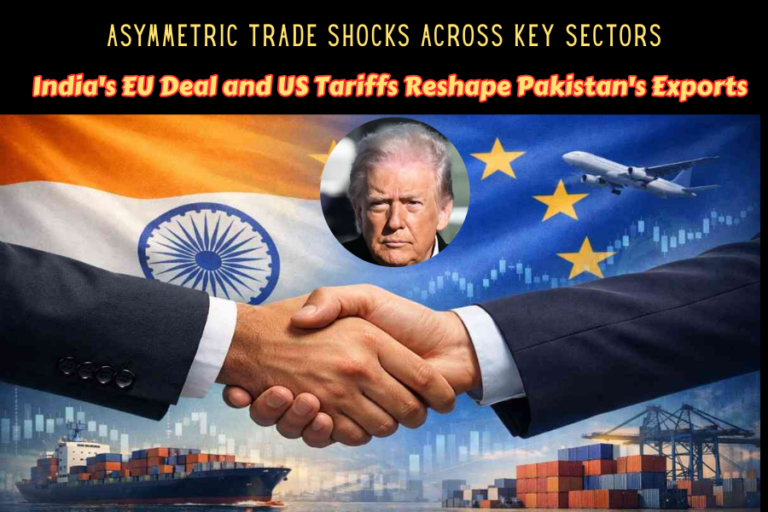
Negotiations for the agreement, initially planned for mid-2025, encountered turbulence over U.S. tariff barriers — including a 50 per cent duty on Indian exports and an additional 25 per cent penalty linked to India’s purchase of discounted Russian oil. In response, New Delhi briefly froze talks on U.S. weapons procurements, such as Stryker vehicles and Javelin missiles, signalling that its strategic sovereignty would not be held hostage to trade disputes. Yet, the Kuala Lumpur venue, set against ASEAN’s drive for a “rules-based order” in the Indo-Pacific, proved providential, allowing both sides to reach a rapid compromise.
Defence Minister Rajnath Singh hailed the accord as heralding “a new era,” while U.S. Secretary of War Pete Hegseth declared that bilateral ties “have never been stronger” — emblematic of Washington’s broader shift from counter-terrorism priorities to great-power competition.
At its essence, the pact remains a non-binding roadmap — voluntary, adaptive, and carefully calibrated to preserve India’s strategic autonomy, a hallmark of its foreign policy since independence. It also builds upon the Modi–Trump Summit of February 2025, where both leaders pledged to reinvigorate the defence framework, aligning it with the U.S. National Defence Strategy’s doctrine of “integrated deterrence.”
Timeline of Evolution
2005 → 2015 → 2025: From co-operation → interoperability → co-production and deterrence dominance — a twenty-year arc of strategic maturity in U.S.–India defence relations.
Pillars of the Partnership: From Rhetoric to Capability
The Framework’s ambition lies in its multi-dimensional scope, blending military, industrial and technological synergies. Key pillars include:
| Pillar | Key Provisions | Strategic Value |
|---|---|---|
| Interoperability & Exercises | Expanded Malabar (including Japan & Australia via the Quad), Tiger Triumph amphibious drills, Yudh Abhyas land-ops; embedding liaison officers in commands. | Enables seamless joint operations in crisis scenarios (e.g., South China Sea, Andaman Sea). Strengthens India’s blue-water navy aspirations. |
| Intelligence & Information Sharing | Real-time geospatial data under BECA; AI-driven cyber fusion centres. | Improves targeting for Indian missiles and drones; counters PLA incursions and intelligence denial strategies. |
| Co-Production & Technology Transfer | Patented joint manufacturing of GE F414 engines (for Tejas Mk2), MQ-9B drones, Stryker variants; AI/quantum R&D hubs. | Aligns with India’s “Make in India” programme and projected $25 bn+ defence deals to 2030; reduces India’s 60 %+ import-dependency. |
| Supply-Chain Resilience | Diversification away from China/Russia; SOSA (2024) prioritises logistics partnership. | Shields India from sanctions risk and supply-choke tactics; nurtures a serial U.S.–India defence-industrial base within CHIPS Act synergies. |
| Emerging Domains | Space situational awareness, undersea surveillance, hypersonic research. | Positions the U.S.–India pillar squarely against the PLA Rocket Force and helps build humanitarian/disaster-response overlays. |
This is not merely about arms sales (which are handled separately under FMS/DCS frameworks – e.g., a $3 bn MQ-9B deal in 2024). Rather it represents ecosystem building. For U.S. firms such as Lockheed Martin and Boeing it opens up India’s projected $130 bn defence market by 2035. For India, it is a leap-frogging moment: DRDO-Lockheed tie-ups on hypersonics could yield successors to BrahMos-class systems.
The Shadow Play: Hearsay, Rumour and Unverified Whispers
Diplomacy often chafes under daylight; much thrives in shadow. The Framework has spawned a cottage industry of speculation. On social media (particularly X, formerly Twitter), users circulate unverified claims: leaked “drafts” suggesting U.S. basing rights in the Andaman & Nicobar Islands (officials dismiss these as “fabricated” by India), or rumours of a “secret Article 5-lite” mutual defence clause (experts largely reject this, citing India’s long-standing non-alignment posture).
Analyst Eurasia Group strategist Pramit Pal Chaudhuri notes the delay in finalisation stemmed from Trump’s boast, in May 2025, of “ending” the India–Pakistan skirmish — a comment that upset Delhi’s equanimity.
Beyond this, whispers abound of economic coercion: Did tariff threats force India’s hand? Or was the deal a U.S. concession to court Delhi amid stalled trade talks? On X, some speculate a “grand bargain”: defence thaw in exchange for India diversifying oil supplies away from Russia. Officially, both sides insist ties are “de-hyphenated”.
These rumours, though unsubstantiated, underscore the pact’s precariousness. One tweet, one tariff hike, or one trade twist — and what has been carefully constructed could unravel.
Ripples of Unease: China’s Apprehensions and Strategic Messaging
Beijing’s response has been predictable, albeit muted. During ADMM-Plus, PLA General Dong Jun reiterated the “unstoppable reunification” of Taiwan and urged Washington to “abandon illusions” of containing China. Chinese state-media organ Global Times derided the agreement as “Cold-War relic-mongering” and warned of “hegemonic encirclement” via the Quad and AUKUS networks.
China’s anxieties are substantive. The U.S.–India Framework positions India as Washington’s “net security provider” in the Indian Ocean – a move that threatens Beijing’s Belt & Road lifelines such as Gwadar. Diplomatically, China has opted for the path of cautious restraint — revisiting its commitment to “peaceful rise” — even as the PLA Navy accelerates deployments near the Malacca Strait. Analysts caution of “salami-slicing” maneuvers (grey-zone operations along Arunachal and Ladakh) that might probe the pact’s resolve.
Nevertheless, economics moderates Beijing’s assertiveness: China-India border disengagements in October 2024 persist, signalling tactical coexistence even amid strategic rivalry.
Pakistan’s Shadow: Alarm Bells and Strategic Recalibrations
For Islamabad, the 10-year pact is less abstract than existential. The official response has been terse: Pakistan’s Foreign Office issued a formal “monitoring” statement, voicing concern about “imbalances” in South Asian security. Beneath the diplomatic calm, however, apprehension simmers: Army Chief Asim Munir is reportedly viewing the deal as strategic encirclement, particularly in light of Delhi’s heightened post-May 2025 ceasefire posture.
Pakistan’s messaging is dual-pronged: defiant in tone yet active in outreach. Deputy Prime Minister Ishaq Dar has touted the September 2025 Saudi–Pakistan Mutual Defence Pact as a “NATO-like bulwark,” implicitly referencing counterbalances to the U.S.–India axis. Simultaneously, whispers emanate from Rawalpindi of clandestine approaches to Beijing for JF-17 upgrades — a hedging move as U.S. high-tech flows to India deepen. On X, Pakistani handles decry what they term “anti-Muslim hegemony”, linking it to unverified claims of U.S. bases in Indian state of Gujarat.
The implications for Pakistan’s defence posture are grave and multilayered.
Impact Table – Pakistan’s Strategic Response
| Domain | Implications | Pakistan’s Likely Response |
|---|---|---|
| Conventional Balance | Enhanced India–U.S. interoperability and satellite-intel sharing erode Pakistan’s numerical armour/artillery edge; co-produced drones tip air-superiority. | Fast‐track JF-17 Block III induction; monumentally increase Bayraktar TB2 import talks; defence budget unlocked more by Gulf aid than domestic growth. |
| Asymmetric & Nuclear | While the pact doesn’t directly shift nuclear doctrine, the U.S.–India edge in cyber/AI raises hybrid-warfare risks (akin to 2019 Balakot). | Reinforce tactical‐nuclear nasr-missile posture; deepen the role of CPEC for early-warning radars; enhance Saudi umbrella narrative. |
| Diplomatic & Economic | U.S. de-hyphenation (favouring India) sidelines Pakistan in Quad/ASEAN structures; U.S. tariffs affect Pakistan’s textile exports too. | Pivot toward the Gulf (Saudi $6 bn deal); lobby the OIC for “India bias”; negotiate rare-earths supply with U.S. ($500 m deal threatened). |
| Regional Dynamics | India emboldened in Kashmir/LoC theatre; Afghan border instability may rise post-Taliban re-engagement. | Escalate proxy warfare via the TTP; re-open deeper Russia arms deals; risk IMF/austerity trade-off. |
In the lexicon of military statecraft, Pakistan’s doctrine of “bleed India with a thousand cuts” faces gradual obsolescence as its space for strategic ambiguity shrinks. Financially, Pakistan faces acute strain: external debt of over $130 bn versus India’s defence outlay of $74 bn. The Saudi–Pakistan pact offers relief but invites Indian diplomatic wedge-play in Riyadh. The net outcome: a more isolated, reactive Pakistan, which may destabilise the sub-continent just as it tries to stabilise.
Global Echoes: ASEAN, the Quad and the Wider Chessboard
Within ASEAN, the pact is viewed with caution — some see the U.S.–India “plus-one” flex at their expense, diluting ASEAN’s centrality. The Quad (U.S., India, Japan, Australia) gains further momentum, with joint hypersonic R&D seminars reportedly on the horizon. For Europe, the deal offers a NATO–Indo-Pacific bridge; for Russia, it provokes acid resentment at being sidelined in India’s weapons calculus. Globally, the Framework signals the contours of multipolarity: democracies forming coalitions of convenience to hedge autocratic revisionism.
Little wonder that the Indo-Pacific is more than a theatre now — it is emerging as the pivot of 21st-century strategic competition.
The Road Ahead: Opportunity Amid Peril
This 10-year Framework is a high-wire act: fortifying deterrence without inviting ruinous escalation. For India, it means turbo-charging self-reliance; for the United States, it is a cost-effective China check. But the hazards are real. A trade disagreement could fracture trust; Pakistan’s desperation might ignite a LoC flashpoint; China may test the pact’s resolve with incremental pressure.
In diplomatic terms, Kuala Lumpur 2025 may come to be seen as a turning point — much like the Simla Accord of 1971. If nurtured properly, it may usher in a stable Indo-Pacific order; if mismanaged, it may turn into its tinderbox.
As statecraft demands, the ink is dry – the real test lies ahead in execution.
Conclusion: A Balanced Pakistani-Perspective Reflection
From a Pakistani vantage point, this agreement signifies a strategic pivot in Indian and U.S. planning that cannot be ignored. The Framework does not mention Pakistan by name, yet the implications ripple across the sub-continent: Islamabad must navigate a narrower margin for manoeuvre while distracting forces strain at home and abroad.
Pakistan’s best course remains clear: bolster its own deterrent, diversify strategic partnerships (notably with China, Turkey and Gulf states), and maintain moderation in its external posture. Escalation is not the answer — resilience is. In an era where the Indo-Pacific is a chessboard, Pakistan needs to ensure it remains a relevant player, not a pawn.
The U.S.–India defence pact is formidable. But as ever, in diplomacy and military statecraft, what matters most is not what is signed, but how it is lived and operationalised. For Pakistan, the moment is not one of despair — but of adaptation, strategic clarity and the reaffirmation of national sovereignty.