(By Khalid Masood)
Introduction
On 4 June 2026, a three-member bench of Pakistan’s Supreme Court delivered the final act of judicial reckoning in the murder of Noor Mukadam, officially rejecting Zahir Jaffer‘s 47-page review petition and dismissing his arguments regarding mental health and the admissibility of digital video evidence. No legal avenue remains except a mercy petition to the President of Pakistan. If it is rejected, the only thing left for the convicted murderer is the walk to the gallows.. The dismissal marked the terminal point of a litigation process that had lasted nearly five years, closing the last legal avenue for a man whose crime had become a national symbol of elite brutality.
That finality had been hard-won. On May 20, 2025, when the Supreme Court first upheld Jaffer’s death sentence for the gruesome murder of Noor Mukadam, the nation had breathed a sigh of relief. For four years, the case had dominated headlines, sparked protests, and become a symbol of the country’s struggle against gender-based violence. Noor’s father, Shaukat Mukadam, a career diplomat who had served as Pakistan’s ambassador to South Korea, stood resolute outside the courthouse. He had refused blood money, rejected compromise, and sustained a legal battle that traversed the trial court, the Islamabad High Court, and finally the apex court. Justice, it seemed, had been served.
But beneath the celebration of this finality lay an uncomfortable question: Would Noor Mukadam have received the same justice if she had not been the daughter of an elite, well-connected family? Would the media have cared? Would the police have investigated with the same urgency? Would the courts have resisted the pressure to accept a quiet pardon under the Qisas and Diyat laws that allow murder to be compounded with blood money?
The answer, evidenced by decades of case law and judicial record, is almost certainly no. Pakistan’s criminal justice system does not operate on the principle of equality before the law. It functions as a two-tiered structure: one tier for the wealthy, the well-connected, and the feudally powerful; another for the ordinary citizen who lacks the resources to sustain a legal fight, the social standing to command media attention, or the political clout to resist intimidation. Noor Mukadam’s case is not a testament to the system’s fairness—it is the exception that proves the rule. It demonstrates that in Pakistan, justice is not a right but a privilege, contingent upon wealth, status, and the ability to withstand a prolonged, expensive, and emotionally draining legal process.
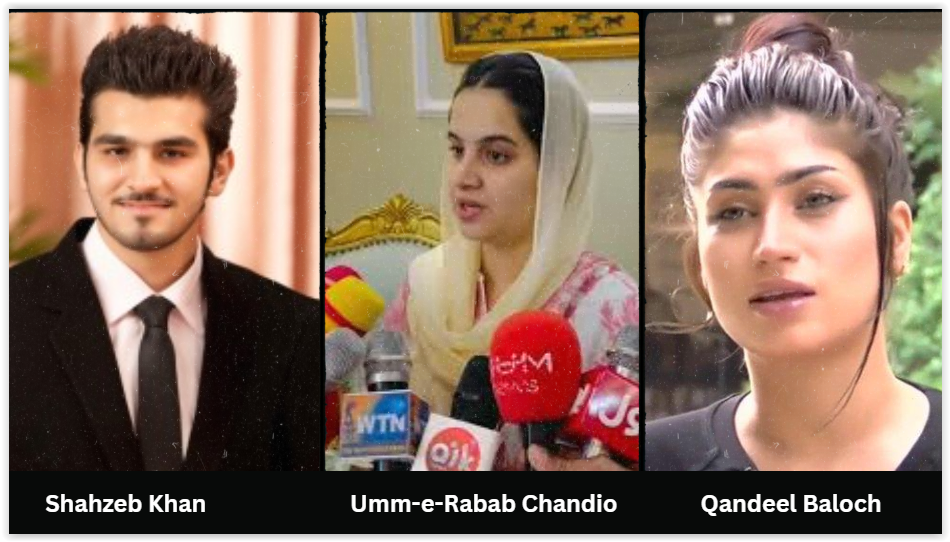
This article examines the stark class disparity in Pakistan’s judicial system, using the Noor Mukadam case as a focal point to demonstrate how justice is often contingent upon social capital. It contrasts her case with those of ordinary citizens—Shahzeb Khan, Umm-e-Rabab Chandio, Qandeel Baloch and many more —whose killers walked free despite evidence, confessions, and years of litigation. It analyzes the structural mechanisms that enable elite impunity, from the Qisas and Diyat legal framework to witness intimidation, media selectivity, and judicial vulnerability to political pressure. The evidence points to a disturbing conclusion: until Pakistan’s justice system is reformed to eliminate blood money loopholes, ensure state prosecution of all homicides, and guarantee judicial independence, justice will remain a commodity available only to those who can afford it.
Section 1: The Noor Mukadam Case—A Victory for the Privileged
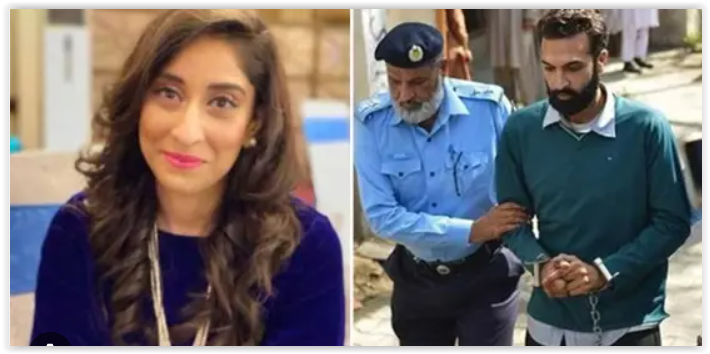
Noor Mukadam was not an ordinary victim. She was the daughter of Shaukat Mukadam, a senior diplomat who had represented Pakistan abroad and moved in elite social circles. The family’s social status, financial resources, and diplomatic connections were immediately apparent in the aftermath of her murder in July 2021. Within days, the case was front-page news in every major outlet. The Prime Minister’s office issued directives that the investigation should brook no concessions. The Islamabad police, often criticized for lethargy in ordinary murder cases, moved with unusual speed. The trial court sentenced Zahir Jaffer to death in February 2022, the Islamabad High Court upheld the sentence in March 2023, and the Supreme Court gave its verdict in May 2025.
The Mukadam family’s elite status played a decisive role at every stage. First, it guaranteed media attention. In a country where hundreds of women are murdered annually with little to no coverage, Noor’s case became a national cause célèbre because her father had the connections and articulacy to engage with the press and sustain public pressure. Second, it ensured quality legal representation. The family could afford top-tier lawyers to argue through three tiers of courts over four years—a financial burden impossible for most Pakistani families, where the minimum monthly wage for unskilled workers is Rs15,000 and over 51 million people live below the poverty line. Third, and most critically, the family’s social standing gave them the psychological and economic resilience to refuse blood money. Under Pakistan’s Qisas and Diyat laws, the legal heirs of a murder victim can waive the right of retribution or compound the offense by accepting monetary compensation. Many poor families, facing years of litigation and threats from powerful accused, succumb to this pressure. The Mukadams did not.
Even after the Supreme Court upheld the death sentence in May 2025, the family’s endurance was tested one final time. Jaffer filed a 47-page review petition, arguing that his mental health should mitigate his culpability and that digital video evidence used against him was inadmissible. It was a sophisticated legal maneuver, the kind of last-ditch appeal that only well-funded defense counsel can mount. On 4 June 2026, a three-member bench rejected the petition outright, dismissing both the mental health and digital evidence arguments. The ruling affirmed what the Mukadam family had fought five years to establish: that neither procedural delay nor technical objections would erase accountability in this case.
The question must be asked: If Noor had been the daughter of a shopkeeper, a farmer, or a factory worker, would Zahir Jaffer—son of a wealthy business family with access to Therapy Works employees and domestic staff who initially tried to cover up the crime—have faced the same relentless prosecution? Would a poor family have had the resources to counter a 47-page review petition crafted by elite defense lawyers? The evidence suggests otherwise. The same legal system that delivered justice for Noor Mukadam has consistently failed countless victims from less privileged backgrounds. The Noor Mukadam case was a victory, but it was a victory made possible by privilege.
Section 2: The Pattern of Impunity—When the Elite Kill
If the Noor Mukadam case illustrates what is possible when wealth and status align with the pursuit of justice, the Shahzeb Khan murder case demonstrates what happens when the accused possesses greater power than the victim. On the night of December 25, 2012, Shahzeb Khan, a 20-year-old university student in Karachi, was shot dead by Shahrukh Jatoi, the son of an influential feudal lord and politician, following a minor altercation. The case had eyewitnesses, CCTV footage, and a clear trail of evidence. An anti-terrorism court sentenced Jatoi and his accomplice Siraj Talpur to death in June 2013.
Yet justice unravelled. Within months, Shahzeb’s parents—who had settled abroad and reportedly lived in fear—issued a formal pardon for the convicts. The Sindh High Court dropped terrorism charges and ordered a retrial. In 2019, the High Court commuted the death sentences to life imprisonment. Finally, on October 18, 2022, a three-member bench of the Supreme Court acquitted all four accused, ruling that since the parties had reached a settlement and the accused had no intention to “spread terror,” the acquittal was justified. Shahrukh Jatoi walked free. The system had functioned exactly as it was designed to: it allowed wealth and political influence to purchase a legal outcome through the mechanism of compromise.
The Umm-e-Rabab Chandio case, decided in March 2026, presents an even more brazen example of feudal impunity. On January 17, 2018, Rubab’s grandfather, father, and uncle were gunned down in broad daylight in Mehar Taluka, Dadu district. She pursued the case for over eight years, attending 392 hearings. The accused included two sitting Pakistan Peoples Party MPAs, Sardar Ahmed Khan Chandio and Burhan Khan Chandio, powerful feudal lords with deep local influence. On March 30, 2026, Additional Sessions Judge Hussain Kalor acquitted all eight accused, stating that no evidence was found to prove the charges. The verdict required the deployment of 589 police personnel, 30 station house officers, and six deputy superintendents to secure the courthouse—a measure that underscored the fear the accused inspired. Rubab, now the sole surviving member of her immediate family, vowed to appeal. “The world is shocked that the feudal lords in Sindh are granted a licence to commit murder,” she said. Jamaat-e-Islami chief Hafiz Naeemur Rehman put it more bluntly: “The court’s decision has once again proven that the justice system is subservient to the powerful feudal lords.”
Then there is the case of Qandeel Baloch, Pakistan’s first social media celebrity, who was strangled by her brother Muhammad Waseem in 2016. Waseem confessed to the murder, calling his sister’s behavior “intolerable.” He was sentenced to life imprisonment in 2019, and the case was hailed as a milestone after the government became the complainant to prevent the family from pardoning him under the so-called “forgiveness loophole.” Yet in February 2022, the Lahore High Court acquitted Waseem after his mother pardoned him. The court ruled that the murder could not be defined as an “honor killing,” dismissing his confession as merely “a piece of paper,” and allowed the Islamic law provision of maternal pardon to override the state’s prosecution.
These cases share common threads: acquittals despite compelling evidence, the invocation of compromise or pardon provisions, the dominance of political and feudal power over judicial process, and a systemic pattern where the elite kill and walk free. The Noor Mukadam case succeeded not because the system works, but because the victim’s family had the rare combination of resources, resolve, and social standing to fight the system to its highest level—and to defeat even a 47-page review petition designed to exploit every remaining technical loophole.
Section 3: The Machinery of Injustice—How the System is Rigged
The disparities in outcomes are not accidental. They are the product of a legal and institutional framework deliberately structured to favor the powerful.
The Qisas and Diyat Framework
At the heart of the problem lies the Qisas and Diyat regime, introduced in 1990 and permanently enacted in 1997. This framework transformed murder from a crime against the state into a private offense against the victim’s heirs. Under Sections 309 and 310 of the Pakistan Penal Code, the legal heirs (wali) of a murdered person can waive the right of retributive punishment (qisas) or compound the offense by accepting badl-i-sulh—blood money. Section 311 theoretically allows courts to impose tazir (discretionary) punishment even after waiver if the principle of fasad fil arz (corruption on earth) is attracted, but the provision is weakly worded and inconsistently applied. The court “may” punish, not “shall” punish.
The consequences are devastating. A wealthy murderer can offer blood money that constitutes a trivial fraction of his wealth but represents a fortune to a poor victim’s family. In many cases, the poor are not merely offered money—they are threatened, coerced, or worn down by years of litigation. The 2005 and 2016 amendments attempted to exclude honor killings from the compounding framework, but they failed to close the fundamental loopholes. In Qandeel Baloch’s case, the court simply reclassified the murder as non-honor-related, allowing the pardon to proceed. In Shahzeb Khan’s case, the Supreme Court accepted the pardon despite the initial terrorism charges. The law provides multiple escape routes for those with the legal sophistication and financial resources to navigate them.
Economic Barriers to Justice
The cost of pursuing justice in Pakistan is prohibitive. A study of the Peshawar High Court found the average case duration to be 4.47 years, with transaction costs averaging 0.048 million rupees per month. For a murder trial spanning trial court, high court, and Supreme Court, a family might spend millions of rupees in legal fees, travel, and lost wages. With over 1.8 million cases pending before the courts and 36,344 pending before the Supreme Court alone, delays are inevitable. Poor families cannot sustain this burden. Their lawyers, often underpaid, have incentives to seek adjournments to extract additional fees for each hearing, further prolonging the process. As one Pakistani lawyer noted, the legal fraternity is “geared towards servicing the needs of the top 10-20pc of the population.”
Witness Intimidation and Coercion
In cases involving feudal lords or politically connected families, witnesses and victims’ families live under constant threat. The Umm-e-Rabab Chandio case required the deployment of nearly 600 police personnel to secure the courthouse—not to protect the victim’s family, but to manage the presence of the accused’s supporters. In Shahzeb Khan’s case, his parents reportedly settled abroad after pardoning the killers, while witnesses who testified against Jatoi were left to wonder about their own safety. The poor have no witness protection, no security detail, and no means to relocate. They face a choice: pursue justice and risk their lives, or accept compromise and survive.
Media Selectivity and Judicial Pressure
Media coverage in Pakistan is heavily skewed toward cases involving elite victims or elite perpetrators. Noor Mukadam’s case dominated the news because her father could articulate the family’s grief and demand accountability. The Chandio family murders, despite occurring in broad daylight and involving elected officials, received fractionally less sustained coverage. This selectivity shapes public pressure, which in turn influences judicial and prosecutorial priorities.
Moreover, lower courts in rural Pakistan—where feudal power structures remain intact—are deeply vulnerable to political pressure. Judges in districts like Dadu operate in environments where the accused control local politics, police, and administration. The acquittal of the Chandio murder accused after 392 hearings suggests not a lack of evidence, but a judicial system that calculated the cost of conviction against the power of the accused and chose impunity.
Section 4: The Human Cost—Stories of the Forgotten
Behind every high-profile case that fails are thousands that never make headlines. In 2024, Pakistan reported 547 honor killings nationwide. The conviction rate was 0.5 percent. In Punjab, only 2 convictions emerged from 225 honor killing cases. In Khyber Pakhtunkhwa, there were 143 honor killings and zero convictions. In Balochistan, 32 honor killings yielded zero convictions. For rape, the national conviction rate was 0.5 percent; Sindh reported 243 rape cases with zero convictions. Domestic violence convictions stood at 1.3 percent nationally.
These are not abstract statistics. They represent women like Qandeel Baloch, whose brother now walks free. They represent girls in rural Sindh murdered by their fathers and forgiven by their mothers under the same Qisas provisions. They represent families who file First Information Reports only to see them cancelled during investigation, or who submit to challans (charge sheets) that languish in courts for years before ending in acquittal or withdrawal.
Pakistan’s overall conviction rate hovers between 8.66 percent (by one estimate) and 12 percent (by provincial data). This compares dismally to India’s 42 percent, the United States’ 91.4 percent, and China’s 99 percent. The country ranks 129 out of 140 in the World Justice Project’s Rule of Law Index.
The poor and marginalized suffer disproportionately. A joint report by the Human Rights Commission of Pakistan and FIDH found that lower economic classes are more likely to confess under duress, be prosecuted in unfair trials, and sentenced to death. Kanizan Bibi, a housemaid from a very poor family, spent 26 years on death row for a crime she likely did not commit, tortured into a confession and driven to insanity. The real culprits, according to her family, had been released after bribing the police. Her story is the inverse of the Noor Mukadam case: a poor woman accused, rather than a rich man pursued.
Conclusion
Revised Conclusion
The Noor Mukadam case was a triumph of persistence over privilege—but also a triumph enabled by privilege. Shaukat Mukadam’s diplomatic standing, financial resources, and media access created the conditions under which the legal system could function as it should. The system did not deliver justice because it is inherently just; it delivered justice because an exceptional family forced it to, against the weight of compromise and delay that crushes ordinary petitioners.
With the Supreme Court’s dismissal of Jaffer’s 47-page review petition on 4 June 2026, the case reached its terminal legal conclusion. The rejection of his mental health and digital evidence arguments affirmed that even the most resourceful defense tactics could not overcome the Mukadam family’s sustained pursuit of accountability. But this finality is cold comfort. It underscores that justice required not merely a crime and evidence, but five years, three court tiers, and a family’s elite social capital to defeat every procedural maneuver thrown in its path.
Pakistan’s justice system operates on a two-tier model. For the elite, it offers delay, loopholes, and eventual acquittal through blood money and political influence. For the poor, it offers duress, unaffordable costs, and statistical near-certainty of failure. The Qisas and Diyat laws, originally framed as an Islamic alternative to colonial penal codes, have become instruments of class warfare. The 2016 anti-honor killing amendments, hailed as reform, proved paper-thin when courts simply reclassified murders to circumvent them.
Structural reform is urgent. All intentional homicides must be made non-compoundable, prosecuted by the state as crimes against society, with victim families stripped of pardon authority. Section 311 must be amended to replace the discretionary “may” with “shall,” mandating tazir punishment regardless of waiver. A robust, independent witness protection program must be established; legal aid expanded to sustain poor families through appellate stages; and judicial postings in feudal districts insulated from political pressure through merit-based processes.
Bryan Stevenson wrote that “the opposite of poverty is not wealth, it is justice.” For Pakistan, this is a warning. A nation where 51 million people live below the poverty line cannot sustain a justice system that serves only the top tier. Noor Mukadam deserved justice. So did Shahzeb Khan. So did Umm-e-Rabab Chandio’s family. So did Qandeel Baloch. So do the hundreds of women murdered annually in the name of honor, whose cases never make the front page.
Until Pakistan’s justice system is blind to wealth and status, it will remain a mechanism not for justice but for its simulation—a theater where the occasional high-profile conviction masks the systematic acquittal of the powerful and the systematic abandonment of the poor. Justice must be a right, not a privilege. Anything less is not justice at all.