I. Introduction: A Warning Shot Across 47 Years
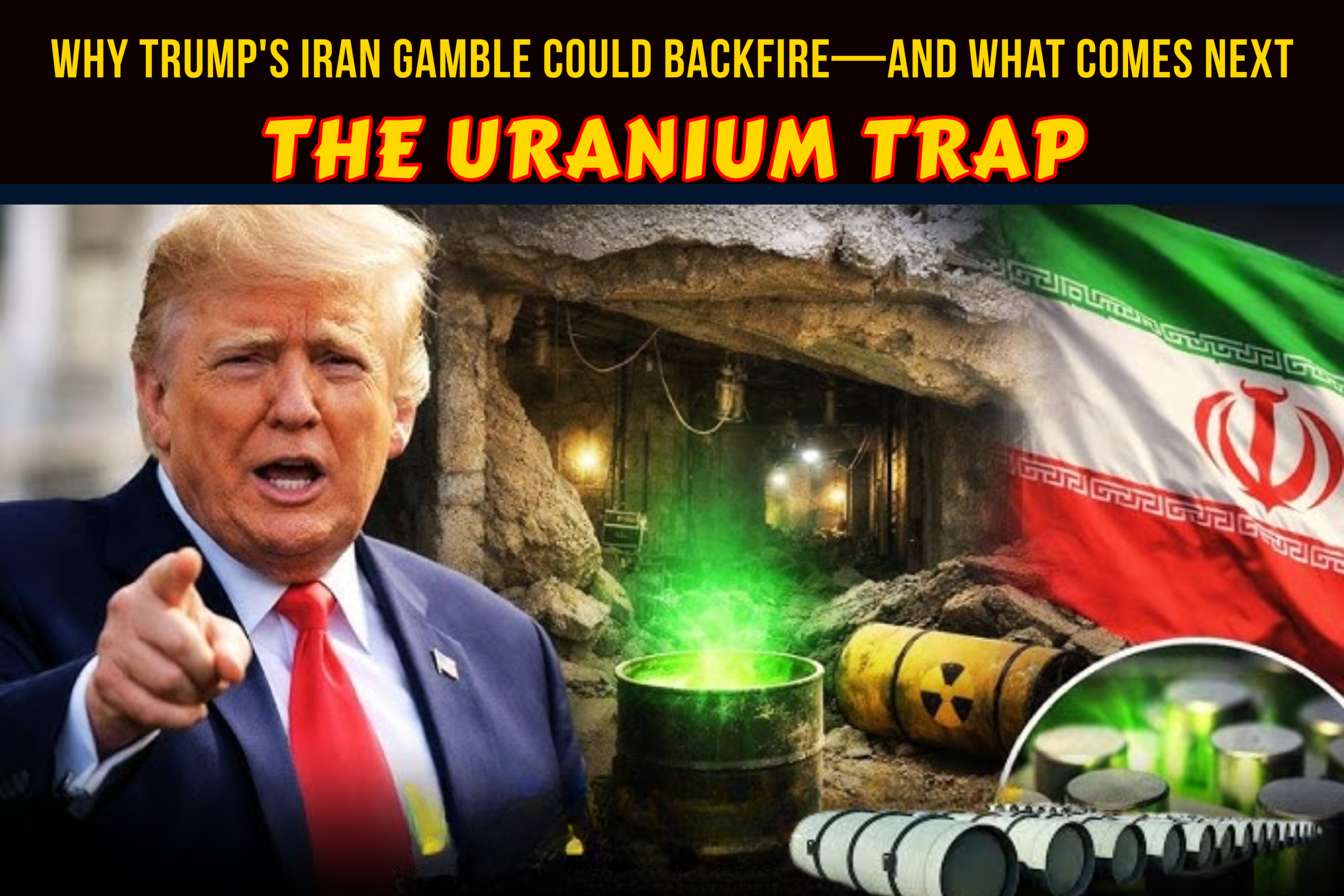
“The U.S. will play no games. We will get their uranium.” When President Donald Trump issued this statement on May 11, 2026, he was not merely updating reporters on diplomatic progress. He was issuing an ultimatum that carries the weight of nearly half a century of enmity. Forty-seven years, to be precise—the span of time Trump explicitly referenced when he accused Iran of “playing games” with the United States since the 1979 Islamic Revolution. The language was vintage Trump: blunt, transactional, and deliberately ambiguous about whether “getting” the uranium would happen through negotiation, coercion, or military force.
But beneath the surface of this rhetorical bombast lies a paradox that defines the entire crisis. Trump claims he wants a “better deal” than the Joint Comprehensive Plan of Action (JCPOA) that President Barack Obama negotiated in 2015—a deal he unilaterally tore up in 2018. Yet the terms his administration has reportedly demanded from Tehran go far beyond anything Iran accepted even under the JCPOA’s most stringent provisions. Full uranium handover. Facility dismantlement. And, most explosively, the abandonment of Iran’s regional proxy network. These are not terms of negotiation. They are terms of surrender.
This is the central tension of the moment: Trump is simultaneously threatening military action and claiming he wants diplomacy. Iran is simultaneously rejecting American demands and insisting it seeks sanctions relief. Both sides are trapped in postures that make compromise politically toxic. And in the space between their incompatible positions, the Middle East edges closer to a conflict that neither side may actually want—but neither can afford to lose.
The technical reality makes this political theater genuinely dangerous. When the JCPOA was fully implemented in 2016, Iran’s breakout timeline—the time required to produce enough weapons-grade uranium for one nuclear device—was estimated at roughly twelve months. That was the deal’s core achievement: not the elimination of Iran’s nuclear capacity, but the extension of warning time. Today, according to the International Atomic Energy Agency (IAEA) and independent nuclear monitors, that timeline has collapsed to approximately two to four weeks. Iran now possesses enough highly enriched uranium, at 60% purity, that further enrichment to weapons-grade 90% could be accomplished in a matter of days. The Natanz and Fordow facilities operate centrifuge cascades that were explicitly prohibited under the JCPOA. The surveillance cameras that once provided real-time monitoring have been disabled or removed. The inspectors who once roamed Iranian facilities have been expelled or restricted.
What exists now is not a nuclear program under diplomatic constraint. It is a nuclear program operating in the shadows, its exact progress unknown, its intentions deliberately ambiguous. And that ambiguity is the point.
This article argues that the current standoff is not merely about nuclear diplomacy in the traditional sense. It is a test of whether coercive diplomacy can function when both sides have systematically burned every bridge between them. It is a test of whether regional powers—Russia, China, the Gulf Arab states—will permit Washington to dictate outcomes unilaterally. And ultimately, it is a preview of what comes after the era of arms control: an age of “nuclear nationalism” where threshold states weaponize ambiguity rather than pursue weapons outright, and where the international community lacks the tools to respond.
II. The Breakdown: What Happened in the Last 48 Hours
The collapse of the latest round of U.S.-Iran talks did not make front-page news in the way that, say, a missile strike would have. That is part of the problem. The erosion of diplomatic infrastructure happens quietly, in rejected communiqués and leaked terms, until one day the absence of options becomes catastrophic.
According to reports from the negotiations, the American delegation presented Tehran with what amounted to a maximalist position: Iran must ship its entire stockpile of enriched uranium out of the country, dismantle its advanced centrifuges, and accept comprehensive restrictions on its missile program. In exchange, the United States would consider “phased sanctions relief” contingent on verified compliance over an extended period. The proposal also included a demand that Iran cease support for Hezbollah in Lebanon, the Houthi movement in Yemen, and Shiite militia networks in Iraq and Syria.
Iran’s response was swift and categorical. Foreign Ministry officials rejected the terms as “non-starters,” insisting that sanctions relief must precede any Iranian concessions, not follow them. More fundamentally, Tehran demanded “sovereignty guarantees”—explicit assurances that the United States would not pursue regime change, directly or through proxies, regardless of future political developments in Iran. This demand reflects a trauma that shapes Iranian strategic thinking: the memory of 1953, when CIA-backed forces overthrew Iran’s elected government; the memory of the Iran-Iraq War, when Western powers armed Saddam Hussein; and the more recent memory of the JCPOA itself, when Iran complied with its obligations only to watch the United States abandon the deal and impose even harsher sanctions.
What has received less attention is the role of secondary actors in this diplomatic failure. Russia’s Foreign Ministry announced on May 10 that Moscow was prepared to mediate between Washington and Tehran, leveraging its relationships with both capitals. This was not altruism. Russia has substantial energy interests in Iran, including oilfield development contracts and nuclear reactor construction agreements that have been disrupted by Western sanctions. More strategically, Moscow sees an opportunity to position itself as an indispensable global broker—a role that carries prestige and leverage in its broader confrontation with the West.
China, meanwhile, has maintained public silence while actively shaping the economic environment around the talks. Beijing is currently the largest purchaser of Iranian oil, absorbing an estimated 1.5 to 2 million barrels per day through a shadow fleet of tankers that disable transponders, falsify registration documents, and transfer cargoes at sea to obscure their origin. Chinese “teapot” refineries—small, independent facilities—process this crude with minimal scrutiny. From Beijing’s perspective, a prolonged U.S.-Iran crisis serves multiple interests: it keeps American diplomatic and military resources tied down in the Middle East rather than the Indo-Pacific; it creates opportunities for China to expand its economic influence in Iran at discounted prices; and it demonstrates the limits of American unilateral power.
But here is the insight that most coverage has missed: the talks collapsed not primarily over uranium, but over proxies. The American demand that Iran abandon its regional network was not a secondary clause. It was, for Tehran, the poison pill. Iran’s support for Hezbollah, the Houthis, and Iraqi militias is not a foreign policy luxury that can be traded away for better economic terms. It is the core of Iran’s national security architecture—a deliberately constructed buffer zone that places Iranian influence and potential retaliation capability on the borders of its adversaries. Asking Iran to surrender this network is equivalent, in Iranian strategic calculus, to asking the United States to withdraw from NATO. It is not a negotiation point. It is an existential demand framed as diplomacy.
This distinction matters because it reveals the fundamental miscalculation in Washington’s approach. The Trump administration appears to believe that maximum pressure—economic sanctions plus military threats—can compel Iran to accept terms that previous Iranian governments, under far less pressure, explicitly rejected. There is no historical precedent for this outcome. The JCPOA itself was only possible because it left Iran’s regional activities untouched, focusing narrowly on the nuclear file. By conflating the nuclear issue with Iran’s broader regional role, the current American position ensures that no deal is possible—while creating the political conditions for escalation.
III. The Hidden Battlefield: Iran’s Nuclear Program in 2026
To understand why this crisis is so intractable, one must understand what Iran has actually built—and what it has deliberately chosen not to build.
Iran’s nuclear infrastructure today centers on three primary facilities: Natanz, Fordow, and Isfahan. Natanz, located in central Iran, houses the bulk of the country’s centrifuge cascades, including thousands of IR-6 and IR-9 models that spin uranium hexafluoride gas at speeds far exceeding the first-generation IR-1 machines limited by the JCPOA. Fordow, built into a mountainside near the holy city of Qom, is the most politically significant site: its deeply buried location makes it resistant to conventional aerial attack, and its conversion to an enrichment facility (rather than the research role permitted under the JCPOA) signals Iranian preparation for a confrontation. Isfahan handles uranium conversion and fuel fabrication, completing the front end of the fuel cycle.
The technical metrics are sobering. Iran has accumulated approximately 200 kilograms of uranium enriched to 60% purity, according to the most recent IAEA reports. Theoretical weapons-grade enrichment to 90% would require only a modest additional effort—days, not weeks, given the cascade configurations now operating. The “breakout” calculation, however, depends on assumptions about efficiency, equipment reliability, and the desire to avoid IAEA detection (now largely moot, given Iran’s restrictions on inspectors). The consensus estimate among Western intelligence agencies is that Iran could produce enough fissile material for one device in roughly two to four weeks, and for multiple devices within a few months.
Yet here is the critical subtlety: Iran has chosen not to cross the 90% threshold. This is not a technical incapacity. It is a strategic choice. By maintaining enrichment at 60%—just below the weapons-grade line—Iran preserves what nuclear strategists call “calculated ambiguity.” It signals capability without triggering the automatic military response that an acknowledged weapons program might provoke. It maintains leverage in negotiations without assuming the full diplomatic and security costs of nuclear weapon status. And it keeps the international community guessing, which is itself a form of power.
This “nuclear hedging” strategy is not unique to Iran. Japan, for instance, maintains a latent nuclear capability through its advanced civilian program that could be weaponized within months if political decisions changed. But Iran’s case is distinctive because of the adversarial context. Tehran is not a treaty ally of the United States seeking insurance against a distant threat. It is a declared enemy of Washington, Jerusalem, and Riyadh, operating in a region where three of its neighbors (Israel, Pakistan, and potentially Saudi Arabia) either possess nuclear weapons or have explored acquiring them. The hedging strategy is therefore both more dangerous and more rational than it would be in a stable security environment.
The shadow of Iran’s past weapons research hangs over this ambiguity. In 2018, Israeli intelligence operatives extracted a massive archive of documents from a Tehran warehouse, revealing the scope of the “Amad Plan”—Iran’s pre-2003 organized effort to design and build nuclear weapons. The archive demonstrated that Iran had made substantial progress on warhead design, uranium metallurgy, and detonation systems before allegedly shelving the program. What the archive could not definitively establish was whether Iran retained the organizational knowledge, hidden equipment, or political authorization to restart weaponization work if the decision were made.
Western intelligence assessments currently hold that Iran has not resumed the Amad Plan’s specific weapons activities. But these assessments come with significant uncertainty caveats. The IAEA’s diminished access means that verification gaps have grown, not shrunk, since 2019. Iran’s explanations for traces of enriched uranium found at undeclared sites—most notably Turquzabad—have been dismissed by the agency as technically implausible. And the distinction between “civilian” and “military” nuclear work, never entirely clear, has become deliberately blurred in Iranian practice.
The result is an “information asymmetry” that benefits Tehran. The West cannot prove that Iran is building weapons. Iran cannot prove that it is not. In this fog, Iran advances its enrichment program, expands its technical knowledge, and waits for the geopolitical environment to shift in its favor. The strategy requires patience. It also requires the belief that time is on Iran’s side—that American attention will eventually shift elsewhere, that sanctions enforcement will erode, that regional powers will accommodate themselves to Iranian strength. Whether this belief is correct will determine the outcome of the current crisis.
IV. The Military Option: Real or Bluff?
Every American administration since the Iranian revolution has, at some point, examined the feasibility of military strikes against Iran’s nuclear facilities. The Trump administration is no exception. What distinguishes the current moment is the convergence of three factors: the collapse of diplomatic alternatives, the acceleration of Iran’s technical progress, and the presence in the White House of a president who has consistently signaled willingness to use force unpredictably.
The target set for any American or Israeli strike is well understood in military planning circles. Natanz would be the primary objective: its above-ground centrifuge halls are vulnerable to precision munitions, and its destruction would set back Iran’s enrichment capacity significantly. Fordow presents the most difficult operational challenge. Buried under approximately 80 meters of rock and soil, the facility is designed to withstand conventional aerial bombardment. The United States possesses the GBU-57 Massive Ordnance Penetrator, a 30,000-pound bunker-buster specifically developed for deeply buried targets. But military analysts question whether even this weapon could achieve complete destruction of Fordow’s chambers, particularly if Iran has constructed decoy entrances or reinforced critical sections. Multiple strikes might be required, and even then, the facility might be damaged rather than destroyed.
Isfahan and the Parchin military complex, where weapons-related research is suspected to have occurred, would likely be secondary targets. The broader campaign would also require suppression of Iranian air defenses, destruction of command-and-control networks, and potentially strikes on missile launch sites to preempt retaliation.
The operational difficulties, however, pale beside the strategic consequences. Iranian retaliation would not be limited to the nuclear file. Tehran possesses multiple asymmetric options: missile strikes on Saudi oil facilities (as demonstrated in the 2019 Abqaiq attack), mining of the Strait of Hormuz, activation of Shiite militias against U.S. forces in Iraq and Syria, and escalation through Hezbollah on Israel’s northern border. The 2020 assassination of Qassem Soleimani demonstrated that Iran can absorb high-level losses while maintaining operational capacity; the retaliatory missile strike on Al Asad Air Base, which wounded over 100 American personnel, demonstrated that Iran can strike U.S. military targets directly when motivated.
More fundamentally, any military campaign raises what this article terms the “Suez Paradox.” In 1956, the British and French military operation against Egypt succeeded in its immediate objective—seizing the Suez Canal zone—but failed strategically by accelerating the very trends it sought to reverse: Egyptian nationalism, Soviet influence in the Middle East, and the decline of European imperial power. An American strike on Iran might similarly achieve tactical success: setting back the nuclear program by two to three years, destroying visible infrastructure, and demonstrating resolve. But the strategic consequences would likely include: an Iranian determination to rebuild with greater secrecy and speed; a collapse of whatever residual international support for American policy remained; a rallying of Iranian domestic opinion behind the regime; and the probable acceleration of Iranian weaponization efforts in the post-strike environment, when diplomatic off-ramps would no longer exist.
Israel’s role in this calculus adds another layer of complexity. Prime Minister Benjamin Netanyahu’s government has consistently advocated for harder lines against Iran, and Israeli intelligence assessments reportedly conclude that Iran is 6 to 12 months from a “nuclear device test” if current trends continue. Israel’s own covert campaign—assassinations of Iranian nuclear scientists, sabotage of centrifuge operations, cyberattacks like the Stuxnet virus—has slowed but not stopped Iranian progress. The question is whether Jerusalem would support, or independently undertake, a strike that Washington declined to authorize. Israeli military capability is sufficient for limited strikes on Natanz and Isfahan, but probably insufficient for the complete campaign that would be required to significantly delay the program. Any Israeli action would almost certainly trigger regional escalation and draw in American forces regardless of Washington’s initial intentions.
The military option, in short, is real in operational terms. It is illusory in strategic terms. It solves the immediate problem of visible enrichment capacity while creating a larger, less visible problem of Iranian determination and regional instability. This is why American military planners, whatever their public rhetoric, have historically been cautious about recommending strikes. The current administration’s apparent appetite for confrontation may override this caution. If so, the consequences will extend far beyond the Iranian nuclear file.
V. The Geo-Economic Dimension: Oil, Sanctions, and the Shadow Fleet
Nuclear diplomacy does not occur in a vacuum. It is embedded in economic relationships that shape the incentives of all parties. The U.S.-Iran standoff of 2026 is simultaneously an energy crisis, a sanctions enforcement challenge, and a test of American financial power in a multipolar economy.
The Strait of Hormuz remains the world’s most critical oil chokepoint. Approximately 21 million barrels of oil per day pass through its narrow waters, representing roughly 21% of global petroleum consumption. Iran has periodically threatened to close the strait in response to aggression, and while a complete closure is militarily difficult to sustain, even partial disruption—through mining, missile attacks on tankers, or harassment of shipping—would send immediate shockwaves through global markets. Analysts estimate that a sustained Hormuz crisis could drive Brent crude prices above $120 per barrel, with spikes potentially reaching $150 depending on duration and severity. The inflationary consequences for import-dependent economies, particularly in Europe and Asia, would be severe.
American sanctions policy, meanwhile, faces an enforcement crisis that receives insufficient attention. When the Trump administration reimposed “maximum pressure” sanctions in 2018, the expectation was that Iranian oil exports would collapse to near zero, depriving the regime of its principal revenue source and forcing concessions. The policy partially succeeded: exports did fall dramatically in 2019-2020. But Iran adapted. By 2026, a sophisticated evasion network has restored export volumes to an estimated 1.5 to 2 million barrels per day.
This “shadow fleet” operates through multiple mechanisms. Tankers registered under flags of convenience—Malaysia, Panama, Tanzania—disable their Automatic Identification System (AIS) transponders when approaching Iranian ports, effectively becoming invisible to commercial tracking. Cargoes are transferred at sea through “ship-to-ship” operations, mixing Iranian crude with oil from other sources to obscure its origin. Chinese independent refineries, operating with minimal government oversight, purchase this crude at discounts of $10-15 per barrel below market rates. Russian entities provide insurance, logistics, and banking services that circumvent the SWIFT financial messaging system. The result is a parallel oil market that functions outside Western regulatory control, funneling billions of dollars to Tehran despite formal sanctions.
This evasion economy reveals a broader trend: the erosion of American unilateral financial power. In the 1990s and 2000s, U.S. sanctions were effective because the dollar dominated international trade, and access to American financial markets was essential for global commerce. Today, alternative payment systems—China’s CIPS, Russia’s SPFS, bilateral currency swaps, and cryptocurrency channels—have reduced this dependency. European allies, battered by energy costs and eager for trade opportunities, have quietly relaxed enforcement. Asian economies prioritize energy security over compliance with American policy preferences. The “maximum pressure” campaign has not been defeated, but it has been circumvented—and in geopolitics, circumvention is often equivalent to defeat.
The Gulf Arab states occupy a particularly delicate position. Saudi Arabia’s Vision 2030 diversification program and the UAE’s economic hub ambitions require regional stability. Both Riyadh and Abu Dhabi have engaged in direct diplomatic contact with Tehran, including the Chinese-brokered Saudi-Iran normalization agreement of 2023, precisely because they fear the consequences of a military confrontation that would disrupt trade, tourism, and investment flows. Yet they cannot publicly break with Washington, which remains their security guarantor against Iranian missile threats. The result is an elaborate diplomatic theater: public alignment with American policy, private encouragement of de-escalation, and active backchannel communication with Iranian officials that goes largely unreported.
This backchannel diplomacy may be the most underappreciated factor in the current crisis. Saudi and Emirati officials have reportedly conveyed to both Washington and Tehran that they will not support military action that threatens their own economic interests, regardless of their formal alliances. They have proposed alternative frameworks—regional security dialogues, economic incentives, gradual normalization—that bypass the binary choice of deal or war. Whether these efforts can gain traction depends largely on whether either Washington or Tehran perceives an interest in exploring them.
VI. The Regional Proxy Web: Why Iran Won’t Disarm
The most common analytical error in Western discussions of Iran’s nuclear program is to treat it as a self-contained issue. In reality, the program is inextricably linked to Iran’s regional strategy, and any attempt to address one without the other is destined to fail.
Iran’s “Axis of Resistance”—Hezbollah in Lebanon, the Houthis in Yemen, Shiite militias in Iraq and Syria, and Palestinian Islamic Jihad in Gaza—is frequently described as a network of terrorist proxies. This description is not inaccurate from the perspective of Iran’s adversaries, but it misses the strategic logic that drives Iranian investment in these groups. From Tehran’s viewpoint, these organizations are not disposable assets. They are strategic depth: a deliberately constructed buffer that places Iranian influence and retaliation capability on the borders of Israel, Saudi Arabia, and American military installations.
Consider the geography. Hezbollah’s presence in southern Lebanon means that any Israeli strike on Iranian nuclear facilities would likely trigger a simultaneous northern front, forcing Israel to fight on two borders. The Houthis’ control of northern Yemen and their demonstrated ability to strike Saudi oil infrastructure and international shipping in the Red Sea means that Riyadh cannot contemplate military action against Iran without assuming substantial economic damage. Iraqi militias, integrated into the country’s formal security structure but responsive to Iranian guidance, threaten American personnel and facilities throughout Iraq. Syrian territory, while weakened by civil war, still provides a land corridor for Iranian weapons transfers to Lebanon.
This network is expensive. Iran reportedly spends billions of dollars annually supporting these groups, at a time when its own economy suffers from inflation, unemployment, and currency depreciation. But the expense is rational if the alternative is strategic vulnerability. Without Hezbollah, Israel could strike Iran with reduced fear of retaliation. Without the Houthis, Saudi Arabia could support American military action with less concern for its own infrastructure. The proxy network is, in essence, Iran’s insurance policy against the precise scenario that the Trump administration appears to be contemplating.
This is why the American demand for proxy disarmament was the true deal-breaker in the recent negotiations. Iranian officials, whatever their private views of the economic costs, cannot publicly or privately accept terms that would leave the homeland defenseless against regional adversaries. The demand reveals a fundamental misunderstanding in Washington: the belief that Iran’s regional activities are a “bad behavior” that can be corrected through pressure, rather than a core national security strategy developed over decades in response to perceived existential threats.
The Houthi dimension deserves particular attention because of its global economic implications. Between late 2023 and early 2024, Houthi attacks on commercial shipping in the Red Sea disrupted approximately 30% of container traffic through the Suez Canal, forcing vessels to reroute around Africa and adding weeks to delivery times. The attacks were nominally directed at Israel-linked shipping in solidarity with Gaza, but their economic impact was global. American and British naval forces conducted retaliatory strikes against Houthi targets in Yemen, with limited effect on the group’s operational capacity. If the U.S.-Iran nuclear talks collapse definitively, a resumption of Houthi maritime attacks is highly probable—not as Iranian revenge per se, but as a calibrated signal that Iran can impose costs on the international economy without direct attribution.
The proxy network, in short, is not a bargaining chip for Iran. It is the reason Iran feels secure enough to pursue nuclear threshold status in the first place. Any diplomatic framework that ignores this reality will fail. Any military campaign that assumes Iran will not activate its proxies has not studied Iranian strategic behavior since 1979.
VII. What Happens Next: Three Scenarios
Given the incompatibility of current American and Iranian positions, the most useful analytical exercise is scenario planning. Three broad pathways appear possible, though the boundaries between them are permeable.
Scenario A: The “Libya Model” (Low Probability)
In 2003, Muammar Gaddafi surrendered Libya’s nascent nuclear program in exchange for normalization with the West and relief from sanctions. The deal held for eight years, until the 2011 NATO intervention that resulted in Gaddafi’s death. Iranian officials, from Supreme Leader Ali Khamenei downward, cite this sequence regularly as proof that American security guarantees are worthless. Any Iranian leader who accepted terms resembling the Libya model—full dismantlement, international oversight, abandonment of strategic assets—would face immediate accusations of naivety or treason from regime hardliners.
The Libya model is therefore politically impossible for Tehran, regardless of economic incentives. It is also strategically unnecessary from Iran’s perspective: unlike Libya in 2003, Iran is not isolated, weakened, or desperate. It has functional relationships with Russia and China, a viable sanctions-evasion economy, and regional influence that Gaddafi never possessed. The probability of this scenario is vanishingly small.
Scenario B: The “North Korea Model” (High Probability)
In this scenario, Iran follows the path of North Korea: openly declaring itself a nuclear weapons state, conducting a test to demonstrate capability, and then using that status to negotiate from a position of strength. The technical prerequisites for this scenario are largely in place. Iran has the fissile material, the delivery systems (ballistic missiles with ranges covering Israel and Gulf capitals), and the organizational experience from the Amad Plan to assemble a device. The political decision to do so would depend on Iranian perceptions of American intentions: if Tehran concludes that Washington is committed to regime change regardless of diplomatic concessions, the incentive to acquire a deterrent becomes overwhelming.
A North Korean outcome would trigger regional proliferation. Saudi Arabia has long signaled that it would pursue nuclear weapons if Iran did so, and the kingdom’s financial resources and existing ballistic missile cooperation with China would accelerate this process. Turkey, under President Recep Tayyip Erdoğan, has hinted at nuclear ambitions and possesses the industrial base to support a weapons program. Egypt, historically restrained by its peace treaty with Israel, might reconsider its non-nuclear posture in a proliferated Middle East. The Non-Proliferation Treaty, already strained, would face collapse in the region.
The timeline for this scenario is uncertain but not distant. If current enrichment rates continue and diplomatic alternatives remain blocked, Western intelligence estimates suggest Iran could test a device within 18 to 24 months. The test would likely be conducted underground, at a remote desert site, with calibrated international signaling to manage the diplomatic fallout.
Scenario C: The “Forever Crisis” (Most Likely)
This is the default scenario, and in many ways the most dangerous because it is the most stable. Neither war nor deal. Years of low-intensity conflict: Israeli sabotage of Iranian facilities, American cyberattacks on Iranian infrastructure, Iranian proxy harassment of U.S. forces, mysterious explosions at nuclear sites, assassinations of scientists and military officers. Iran continues enrichment at 60%, creeping periodically closer to weapons-grade without crossing the line. The United States maintains sanctions that Iran increasingly circumvents. The international community expresses concern without taking decisive action.
The “forever crisis” is appealing to policymakers on both sides because it avoids the catastrophic risks of war and the political costs of compromise. But it is strategically corrosive. It normalizes nuclear threshold status as a permanent condition. It demonstrates to other would-be proliferators that the international community lacks the will or coherence to prevent determined states from approaching weapons capability. And it creates constant risk of accidental escalation—a sabotage operation that kills Iranian personnel, a missile strike that hits the wrong target, a naval confrontation in the Gulf that spirals beyond control.
Within this scenario, a Gulf-led mediation represents the most plausible off-ramp. Saudi Arabia, the UAE, and Oman have the relationships, the economic incentives, and the diplomatic credibility to propose a face-saving framework that neither Washington nor Tehran can initiate directly. Such a framework might include: a regional non-aggression pact, phased sanctions relief tied to specific Iranian nuclear restrictions (not full dismantlement), and a tacit understanding that Iran’s proxy network will be “managed” rather than eliminated. This would not satisfy maximalists in either capital. But it might prevent the worst outcomes.
VIII. Conclusion: The Uranium Trap
The United States and Iran are trapped in a confrontation that neither can win and neither can exit without cost. Trump wants Iran’s uranium without paying the price Tehran demands. Iran wants sanctions relief without surrendering the security architecture that makes relief politically survivable. Both positions are rational from the perspective of domestic politics and national security. Both are incompatible with the other’s requirements.
But the deeper significance of this moment extends beyond the bilateral relationship. The JCPOA was the last major multilateral arms control agreement of the post-Cold War era. Its collapse—and the failure to replace it with anything functional—signals the end of an approach to nonproliferation that relied on international institutions, verified constraints, and diplomatic patience. What replaces it is an era of nuclear nationalism: states that weaponize ambiguity, exploit institutional weakness, and calculate that the benefits of threshold status outweigh the costs of full weaponization or full compliance.
Iran is the test case for this new era, but it will not be the last. Saudi Arabia watches. Turkey calculates. South Korea and Japan revisit their own latent capabilities. The question that policymakers in Washington, Brussels, and beyond must confront is no longer “Can we prevent Iran from getting the bomb?” That question may already have been answered, not by Iranian technical achievement, but by the exhaustion of diplomatic alternatives.
The question now is: “Who will stop them, and at what cost to the global order?”
The answer may be: no one. And that is the real story of 2026—not the uranium in Iranian centrifuges, but the vacuum of credible international authority that allows it to spin unchecked.