(By Khalid Masood)
Introduction: The Unraveling of a Century-Old Consensus
For nearly eighty years, the architecture of modern warfare rested on a deceptively simple hierarchy: armour provides the breakthrough, air power provides the decision. From the blitzkrieg across the Ardennes to the “shock and awe” of Baghdad, military doctrine assumed that victory flowed from the ability to mass mobile firepower at the decisive point and to dominate the skies above it. Tanks were the spear; aircraft were the hammer. Everything else—infantry, artillery, air defence, signals or logistics—existed to enable this symbiosis.
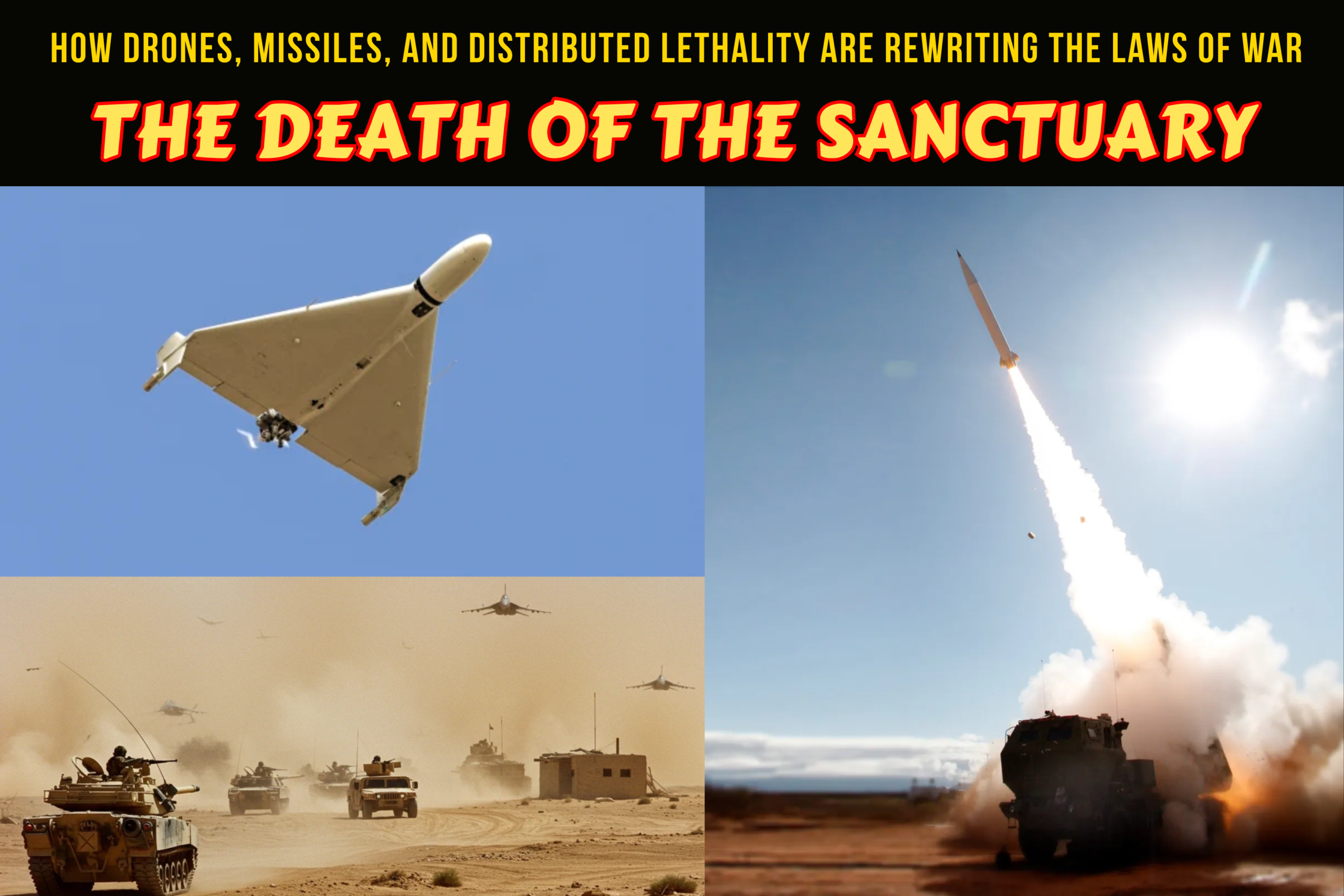
That consensus is dying—not with a single battle, but through a cumulative erosion of its foundational assumptions. The Second Nagorno-Karabakh War (2020), the India-Pakistan clashes of May 2025, and the ongoing US-Iran conflict have each chipped away at the edifice of platform-centric warfare. In their wake stands a new ecology of conflict: one defined not by the concentration of exquisite platforms but by the distribution of cheap, autonomous, and precision-guided lethality. The tank column is no longer the apex predator. The manned fighter wing no longer holds a monopoly on strategic strike. And the rear-area sanctuary—the logistical spine, the command post, the homeland itself—has ceased to exist.
This article examines that transition in full: its historical roots, its catalyzing conflicts, its emerging characteristics, and its profound implications for every level of the defence enterprise. For governments, it raises questions of economics and deterrence that Cold War frameworks cannot answer. For analysts, it demands new metrics and models. For commanders, it compels a radical rethinking of how forces are organized, deployed, and protected. And for the individual warrior, it portends a battlefield where survival depends less on physical courage than on digital invisibility and human-machine symbiosis.
I. Historical Foundation: The Armour-Air Power Consensus
The Second World War and the Triumph of Combined Arms
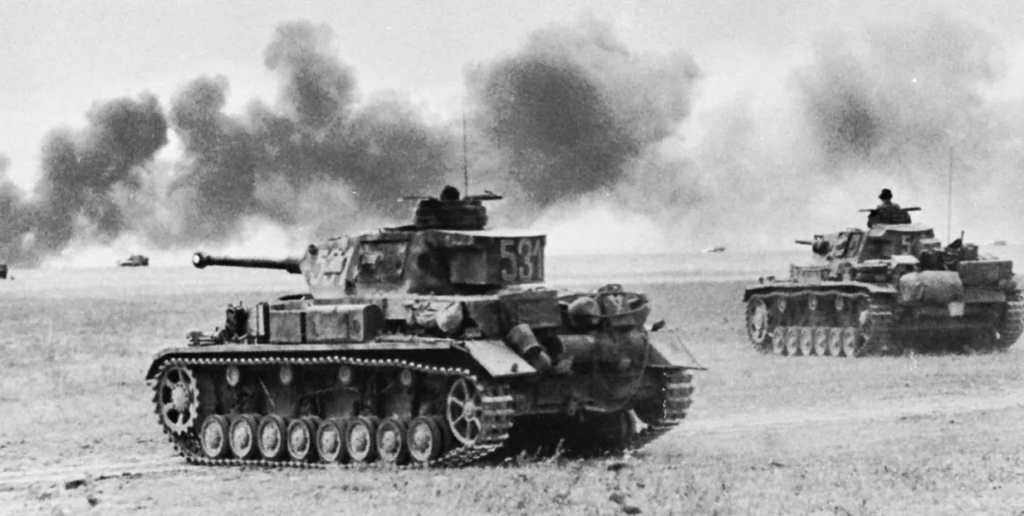
The Second World War did not invent the tank or the airplane, but it validated their integration as the decisive instruments of operational art. German blitzkrieg demonstrated that armour, when massed and supported by tactical air power, could achieve operational paralysis—collapsing enemy command structures before they could react. The Wehrmacht’s 1940 campaign through the Low Countries was not merely a tactical victory; it was a doctrinal revolution that established the template for mechanized warfare for generations.
The Allied response refined this model. The Soviet Deep Battle doctrine, American armoured divisions, and the Anglo-American bombing campaigns all converged on a shared assumption: victory required the physical destruction or disruption of the enemy’s capacity to resist, and the most efficient means to do so were concentrated, mobile, and heavily protected platforms. Tanks provided the breakthrough; fighter-bombers provided the interdiction; heavy bombers provided the strategic coercion. The hierarchy was clear, and it persisted.
Post-war, this consensus deepened. NATO’s Central Front strategy envisioned massed armoured formations breaking through the Fulda Gap, supported by air superiority that would isolate the battlefield and attrit Soviet second-echelon forces. The Israeli Defence Forces refined the model in 1967 and 1973, proving that qualitative superiority in armour and air power could overcome numerical inferiority. The tank was not merely a weapon; it was a symbol of national will and technological prowess.
The Air Power Era: From Vietnam to the Gulf
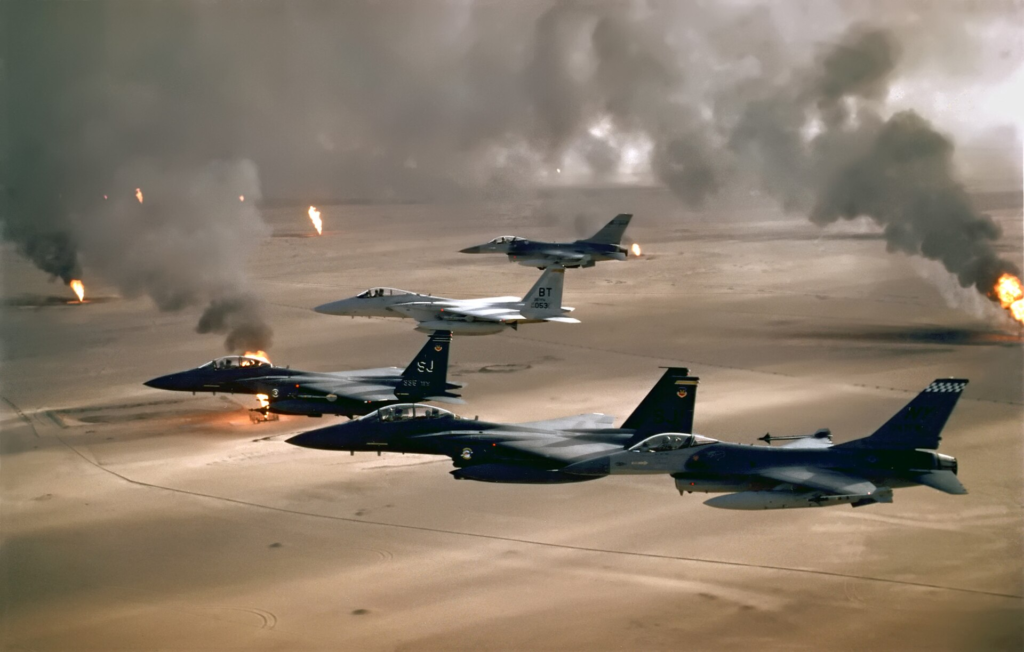
If World War II established the tank’s primacy, the late 20th century elevated air power to a position of doctrinal supremacy. The Vietnam War hinted at the potential of precision strike, but it was the 1991 Gulf War that cemented the narrative. Six weeks of coalition air campaign preceded 100 hours of ground warfare. Stealth aircraft, laser-guided munitions, and space-based navigation demonstrated that air power could achieve strategic effects—infrastructure destruction, command decapitation, morale collapse—that previously required months of ground combat.
The Kosovo War (1999) pushed this logic further. NATO achieved its political objectives without a single friendly ground casualty, relying entirely on air-delivered precision. The early 21st-century counterinsurgency campaigns in Iraq and Afghanistan reinforced the assumption: air power provided persistence, reach, and precision that ground forces could not match. The drone—initially a reconnaissance platform, later an armed one—emerged as the logical extension of this trend: air power without the pilot, persistence without the risk.
Beneath these successes lay a set of assumptions that would prove brittle:
- Platform-centricity: Victory correlated with the quality and quantity of major platforms (tanks, fighter aircraft, aircraft carriers).
- Attrition of hardened targets: The enemy’s center of gravity was its heavy military inventory, which could be located and destroyed.
- Airfield and logistics sanctuary: Air power required secure bases; logistics required concentrated supply hubs; command required fixed headquarters. These were vulnerable in theory but protected in practice by distance, defence, and the enemy’s inability to strike deep.
These assumptions held because potential adversaries lacked the means to challenge them. That is no longer true.
II. The Inflection Points: Three Wars That Changed Everything
Azerbaijan-Armenia (2020): The Democratization of Precision
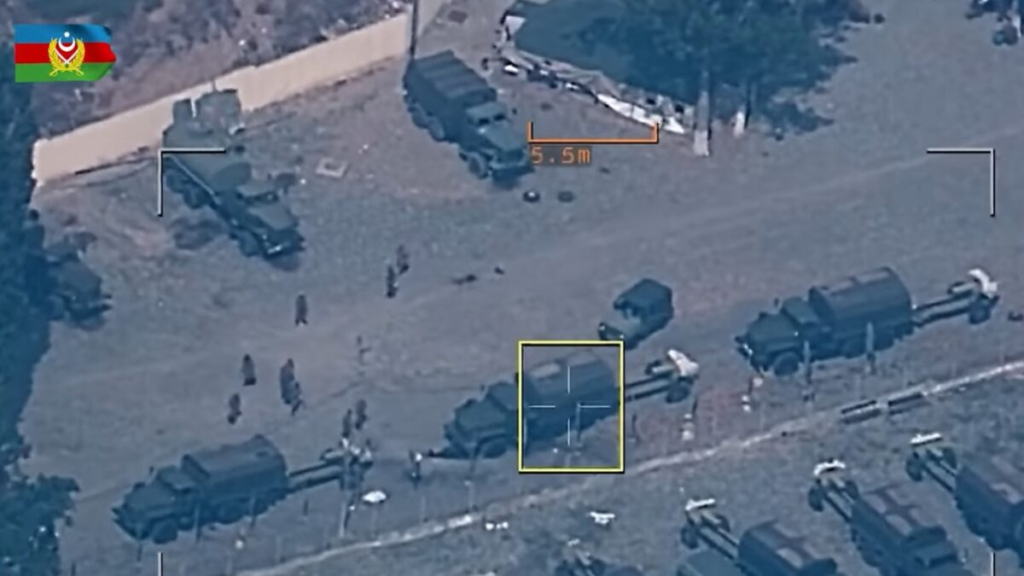
The Second Nagorno-Karabakh War was not the first conflict to feature drones, but it was the first to demonstrate their capacity to systematically dismantle a conventional, entrenched defence at a cost-exchange ratio that defied every existing model of defence economics.
Armenia’s armed forces were, by traditional metrics, formidable. They possessed layered air defences (SA-8, SA-13, Tor-M2KM), entrenched armour, and artillery positions hardened by three decades of fortification. Azerbaijan, supported by Turkish and Israeli technology, fielded a different arsenal: the Bayraktar TB2 medium-altitude long-endurance drone, Harop loitering munitions, and a sensor-to-shooter network that fused commercial satellite imagery, signals intelligence, and real-time drone video.
The results were staggering. Armenian tanks were located by drone, targeted by loitering munition, and destroyed before their crews knew they were observed. Air defence systems designed to counter manned aircraft were overwhelmed by small, slow, and cheap drones that their radars struggled to discriminate from clutter. Artillery positions were suppressed not by counter-battery fire but by precision drone strikes directed from command centers hundreds of kilometers away.
The strategic significance extended beyond the battlefield. Azerbaijan demonstrated that a mid-tier military, with a modest defence budget and access to commercial and dual-use technology, could defeat a peer competitor that had invested heavily in traditional platforms. The TB2, costing approximately $1–2 million per unit, destroyed T-72 tanks worth $2–4 million each, and did so with munitions costing tens of thousands of dollars. The Harop, a “kamikaze” drone, cost roughly $100,000 and could destroy radar installations worth tens of millions.
This was the democratization of precision strike. The monopoly on accurate, real-time targeting—previously the preserve of advanced Western militaries with satellite constellations and stealth aircraft—had been broken. A new axis of military effectiveness emerged: not the quality of the platform, but the density of the sensor network; not the thickness of the armour, but the transparency of the battlefield.
India-Pakistan (May 2025): The Compression of the OODA Loop
If Azerbaijan-Armenia revealed the vulnerability of static defences, the May 2025 India-Pakistan crisis demonstrated what happens when two nuclear-armed, near-peer competitors apply these technologies against each other—and how rapidly the calculus of air power can collapse. The conflict, though brief and geographically limited, offered a glimpse into the future of high-intensity conventional warfare between major powers.
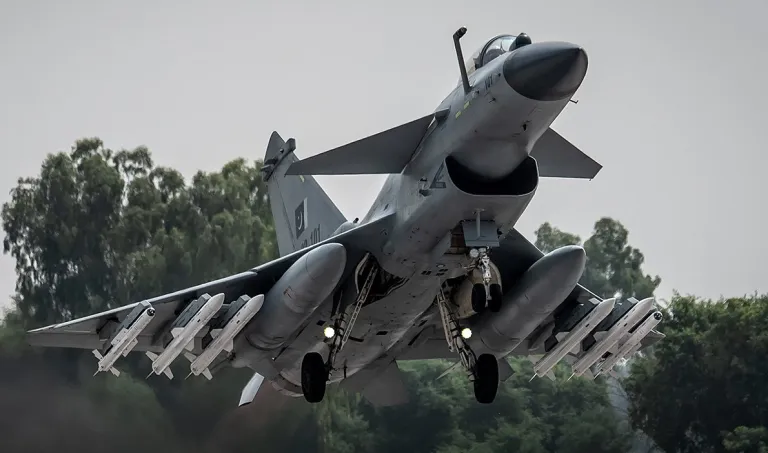
The opening hours proved decisive. On the first night, the Pakistan Air Force achieved a stunning air victory, employing J-10C and JF-17 fighters to down six Indian Air Force fighter jets—including three Rafale aircraft—using Chinese PL-15 beyond-visual-range air-to-air missiles. The engagement was executed under highly coordinated and electronically controlled conditions, with Pakistani fighters leveraging superior situational awareness to prosecute targets at stand-off distances. The loss of three Rafales, platforms India had acquired at enormous cost precisely to ensure air dominance, sent shockwaves through the Indian command structure and fundamentally altered New Delhi’s risk calculus within hours of the first shots being fired.
India’s response illustrated the other side of the equation. After losing six aircraft in aerial combat on the first night, Indian commanders made a fateful decision: they withdrew all remaining fighter jets approximately 300 kilometers from the Pakistani border. This physical retreat of manned air power from the forward edge of the battle area was unprecedented for a major air force in the 21st century. It signaled not merely tactical caution but a structural verdict: in a contested environment where adversary fighters wielded long-range AAMs and operated under dense electromagnetic management, the risk-reward calculus for manned strike platforms had inverted catastrophically.
The punishment did not end with the first night. On Day-2 of the conflict, in broad daylight, Pakistani forces destroyed the radar and command vehicles of India’s vaunted S-400 ATBM system. The destruction of a premier integrated air-and-missile defence network in daylight hours—after its location had presumably been masked, camouflaged, and protected by active defences—shattered the assumption that advanced ground-based air defence could create sanctuaries for either static installations or manned aviation. If the S-400 could be found and killed in broad daylight, no fixed node on the battlefield was safe.
Both nations had invested heavily in drone swarms, hypersonic missiles, and space-linked targeting architectures. Indian forces employed massed loitering munitions and reconnaissance-strike complexes to suppress Pakistani air defences and target forward airfields. Pakistan responded with Shaheen-III ballistic missiles, Babur cruise missiles, and indigenous drone swarms designed to saturate Indian radar and strike command nodes deep in Indian territory.
The most striking feature of the conflict was the compression of the observe-orient-decide-act (OODA) loop. In previous eras, an air campaign required days or weeks to achieve suppression of enemy air defences (SEAD) before strike aircraft could operate with acceptable risk. In May 2025, drone swarms achieved tactical SEAD in hours, creating temporary windows of airspace dominance that closed as quickly as they opened. Hypersonic missiles, traveling at Mach 5+, reduced the warning time for strategic targets from hours to minutes.
Traditional air power struggled to find its footing. Indian Su-30MKI and Rafale fighters, among the most advanced manned aircraft in the region, faced an environment where air superiority was not a condition to be established but a fleeting state to be contested continuously. The withdrawal of Indian fighters to stand-off distances underscored a harsh reality: even exquisite platforms could not survive when the adversary possessed long-range AAMs, layered surface-to-air missiles, and capable fighters operating under robust sensor management. Pakistani J-10Cs and JF-17s, despite their first-night success, faced similar constraints as Indian defences adapted. The airspace was too dangerous for persistent manned operations; the threat from BVR missiles, drones, and layered air defence was too dense.
Space played a decisive role. Both sides relied on commercial and military satellite constellations for targeting, navigation, and battle damage assessment. When India conducted limited anti-satellite demonstrations, Pakistan responded with cyber attacks on ground stations. The conflict blurred the line between space, cyber, and kinetic domains—not as a theoretical “multi-domain operations” concept, but as a practical reality where a targeting chain could be broken at any node.
The lesson was stark: in a drone-and-missile-saturated environment, the advantage does not necessarily accrue to the side with better aircraft or more tanks. It accrues to the side that can process information faster, distribute targeting data more widely, and accept the loss of disposable platforms without strategic paralysis. India’s decision to pull its fighters back 300 kilometers was not a failure of courage but an admission that platform preservation had become incompatible with platform employment—a dilemma that every major air force must now confront.
US-Iran: The Stalemate of Overmatch
The ongoing US-Iran conflict represents perhaps the most profound challenge to the armour-air power consensus because it pits the world’s most technologically advanced military against a regional power that has deliberately structured its forces to negate American advantages.
The United States entered the conflict with overwhelming superiority in every traditional metric: stealth aircraft, precision munitions, naval carrier groups, space-based intelligence, and global logistics. By the standards of 1991 or 2003, this should have produced rapid strategic decision. It did not.
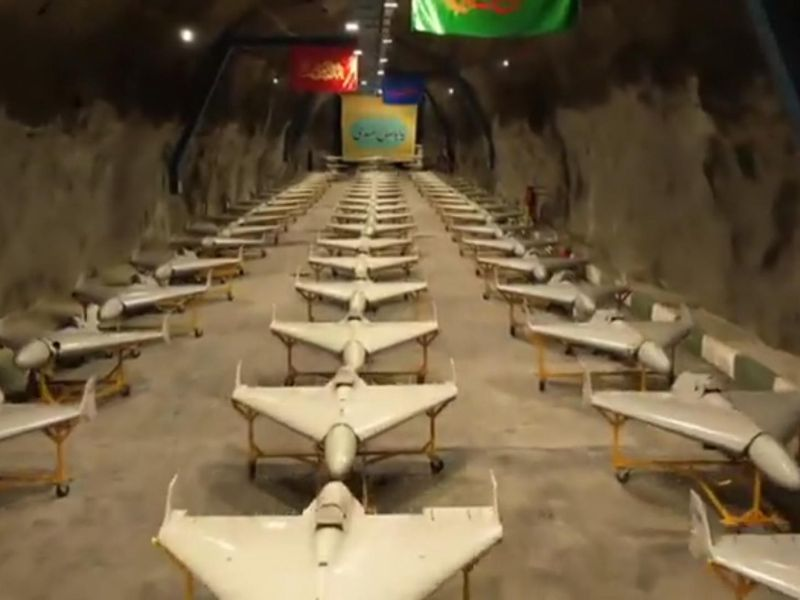
Iran’s military doctrine—developed over decades of facing American power—prioritized asymmetric resilience over symmetric confrontation. Its ballistic missile arsenal, numbering in the thousands, was dispersed in hardened tunnels and mobile launchers across the country. Its drone program, from the Shahed family to more advanced platforms, provided persistent surveillance and strike capability at ranges that threatened regional American bases. Its naval forces, centered on fast attack craft and anti-ship missiles, denied the US Navy uncontested freedom of movement in the Persian Gulf.
Most importantly, Iran’s command-and-control network was designed for survival, not efficiency. Decentralized to the point of autonomy, Iranian Revolutionary Guard Corps units could continue operations even if national command nodes were destroyed. This was not merely a tactical choice; it was a strategic one. Iran understood that American air power excels at decapitation strikes against centralized hierarchies. It built a network that could not be decapitated.
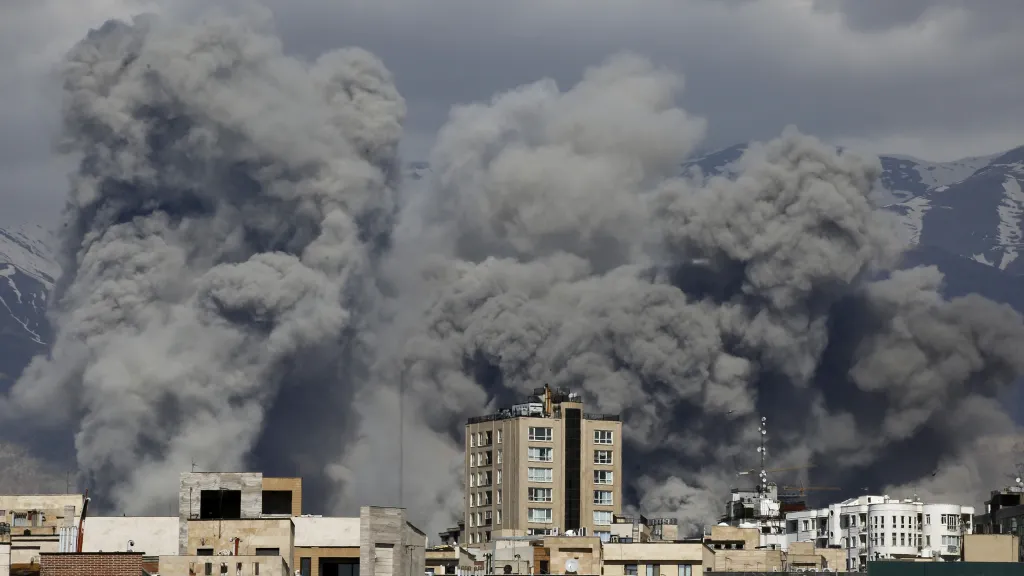
The result was a strategic stalemate. American air strikes destroyed Iranian infrastructure, degraded missile launchers, and imposed costs. But they could not compel strategic submission. Iranian drones and missiles, though individually inferior, imposed sufficient risk on American forces and regional allies to prevent the consolidation of American gains. Carrier aircraft faced missile threats that restricted their operational radius. Regional bases faced drone swarms that required expensive air defence expenditure. The cost-exchange ratio, once America’s greatest advantage, began to invert: the US was spending millions to intercept drones costing thousands.
The conflict is now being settled at the negotiating table not because either side achieved military victory, but because both recognized that the military instrument had reached its limits. For the first time in a generation, American air and naval superiority proved insufficient to impose a strategic decision against a determined, dispersed, and missile-armed adversary. This is not a failure of American will or skill; it is evidence that the technological and doctrinal paradigm that delivered victory in 1991 has encountered its structural limits.
III. The New Warfare Ecology: Characteristics of the Emerging Paradigm
The conflicts in the Caucasus, South Asia, and the Middle East are not isolated anomalies. They are early data points in a structural shift that is redefining the ecology of warfare. Several characteristics distinguish this emerging paradigm from the armour-air power era that preceded it.
Mass Over Platform
The defining weapons of the 20th century were exquisite platforms: the Tiger tank, the F-15, the aircraft carrier. Each represented a concentration of capability, survivability, and cost. Their loss was a strategic event; their preservation was a operational imperative.
The defining weapons of the emerging era are disposable systems: the $50,000 loitering munition, the $10,000 reconnaissance drone, the $1 million cruise missile. Their individual loss is irrelevant; their collective mass is decisive. A swarm of 100 cheap drones can saturate defences designed to defeat 10 expensive aircraft. A distributed network of sensors can provide persistent surveillance that no single satellite or AWACS platform can match.
This inversion has profound implications for force design. Militaries optimized around platform preservation—heavy armour, manned aviation, concentrated naval groups—face an adversary optimized around platform expendability. The side that can afford to lose assets wins, because it can impose costs that the platform-centric side cannot sustain.
Persistence Over Penetration
Cold War air power theory emphasized penetration: the ability to penetrate contested airspace, strike deep, and return. Stealth, speed, and electronic warfare were the enablers. This required exquisite, expensive platforms.
The new paradigm emphasizes persistence: the ability to hold targets at risk continuously, for hours or days, without requiring penetration. A TB2 drone orbiting at 15,000 feet cannot survive in heavily contested airspace, but it does not need to. It operates where air defences have been degraded, or it operates below the threshold of engagement, or it simply accepts attrition as a cost of doing business. Its value is not in surviving; its value is in observing, and in enabling others to strike.
This shifts the operational calculus from “how do we get in?” to “how do we stay there?” Persistence requires numbers, logistics, and software-defined adaptability. It does not require the physical survivability of the platform.
Software Over Hardware
The decisive advantage in the new warfare ecology is increasingly algorithmic. The side with better target recognition software, faster data fusion, and more resilient networks wins—not because its hardware is superior, but because its decision cycle is shorter.
This represents a fundamental challenge to traditional defence procurement. Military hardware is designed on decade-long cycles, fielded for thirty years, and upgraded incrementally. Software, by contrast, evolves on commercial timelines: months, weeks, even days. A drone purchased in 2020 can be rendered obsolete in 2025 not by a better drone, but by better AI on the same airframe.
The implication is that defence industrial bases must shift from hardware manufacturing to software integration. The platform becomes the substrate; the software becomes the capability. This favors nations with vibrant commercial technology sectors and agile procurement systems, and disadvantages those with rigid, state-controlled defence industries.
The Death of Sanctuary
Perhaps the most consequential characteristic of the new ecology is the disappearance of the rear area. In previous eras, logistics hubs, command posts, and even national capitals enjoyed a measure of sanctuary by virtue of distance. The enemy lacked the range, precision, or survivability to strike deep.
Drones and missiles have collapsed that distance. A $100,000 cruise missile can strike a capital from 1,000 kilometers away. A drone swarm can attack a logistics depot without warning. A hypersonic weapon can reach a command center before its occupants can reach shelter.
This has cascading effects. Concentrated logistics—the foundation of industrial-age warfare—become vulnerabilities. The divisional headquarters, the ammunition dump, the airfield, the port: these are no longer protected by their location. They are protected only by their invisibility, their mobility, or their active defence. “Fight dispersed, survive concentrated” is no longer a special operations mantra; it is becoming the default condition of conventional warfare.
The Erosion of Air Power Monopoly
For a generation, air forces claimed a unique strategic value proposition: only they could deliver precision effects at range with acceptable risk. Ground forces could not reach deep; naval forces could not operate inland; missiles were too expensive and too inflexible.
Drones and missiles have eroded this monopoly. A drone can perform close air support without risking a pilot. A cruise missile can strike a strategic target without requiring air superiority. A loitering munition can conduct interdiction without a manned sortie.
This does not mean air power is obsolete. Manned aircraft retain advantages in contested airspace, complex targeting, and nuclear delivery that drones have not yet matched. But the air force’s claim to be the indispensable arbiter of strategic outcomes is weakening. When a ground unit can launch its own precision strike, when a navy can fire hypersonic missiles from 500 miles away, the air force becomes one provider of effects among many—not the prerequisite for all others.
IV. Implications by Stakeholder
Governments and Policymakers: The Economics of Deterrence
For national governments, the new warfare ecology presents an existential budgetary and strategic challenge. The defence economics of the platform era were linear: more tanks, more aircraft, more ships meant more capability. The defence economics of the distributed era are exponential: more sensors, more drones, more missiles create network effects that outpace linear platform investments.
Cost-Exchange Ratios: The following table illustrates the inversion:
Table
| Capability | Traditional Platform Approach | Distributed Approach | Cost Ratio |
|---|---|---|---|
| Strategic strike (1 target) | 4x F-35 + tankers + EW support ($200M sortie cost) | 10x cruise missiles ($10M total) | 20:1 |
| Armour kill (1 tank) | 1x Apache + munitions ($25M platform, $100K missile) | 1x TB2 + MAM-L ($2M platform, $20K munition) | 12:1 |
| SEAD/DEAD (1 radar) | 4x F-16 + HARM ($80M sortie cost) | 3x Harop loitering munitions ($300K total) | 266:1 |
| Persistent ISR (24 hrs) | 1x JSTARS ($300M platform, $15K/hr) | 6x tactical drones ($3M total, $500/hr) | 100:1 |
These ratios are approximate and scenario-dependent, but they capture the essential trend: distributed, disposable systems deliver comparable or superior effects at a fraction of the cost. For governments facing fiscal constraints—and all governments do—this creates pressure to shift procurement away from exquisite platforms toward massable, software-defined systems.
Deterrence Theory: The new ecology complicates deterrence. Cold War deterrence relied on the credible threat of escalation: if you attack, I will respond with overwhelming force. But when both sides possess dense networks of precision strike capabilities, the threshold for “attack” becomes ambiguous. Is a drone swarm an act of war? Is a cyber intrusion into targeting software? Is the deployment of loitering munitions along a border a defensive measure or a prelude to offensive action?
Mutual vulnerability replaces mutual deterrence. In a world where both sides can strike each other’s capitals with cheap, accurate weapons, the incentive for preemption increases. Stability requires not just the balance of terror, but the balance of restraint—a far more delicate equilibrium to maintain.
Alliance Structures: Traditional alliances were built on the exchange of security for basing rights and burden-sharing. The new ecology may strain these arrangements. If precision missiles can strike bases from hundreds of miles away, the value of forward basing decreases. If drone swarms can be launched from commercial vessels or trucks, the need for fixed infrastructure diminishes. Allies may question whether hosting American forces provides security or merely paints a target on their territory.
Industrial Base: The platform era favored concentrated, state-controlled defence industries capable of manufacturing complex hardware. The distributed era favors agile, software-capable industries that can iterate rapidly. Governments must decide whether to protect legacy defence industries or to open procurement to commercial technology providers—a politically fraught choice with implications for employment, sovereignty, and security.
Defence Analysts and Strategists: New Frameworks for a Transparent Battlefield
For the analytical community, the new warfare ecology demands a fundamental rethinking of how military effectiveness is measured and modeled.
Beyond Loss-Exchange Ratios: The traditional metric of military success—the loss-exchange ratio (LER)—assumes that warfare is about the attrition of enemy platforms. In the distributed era, the relevant metric may be the “cost-imposition ratio”: how much cost can I impose on the enemy per dollar spent? A side that loses 100 drones but destroys 10 enemy tanks has achieved a favorable exchange, even if its LER is poor.
Wargaming the Transparent Battlefield: Most wargaming assumes fog and friction: imperfect information, delayed communications, uncertain outcomes. The new battlefield is increasingly transparent. Commercial satellite imagery, social media, drone video, and signals intelligence create a level of situational awareness that Clausewitz could not have imagined. Analysts must model not how to find the enemy, but how to operate when both sides know where the other is. This requires new concepts: signature management, deception in an age of ubiquitous sensing, and the operational art of invisibility.
Cyber-Electronic-Kinetic Convergence: The targeting chain for a drone strike may begin with a commercial satellite, proceed through a cloud-based data fusion platform, and terminate with a kinetic impact. At any point, the chain can be disrupted electronically or cybernetically. Analysts can no longer treat these domains separately. A cyber vulnerability in a drone’s navigation software is a kinetic vulnerability on the battlefield. An electronic warfare capability that jams drone control links is a strategic asset.
The Problem of Strategic Assumptions: Much strategic analysis still assumes that major war between great powers will resemble World War II or the Gulf War: a phase of maneuver followed by decisive engagement. The new ecology suggests a different model: persistent, low-level attrition; continuous competition below the threshold of declared war; and strategic outcomes achieved through cumulative tactical effects rather than operational breakthroughs.
Commanders: Dispersal, Decentralization, and the Vulnerability of Nodes
For military commanders, the new ecology imposes requirements that run counter to decades of organizational culture.
Decentralized Command: Centralized command was the hallmark of industrial-age warfare. The division commander directed the brigades; the brigade commander directed the battalions. Information flowed up; orders flowed down. This worked because the commander possessed the best situational awareness and because communications were reliable.
In the new ecology, centralized command becomes a vulnerability. A divisional headquarters is a high-value target that cannot hide. A commander who concentrates decision-making becomes a single point of failure. The alternative is “mission command” taken to its logical extreme: small, autonomous units equipped with their own sensors, their own drones, and their own precision fires, operating within broad strategic guidance but making tactical decisions independently.
This requires trust, training, and a tolerance for initiative that many militaries—particularly those with authoritarian political cultures—struggle to inculcate. But the alternative is paralysis: a command structure that cannot function because its nodes have been destroyed or its communications jammed.
Signature Management Over Armour Protection: For a century, protection meant physical hardening: thicker tank armour, hardened aircraft shelters, fortified command posts. In the new ecology, protection means signature management: the ability to avoid detection. A tank with active camouflage and low thermal signature is more survivable than one with reactive armour. A command post that emits no electronic signature is safer than one buried in concrete.
This shifts procurement priorities and tactical behavior. It rewards investments in decoys, deception, and emissions control. It penalizes the reliance on heavy, signature-intensive platforms.
The Vulnerability of High-Value Nodes: Aircraft carriers, airfields, and divisional headquarters remain essential, but they are no longer secure. A carrier group can be held at risk by anti-ship ballistic missiles. An airfield can be cratered by precision strikes. A headquarters can be destroyed by a drone swarm.
Commanders must plan for the loss of these nodes. Operations must be designed to continue even if the carrier is damaged, the airfield is closed, or the headquarters is destroyed. This requires pre-positioned supplies, redundant communications, and forces trained to operate in isolation.
“Fight Dispersed, Decide Concentrated”: This paradoxical concept captures the new operational art. Forces must be physically dispersed to survive—small units, mobile platforms, distributed logistics. But effects must be concentrated at the decisive point—massed drone strikes, synchronized missile salvos, converging cyber and kinetic attacks. The challenge for commanders is to achieve concentration of effect without concentration of force.
Warriors at the Tactical Edge: The Human Element in an Autonomous Age
For the individual soldier, sailor, or airman, the new warfare ecology is both empowering and dehumanizing.
Lethality vs. Survivability: The individual warrior is more lethal than ever. A squad with commercial drones and precision mortar rounds can destroy targets that previously required artillery batteries or air strikes. But the individual is also more vulnerable than ever. There is no rear area; there is no safe zone. The drone that the squad uses to find the enemy is the same type of drone the enemy uses to find the squad.
The Psychological Impact of Autonomous Threats: Human beings are adapted to threats they can see, understand, and potentially negotiate with. A drone swarm offers none of these. It cannot be intimidated; it does not sleep; it does not hesitate. The psychological stress of facing autonomous threats is qualitatively different from facing human adversaries. Militaries must develop new training protocols to inoculate personnel against this stress, and new support structures to address the psychological casualties it will inevitably produce.
Human-Machine Teaming: The warrior of the future will not fight alone. They will fight alongside, through, and in coordination with autonomous systems. This requires new skills: the ability to manage multiple drones, to interpret AI-generated targeting recommendations, to maintain situational awareness when critical tasks are delegated to machines. Training must evolve from physical conditioning and weapons proficiency to human-machine interface management, data literacy, and rapid decision-making under algorithmic assistance.
From Closing to Orchestrating: The traditional infantry ethos emphasizes closing with and destroying the enemy through physical courage and direct fire. The new ecology shifts the emphasis to directing and orchestrating distributed fires. The soldier may never see the enemy they destroy. They may launch a drone, mark a target, and watch a missile arrive from a platform they cannot see. This is not less demanding than close combat, but it is different. It requires analytical skill, patience, and the ability to operate in a networked, multi-domain environment.
V. Forward Trajectory: The Next Decade
Looking ahead, the trends visible in the Caucasus, South Asia, and the Middle East will accelerate. Several developments are likely to define the next phase of this transformation.
AI-Enabled Autonomous Kill Chains: The current generation of drones and missiles requires human authorization for lethal strikes. The next generation will not. Artificial intelligence will enable target recognition, prioritization, and engagement at machine speed. The OODA loop, already compressed from days to minutes, will be compressed to seconds. The ethical and legal implications are profound: can a machine be held accountable for a war crime? Can autonomous systems discriminate between combatants and civilians? These questions are no longer theoretical; they are procurement decisions being made today.
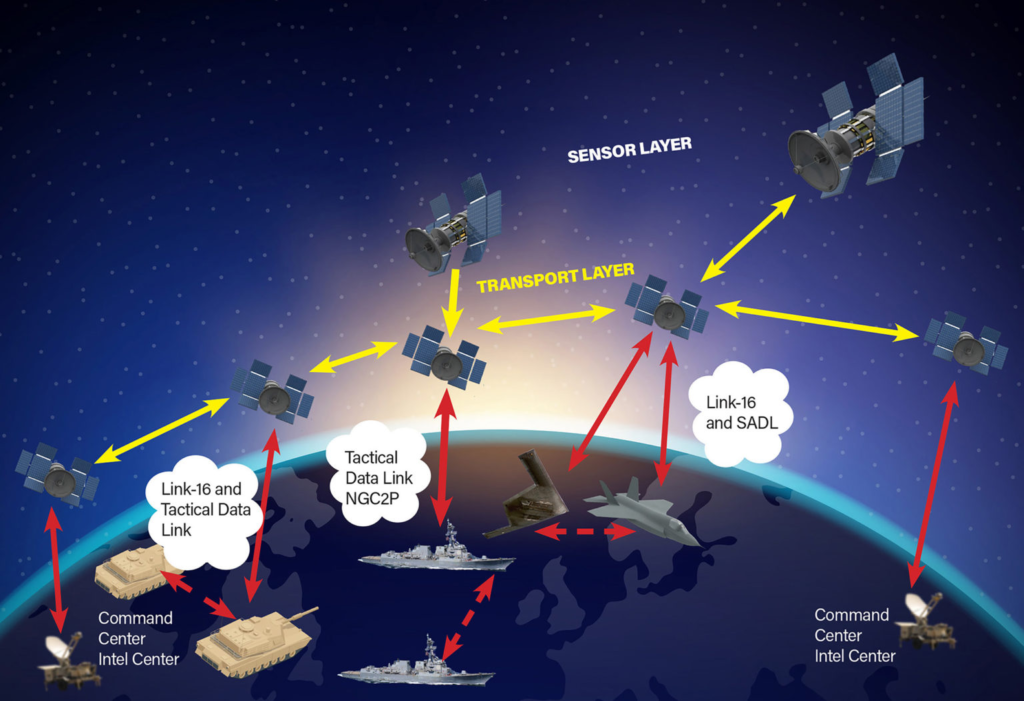
Space-Based Targeting Mesh: The proliferation of commercial and military small satellites will create a persistent, global targeting mesh. No military movement will be unobserved; no fixed installation will be hidden. The side that can process this data fastest—using AI and edge computing—will possess a decisive advantage. Space will become not merely a supporting domain but the central nervous system of warfare.
Energy Weapons and Counter-Drone Architecture: As drones and missiles proliferate, so will defences against them. Directed energy weapons (lasers), high-power microwaves, and electromagnetic pulse systems will form layered counter-drone architectures. The offense-defence competition will intensify, with each side seeking to overwhelm or outlast the other’s defensive capacity.
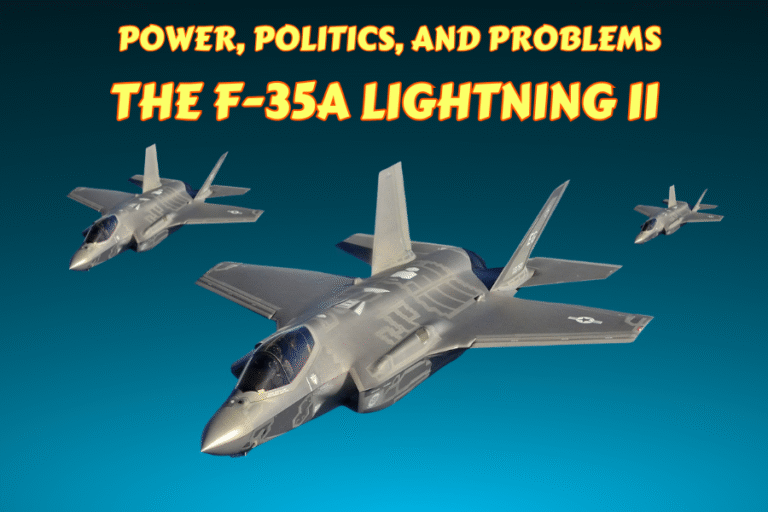
The Obsolescence Question: Will manned fast jets and heavy armour become obsolete? Not immediately, and not entirely. There will remain scenarios—contested airspace against peer adversaries, close combat in complex terrain—where manned platforms retain unique value. But their share of the military burden will shrink. The F-35 and the Abrams tank may be the last of their kind: exquisite platforms fielded in an era that demanded exquisiteness, soon to be supplemented or supplanted by swarms of cheaper, more adaptable systems.
VI. Conclusion: Revolution, Evolution, and the Unchanging Nature of War
Is this a revolution or an evolution? The honest answer is both. The technologies are revolutionary: autonomous systems, hypersonic missiles, AI-enabled targeting. But the underlying dynamics are evolutionary extensions of long-standing trends—the quest for precision, the expansion of the battlefield in depth, the substitution of capital for labor.
What must be unlearned is the assumption that victory flows from the concentration of exquisite capability. What remains valid is the enduring nature of war: it is a contest of wills, characterized by fog, friction, and chance. Technology changes how wars are fought; it does not change what war is.
For governments, the imperative is to restructure defence economics around distributed, software-defined systems without sacrificing the industrial capacity to surge in existential conflict. For analysts, the task is to build new frameworks that capture the logic of network-centric, transparent warfare. For commanders, the challenge is to lead dispersed forces in an environment where concentration is fatal and decentralization is essential. For warriors, the requirement is to master human-machine teaming while preserving the moral and psychological resilience that no algorithm can replicate.
The armour column and the manned fighter wing will not disappear from the battlefield tomorrow. But their era of dominance is ending. The future belongs to the side that can see the most, decide the fastest, strike the cheapest, and survive the longest in a world where there are no sanctuaries and no safe assumptions.
The death of the sanctuary is the birth of a new kind of war. Those who recognize it first will shape it. Those who deny it will be shaped by it.
____________________________________________________________________________