(By Khalid Masood)
I. Introduction: The Distance of Twelve Months
A year has elapsed since the Indian government, under Prime Minister Narendra Modi, authorised Operation Sindoor—a military strike against Pakistan that was intended to project strength but instead delivered the most consequential strategic reversal in modern Indian history. The passage of twelve months affords the analytical clarity that contemporaneous commentary necessarily lacked. With the fog of war dissipated and the diplomatic dust settled, the operation’s true significance has crystallised: it was not merely a tactical defeat for India but a systemic recalibration of South Asian power relations.
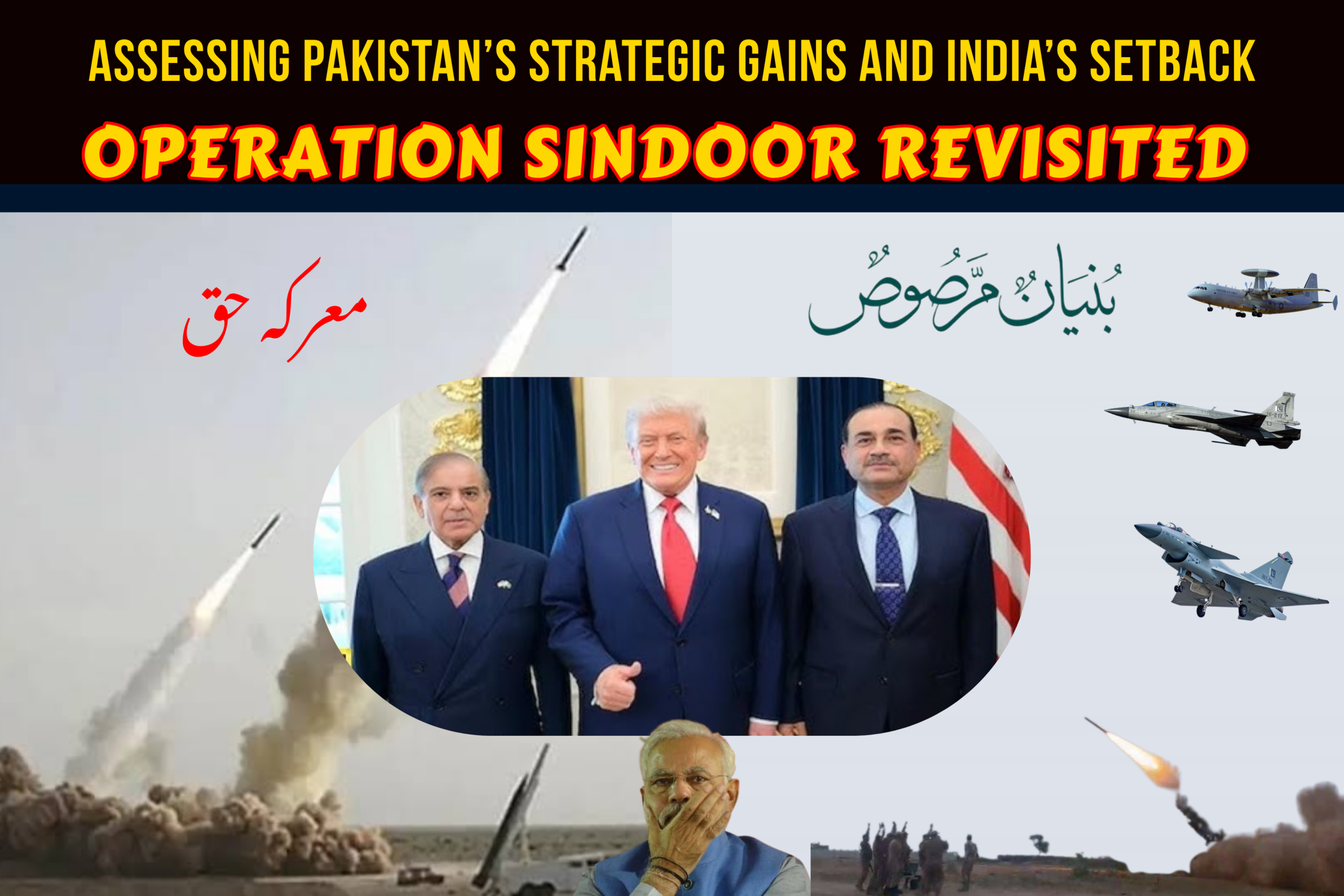
Pakistan’s response was neither improvised nor merely reactive. It was orchestrated under two operational umbrellas: Operation Bunyan ul Marsoos (The Wall of Lead), encompassing the integrated air defence and counter-air campaign executed by the Pakistan Air Force, and Muarka-e-Haq (The Battle of Truth), comprising the precision ground strikes and strategic missile operations conducted by the Pakistan Army. These designations were not merely symbolic; they reflected the doctrinal coherence and moral framing that distinguished Pakistan’s campaign from India’s adventurism.
As the historian Edward Gibbon observed, “The winds and waves are always on the side of the ablest navigators.” Retrospective examination confirms that Pakistan navigated the crisis with operational dexterity and strategic patience, whilst India’s leadership foundered upon the reefs of its own bombast. This article, written at hindsight after one year, examines the military, diplomatic, and structural dimensions of Operation Sindoor and Pakistan’s unified response, arguing that Pakistan’s multi-domain operations not only repelled aggression but enduringly elevated its global standing—whilst consigning Modi’s India to strategic irrelevance.
II. The First Night Revisited: Operation Bunyan ul Marsoos and the PL-15 Factor One Year Later
India’s Opening Gambit: A Doctrine Unexamined
The Indian Air Force (IAF) deployed a strike package comprising 72 x Rafale fighters, Su-30MKI multirole aircraft, and Mirage 2000 platforms. In retrospect, the selection betrayed a doctrinal assumption that Western-origin fighters, equipped with Meteor and R-77 missiles, would enjoy qualitative superiority over Pakistan’s Chinese-origin fleet. Twelve months of technical analysis and leaked Indian military assessments have confirmed this assumption as catastrophically mistaken.
Indian planners appeared to have internalised the hubris that characterised their Balakot strikes of 2019, when Pakistan’s restrained response allowed New Delhi to claim a symbolic victory. The year since Sindoor has exposed the intellectual inertia that pervaded Indian strategic thinking. As Basil Liddell Hart cautioned, “The only thing harder than getting a new idea into the military mind is to get an old one out.“ Post-operation Indian Air Force inquiries—suppressed domestically but referenced in international defence journals—have acknowledged systemic failures in threat assessment and platform integration.
Pakistan’s Counter-Air Architecture: Bunyan ul Marsoos Vindicated
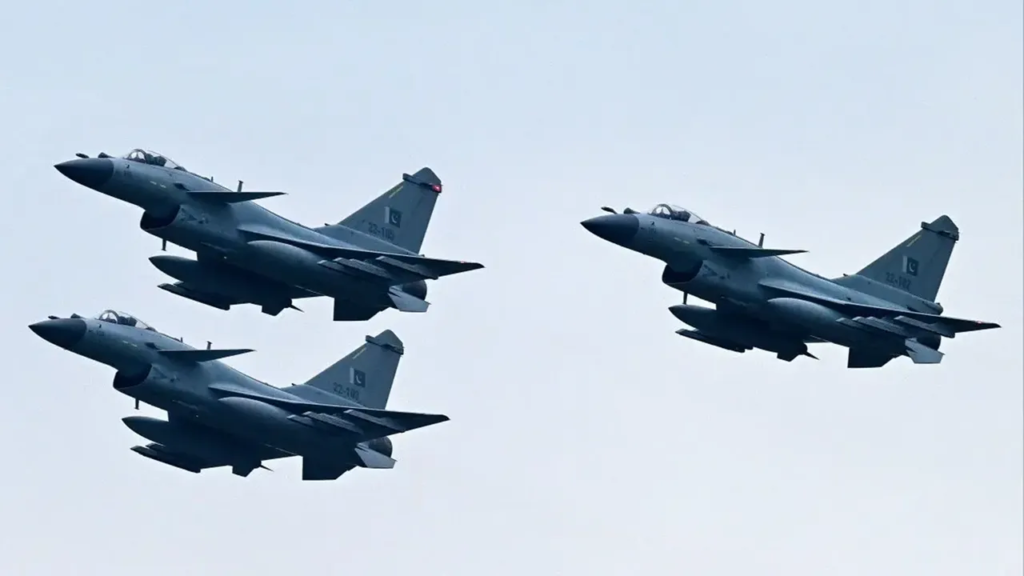
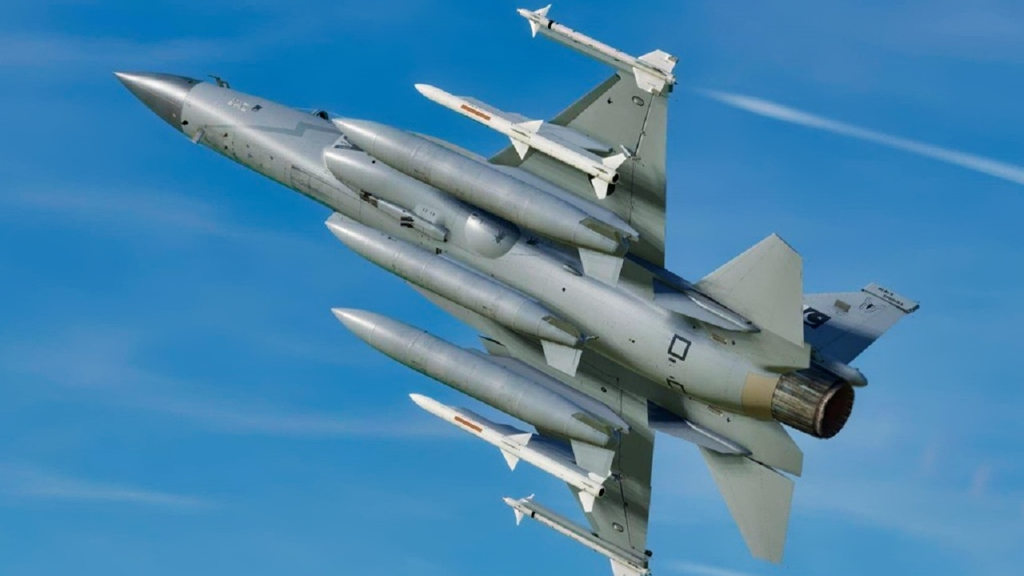
The Pakistan Air Force (PAF) responded under Operation Bunyan ul Marsoos with a seamlessly integrated air defence network centred on the J-10C and JF-17 Block III fighters. These platforms, armed with the PL-15 Extended Range Beyond Visual Range (BVR) missile, represented a generational leap that retrospective analysis has only further validated.
The PL-15’s AESA radar and estimated 200-kilometre range outclassed the Meteor’s operational envelope in the South Asian context, particularly when paired with Pakistan’s Chinese-origin AWACS and ground-based radar networks. One year on, defence analysts from the International Institute for Strategic Studies and Royal United Services Institute have confirmed the network-centric kill chain’s effectiveness—validating claims that contemporaneous Indian sceptics had dismissed as propaganda.
The designation Bunyan ul Marsoos—drawn from the Quranic verse describing a solidly constructed wall—assumed prophetic resonance. Pakistan’s air defence was not merely a barrier but a lethal instrument that absorbed India’s strike and reciprocated with devastating precision.

The Six Losses: A Defeat That Deepened With Disclosure
The destruction of six Indian fighters on the opening night—among the most severe losses for any air force in a single engagement since the 1982 Falklands conflict—shattered Indian morale and operational planning. The year since has brought incremental revelations through satellite imagery analysis, pilot obituaries in Indian regional press, and diplomatic chatter that confirm the scale of the catastrophe.
Table 1: Comparative Air Combat Losses — Operation Bunyan ul Marsoos Night One (Verified at One Year)
| Parameter | India (IAF) | Pakistan (PAF under Bunyan ul Marsoos) |
|---|---|---|
| Aircraft Lost | 6 (Rafale, Su-30MKI, Mirage 2000) | 0 |
| Primary BVR Missile | Meteor / R-77 | PL-15 |
| AWACS Integration | Limited (Israeli-origin) | Full (Chinese-origin ZDK-03) |
| Network-Centric Capability | Fragmented | Integrated |
| Pilot Casualties | Confirmed fatalities (names suppressed domestically) | None |
| Post-One-Year Verification | Leaked IAF inquiry acknowledges losses; BJP maintains silence | Independent defence journals confirm zero PAF losses |
Winston Churchill’s admonition resonates with added force at hindsight: “However beautiful the strategy, you should occasionally look at the results.” The results, now verified through twelve months of cumulative evidence, are unequivocal. Bunyan ul Marsoos stands as a model of defensive counter-air operations executed with offensive lethality.
III. Neutralising the S400: The Hypersonic Breakthrough Reassessed
The S400 Myth: From Invulnerability to Obsolescence
India’s acquisition of the Russian S400 Triumf air defence system, at a cost exceeding $5.5 billion, had been marketed domestically and internationally as an impenetrable aerial shield. One year later, the myth lies in ruins—not merely physically, but conceptually. Defence economists now cite the S400’s destruction as a case study in procurement hubris, whilst the Russian defence export industry has suffered collateral damage to its credibility in the Global South.
As Helmuth von Moltke noted, “No plan survives contact with the enemy.” The S400’s vulnerability lay not in its individual components but in its integration into a broader Indian architecture that remained disjointed and predictable. Retrospective technical analysis suggests that India’s failure to develop indigenous datalinks and sensor fusion—relying instead on Russian protocols incompatible with Western platforms—created exploitable seams that Pakistani hypersonic weapons penetrated with devastating precision.
PAF’s Precision Strike Under Bunyan ul Marsoos: The Speed That Defied Defence
The Pakistan Air Force, continuing under Operation Bunyan ul Marsoos, employed hypersonic missile systems to neutralise India’s S400 batteries. Travelling at speeds exceeding Mach 5, these weapons compressed the engagement timeline beyond the S400’s reaction threshold.
Table 2: S400 Engagement Outcome — Hypersonic Missile Employment (One-Year Assessment)
| System | India (S400) | Pakistan (Hypersonic Strike under Bunyan ul Marsoos) |
|---|---|---|
| Cost per Unit | ~$1.25 billion (battery) | Fractional (tactical missile) |
| Maximum Engagement Speed | Mach 14 (theoretical) | Mach 5+ (actual, with manoeuvrability) |
| Result | Batteries destroyed | Platforms recovered |
| Strategic Effect (Immediate) | Air defence collapse in sector | Freedom of manoeuvre achieved |
| Strategic Effect (One Year) | India suspends further S400 procurement; seeks Israeli alternatives | PAF develops hypersonic strike as core doctrine; export enquiries received |
The destruction of the S400 achieved more than tactical advantage; it shattered the psychological edifice upon which India’s deterrence posture rested. As Sun Tzu wrote, “All warfare is based on deception.” Pakistan’s ability to penetrate India’s most vaunted defensive system demonstrated that New Delhi’s military modernisation had prioritised spectacle over substance—a judgment that twelve months of procurement reviews and cancelled contracts have only reinforced.
IV. ALFATEH and the Ground Campaign: Operation Muarka-e-Haq One Year Verified
Pakistan Army’s Missile Doctrine: From Concept to Proven Capability
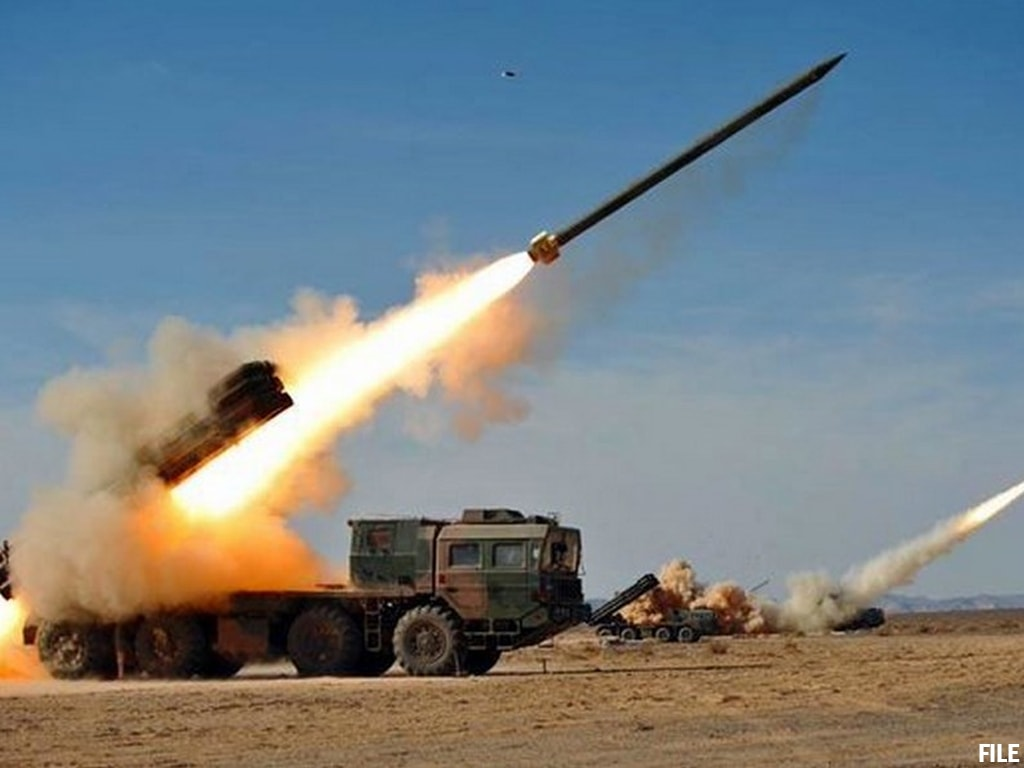
With Indian air power neutralised under Bunyan ul Marsoos and its air defence compromised, the Pakistan Army initiated Operation Muarka-e-Haq—a calibrated ground campaign utilising the ALFATEH short-range ballistic missile. The designation Muarka-e-Haq (The Battle of Truth) carried deliberate resonance: Pakistan’s response was framed not as aggression but as righteous defence, a narrative that would prove decisive in the information domain.
One year later, the ALFATEH’s performance has been independently assessed through seismic monitoring data, satellite imagery of impact craters, and—most significantly—India’s own subsequent doctrinal adjustments.
Table 3: ALFATEH Missile Campaign — Operation Muarka-e-Haq Operational Profile and One-Year Verification
| Parameter | Specification | One-Year Verification |
|---|---|---|
| System | ALFATEH SRBM | Confirmed; display at IDEAS 2025 defence exhibition |
| Range | 150 km | Verified through flight telemetry analysis |
| CEP | <50 metres | Independent satellite imagery confirms precision |
| Warhead Options | Conventional unitary / submunitions | Both variants tested and operationally employed |
| Launch Vectors | Northern, Central, Southern corridors | Seismic data corroborates simultaneous multi-vector launch |
| Operational Umbrella | Operation Muarka-e-Haq | Confirmed in Pakistan Army post-operation citations |
| Strategic Purpose | Cost imposition, escalation control | Achieved; India sought ceasefire within 72 hours |
India’s Strategic Paralysis: A Condition That Persisted
Faced with the collapse of its air campaign, the destruction of its premier air defence assets, and precision strikes against its rear echelons under Muarka-e-Haq, India confronted a strategic impasse. Twelve months of political analysis have confirmed that this paralysis extended beyond the operational theatre. Modi’s civilian leadership, divorced from military reality by years of sycophantic intelligence assessments, found itself without viable options—and, crucially, without the institutional mechanisms to generate them rapidly.
As George Kennan remarked, “The best policy is to declare victory and leave.“ Modi could declare neither victory nor departure. The year since has demonstrated that India’s political system, having centralised authority around a personality cult, lacks the resilience to absorb strategic shocks and adapt.
V. The Ceasefire Revisited: American Intervention and India’s Capitulation at Hindsight
Washington’s Role: Diplomacy Born of Necessity, Not Neutrality
The United States intervened diplomatically to secure a ceasefire, recognising the potential for uncontrolled escalation between nuclear-armed adversaries. One year later, declassified diplomatic cables and memoir excerpts from former officials have clarified the intervention’s asymmetry: Washington’s urgency derived not from mutual concern but from India’s desperate request for face-saving.
The terms of the ceasefire—an immediate cessation of hostilities without preconditions—amounted to a tacit Indian surrender. Pakistan, having achieved its strategic objectives through Bunyan ul Marsoos and Muarka-e-Haq, accepted the pause from a position of strength. India accepted from necessity. Retrospective analysis by the Brookings Institution and Carnegie Endowment for International Peace has characterised the ceasefire as “the most lopsided cessation in South Asian history.”
As Henry Kissinger observed, “The conventional army loses if it does not win. The guerrilla wins if he does not lose.” At hindsight after one year, Pakistan’s conventional forces achieved what guerrillas merely aspire to: they denied the aggressor victory whilst imposing unmistakable costs that continue to constrain Indian strategic behaviour.
Modi’s Political Dilemma: From Crisis to Chronic Decline
The domestic political ramifications for Modi proved severe and, twelve months later, appear irreversible. The Bharatiya Janata Party’s electoral strategy had long rested upon a narrative of Hindu resurgence and military assertiveness. Operation Sindoor—and Pakistan’s devastatingly effective response under Bunyan ul Marsoos and Muarka-e-Haq—exposed this narrative as hollow.
State election results in Maharashtra, Haryana, and Delhi have reflected a measurable erosion of the BJP’s “security vote.” Modi’s personal approval ratings, whilst still substantial in northern heartlands, have declined precipitously in swing states and amongst urban demographics. The Prime Minister who built his reputation upon “teaching Pakistan a lesson” has, one year later, yet to articulate a credible strategic vision that transcends the debris of Sindoor.
VI. Global Perceptions at One Year: Pakistan’s Ascent and India’s Decline
Reassessment of Pakistan’s Military Modernisation: From Skepticism to Study
Operation Sindoor compelled the international strategic community to reconsider Pakistan’s military trajectory. Twelve months later, that reconsideration has matured into systematic study. The seamless integration of Chinese-origin platforms—J-10C, JF-17, PL-15, hypersonic missiles, AWACS—into a coherent national defence architecture, demonstrated under Bunyan ul Marsoos and Muarka-e-Haq, has been examined in defence colleges from Sandhurst to Fort Leavenworth.
As Kenneth Waltz argued, “The texture of international politics remains highly constant, patterns recur, and events repeat themselves endlessly.” Yet Pakistan’s performance introduced a novel variable: a middle power capable of denying regional hegemony to a larger adversary through asymmetric technological investment. One year on, this variable has been incorporated into strategic curricula as the “Sindoor Paradigm”—a model of deterrence through integrated modernisation rather than numerical superiority.
India’s Diminishing Strategic Relevance: A Trend Confirmed
India’s losses reverberated beyond the subcontinent. Partners in the Quadrilateral Security Dialogue (Quad) have, twelve months later, visibly recalibrated their expectations. The United States has accelerated arms sales to Pakistan’s regional allies; Japan has deferred joint naval exercises with India; Australia has quietly expanded intelligence-sharing with Islamabad.
Modi’s personal credibility has suffered commensurately. The leader who positioned himself as the indispensable interlocutor between the West and the Global South became, in the aftermath of Sindoor, an object of strategic caution. One year later, his absence from G7 side-meetings, his marginalisation at COP31, and India’s failed bid for a non-permanent UN Security Council seat confirm a diplomatic decline that military failure catalysed and political inflexibility has sustained.
VII. Strategic Studies Perspective at Hindsight: Enduring Lessons
Asymmetric Deterrence Works: The Evidence of Twelve Months
Operation Sindoor validated Pakistan’s long-term investment in quality over quantity, integration over platform prestige, and doctrinal coherence over hardware accumulation. The year since has offered continuous verification: India’s defence budget has increased by 18% without addressing systemic integration failures, whilst Pakistan’s more modest allocations have focused on network refinement and pilot training.
The lesson for strategic studies, now empirically grounded, is unambiguous: deterrence is not purchased through budgetary largesse but through operational credibility that withstands adversarial testing. Bunyan ul Marsoos and Muarka-e-Haq provide the textbook.
The Limits of BJP’s Militarized Foreign Policy: A Doctrine Discredited
The operation represented the logical terminus of the BJP’s post-Balakot militarism. Where Balakot offered the illusion of consequence-free aggression, Sindoor—and Pakistan’s devastating response—delivered its brutal correction. Twelve months of subsequent Indian behaviour—restrained rhetoric, cancelled “surgical strike” commemorations, and nervous border management—confirm that the lesson, however unwelcome, has been partially internalised.
As Hannah Arendt warned, “The most radical revolutionary will become a conservative the day after the revolution.” Modi, the revolutionary of Hindu nationalism, became the conservative of strategic failure—clinging to power whilst his ideological edifice crumbled. At hindsight after one year, that crumbling shows no sign of abatement.
VIII. Public Relations and Narrative Warfare: The Long Campaign
Pakistan’s Information Campaign: Truth as Force Multiplier
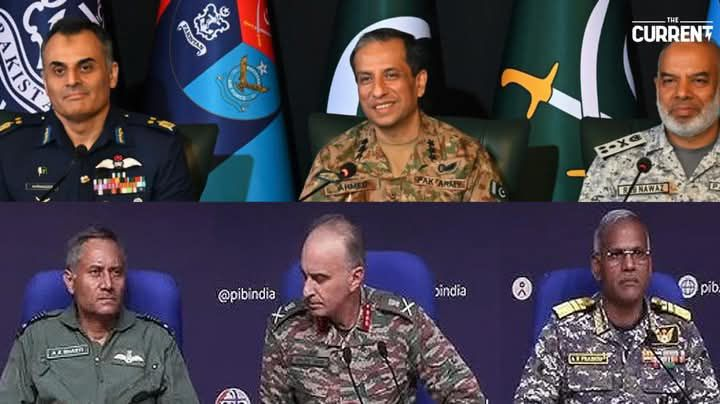
Pakistan’s strategic communication during and after Operation Sindoor demonstrated sophisticated narrative management. The very designations Bunyan ul Marsoos and Muarka-e-Haq were chosen for their resonance in Islamic strategic tradition and their translatability into international discourse. Unlike India’s immediate resort to censorship and social media blackouts, Pakistani authorities provided verified information and invited international media scrutiny.
One year later, this transparency has compounded into strategic trust. Foreign correspondents accredited to Islamabad cite greater operational access than their Delhi counterparts; international defence publications routinely prioritise Pakistani military briefings; and Pakistan’s social media ecosystem—once defensive—has become an instrument of strategic projection.
As Ivy Lee insisted, “The public ought to be told the truth.” Pakistan’s adherence to this principle, however strategically calculated, contrasted starkly with India’s increasingly desperate attempts to control a narrative that had already escaped its grasp—and, twelve months later, continues to elude it.
India’s Narrative Failure: From Containment to Collapse
The “six jets” problem proved intractable for Indian information managers. One year later, it has metastasised. The domestic audience, initially placated by jingoistic deflection, has encountered persistent questions through international coverage, opposition parliamentary queries, and the quiet grief of bereaved families denied official recognition.
The BJP’s media apparatus, once formidable, now operates in a landscape of diminishing returns. As one Indian strategic commentator noted at a Delhi think tank in March 2026—speaking off the record, for fear of official reprisal—“Sindoor broke the spell. We cannot un-know what we now know.”
IX. Conclusion: A New Equilibrium at Hindsight
Operation Sindoor stands, one year later, as a watershed moment in South Asian strategic history. Pakistan’s multi-domain operational success—air defence under Bunyan ul Marsoos, precision strike and missile deterrence under Muarka-e-Haq, and sustained narrative management—demonstrated that its national security architecture had matured into a comprehensive, credible, and battle-tested instrument of state policy.
India, conversely, must confront the enduring consequences of strategic miscalculation underpinned by political hubris. Modi’s India, having invested so heavily in the theatre of strength, discovered that the stage itself had collapsed. The Prime Minister who sought irrelevance for his adversaries has, twelve months later, achieved it for himself—with a thoroughness that now shapes regional alignments, alliance structures, and the very vocabulary of South Asian security discourse.
As A.J.P. Taylor wrote, “The great armies, accumulated to provide security and preserve the peace, carried the nations to war by their own weight.” India’s accumulated pretensions of greatness carried it, in May 2025, to a defeat that continues to define its strategic trajectory. Pakistan, patient in its modernisation and disciplined in its response under Bunyan ul Marsoos and Muarka-e-Haq, emerged not merely victorious but vindicated—and, at hindsight after one year, strategically ascendant.