
(By Khalid Masood)
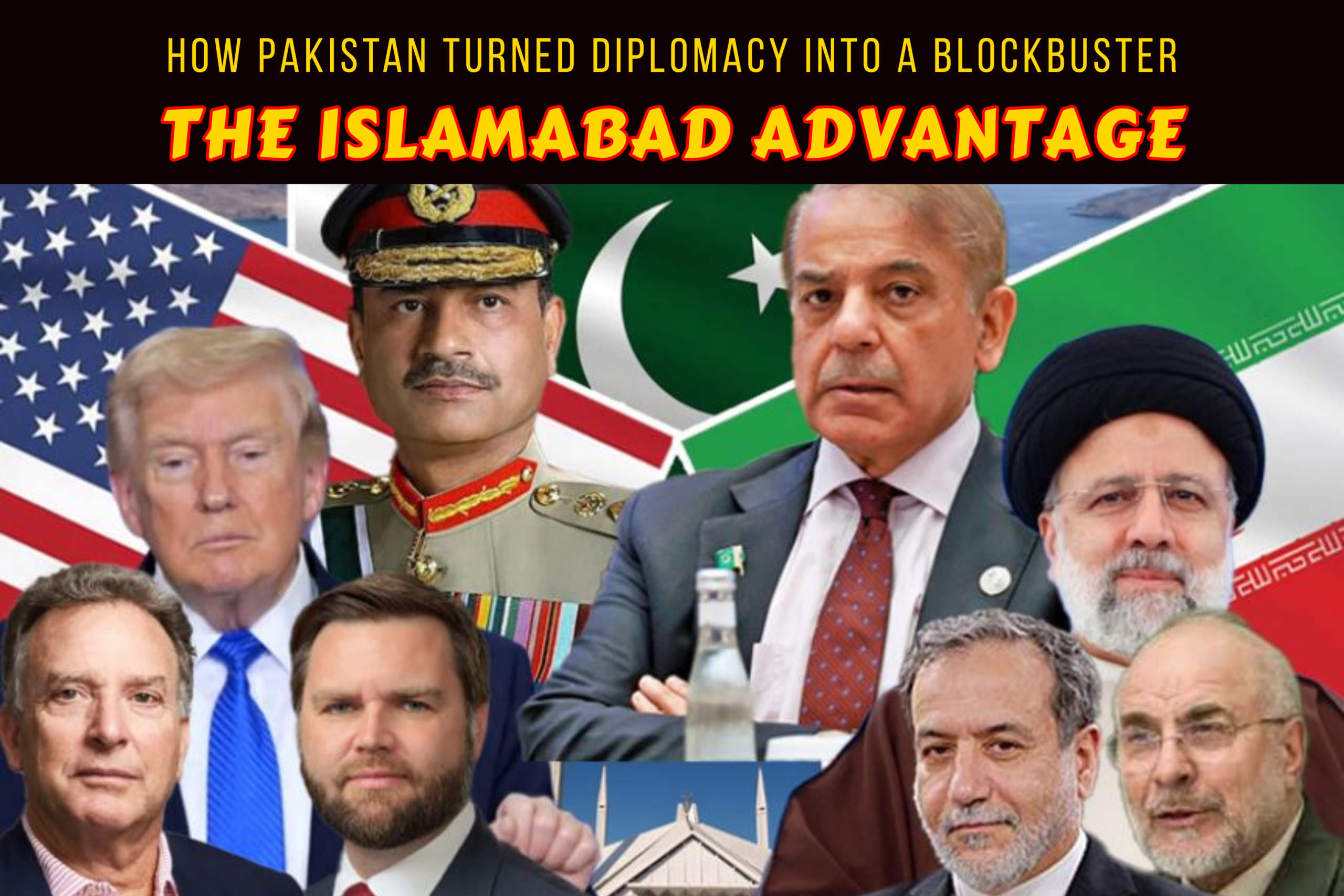
Introduction: The Quiet Coup
In the world of geopolitics, there are two ways to make headlines.
Method A: Shout loudly, move troops, and break things.
Method B: Invite everyone over for tea, close the door, and whisper until everyone agrees to stop shouting.
Recently, Pakistan chose Method B.
While the world was busy watching the usual suspense thriller of US-Iran tensions, Pakistan quietly picked up the phone, called Washington, called Tehran, and said, “Why don’t you come to Islamabad? We have great biryani and a neutral conference room.”
Suddenly, the narrative shifted. Pakistan wasn’t just in the news; it was hosting the news. And while diplomacy is usually a slow, boring affair of draft documents and lukewarm coffee, the reaction to this move turned it into the season finale of a geopolitical drama.
Part 1: Pakistan’s Diplomatic Glow-Up
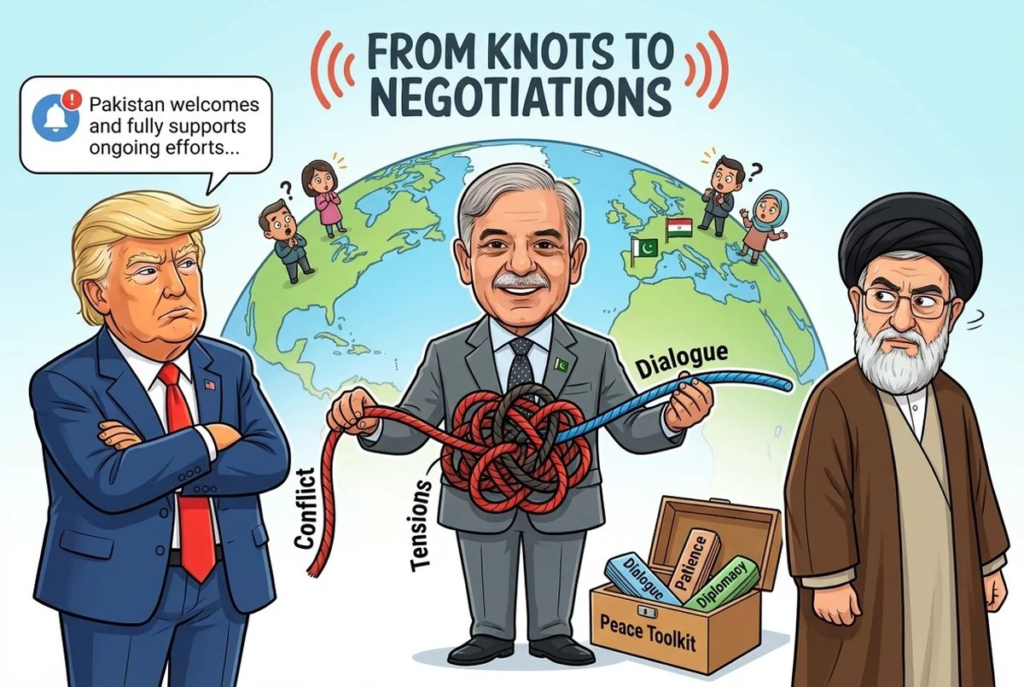
Let’s give credit where it’s due. Mediating between the US and Iran is not like organizing a neighborhood cricket match. It’s like trying to get a cat and a dog to share a single sofa without hissing.
Pakistan’s emerging role here is a masterclass in strategic positioning:
- The Geography: Sitting right at the crossroads of South Asia, Central Asia, and the Middle East.
- The Relationships: Maintaining lines of communication where others have slammed the phone down.
- The Venue: Islamabad is suddenly being touted as the “New Geneva.” Move over, Switzerland. We have better kebabs.
This isn’t just about hosting a meeting; it’s about signaling that Pakistan is ready to be a stabilizing force. It’s a soft-power victory that says, “We may have our challenges, but when the region needs a table to talk around, we bring the table.”
Part 2: The Neighbor’s Noise (Or, How to Turn Peace Into Panic)
Now, let’s talk about the reaction next door. Because if Pakistan scores a diplomatic goal, apparently, someone else must have lost the match.
In India, the news of Islamabad’s potential hosting duties didn’t just land; it exploded like a fireworks factory in a library.
The TV News Spectacle
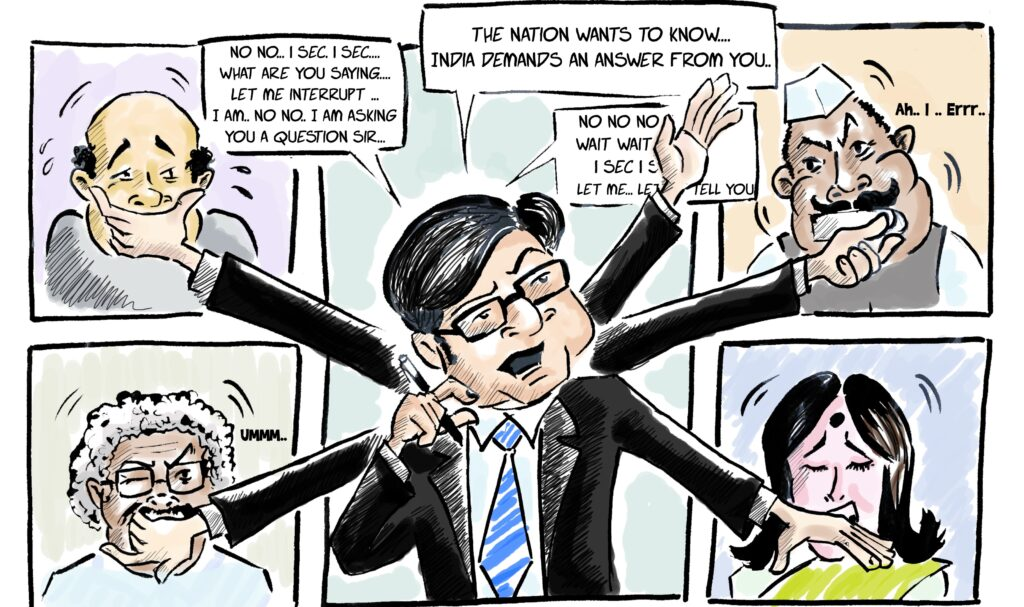
Indian prime-time television transformed into a high-stakes poker game where everyone is bluffing.
- The Breaking News Banner: “PAKISTAN PEACE PLAY: DIPLOMATIC MASTERSTROKE OR STRATEGIC TRAP?” (Answer: Usually just a meeting.)
- The Panel: A retired general, a fiery nationalist, and a confused economist.
- The Volume: Set to “Earthquake.”
The narrative? “India’s role is diminishing!”
The reality? Diplomacy isn’t a pie where one slice for Pakistan means less for India. But try explaining that when the ratings depend on outrage.
The “Fatherland” Flashback
To make matters spicier, the media dragged in PM Modi’s recent visit to Israel. When he referred to Israel as the “fatherland” for Indian Jews (a specific cultural nod), it was a diplomatic gesture. But in the heat of the Pakistan-US-Iran news cycle, it became Exhibit A for the prosecution.
The Logic Chain on Indian TV:
- Modi said “Fatherland.”
- Arabs/Iran might be annoyed (allegedly).
- Therefore, they chose Pakistan for talks.
- Therefore, India’s foreign policy is “faulty.”
It was a perfect storm of context-free connectivity. Meanwhile, actual diplomats were quietly noting that India still holds strong cards: the Chabahar Port with Iran, deep defence ties with Israel, and strategic partnerships with the US. But “India is Playing Multiple Chess Boards” is a boring headline. “India Lost the Game!” gets more clicks.
Part 3: Social Media – The Digital Thunderdome
If TV was loud, social media was deafening.
On X (Twitter):
- Pakistanis: Celebrating the potential peace role. “Soft power wins!”
- Indians: Debating whether this is a national emergency. “Why Islamabad? Why not Delhi? Is this the end of civilization?”
- Neutral Observers: “Can we just be happy if war is avoided?”
- The Algorithm: “Here is more content to make you angry!”
On WhatsApp:
The forwarded messages were works of art.
“URGENT: Pakistan is now the leader of the Islamic World again. India will face oil shortage by Tuesday. Forward to 10 people.”
(Source: Usually “A friend in the Embassy,” who does not exist.)
On TikTok:
15-second videos explaining the entire Middle East crisis with a green screen and a serious face.
“POV: You thought India was the big boss, but Pakistan just booked the venue.”
(Likes: 1 million. Context: 0.)
Part 4: The Global Yawn vs. The Local Scream
Here is the funniest part of all: The Rest of the World.
While Indian media was having a collective nervous breakdown, international outlets like Reuters, AP, and BBC treated the news like… well, news.
“Pakistan offers to host talks. US considering. Iran open.”
No alarms. No sirens. No “National Humiliation” graphics.
To the global community, a regional power stepping up to reduce tensions is good news. Period.
They aren’t keeping score of who gets the photo op. They just want the temperature turned down from “Boiling” to “Simmer.”
Pakistan’s role is being seen as a positive development—a sign that regional actors are willing to take ownership of stability. It’s a mature move. And maturity, unfortunately, doesn’t trend as well as panic.
Part 5: The Real Winner? Peace (Hopefully)
At the end of the day, here is the truth beneath the noise:
- Pakistan is seizing a moment to showcase its diplomatic relevance. Good for them. It’s a smart play that builds goodwill and strengthens ties with Washington and Tehran.
- India is still a major global player with massive economic and strategic leverage. One meeting in Islamabad doesn’t erase decades of influence.
- The Media is still selling anxiety because calm doesn’t pay the bills.
The humor lies in the absurdity of treating diplomacy like a sports rivalry. When Pakistan wins a peace deal, India doesn’t lose a war. Everyone wins if the guns stay silent.
But until then, enjoy the show. The anchors will keep shouting, the tweets will keep flying, and the diplomats? They’ll just keep drinking their coffee, closing the doors, and doing the actual work.
Final Score:
- Pakistan: +10 Diplomacy Points.
- Indian Media: +100 Decibels.
- Peace: Hopefully +1 Chance.

One Comment