(By Khalid Masood)
Introduction
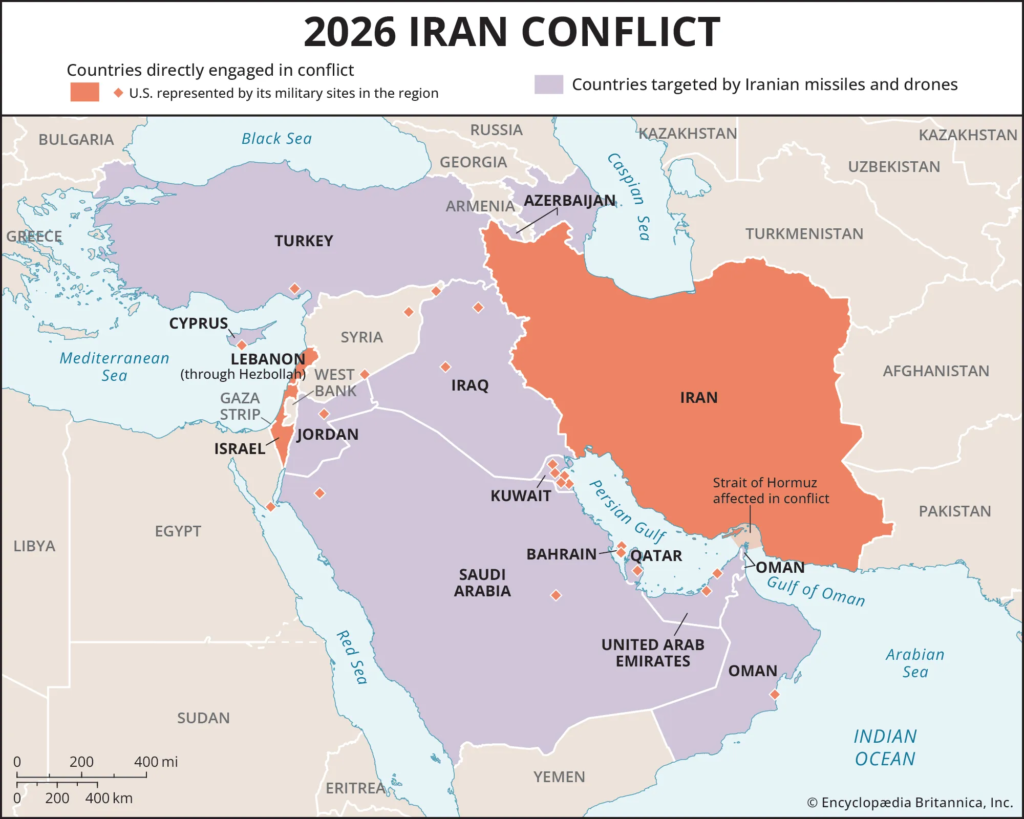
The conflict involving Iran, Israel, and the United States has escalated beyond initial expectations, transforming into a complex regional crisis with global strategic ramifications. Triggered by a coordinated US–Israel strike campaign against Iranian military infrastructure, the war has rapidly expanded to include missile and drone exchanges, attacks on civilian infrastructure, and threats to international shipping through the vital Strait of Hormuz.
This is not merely a military engagement—it is a confrontation with far‑reaching economic, geopolitical, and humanitarian consequences, affecting energy markets, regional alliances, and global security dynamics.
Timeline of the Conflict
| Date | Major Event | Strategic Impact |
|---|---|---|
| 28 Feb 2026 | US–Israel strike on Iranian missile bases & air defences | Official start of conflict; air campaign begins |
| 1–5 Mar 2026 | Iranian missile & drone retaliation across Gulf | Expansion of conflict beyond Iran |
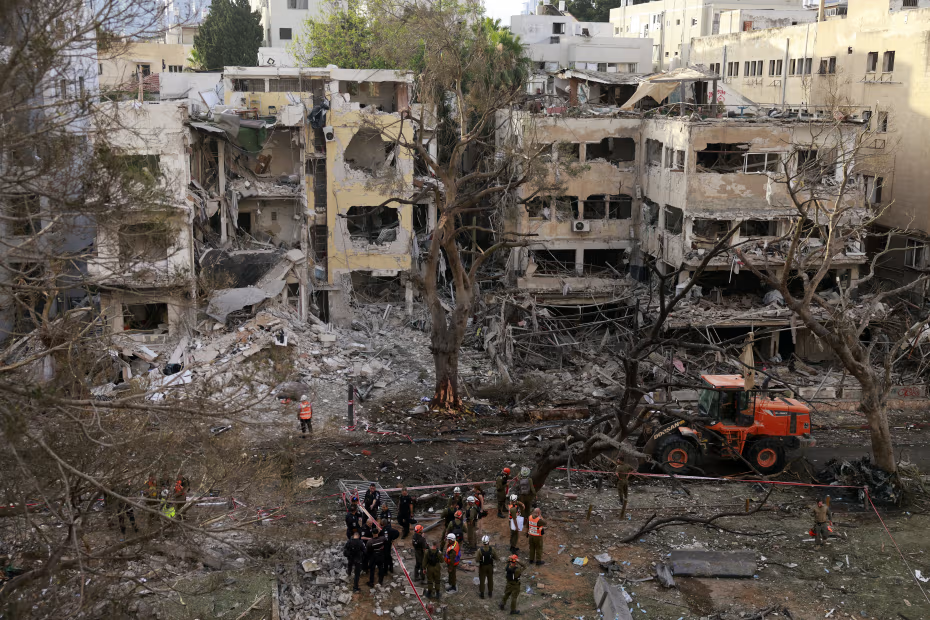
| 5–8 Mar 2026 | Attacks on energy infrastructure & desalination plants | Civilian and economic targets hit |
| Ongoing | Hezbollah launches attacks from Lebanon | Northern front opens |
| Ongoing | Strait of Hormuz tensions | Threat to global oil supply |
Phase I — Air and Missile Campaign
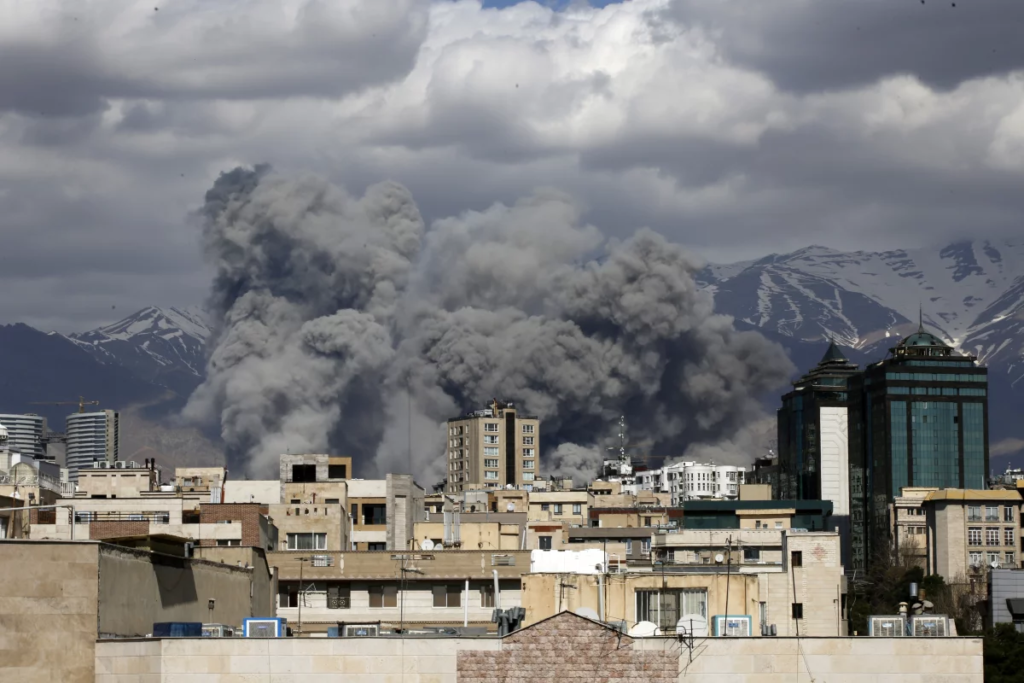
The initial phase saw the United States and Israel launch a high‑intensity air and missile campaign targeting key Iranian military infrastructure:
- Ballistic missile sites
- Air defence systems
- Command & control bases
- Nuclear‑adjacent facilities
Precision guided munitions and cruise missiles were employed from air, sea, and land platforms. The objective was clear: to degrade Iran’s ability to threaten regional neighbors through ballistic missiles and to disrupt Iranian strategic deterrence.
Key Strategic Goals of Phase I:
✔ Cripple missile launch capability
✔ Suppress air defence radar networks
✔ Disrupt long‑range strike options
While details remain classified, open‑source battle damage assessments indicate widespread destruction of Iranian defensive layers—a development that significantly alters the tactical balance.
Phase II — Iranian Retaliation and Regional Escalation
Rather than capitulate, Iran responded with a wave of missile and drone strikes aimed at foreign and regional targets:
Major reported retaliations:
- Bahrain: Missile & drone attacks targeting US Fifth Fleet & port infrastructure
- Oman: Strikes near Duqm port and tanker storage facilities
- UAE & Saudi Arabia: Attacks on energy and critical infrastructure
These strikes signaled a change in Iran’s strategic calculus—moving from defence to offense with the intent to increase the economic and logistical cost of continued hostilities.
Strategic Impacts of Phase II:
✔ Shift battlefield beyond Iranian territory
✔ Threaten global energy infrastructure
✔ Raise insurance and operational costs for shipping
Iran’s asymmetric retaliation demonstrates its willingness to leverage missile and drone forces to compensate for conventional air & naval gaps.
Phase III — Secondary Fronts
1. Northern Front (Levant)
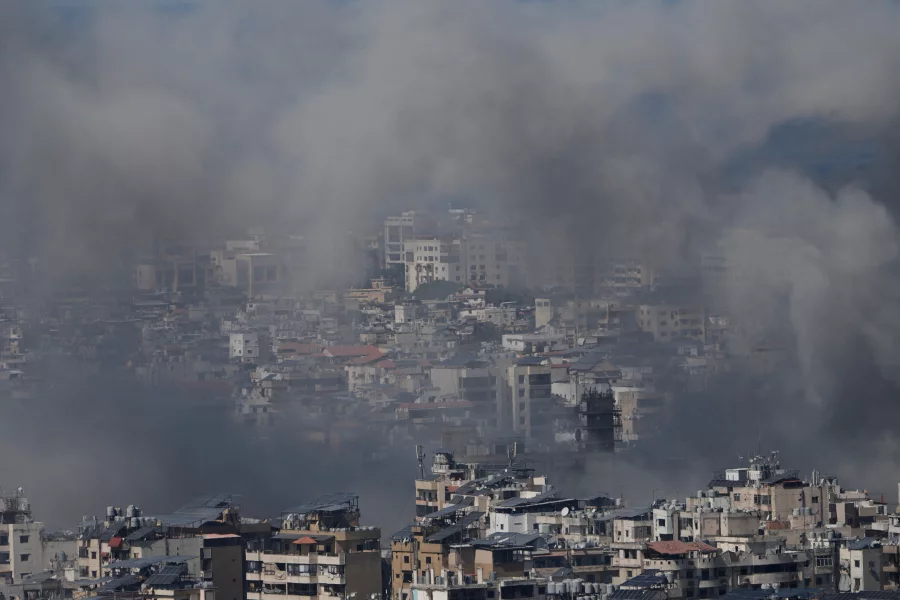
Iran’s alliance network, particularly Hezbollah in Lebanon, has contributed to widening the front:
- Rockets and drones fired into northern Israel
- Israel responded with cross‑border strikes
- Northern border on high alert
This front adds complexity to Israel’s defensive needs and diverts resources from the southern theater.
2. Maritime Front — The Strait of Hormuz
The Strait of Hormuz, a narrow chokepoint through which nearly 20% of the world’s crude oil supply transits, has become a central theatre of tension.
Threats include:
- Mining of shipping lanes
- Missile strikes on tankers
- Deployment of fast attack craft
- Heightened naval patrols
Disruption of this artery could immediately spike oil prices, destabilize markets, and trigger economic shockwaves.
Military Balance of Power
Understanding the conflict requires comparing military capabilities:
| Capability | Iran | Israel | United States |
|---|---|---|---|
| Ballistic Missiles | Extensive stockpiles | Moderate | Strategic deterrence |
| Air Power | Older fleet + drones | Modern F‑35/F‑16 | Carrier‑based and strategic |
| Missile Defence | Moderate | Advanced – Iron Dome & Arrow | Highly advanced – Patriot & THAAD |
| Naval Power | Fast boats, mines | Limited | Carrier strike groups |
Key Takeaway:
While the US and Israel hold technological air & sea superiority, Iran’s missile forces and asymmetric capabilities enhance its ability to wage prolonged conflict.
The Strategic Importance of Water Infrastructure
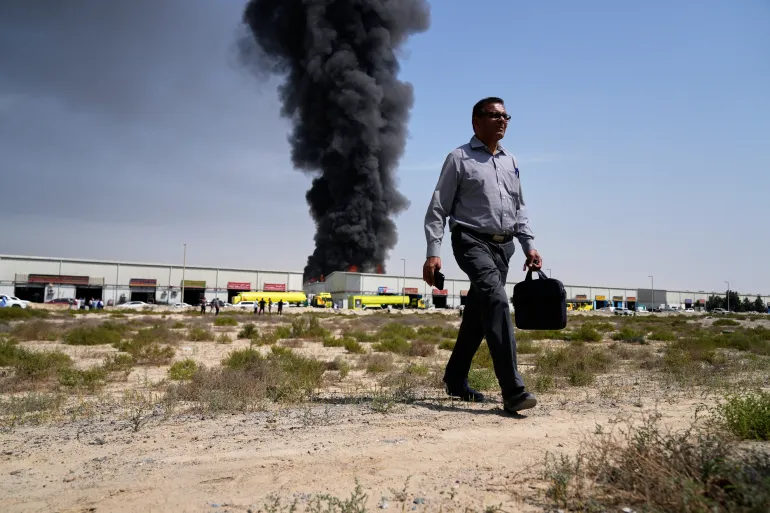
In desert‑dependent Gulf states, water scarcity is a structural vulnerability. Most nations rely overwhelmingly on desalination:
| Country | Desalination Dependency |
|---|---|
| Saudi Arabia | ~70% |
| UAE | ~90% |
| Bahrain | ~100% |
| Oman | ~85% |
Damage to desalination plants threatens civilian health, agricultural output, and industrial supply chains. This could force governments to redirect military resources toward safeguarding humanitarian infrastructure.
Economic Implications — Beyond the Battlefield
The world is feeling the fallout far from the frontlines:
| Sector | Impact |
|---|---|
| Oil Markets | Price surges and volatility |
| Aviation | Rerouted flights; increased insurance |
| Shipping | Delays; higher operating costs |
| Trade | Supply chain disruptions extend beyond energy |
Annual global GDP could be impacted if energy prices remain elevated and shipping remains insecure.
Future Scenarios
Scenario 1: Containment and Diplomatic De‑Escalation
In this scenario, international diplomatic pressure—primarily from the United Nations, European Union, China, and Russia—forces Iran and Israel to step back from active hostilities.
Key Elements:
- Ceasefire Negotiations: Temporary ceasefire agreements along contested borders, particularly in northern Israel and southern Lebanon.
- Proxy Restraint: Iran instructs Hezbollah and other affiliated groups to halt cross-border operations.
- Gulf Cooperation: Saudi Arabia, UAE, and Oman mediate to prevent further missile or drone attacks on energy infrastructure.
Implications:
- The conflict remains localized and controlled, with minimal escalation beyond the immediate frontlines.
- Economic stability improves as oil prices stabilize and shipping in the Strait of Hormuz resumes normal operations.
- While a ceasefire reduces immediate military casualties, tensions remain high and a resurgence of conflict remains possible.
📌 Strategic Insight: Containment is the least costly scenario for both military forces and the global economy, but it requires credible enforcement mechanisms and third-party monitoring.
Scenario 2: Prolonged Regional War
Here, the conflict expands into a multi-front regional war, fueled by the engagement of proxy forces and the involvement of Gulf states.
Key Elements:
- Proxy Escalation: Hezbollah, Houthi rebels, and other Iranian-aligned groups increase attacks on Israeli and Gulf targets.
- Multiple Fronts: Northern Israel, southern Lebanon, and Gulf states face repeated missile and drone attacks.
- Gulf State Involvement: Saudi Arabia, UAE, and Oman may conduct retaliatory strikes against Iranian positions or proxies.
Implications:
- Casualties rise sharply on both sides, with significant civilian impact due to missile strikes on cities and infrastructure.
- Global energy prices surge, driven by uncertainty and repeated attacks on oil terminals and pipelines.
- Maritime insurance costs spike, affecting international trade.
- International actors, including the United States and European nations, may be forced to increase troop deployments to protect interests.
📌 Strategic Insight: A prolonged regional war could destabilize the Middle East for years, disrupt global supply chains, and test alliances. It also risks drawing in additional external powers, including Russia or China, as mediators or indirect participants.
Scenario 3: Closure of the Strait of Hormuz
Iran could leverage its geographic advantage over the Strait of Hormuz, a critical chokepoint through which nearly 20% of the world’s oil supply passes, to pressure the international community.
Key Elements:
- Mining or Missile Threats: Iran deploys naval mines, fast attack boats, and anti-ship missiles to disrupt tanker traffic.
- Tanker Escorts and Blockades: Gulf states, potentially supported by the US Navy, attempt to maintain shipping lanes under high-risk conditions.
- Economic Leverage: Iran uses threats to raise global energy prices and extract political concessions.
Implications:
- Immediate global energy crisis: Oil prices spike dramatically, affecting Europe, Asia, and North America.
- Economic recession risk: Countries dependent on oil imports face inflation, supply chain disruption, and slowed industrial output.
- Military escalation potential: Any attack on tankers could trigger direct US or Israeli retaliation, escalating the conflict further.
📌 Strategic Insight: Closure of Hormuz is a high-risk strategy. While it gives Iran short-term leverage, it could provoke overwhelming retaliation and international condemnation.
Scenario 4: Limited Ground Escalation
This scenario envisions selective conventional ground engagements between Iranian forces and regional allies or proxies, without full-scale invasion.
Key Elements:
- Border Clashes: Limited operations along Israel’s northern borders, southern Lebanon, and potentially Iraq.
- Special Forces Raids: Covert operations by US, Israeli, or Iranian special forces targeting critical infrastructure or command centers.
- Proxy Engagements: Iran’s local allies engage in tactical offensives to challenge Israel or Gulf state defences.
Implications:
- Localized military gains for either side, but full victory is unlikely.
- High-intensity but contained conflict: Civilian populations near the frontlines face displacement and humanitarian crises.
- Escalation Risk: Even minor ground operations could escalate if miscalculations or miscommunications occur.
📌 Strategic Insight: Limited ground escalation is manageable but unpredictable. It allows both sides to test military capabilities and probe defences, but small errors could trigger wider war.
Strategic Summary
- Containment: Best-case scenario; low human and economic cost, but tension persists.
- Prolonged Regional War: Worst-case scenario; high casualties, economic disruption, and possible involvement of external powers.
- Closure of Hormuz: High-impact economic leverage; potential trigger for global energy crisis.
- Limited Ground Escalation: Tactical engagements; risk of accidental escalation into full-scale conflict.
Each scenario emphasizes the interconnectedness of military, economic, and humanitarian factors. Analysts agree that water and energy infrastructure, particularly desalination plants and oil terminals, will be as crucial as missiles, drones, and air power in determining the conflict’s outcome.
Conclusion
The Iran–Israel–US conflict has transcended its initial air campaign to become a strategic confrontation with global stakes. It intertwines military force, energy infrastructure, maritime security, and international diplomacy. Water scarcity, oil dependency, and strategic maritime chokepoints now play central roles alongside missiles and fighter jets.
The world watches closely, not only for battlefield developments but for economic stability, supply chain resilience, and geopolitical realignment. As the conflict evolves, so too will its impact on regional security and global affairs.