(By Quratulain Khalid)
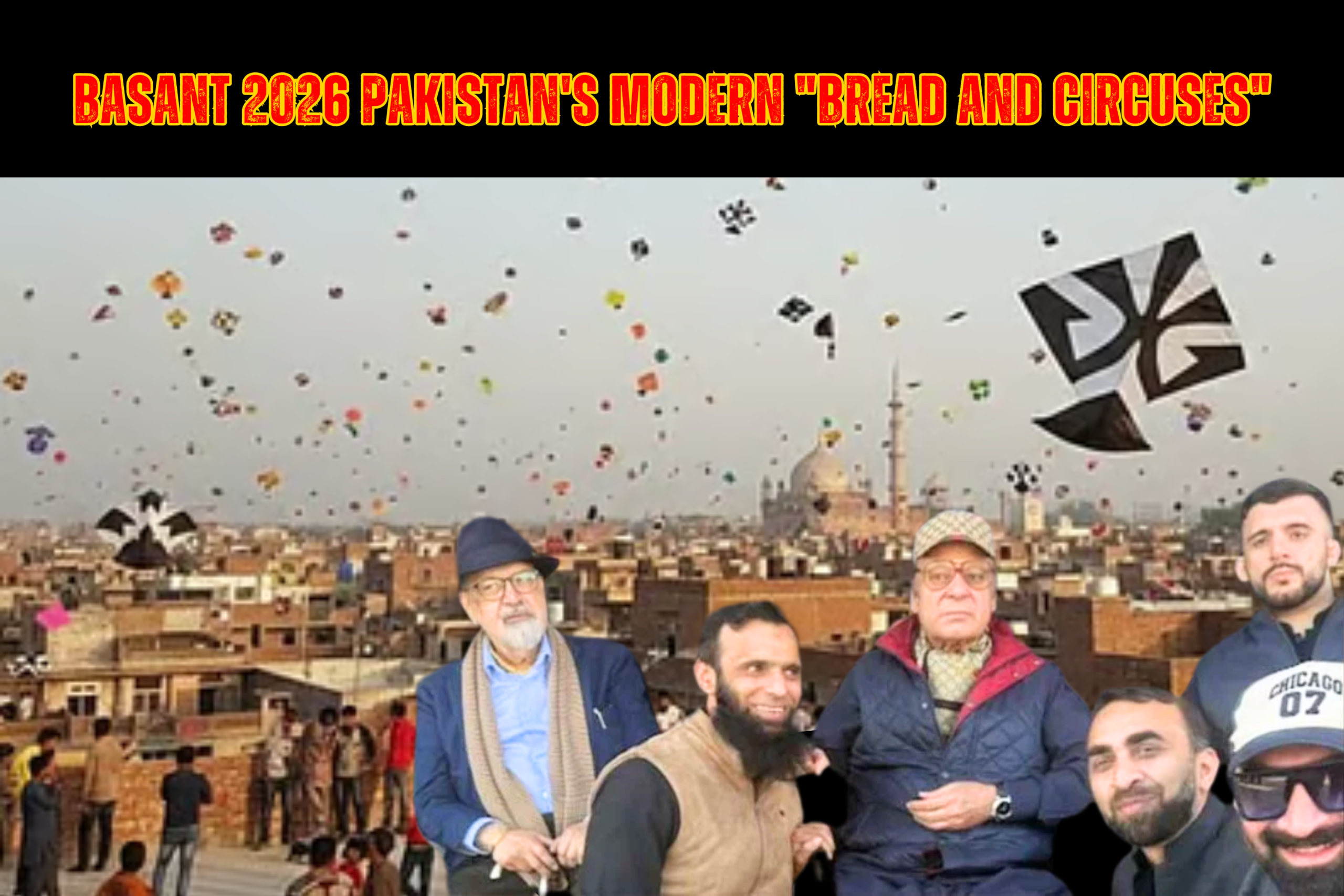
As I write this from Lahore on February 8, 2026, the final day of Basant, the city’s rooftops are still dotted with colorful kites cutting through the afternoon sky. Laughter echoes from streets lined with food stalls selling spicy chaat, falooda, and jalebi. Families gather on terraces, children shout “Bo-kata!” as one kite defeats another, and drumbeats pulse late into the night even on the concluding day. The Punjab government, led by Chief Minister Maryam Nawaz Sharif, revived this centuries-old spring festival after nearly two decades of ban—promoting it as a safe, regulated celebration of Punjabi heritage, tourism, and joy.
Yet the joy feels jarring against a backdrop of fresh tragedy. On February 6—the opening day of Basant—a suicide bomber struck the Khadija Tul Kubra Shia mosque in Islamabad’s Tarlai Kalan area during Friday prayers. At least 31 people were killed and over 169 injured in the deadliest attack in the capital in nearly two decades. Islamic State claimed responsibility. While CM Maryam Nawaz canceled official government events (including a mega show at Liberty Chowk) in solidarity with the victims and called for national unity against extremism, public kite-flying, rooftop gatherings, and informal celebrations continued across Lahore through February 7 and into today.
Many Lahoris could have chosen to pause or mute the festivities in collective mourning for the victims—perhaps by limiting rooftop participation, observing a moment of silence, or redirecting energy toward solidarity efforts. Ironically, the festival’s public elements persisted with enthusiasm in many areas: kites soared, music played, and families celebrated as if the national grief was distant. This continuation, despite the tragedy, suggests a degree of indifference and lack of empathy among segments of the public—prioritizing personal joy over shared sorrow in a moment when unity and reflection might have been more fitting. For some, it was resilience in the face of terror; for others, it highlighted a troubling disconnect between Lahore’s festive bubble and the pain elsewhere in the country.
Adding to this perception, even former Prime Minister and PML-N supremo Mian Muhammad Nawaz Sharif—father of CM Maryam Nawaz and chairman of the ruling party—joined the celebrations in Lahore’s historic Walled City (Androon Lahore) on February 7. He spent several hours at a friend’s residence near Masti Gate in the Sultan Tipu Building area (close to Pani Wala Talab), flying kites from a rooftop with his sons, family members, close friends, and a group of longtime associates. Visuals broadcast on TV channels and shared widely on social media showed him actively participating—watching kites soar, praising the quality of strings, and enjoying the traditional atmosphere in the heart of old Lahore.
This was not a low-key or private affair; it was prominently covered, with reports noting he remained there for around four hours amid ongoing Basant activities in the old city neighborhoods. Given his stature as a senior statesman and the gravity of the national tragedy just a day earlier, many expected restraint, condolence-focused messaging, or at least a visible pause from public festivity. Instead, his enthusiastic participation—smiling in family gatherings while the nation mourned—struck many observers as emblematic of a deeper hypocrisy. Politicians often project sensitivity and grief in public statements, condemning violence and calling for unity, yet their actions can reveal hearts of stone—prioritizing personal enjoyment and political optics over genuine empathy or leadership by example in times of collective sorrow. The visuals of Nawaz Sharif amid kites and laughter, broadcast nationwide, fueled criticism that the ruling elite’s “dual faces” were on full display: solemn words for the cameras, but celebration in reality.
For many Lahoris, the festival brought much-needed color and community spirit after years of restrictions. International guests, including US diplomats, joined in kite-flying sessions, highlighting cultural diplomacy. But for others—especially amid ongoing questions about security lapses, economic hardship, and political legitimacy—the timing and partial continuation raise uncomfortable questions: Is this a genuine cultural revival, or a modern echo of “bread and circuses”—a spectacle that keeps the masses engaged while deeper crises go unaddressed?
From Roman Gladiators to Lahore’s Rooftops: The Art of Distraction
The phrase “bread and circuses” (panem et circenses) comes from Roman poet Juvenal in the early 2nd century AD. He criticized how emperors provided free grain and lavish public spectacles—like gladiatorial combats in the Colosseum—to pacify the urban poor and prevent unrest. What began as religious funeral rites honoring the dead with blood offerings evolved into massive, state-sponsored entertainment that distracted from corruption, economic woes, military failures, and autocratic rule.
In modern times, the concept applies to sports leagues, celebrity events, festivals, and media spectacles that absorb public energy and emotion. In Pakistan, critics point to events like the Pakistan Super League (PSL) cricket matches, Independence Day parades, and now Basant as tools that project progress and unity while fundamentals stagnate.
The pattern isn’t new here. Dynasties and governments have long prioritized visible “development”—motorways, metros, bridges, luxury projects—while underfunding essentials. PSL seasons generate national hype and celebrity glamour amid inflation and power cuts. Basant 2026 fits this mold: heavily promoted by the Punjab government as a return of cultural pride, with safety SOPs, public holidays, and a “Basant Control Room” to monitor incidents. Yet it arrives against a backdrop of polarized politics, where opposition voices label the current setup a “Form 47 government” (alleging election irregularities) and question governance on security, economy, and social services.
The Education Crisis: A Scandal Hiding in Plain Sight
While kites fly, a quieter emergency festers. According to the latest Pakistan Social and Living Standards Measurement–Household Integrated Economic Survey (PSLM–HEIS) 2024–2025 (released late 2025/early 2026 via Pakistan Bureau of Statistics and analyzed by FAFEN), Pakistan’s literacy rate stands at 63% (for population aged 10+), the lowest in South Asia. Compare this to Maldives (98%), Sri Lanka (93%), India (~87%), and Bangladesh (~79%). The regional average is around 78%—Pakistan lags by 15 points.
Even more alarming: 26 million children (about 38% of school-age kids) are out of school—the second-worst figure globally. In Balochistan, the rate exceeds 50–60% in some breakdowns. Youth literacy (15–24) is better at 77%, showing slow gains, but adult literacy remains stuck around 60%.
Spending tells the story: Cumulative federal and provincial education expenditure in FY 2025 (July–March data from the Pakistan Economic Survey 2024–25) is estimated at just 0.8% of GDP—down from prior years and far below UNESCO’s recommended 4–6%. Expenditures fell 29% in early FY2025 compared to the previous period. Even when funds flow, outcomes are poor: Punjab achieves 68% literacy with relatively lower per-capita spending in some metrics, while Balochistan lags despite higher allocations in places—highlighting inefficiencies, governance gaps, and elite priorities.
“Functional” literacy is often lower—many counted as literate can barely sign their name. Madrasa education inflates official figures; government schools frequently deliver substandard learning, leaving graduates unemployable. The result? Brain drain, persistent poverty, vulnerability to extremism. Neighbors build economies on educated workforces—India with IT, Bangladesh with textiles, Sri Lanka with tea. Pakistan risks exporting illiteracy, excuses, and instability.
Connecting the Dots: Distraction as a Recurring Pattern?
Basant isn’t the problem—it’s part of a broader pattern. When accountability rises (over security, elections, corruption, or budget misallocation), the calendar fills with spectacles: PSL hype, parades, cultural festivals. These provide tribal pride, emotional catharsis, and short-term goodwill—channeling energy away from sustained demands for change.
This isn’t always deliberate malice. Basant has deep cultural roots—centuries-old spring celebration—and genuine public demand after years of ban. The government’s safety measures and partial response to tragedy show some awareness. But in a resource-scarce, polarized system, such events conveniently soften scrutiny and boost popularity.
The cost is clear: Temporary joy can’t replace investment. Without shifting priorities to classrooms—targeting 3–4% GDP spending in the near term, teacher training, girls’ education, and provincial equity—distractions remain bandaids on a gaping wound.
What Would Real Progress Look Like?
Real change starts with benchmarks:
- Ramp education spending toward 4% of GDP within 5 years, reallocating from non-essential projects.
- Punjab could lead: Redirect portions of motorway/metro budgets to rural schools and STEM training.
- Emulate neighbors: Bangladesh’s female literacy gains fueled textile exports; India’s focus on English/STEM built IT dominance.
- Citizens can act: Track provincial budgets via public portals, support NGOs like The Citizens Foundation, demand transparency in PSDP allocations, and hold MPs accountable.
Final Thought: Choose Futures Over Festivals
Basant 2026 brought color back to Lahore’s skies—a welcome burst after years of gray. But as the last kites land today and the city returns to routine, let’s remember the empty classrooms waiting tomorrow. Many Lahoris could have chosen to pause or significantly tone down the festivities in collective mourning after the February 6 mosque tragedy—yet ironically, the public celebration continued with enthusiasm in many areas, suggesting a degree of indifference and lack of empathy among segments of the public when national grief called for shared restraint and reflection.
Even former Prime Minister Mian Nawaz Sharif—chairman of the ruling PML-N—joined in, spending hours in Lahore’s historic Walled City on February 7 with his sons, family members, and friends, actively participating in kite-flying from a rooftop. Visuals broadcast on TV showed him enjoying the festivities amid the ongoing national mourning, a stark contrast to the sensitive, grief-stricken tone often projected in official statements. This participation by a senior statesman, who was not expected to engage publicly so soon after such a tragedy, underscores a troubling duality: politicians frequently display compassionate faces in speeches and condemnations, yet their actions can reveal hearts of stone—prioritizing personal enjoyment, family tradition, or political optics over genuine empathy and leadership by example in moments of collective sorrow.
Festivals can coexist with progress, but only if we stop sacrificing education on the altar of spectacle. For those of us in Lahore watching the skies today, the question is simple: What are we building for the next generation—more kites, or brighter futures?
And one more question worth asking ourselves: If a national tragedy like the Islamabad mosque bombing doesn’t prompt a widespread pause in public celebration—even from top political figures—what kind of shared empathy and collective responsibility do we truly have left?
What do you think? Is Basant a deserved cultural revival, or does it distract from deeper failures? Did the continuation of festivities after the tragedy feel like resilience—or indifference? Share your thoughts in the comments, tag your representatives, and let’s demand classrooms get the priority they deserve.