(By Quratulain Khalid)
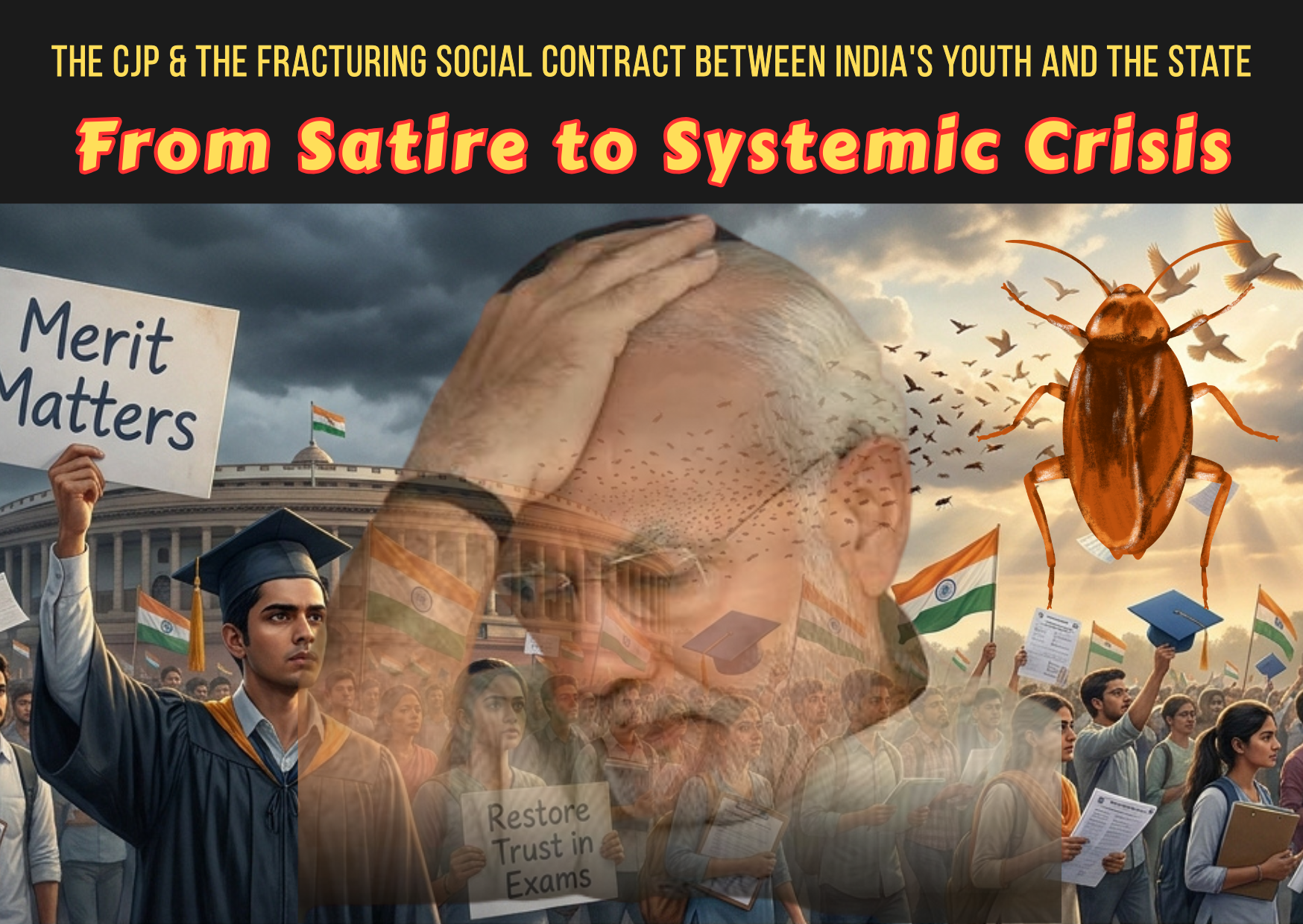
Political movements are often born from ideology, economic hardship, or charismatic leadership. Occasionally, however, they emerge from irony. India’s “Cockroach Janta Party” (CJP), which began in 2026 as an online satirical response to a derogatory remark allegedly directed at unemployed youth, has evolved into a significant expression of frustration among sections of India’s educated young population. What started as internet humor has increasingly become a vehicle for discussing examination integrity, unemployment, institutional trust, and the perceived disconnect between the aspirations of young Indians and the capacity of state institutions to deliver opportunities.
Although the controversy surrounding the National Eligibility cum Entrance Test (NEET) served as an immediate catalyst, the movement reflects broader concerns that have accumulated over many years. Repeated allegations of examination leaks, recruitment irregularities, prolonged delays in public-sector hiring, and persistent graduate unemployment have contributed to a growing perception that merit alone is no longer sufficient to secure upward mobility. Whether or not that perception fully reflects reality, it has become politically consequential.
The Indian government, for its part, has maintained that maintaining public order is a constitutional responsibility and has defended measures taken to manage demonstrations. At the same time, critics argue that policing responses to peaceful protests risk deepening public distrust rather than resolving underlying grievances. The challenge, therefore, extends beyond law enforcement into the realm of governance and institutional credibility.
This article examines the emergence of the CJP as a case study in the evolving relationship between India’s youth and the state. Rather than treating it as an isolated protest, it considers whether it represents a broader warning about the durability of the social contract in the world’s largest democracy.
I. Introduction: The Metamorphosis of a Metaphor
History has repeatedly shown that words intended to demean can sometimes become symbols of collective identity. Political language often acquires meanings far beyond those originally intended by its speakers. Across different societies, marginalized communities have occasionally reclaimed disparaging labels, transforming them into emblems of resilience and solidarity.
The reported emergence of India’s “Cockroach Janta Party” illustrates this phenomenon. According to widespread media reporting, the movement originated after educated unemployed youth interpreted a judicial remark comparing them to “cockroaches” as emblematic of how institutions viewed their struggles. Regardless of the precise context or interpretation of that remark, the metaphor resonated because it appeared to capture a sentiment already felt by many young Indians: that despite years of education and intense competition, they remained invisible within the policy priorities of the state.
Rather than rejecting the label, activists embraced it.
Their message was strikingly simple:
“Cockroaches survive every hostile environment. We survive despite the system.”
The symbolism rapidly spread across digital platforms. What began as internet satire evolved into an organized campaign that combined memes, street protests, decentralized communication networks, and coordinated demonstrations.
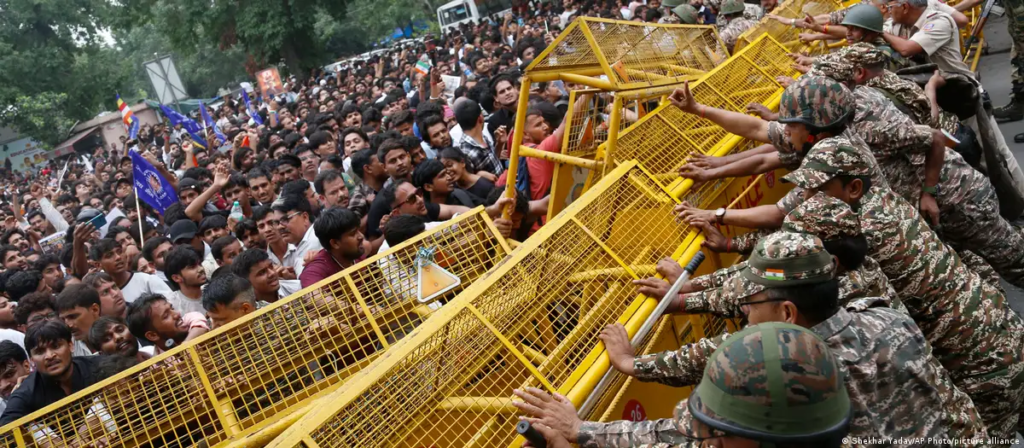
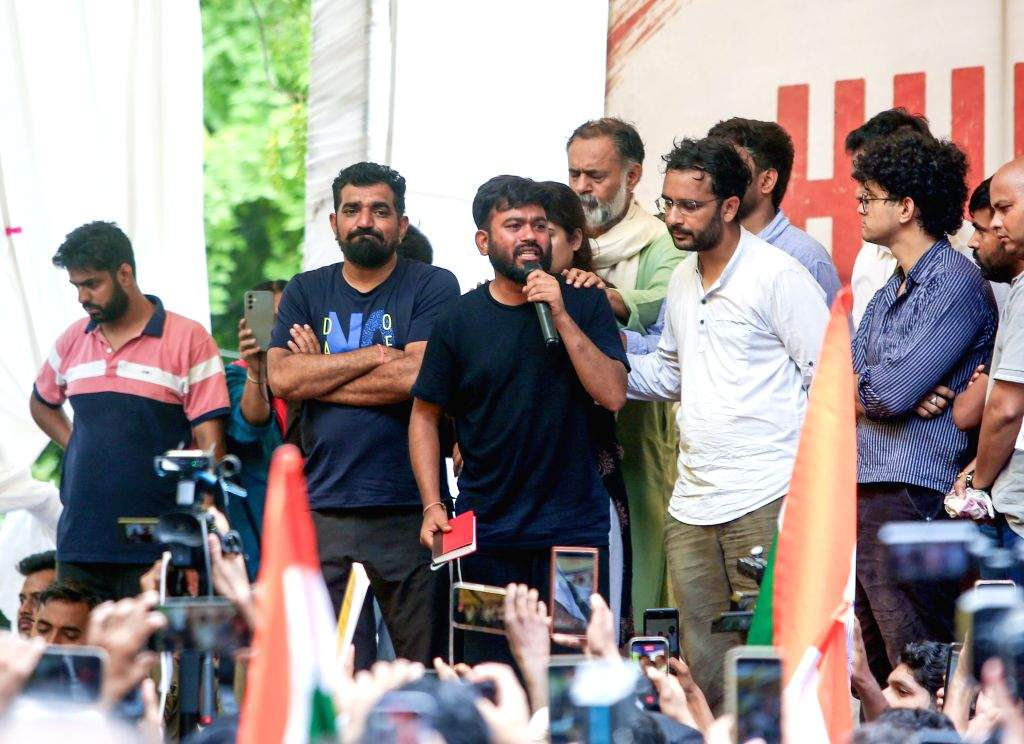
The movement expanded from online discussions into physical gatherings at New Delhi’s Jantar Mantar, a location long associated with peaceful democratic protest. As participation grew, observers increasingly interpreted the campaign not merely as another student agitation but as evidence of deeper institutional frustrations among India’s educated youth.
This transformation deserves attention because India has frequently celebrated its demographic profile as one of its greatest strategic advantages. For decades policymakers have described India’s youthful population as a “demographic dividend” capable of driving sustained economic growth.
That optimistic narrative depends on one critical assumption:
Education must lead to opportunity.
When that expectation weakens, the demographic dividend risks becoming a source of social discontent rather than economic strength.
The rise of the CJP therefore raises a larger policy question.
Is India witnessing only another protest movement, or is it observing early signs of a widening gap between public aspirations and institutional performance?
II. Digital Satire Meets Political Mobilization
Unlike many twentieth-century political movements, the CJP developed without centralized leadership, formal party structures, or conventional organizational hierarchies.
Instead, its infrastructure was digital.
Social media platforms enabled participants to bypass traditional gatekeepers of political communication. Memes, short videos, personal testimonies, and symbolic imagery circulated at remarkable speed. The movement’s decentralized structure made it difficult to suppress through conventional political mechanisms because no single leader could negotiate on behalf of all participants or be easily discredited.
Political scientists have increasingly observed that modern protest movements often resemble distributed networks rather than hierarchical organizations. Information flows horizontally rather than vertically. Authority is earned through credibility instead of formal position.
The CJP appears to fit this emerging model.
Its organizers emphasized issue-based mobilization rather than ideological alignment. Many participants rejected affiliation with established political parties, arguing that both governing and opposition parties had failed to address long-standing concerns regarding employment and examination integrity.
This non-partisan posture broadened its appeal.
Students preparing for civil services, engineering graduates, medical aspirants, unemployed professionals, and even sections of the urban middle class found common ground in concerns over fairness, transparency, and opportunity.
The movement therefore became less about any single examination and more about the perceived reliability of public institutions.
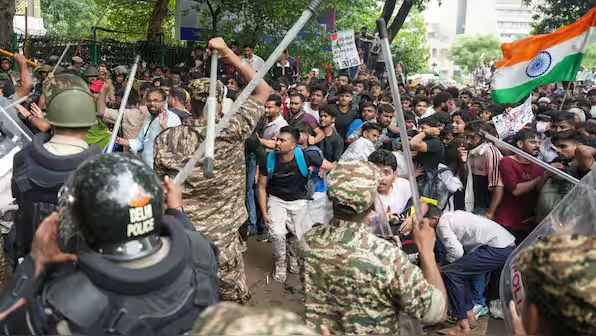
Table 1: Factors Driving Youth Mobilization
| Structural Issue | Public Concern | Potential Long-Term Impact |
|---|---|---|
| Examination irregularities | Loss of confidence in merit-based selection | Reduced institutional trust |
| Graduate unemployment | Economic insecurity | Delayed family formation, migration |
| Delayed public recruitment | Career uncertainty | Rising frustration among educated youth |
| Digital connectivity | Rapid information sharing | Faster nationwide mobilization |
| Perceived governance deficits | Declining confidence in institutions | Increased political polarization |
III. Beyond NEET: Symptoms of a Broader Governance Challenge
Although public attention initially focused on controversies surrounding NEET, limiting the discussion to one examination would overlook broader structural concerns.
India’s examination ecosystem has expanded dramatically over the past three decades. Millions of students compete annually for relatively limited seats in universities, government employment, and professional institutions. In such a highly competitive environment, even isolated failures can generate widespread public anxiety.
Several examination controversies over recent years—including recruitment disputes in different states, allegations of question paper leaks, and the earlier Vyapam scandal—have contributed to perceptions that weaknesses in examination governance extend beyond any single institution. While the nature and scale of individual cases differ, together they have reinforced public debate over transparency, accountability, and institutional resilience.
Whether every allegation proves accurate is less important politically than the cumulative effect on public confidence. Trust in examination systems depends not only on integrity but also on the widespread belief that integrity exists.
Once that belief weakens, every subsequent controversy acquires greater significance.
For millions of families, competitive examinations represent far more than academic assessments. They are investments involving years of coaching, financial sacrifice, and emotional commitment. Any perception that outcomes are compromised therefore carries consequences extending well beyond education policy.
IV. The Employment Paradox
India remains one of the world’s fastest-growing major economies. Yet rapid macroeconomic growth does not automatically translate into sufficient high-quality employment for educated youth.
This tension lies at the heart of contemporary policy debates.
Economic expansion has generated opportunities in technology, digital services, manufacturing, and entrepreneurship. Nevertheless, labour market analysts have consistently highlighted concerns regarding graduate unemployment, underemployment, and skill mismatches.
Many graduates increasingly compete for relatively small numbers of government positions because public-sector employment continues to offer stability, social prestige, and predictable career progression.
This has intensified competition to extraordinary levels.
In numerous recruitment drives, thousands—and sometimes tens of thousands—of applicants compete for a single vacancy. Such ratios magnify the consequences of any procedural irregularity, because even minor controversies can affect enormous numbers of candidates.
The result is an environment where institutional credibility becomes as valuable as economic opportunity itself.
For many young Indians, the central question is no longer simply whether jobs exist.
It is whether the pathway to those jobs is perceived to be fair, transparent, and insulated from corruption.
As economist Joseph Stiglitz once observed:
“A society cannot flourish if people lose faith in the fairness of its institutions.”
Whether applied to financial systems or recruitment processes, the principle remains relevant.
V. Youth Unemployment and the Erosion of the Social Contract
Political philosopher Jean-Jacques Rousseau argued that the legitimacy of a state ultimately rests upon a social contract—an implicit understanding that citizens surrender certain freedoms in exchange for security, justice, and equal opportunity. In modern democracies, this contract has evolved beyond physical security. Citizens increasingly expect access to quality education, fair competition, transparent institutions, and meaningful economic opportunities.
For millions of educated young Indians, this expectation has become increasingly difficult to reconcile with lived experience.
India has invested heavily in expanding higher education over the past three decades. Universities, engineering colleges, medical institutions, and technical institutes have multiplied rapidly. Consequently, every year millions of graduates enter the labour market with expectations of upward social mobility. Yet employment creation has not always kept pace with this expanding pool of educated talent.
Government surveys and independent labour market studies have consistently indicated that unemployment among educated youth remains significantly higher than among less educated sections of society. This paradox creates a profound psychological challenge. Education, traditionally viewed as the surest path to prosperity, no longer appears to guarantee economic security.
The consequences extend beyond economics.
When young citizens begin to believe that merit alone is insufficient to determine success, institutional trust begins to erode. Whether this perception reflects objective reality in every case is less important than its political implications. Democracies depend not merely upon fair institutions but upon widespread confidence that those institutions are fair.
The resulting frustration has produced a generation increasingly willing to question established political narratives.
VI. The Coaching Economy and the Mental Health Crisis
India’s competitive examination ecosystem has become one of the largest educational industries in the world.
Cities such as Kota have become synonymous with intensive coaching programmes that prepare students for engineering, medicine, civil services, banking, railways, defence services, and countless other competitive examinations.
For many families, coaching is not merely education; it represents an investment consuming years of savings and emotional commitment.
Success promises social mobility.
Failure often carries enormous psychological consequences.
Mental health professionals have repeatedly highlighted the emotional burden imposed by extreme competition, prolonged uncertainty, repeated examination postponements, and the fear of missing limited opportunities.
Reports of student suicides have periodically renewed national debate over the pressures associated with India’s examination culture. While individual tragedies arise from multiple personal and social factors, educational stress has become an important public policy concern.
The CJP appears to have drawn considerable support from precisely this demographic—students who have spent years preparing for examinations while simultaneously confronting uncertainty about recruitment, delayed appointments, or allegations of irregularities.
For many participants, therefore, the movement is less about politics than about dignity.
Their central demand is not preferential treatment but confidence that effort will be rewarded fairly.
VII. Jantar Mantar: Symbolism Beyond Geography
Every democracy possesses symbolic spaces where public dissent acquires national visibility.
In Britain, it is Parliament Square.
In the United States, it is the National Mall.
In India, Jantar Mantar has long served as one of the country’s recognised venues for peaceful protest.
The emergence of the CJP at Jantar Mantar therefore carried symbolic importance beyond the physical location itself.
The movement’s transition from digital activism to sustained physical demonstrations suggested that online frustration had matured into organised civic mobilisation.
Equally significant was the organisers’ reported effort to maintain a degree of political independence.
Although leaders from opposition parties expressed solidarity with protesters, many organisers publicly stated that their movement was issue-based rather than party-based. Such positioning enabled the campaign to attract support from individuals who might otherwise remain sceptical of conventional political mobilisation.
This decentralised structure also complicated the state’s response.
Traditional protest movements frequently revolve around identifiable leadership capable of negotiating with government authorities.
Leaderless digital movements operate differently.
Ideas rather than individuals become the principal organising force.
Consequently, dialogue becomes more complex because no single representative can credibly speak for the entire movement.
Table 2: Competing Narratives Surrounding the CJP Movement
| Issue | Protesters’ Perspective | Government Perspective |
|---|---|---|
| Examination controversies | Evidence of systemic governance failures | Isolated irregularities addressed through investigations and reforms |
| Public demonstrations | Exercise of constitutional freedoms | Must be regulated to maintain public order and safety |
| Police interventions | Excessive restrictions on peaceful dissent | Necessary to prevent disruption and ensure security |
| Youth unemployment | Indicates structural economic shortcomings | Employment generation improving through broader economic growth |
| Political identity | Independent citizens’ movement | Concerns that political actors may seek to exploit protests |
The table illustrates that many of the central disagreements are not simply about facts but about interpretation. Recognising these competing narratives is essential to understanding why consensus has proved difficult.
VIII. State Response and the Challenge of Democratic Governance
Every constitutional democracy confronts a recurring dilemma.
Governments must protect the right to peaceful assembly while simultaneously ensuring public order, safeguarding institutions, and preventing violence.
India is no exception.
Authorities have argued that restrictions on demonstrations, including barricades and crowd-control measures, were necessary to prevent disruption and maintain security in the national capital. From this perspective, the state’s actions reflected its constitutional obligation to balance competing public interests.
Critics, however, contend that heavy policing of peaceful demonstrations risks undermining the very legitimacy that governments seek to preserve. Images of confrontations between police and protesters can quickly become symbols of state insensitivity, particularly when participants are students or young professionals.
The digital era magnifies these dynamics.
Videos recorded on mobile phones circulate within minutes, often reaching audiences far larger than those physically present at protest sites. Public perception can therefore evolve far more rapidly than official explanations.
Human rights organisations have urged authorities to ensure that crowd-control measures remain proportionate and consistent with constitutional protections for peaceful assembly. Legal scholars have similarly emphasised that restrictions on protests should remain narrowly tailored, transparent, and subject to judicial oversight.
The broader lesson extends beyond any single demonstration.
Institutional legitimacy depends not only upon enforcing law but also upon maintaining public confidence that enforcement is impartial and proportionate.
IX. Digital Media and the “Streisand Effect”
Communication technologies have fundamentally altered the relationship between governments and protest movements.
Attempts to suppress demonstrations frequently generate greater public attention than the demonstrations themselves—a phenomenon widely known as the “Streisand Effect.”
Where earlier governments could shape public narratives through traditional media, contemporary movements communicate directly with millions of citizens through social media platforms.
This transformation has several implications.
First, decentralised movements become more resilient because information continues flowing even if individual organisers are detained.
Second, public sympathy may increase when audiences perceive disproportionate state responses.
Third, international observers gain immediate access to unfolding events, increasing external scrutiny.
The CJP appears to have benefited from this digital environment.
Regardless of one’s political perspective, the movement demonstrates how contemporary civic mobilisation increasingly depends upon networks rather than formal organisations.
X. Beyond Protest: Implications for India’s Future
India’s greatest strategic advantage has long been described as its youthful population.
Demographic strength, however, is not measured solely by numbers.
It depends upon confidence.
Young citizens who believe that institutions reward talent become engines of innovation, entrepreneurship, and economic growth.
Conversely, prolonged uncertainty can produce unintended consequences.
Some may seek opportunities abroad, contributing to brain drain.
Others may withdraw from public life altogether.
Still others may become increasingly receptive to populist political narratives promising rapid institutional change.
None of these outcomes serves the long-term interests of the Indian state.
The challenge therefore extends beyond managing protests.
It concerns restoring confidence in institutions themselves.
XI. Policy Recommendations
Several policy measures could help strengthen institutional trust and reduce future tensions:
- Strengthen Examination Security: Continue modernising examination administration through secure digital systems, improved auditing, and rapid independent investigations into alleged irregularities.
- Enhance Transparency: Publish timely information regarding recruitment processes, investigation outcomes, and corrective actions to reduce speculation.
- Diversify Employment Opportunities: Expand investment in manufacturing, innovation, vocational education, and entrepreneurship so that career success is not perceived as overly dependent on government employment.
- Support Student Well-being: Integrate mental health services into schools, universities, and coaching centres while promoting healthier approaches to competitive education.
- Institutional Dialogue: Establish regular consultative forums through which student organisations, educational institutions, and policymakers can address grievances before they escalate into nationwide protests.
- Protect Peaceful Assembly: Continue refining legal frameworks governing demonstrations to ensure that public order and constitutional freedoms remain balanced in practice as well as principle.
XII. Conclusion: Warning or Wake-Up Call?
The emergence of the Cockroach Janta Party represents more than an unusual political slogan or an exercise in internet satire.
It reflects a broader conversation about governance, opportunity, and institutional trust within one of the world’s youngest democracies.
Whether the movement ultimately succeeds or fades, the issues it has highlighted are unlikely to disappear quickly. Questions surrounding examination integrity, graduate employment, educational pressure, and the relationship between citizens and state institutions will remain central to India’s policy agenda.
It is equally important to acknowledge the limits of current knowledge. The precise size of the movement, the motivations of every participant, and the long-term political consequences remain difficult to verify independently. Likewise, the government retains a legitimate constitutional responsibility to maintain public order while protecting democratic institutions. Any lasting solution will therefore require balancing civil liberties with public safety.
History suggests that societies become stronger not by avoiding criticism but by responding constructively to it.
If the frustrations expressed by many young Indians encourage meaningful reforms in education, recruitment, employment, and institutional accountability, the movement may ultimately be remembered less as a confrontation and more as a catalyst for renewal.
The central question is therefore not whether satire can become politics—it clearly can.
The more important question is whether democratic institutions can respond to that satire with reflection, reform, and renewed public confidence before cynicism hardens into permanent disengagement.
As Abraham Lincoln famously observed, “Public sentiment is everything. With public sentiment, nothing can fail; without it, nothing can succeed.” Whether viewed from the perspective of protesters or policymakers, rebuilding that public sentiment may prove to be the most important challenge facing contemporary India.