(By Khalid Masood)
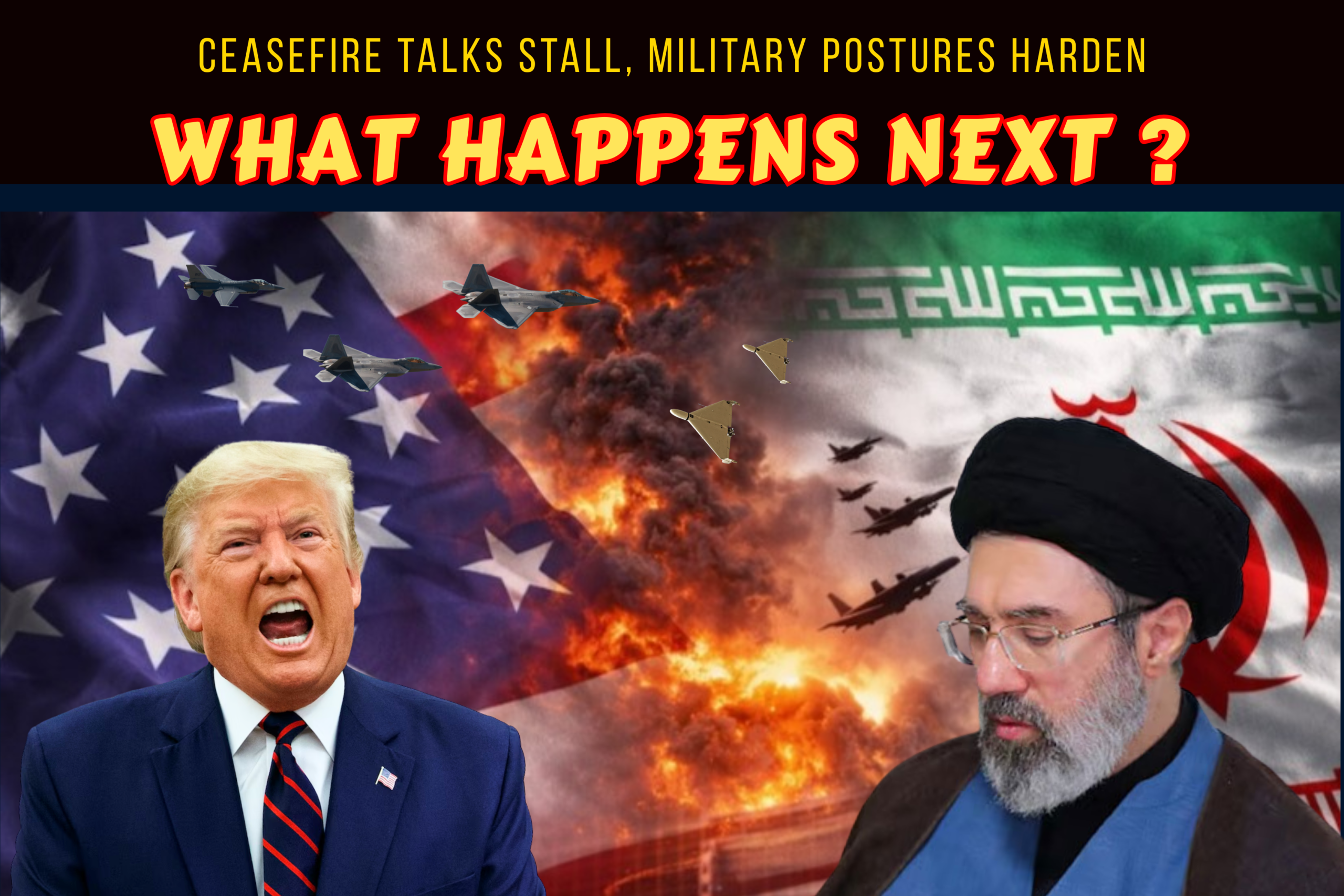
The midnight deadline has passed. In situation rooms across Washington, Tehran, and allied capitals, military planners and diplomatic envoys are weighing the same question: has the window for de-escalation closed, or has it merely narrowed to a thread?
For days, the Middle East has operated under the shadow of an April 7 ultimatum issued by Washington: reach a ceasefire agreement or face expanded strikes on Iranian energy and infrastructure targets. Publicly, diplomacy has stalled. Iran rejected a Pakistani-brokered 45-day pause, countering with demands that U.S. officials dismissed as maximalist. Militarily, both sides have accelerated operations. U.S. and Israeli forces have struck petrochemical complexes, missile depots, and high-value IRGC commanders, while Iran has launched coordinated ballistic and drone attacks across Israel, Kuwait, the UAE, and Jordan, even deploying cluster munitions in recent salvos.
Yet beneath the hardened rhetoric and visible kinetic activity, backchannel communications remain active. Mediators in Ankara, Doha, and Islamabad continue shuttling proposals. Military postures suggest readiness for escalation, but not necessarily intent for total war. The US-Iran standoff now sits at a critical inflection point. The trajectory of the next 48 to 72 hours will determine whether calibrated pressure yields a negotiated pause or whether miscalculation, domestic imperatives, or proxy dynamics push the region into a broader, more destabilizing conflict.
This analysis examines the diplomatic deadlock, the military realities on the ground, the global stakes of Strait of Hormuz disruptions, and the plausible scenarios that will shape what comes next.
The Diplomatic Deadlock
On April 6, Tehran formally rejected a ceasefire proposal brokered by Pakistan that would have instituted a 45-day pause in hostilities and reopened the Strait of Hormuz to pending negotiations. In its place, Iranian officials presented a counterproposal that included a permanent regional ceasefire, a formal “protocol for safe passage” through the Hormuz chokepoint, international reconstruction support, and comprehensive sanctions relief. U.S. officials quickly characterized the terms as “maximalist,” noting they effectively demanded strategic concessions before any reduction in hostilities.
The public framing of the talks suggests irreconcilable positions. Washington insists on an immediate, verifiable halt to Iranian and proxy attacks as a precondition for broader negotiations. Tehran argues that any temporary pause without guarantees on long-term security, economic relief, and maritime access would merely provide the U.S. and Israel with operational breathing room to consolidate gains.
Yet diplomatic channels remain open. Iranian Foreign Minister Abbas Araghchi held consecutive calls with his Turkish and Qatari counterparts on April 6, while Omani and Pakistani envoys continue quiet shuttling between regional capitals. This pattern is consistent with Middle East crisis diplomacy: public hardline positioning often masks private flexibility, and formal deadlines frequently serve as negotiating anchors rather than irreversible triggers.
Historical precedent supports this reading. During previous U.S.-Iran confrontations, including the 2019-2020 escalation cycle and the 2024 regional flare-ups, public ultimatums were routinely followed by mediated off-ramps that allowed both sides to claim strategic victory while avoiding uncontrolled escalation. The current dynamic appears to follow a similar script, though with higher stakes given the expanded target sets, active multi-front proxy coordination, and direct strikes on Iranian energy infrastructure.
The diplomatic challenge is no longer whether both sides want to avoid all-out war. It is whether they can construct a mutually acceptable face-saving mechanism that addresses immediate security concerns while leaving longer-term grievances for future negotiation. That mechanism, if it exists, is likely being drafted away from public view.
Military Realities on the Ground
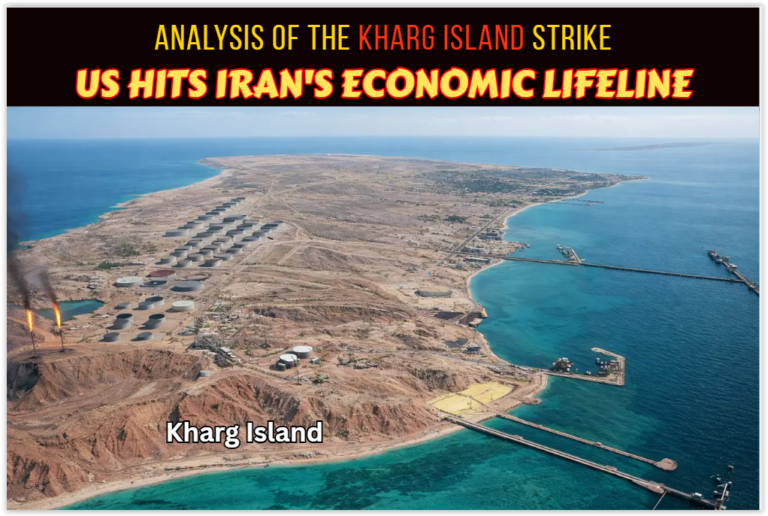
The kinetic landscape reflects a conflict operating at high tempo but within calculated parameters. U.S. and Israeli forces have maintained a coordinated strike campaign targeting Iran’s missile launch infrastructure, air defense networks, defense industrial facilities, and energy export nodes. The Israel Defense Forces confirmed strikes on Iran’s two largest petrochemical complexes—South Pars and Bandar Imam—which together account for approximately 85% of Iranian petrochemical exports. Additional operations have targeted missile depots in Bushehr, airbases in Tehran Province, and defense contractors such as Shiraz Electronics Industries.
High-value targeting has also intensified. Recent strikes eliminated IRGC Intelligence Chief Maj. Gen. Majid Khademi and Quds Force Unit 840 Commander Ashar Bagheri in coordinated operations over Tehran. These eliminations degrade Iranian command-and-control capabilities but also signal a willingness to escalate the personal stakes for Iranian security leadership.
Iran’s retaliatory posture has been multi-domain and geographically dispersed. On April 6, ballistic missile salvos struck central Israel, with initial assessments indicating at least one warhead deployed cluster munitions—a tactical adaptation that increases area effect and civilian risk but suggests Iran is maximizing impact from a constrained inventory. Coordinated alerts were triggered simultaneously across northern, central, and southern Israel, reflecting deliberate timing designed to stretch Israeli air defense and civil defense resources. Beyond Israel, Iranian cruise missiles struck targets in Kuwait and the UAE, while Jordan reported intercepting multiple drones but confirmed one missile impact on its territory.
Proxy forces have maintained synchronized but calibrated activity. Hezbollah continues rocket and FPV drone campaigns from Lebanon, prompting intensified Israeli ground operations in southern Lebanon that have reportedly resulted in over 1,100 fighter casualties since early March. Houthi forces in Yemen have sustained maritime pressure in the Red Sea, while Iranian-aligned militias in Iraq, Jordan, and Bahrain continue low-intensity drone attacks against U.S. facilities. These operations demonstrate coordination without crossing thresholds that would trigger direct state-on-state war.
A critical wildcard remains Iran’s nuclear infrastructure. On multiple occasions, projectiles have landed near the Bushehr Nuclear Power Plant. The International Atomic Energy Agency has confirmed no radiation releases, but the recurrence of strikes near civilian nuclear facilities underscores the fragility of critical infrastructure in active combat zones and raises long-term safety and environmental concerns.
Verification remains a persistent challenge. Restricted media access in Iran, the fog of active combat, and competing official narratives mean that casualty figures, infrastructure damage assessments, and strike effectiveness claims must be treated with caution. Cross-referencing satellite imagery, OSINT tracking, and independent monitoring remains essential for accurate reporting.
The April 7 Deadline: Meaning and Implications
The April 7 deadline was never solely a military trigger; it was a diplomatic instrument, a domestic political marker, and an operational planning horizon rolled into one. Publicly, it served to pressure Iranian decision-makers by framing inaction as a choice with escalating consequences. Behind the scenes, it provided U.S. military planners with a fixed timeline to prepare for expanded strike packages targeting power grids, refineries, and transportation corridors.
U.S. officials have confirmed that contingency plans for infrastructure strikes are in place. The stated objective is not regime change or total military destruction, but rather coercive pressure designed to bring Tehran back to the negotiating table with revised terms. The escalation ladder appears deliberately structured: limited, high-impact strikes that degrade Iranian revenue and logistical capacity while avoiding direct attacks on nuclear facilities or major population centers.
Iran’s red lines are equally clear. A sustained campaign against energy infrastructure would threaten regime stability by crippling export revenues and exacerbating domestic economic strain. In response, Tehran has signaled readiness to escalate across multiple vectors: sustained ballistic missile campaigns, broader Strait of Hormuz restrictions, and activation of proxy networks at higher intensity. Iranian state media has repeatedly warned that any strike on “critical national infrastructure” will be met with “unrestricted response,” though the operational meaning of that phrase remains deliberately ambiguous.
Historically, public deadlines in Middle East crises have rarely resulted in immediate, uncontrolled escalation. More often, they create a compressed negotiation window where backchannel actors work to construct mutually acceptable off-ramps before the clock expires. The April 7 deadline has now passed, but the absence of immediate large-scale strikes does not indicate de-escalation; it suggests both sides are assessing whether the pressure applied has been sufficient to shift the other’s negotiating posture.
The critical variable is now time. If diplomatic momentum does not materialize within days, the conflict risks entering a self-sustaining escalation spiral where military action dictates political reality rather than the reverse.
Strait of Hormuz: The Global Stakes
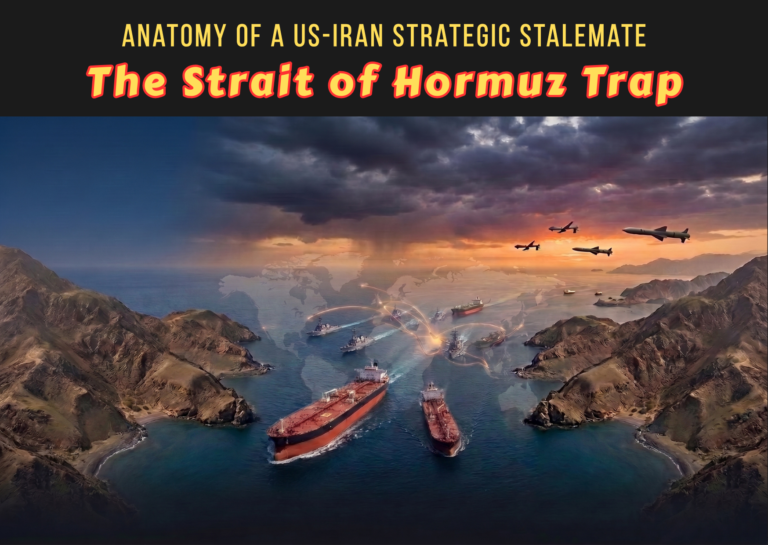
Few geographic chokepoints hold as much strategic and economic weight as the Strait of Hormuz. Roughly one-fifth of global oil consumption and nearly a third of global LNG trade transit its narrow waters. The strait’s current operational status is neither fully open nor completely closed; it exists in a state of managed restriction.
Pre-conflict, an average of 138 commercial vessels transited the strait daily. By early April, that number had plummeted to a dozen openly reporting via AIS. Iranian authorities have implemented a vessel-vetting system that requires commercial ships to seek clearance before passage. Under this protocol, Iranian media reported that 15 ships were “allowed” to transit on April 6, suggesting a selective access model rather than a blanket closure.
Specific incidents highlight the coercive nature of this approach. The Marshall Islands-flagged LNG carrier Rasheed and the Bahamas-flagged tanker Al Dayeen, both bound for China, were turned back on April 6. An Indian-flagged vessel was detained, and insurance premiums for Gulf transits have surged to levels not seen since the 2019 tanker incidents. Global energy markets have responded with heightened volatility, prompting the International Energy Agency to review contingency release mechanisms and major Asian importers to accelerate alternative routing plans.
Iran’s strategy appears calibrated: maintain enough commercial flow to preserve revenue and avoid triggering a full international naval coalition response, while restricting enough traffic to exert economic and political leverage. A complete closure would constitute an act of economic warfare with immediate global consequences, including potential oil price shocks exceeding $150 per barrel, severe supply chain disruptions, and rapid military retaliation from the U.S. Fifth Fleet and allied navies. Tehran is aware of this threshold and has so far avoided crossing it.
The naval posture in the region reflects this delicate balance. U.S. and allied warships maintain freedom of navigation operations, escort capabilities, and rapid response postures, while avoiding direct confrontation with Iranian patrol forces unless commercial shipping is actively interdicted or attacked. The strait remains a pressure valve, not a detonator—for now.
Regional Fallout and Humanitarian Concerns
The human cost of the conflict is difficult to quantify but increasingly visible. Civilian casualty reports from Iran, Israel, and Gulf states remain fragmented due to restricted access, conflicting official narratives, and the rapid pace of strikes. The confirmed use of cluster munitions in Iranian missile salvos elevates civilian risk, particularly in urban areas like Haifa and central Israel, where unexploded ordnance poses long-term hazards.
In Iran, strikes on petrochemical and industrial facilities have disrupted local economies and raised concerns about environmental contamination, though independent verification remains limited. Displacement risks are mounting in border regions and areas near repeated strike zones, with regional governments preparing contingency reception centers and international humanitarian organizations urging protected corridor agreements.
Nuclear safety remains a paramount concern. The repeated projectile incidents near Bushehr, while not resulting in radiation releases, highlight the vulnerability of civilian nuclear infrastructure to collateral damage or targeting miscalculation. The IAEA has maintained monitoring capabilities, but active conflict conditions limit real-time verification and emergency response readiness. A direct strike on a nuclear facility, whether intentional or accidental, would trigger regional and global crisis protocols with unpredictable consequences.
Humanitarian diplomacy has so far operated in the background. Cross-border medical supply channels, prisoner exchange negotiations, and civilian evacuation corridors have not been publicly announced, but regional health ministries and UN agencies are reportedly preparing for scaled-up response operations. The absence of formal humanitarian pauses increases the risk of compounding crises, particularly if infrastructure damage disrupts water, power, or healthcare systems.
Scenarios: What Happens Next
The trajectory of the conflict will likely follow one of four plausible pathways over the coming weeks. Each carries distinct triggers, operational patterns, and strategic implications.
1. Last-Minute Diplomatic Breakthrough (20–25% probability)
A mediated agreement emerges from backchannel negotiations, likely involving modified terms: a temporary ceasefire, limited Hormuz access guarantees, and phased discussions on sanctions relief. Both sides claim strategic victory while pausing kinetic operations. De-escalation follows, but underlying tensions and proxy activity persist at reduced levels.
2. Limited U.S. Strikes, Contained Iranian Response (40–45% probability)
The April 7 deadline passes without agreement, prompting targeted U.S. strikes on power infrastructure, refineries, and transportation nodes. Iran responds with proportional missile salvos and maintained Hormuz restrictions but avoids full closure. Proxy activity increases but remains below war-triggering thresholds. Escalation risk stays elevated, but diplomatic channels remain active for crisis management.
3. Major Escalation and Regional War (20–25% probability)
Miscalculation, high-casualty strike, or domestic political imperative triggers uncontrolled escalation. U.S. launches comprehensive campaign against Iranian energy sector; Iran responds with full Hormuz closure, sustained missile campaigns, and activated proxy networks across Lebanon, Yemen, and Iraq. Direct U.S.-Iran military confrontation occurs. Oil prices spike globally, regional governments mobilize, and UN emergency sessions convene. Humanitarian and economic impacts become severe.
4. Protracted Stalemate (10–15% probability)
No formal agreement is reached, but kinetic tempo gradually declines. Strikes continue at reduced frequency, Hormuz remains partially restricted, and proxy activity persists at low intensity. The conflict settles into a war of attrition lasting weeks to months. Economic pressure builds on both sides, domestic political fractures emerge, and eventual negotiated settlement becomes inevitable but delayed.
Key variables will determine which scenario materializes: U.S. domestic political timelines, Iranian leadership cohesion, Israeli operational autonomy, regional mediator effectiveness, and international economic pressure. The next 72 hours will provide the clearest signals of trajectory.
What to Watch: Indicators and Timelines
Monitoring the conflict requires tracking specific, verifiable indicators across diplomatic, military, economic, and humanitarian domains.
Immediate (24–48 Hours)
- Official statements from the White House, Iranian Foreign Ministry, and mediating governments
- Hormuz transit data updates from JMIC and commercial AIS trackers
- Israeli Home Front Command alert frequency and geographic distribution
- Brent crude and LNG futures price movements
- IAEA statements on nuclear facility monitoring
Short-Term (3–7 Days)
- U.S. force posture changes: carrier group deployments, bomber task force rotations, logistics prepositioning
- Iranian missile launch frequency, targeting patterns, and weapon types deployed
- Hezbollah operational tempo and Israeli ground operation expansion in Lebanon
- UN Security Council emergency sessions or regional bloc statements (GCC, Arab League)
- IEA strategic petroleum reserve release decisions
Medium-Term (2–4 Weeks)
- Iranian economic indicators: rial exchange rate, inflation metrics, export revenue reports
- Domestic political developments in the U.S., Iran, and Israel
- Regional alliance shifts and defense posture adjustments
- Humanitarian situation assessments and displacement tracking
- Recurrence pattern of strikes near civilian nuclear infrastructure
Analysis: Strategic Implications
The US-Iran standoff carries implications that extend far beyond bilateral relations. For U.S. foreign policy, the conflict tests the credibility of diplomatic ultimatums, the sustainability of Middle East force posture, and the broader strategic competition with China and Russia. Prolonged engagement risks draining military and economic resources while providing geopolitical competitors with opportunities to expand influence in energy markets and regional diplomacy.
For the Iranian regime, the conflict presents a survival calculus. Economic deterioration, military capacity constraints, and domestic political pressure create incentives for negotiation, while ideological commitments and regional influence ambitions push toward sustained resistance. The regime’s ability to manage proxy networks, maintain domestic cohesion, and project strategic deterrence will determine its long-term trajectory.
Regionally, the conflict accelerates shifts in security architecture. GCC states are recalibrating defense postures and exploring multilateral security frameworks. Israel’s strategic position is reinforced militarily but complicated diplomatically. Proxy warfare continues to evolve toward decentralized, technology-enabled operations that blur traditional state-nonstate boundaries. Nuclear proliferation risks increase as regional states reassess deterrence requirements.
Globally, the crisis underscores the vulnerability of energy chokepoints and the urgent need for supply chain diversification. Long-term market restructuring, including accelerated transitions to alternative energy routes and strategic reserve expansions, will likely follow regardless of the conflict’s immediate outcome.
Conclusion
The US-Iran conflict has entered a narrow window where diplomatic off-ramps and military escalation paths converge. Stalled negotiations do not mean closed channels. Military actions reveal both capability and constraint. Regional and global stakes extend far beyond Washington and Tehran, touching energy markets, civilian populations, and the architecture of Middle East security.
The next 48 to 72 hours will not determine the conflict’s ultimate outcome, but they will set its trajectory. If backchannel diplomacy produces a calibrated pause, the region may step back from the brink. If kinetic operations continue unchecked, escalation dynamics could become self-sustaining. The narrow window for negotiated de-escalation remains open, but it is closing.
For policymakers, analysts, and civilian populations alike, the imperative is clear: prioritize verification, avoid worst-case assumptions without evidence, and recognize that in modern crisis diplomacy, the space between public rhetoric and private negotiation is often where peace is preserved—or lost. The clock has not stopped ticking. It has only changed tempo.