(By Khalid Masood)
I. Introduction: A Crisis No Longer Contained
“We’re going to hit them extremely hard over the next two to three weeks — we’re going to bring them back to the Stone Age, where they belong.”
— President Donald Trump, Prime-Time Address, April 2026
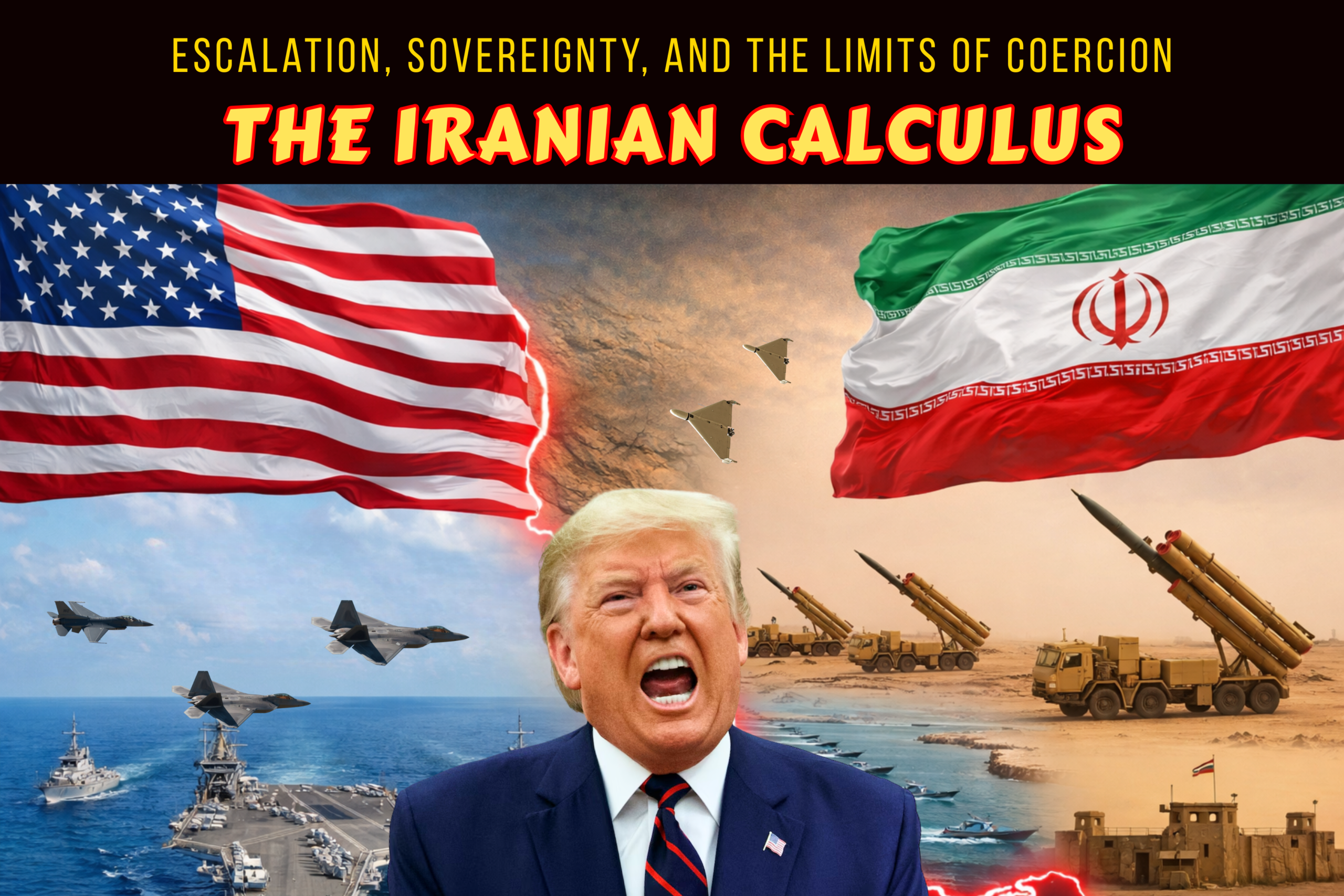
When the White House deployed rhetoric of civilisational erasure, it echoed a familiar American playbook: the assumption that overwhelming force can compel a state with millennia of institutional memory to capitulate. Yet beneath the theatrics lies a more durable reality. Iran has spent decades studying foreign interventions, embedding asymmetric defences, and recalibrating its economic architecture to withstand external pressure. What Washington frames as a decisive campaign is, in Tehran, understood as another test of strategic endurance. The confrontation has long ceased to be a contained bilateral dispute. It is now a multi-layered geopolitical stress test, one in which geography, historical memory, and adaptive resilience are proving as decisive as carrier groups and precision munitions.
II. The Trust Deficit: Why Diplomacy Has Stalled
From the Iranian perspective, the door to negotiation was not closed by obstinacy, but by precedent. The unilateral withdrawal from the 2015 nuclear agreement, followed by maximum-pressure sanctions, covert operations, and public ultimatums, left Iranian strategists with a consistent lesson: concessions are rarely met with reciprocity, but with renewed leverage.
“Dialogue under the shadow of coercion is not diplomacy. It is submission dressed in diplomatic language.”
— Former Iranian Foreign Ministry Adviser, Regional Security Briefing, March 2026
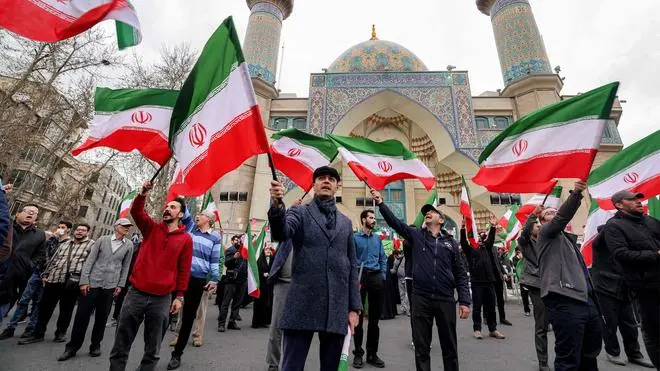
Tehran’s insistence on negotiating from a position of parity is not ideological rigidity; it is a rational response to a documented pattern of asymmetrical expectations. In a region where sovereignty has been repeatedly compromised, Iranian leadership views strategic patience not as delay, but as survival.
III. Escalation Pathways: What Washington Is Signalling
American rhetoric points toward two primary escalation vectors: a ground incursion and the systematic targeting of critical infrastructure. Both are fraught with operational and political miscalculation. Secretary of War Pete Hegseth’s recent articulation of a “Greater North America” security perimeter—framing hemispheric resource consolidation as the next strategic imperative—has only deepened regional suspicions that Washington’s objectives extend far beyond non-proliferation.
| Operational Factor | Strategic Reality | Implication for Ground Operations |
|---|---|---|
| Zagros Mountain Corridor | Rugged, elevation 2,000–4,000m, narrow passes | Ideal for ambush, drone deployment, and supply-line interdiction |
| Eastern Desert Approaches | >1,500km from nearest viable staging area to Tehran | Logistically unsustainable for sustained armoured thrusts |
| Southern Coastal Landing | Exposed to coastal artillery, anti-ship missiles, and minefields | High casualty risk; vulnerable to asymmetric naval response |
| Force Requirement Estimates | 3–4 million personnel for occupation vs. ~1.3M active US personnel | Mathematical impossibility without mass mobilisation or allied conscription |
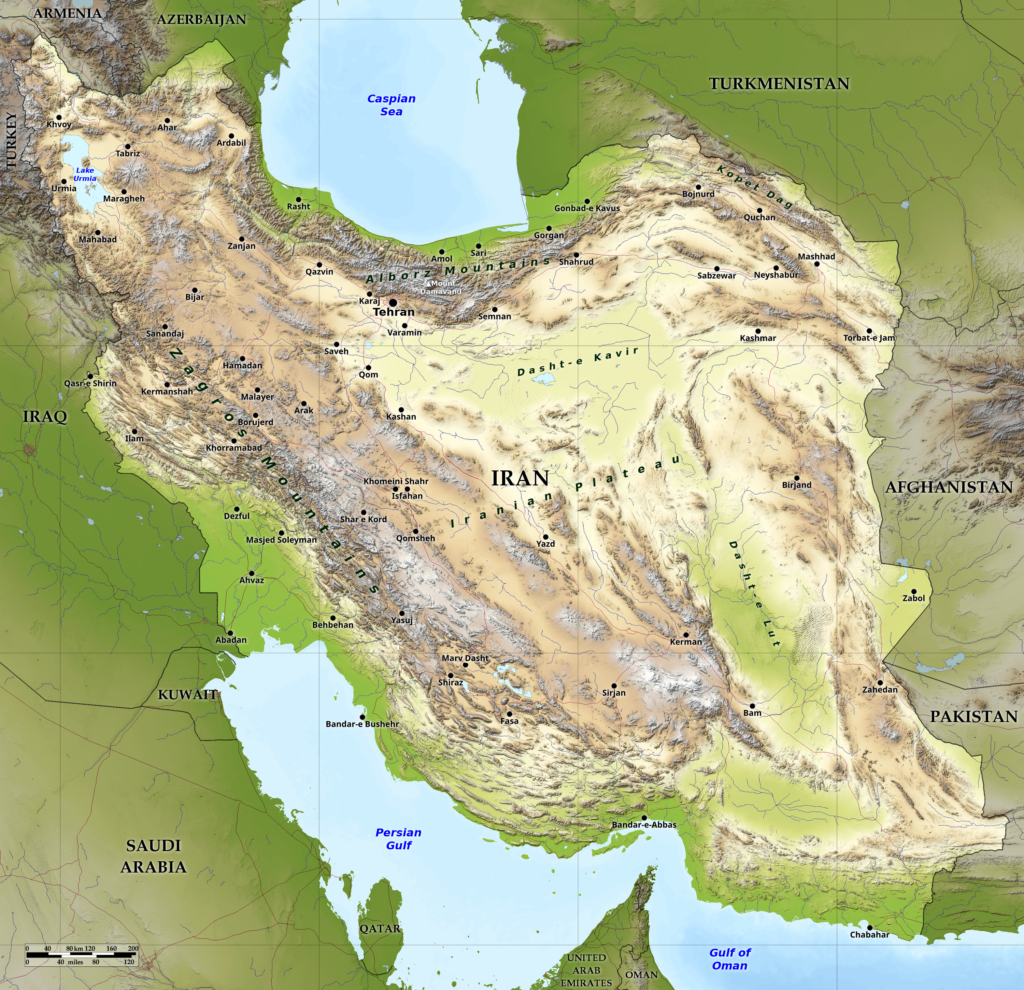
Military historians and regional defence analysts consistently note that terrain of this complexity neutralises technological superiority. Iran’s layered defence doctrine—decentralised command nodes, underground munition caches, and mobile missile batteries—is explicitly calibrated to exploit these vulnerabilities.
Internal Dissent: Leadership Changes and Strategic Disagreement
“When coercive campaigns outrun institutional consensus, the resulting friction often becomes the defender’s greatest ally.”
— Regional Strategic Analyst, Middle East Security Review, April 2026
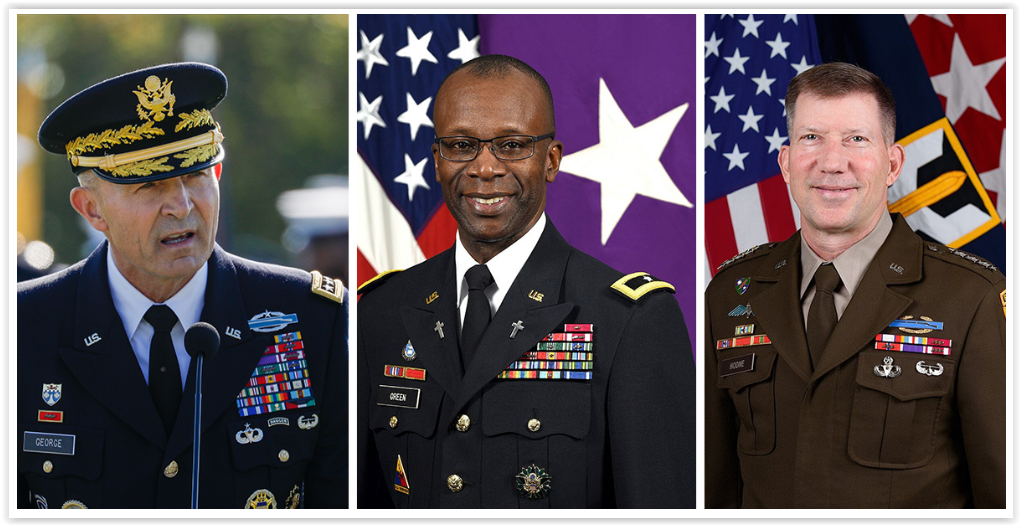
On 3 April 2026, Pentagon spokesperson Sean Parnell confirmed that General Randy George would retire from his position as Chief of Staff of the US Army “effective immediately”. The announcement followed reports that Secretary of War Pete Hegseth had directly requested the general’s departure amid the ongoing conflict with Iran.
While the Pentagon did not publicly specify a reason for the abrupt change, multiple defence analysts and regional observers have linked the decision to reported disagreements over the feasibility and wisdom of expanding ground operations against Iran. General George, appointed under the previous administration in 2023, was widely regarded as a cautious strategist who emphasised logistical readiness and alliance coordination—positions reportedly at odds with the accelerated escalation timeline advocated by civilian leadership.
The removal was not isolated: reports indicate that two other senior generals were also reassigned or asked to retire in the same shake-up. For observers of civil-military relations, the episode raises familiar questions about the balance between political direction and professional military judgement. Historically, the forced departure of senior uniformed leaders during active conflict has preceded strategic recalibrations—or, in some cases, prolonged miscalculation.
From Tehran’s perspective, such internal friction within the US command structure is neither surprising nor unwelcome. Iranian strategic doctrine has long emphasised the value of patience: allowing an adversary’s political and military institutions to generate their own contradictions.
| Event | Date | Official Stated Reason | Reported Context | Source |
|---|---|---|---|---|
| General Randy George asked to retire as Army Chief of Staff | 3 April 2026 | Not publicly specified | Reported disagreements over Iran ground operation planning; broader Pentagon leadership shake-up | Pentagon briefing; multiple defence outlets |
| Two additional senior generals reassigned | Early April 2026 | Routine personnel rotation (unconfirmed) | Linked by analysts to strategic dissent on Iran escalation | CBS, SFG Media, regional defence monitors |
| Christopher LaNeve appointed Vice Chief of Staff | February 2026 | Standard succession planning | Positioned as potential successor amid leadership uncertainty | BBC, defence appointments tracker |
IV. Military Reality Check: Capabilities, Constraints, and Uncertainties
Despite narratives of unchallenged aerial dominance, the operational picture remains contested. Iranian air defences have demonstrated persistent effectiveness, and reports of coalition aircraft losses, underscore the limits of force projection in denied airspace. More significantly, Iran’s military strategy does not rely on matching Western platforms, but on systemic disruption: swarm drone tactics, anti-access/area-denial networks, and precision strikes against forward logistics hubs.
| Metric | Estimated Figure | Strategic Context |
|---|---|---|
| Daily Conflict Expenditure | ~$1.0–1.2 billion (US-led operations) | Equivalent to ~12% of annual Pentagon discretionary budget if sustained for 90 days |
| Regional Troop Posture | ~50,000 US personnel across Gulf bases | Highly concentrated; vulnerable to saturation missile/drone strikes |
| Iranian Underground Facilities | 100+ confirmed hardened sites across Zagros & central ranges | Designed to survive sustained aerial campaigns; command redundancy built-in |
| Hostage/Captured Personnel Precedent | Historically shifts negotiation leverage, triggers domestic political pressure | Even single confirmed detentions alter strategic calculus and public tolerance |
The assumption that precision strikes will yield rapid capitulation overlooks a fundamental reality: a state that has institutionalised foreign intervention as a national security lesson is unlikely to be caught unprepared.
V. Economic Flashpoints: Energy, Currency, and Global Supply Chains
The Strait of Hormuz remains the geopolitical fulcrum of the crisis. Roughly a fifth of global oil transit passes through these waters, alongside critical shipments of liquefied natural gas, agricultural fertilisers, and semiconductor precursors. Iran’s reported exploration of yuan-denominated transit fees and bilateral energy settlements is frequently characterised as sanctions evasion. Yet it may be more accurately understood as sovereign economic adaptation.
| Commodity/Flow | Daily Transit Volume | Global Dependency | Disruption Impact |
|---|---|---|---|
| Crude Oil | ~18–20 million barrels | ~30% of seaborne trade | Immediate price spikes; Asian/European refining strain |
| Liquefied Natural Gas | ~4–5 million tonnes | ~25% of global LNG | European/Asian winter supply vulnerability |
| Ammonia/Urea Fertilisers | ~1.2 million tonnes | Critical for South Asian/African agriculture | Food security shocks within 60–90 days |
| Helium & Sulfuric Acid | Niche but irreplaceable | Semiconductor & industrial manufacturing | Supply chain bottlenecks in tech/defence sectors |
“The dollar’s utility is no longer guaranteed by force alone. When settlement mechanisms are weaponised, alternatives emerge not as ideology, but as necessity.”
— Senior Energy Economist, Gulf Policy Institute, February 2026
While the greenback’s dominance is unlikely to dissolve overnight, the gradual diversification of trade settlement reflects a broader structural shift. Nations across the Global South are re-evaluating their exposure to unilateral financial coercion, and Iran’s positioning within this recalibration underscores a quiet but persistent challenge to monetary hegemony.

VI. Regional Ripple Effects: Allies, Adversaries, and Non-Aligned States
The broader Middle East watches with acute caution. Gulf states, long reliant on American security guarantees, now navigate a precarious balance between alliance commitments and economic interdependence with regional neighbours. Israel’s strategic calculus remains focused on decisive deterrence, yet prolonged attrition threatens to entangle it in a conflict with no clear off-ramp.
Beyond the immediate theatre, BRICS+ nations and non-aligned states are observing how Washington’s approach aligns with broader patterns of intervention. Iran’s emphasis on regional sovereignty and multipolar engagement resonates increasingly in capitals that view unilateral coercion as a relic of a fading order. The crisis, therefore, is not merely about two adversaries; it is a referendum on the future architecture of international relations.
VII. Strategic Frameworks: Competing Interpretations of US Intent
Analysts have proposed several frameworks to interpret Washington’s posture. Some suggest a deliberate unravelling of the post-war liberal order in favour of a resource-centric, hemispheric bloc. Others argue for a strategy of calibrated pressure designed to force concessions without triggering full-scale war. What both overlook, however, is the Iranian capacity for strategic patience.
“Coercion without credible pathways to integration does not break states. It consolidates them. The historical record is clear: empires that mistake resilience for rigidity often find themselves overextended, while patient states outlast temporary surges of force.”
— Professor of Strategic Studies, Middle East Security Review, January 2026
Tehran has consistently demonstrated that pressure yields compliance only when accompanied by mutual security guarantees. Absent that, pressure accelerates alternative alignments and deepens institutional self-reliance.
VIII. The Human Equation: Costs Beyond Strategy
Behind the strategic calculus lie ordinary lives. Iranian civilians, already navigating economic constraints and international isolation, face the prospect of infrastructure disruption, supply chain fractures, and the psychological toll of sustained tension. American taxpayers absorb the financial burden of an open-ended engagement, while regional populations from the Gulf to South Asia brace for market volatility and energy insecurity.
“The heaviest price of geopolitical posturing is invariably paid by those furthest from the decision-making tables. Security cannot be measured solely in missile counts or currency reserves; it must be measured in bread, electricity, and the quiet dignity of survival.”
— Regional Humanitarian Coordinator, UN OCHA Field Briefing, March 2026
Any responsible analysis must centre this human reality, recognising that sovereignty and security are not abstract concepts, but the foundations upon which societies endure.
IX. Indicators to Watch: A Monitoring Framework for Readers
To navigate the uncertainty, observers should track several key markers:
| Category | Specific Indicators | Reliable Sources |
|---|---|---|
| Military | Troop movements, drone launch patterns, air defence readiness | DoD releases, Janes Defence, regional defence ministries |
| Diplomatic | Backchannel communications, third-party mediation, UN Security Council activity | Official statements, declassified cables, trusted regional media |
| Economic | Oil price volatility, currency swap agreements, shipping insurance premiums | IEA, BIS, Lloyd’s List, central bank reports |
| Information | Narrative shifts in state media, social media amplification, rhetoric de-escalation | Academic monitoring networks, independent media analysts |
In a conflict where perception often drives policy, discerning signal from noise is essential.
X. Conclusion: Responsible Analysis in an Uncertain Moment
The current confrontation is not merely a test of military capability, but of strategic wisdom. Iran’s posture, grounded in historical memory, geographical advantage, and asymmetric preparedness, reflects a state accustomed to navigating external pressure without surrendering sovereign agency. Washington’s approach, meanwhile, rests on assumptions that have repeatedly proven fragile in practice.
The path forward does not lie in escalation, but in recalibration: recognising that coercion without credible diplomacy yields only entanglement, and that regional stability requires respect for strategic autonomy. In an era defined by multipolarity and interconnected vulnerabilities, the most enduring outcomes are rarely dictated by force alone, but by the quiet discipline of patience, preparation, and principle.
“The measure of a nation’s strength is not the volume of its threats, but the depth of its resolve. Iran has learned, through centuries of external pressure, that sovereignty is not granted—it is maintained.”
— Tehran-Based Political Historian, April 2026