(By Khalid Masood)
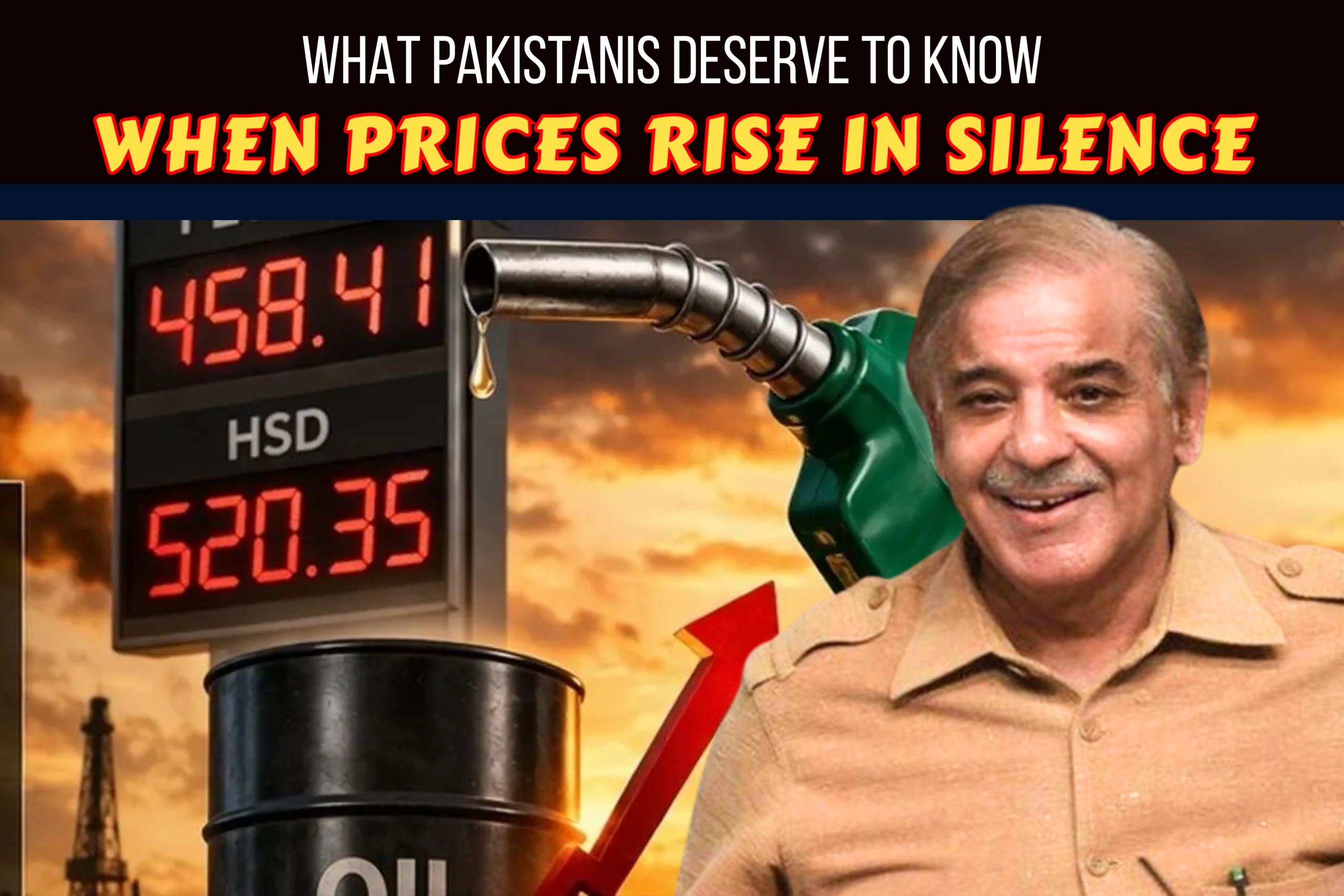
In early April 2026, millions of Pakistanis faced a sharp economic jolt: petrol prices surged to PKR 458.40 per litre (Now reduced to PKR 378), diesel crossed PKR 520, and households braced for immediate ripple effects across transport, food, and daily essentials. Official statements cited global crude volatility and exchange rate pressures—factors that are real, documented, and partially explanatory.
But for citizens feeling the pinch, the narrative felt incomplete.
Around the same time, Pakistan moved to repay approximately $3.5 billion to the United Arab Emirates—a significant facility that had previously been rolled over annually. This repayment, confirmed by financial reporting, came as Pakistan’s foreign exchange reserves remained constrained and the IMF program continued to shape fiscal discipline.
Separately, at an extraordinary meeting of Muslim foreign ministers in Saudi Arabia in late February, Pakistan took a firm diplomatic stance. While acknowledging regional tensions, Islamabad insisted that any credible communiqué must address Israel’s role in the broader crisis. Pakistan’s position, ultimately supported by Lebanon and Turkey, contributed to a revised final statement that included explicit condemnation of Israeli policies.
Officially, these three developments—domestic fuel pricing, external loan repayment, and diplomatic positioning—have been presented as separate tracks. But when economic decisions of this magnitude coincide with sensitive financial and diplomatic milestones, citizens have a legitimate right to ask: Are these events connected? And if so, what does that mean for the choices affecting our daily lives?
The Principle at Stake: Transparency Is Not Optional
This analysis does not allege undisclosed agreements or claim access to confidential diplomatic cables. It advances a simpler, foundational argument: When governments make decisions that impose significant hardship on citizens, they owe those citizens an explanation—not just of what was decided, but why.
If the timing or scale of Pakistan’s fuel price adjustments was influenced, even in part, by the need to meet external financial obligations or to uphold a particular foreign policy posture, that context matters. The public can engage with complexity. What erodes trust is not difficulty—it is silence.
Critical Context: What the Numbers Actually Show
Before assessing the rationale for recent price adjustments, three contextual factors warrant attention:
1. Indigenous production provides a partial buffer. Approximately 25–30% of Pakistan’s crude oil supply comes from domestic production. This means nearly a third of the fuel consumed is insulated from immediate global price swings and forex volatility. While not sufficient to eliminate import dependence, this share should, in principle, moderate the pass-through of international shocks to domestic prices.
2. Saudi support eases near-term forex pressure. Pakistan continues to receive oil shipments from Saudi Arabia under a deferred payment facility. This arrangement allows the country to defer payment for a meaningful portion of its imports, reducing immediate strain on foreign exchange reserves. If this facility remained active during the recent price revision, it further complicates the justification for sharp, unexplained increases.
3. Historical price comparisons require careful framing. It is sometimes suggested that current prices, while high, reflect necessary economic corrections. Yet the data tells a more nuanced story.
In early 2022, , Once Imran Khan was the Prime Minister, petrol prices hovered around PKR 150 per litre against comparable international prices. Even after adjusting for inflation and currency depreciation, current prices remain disproportionately high relative to moderated international crude trends.
The relevant question is not whether today’s price is higher or lower than a specific point in the past. Rather, it is this: given that international crude prices have stabilized, and considering Pakistan’s indigenous production and deferred-payment arrangements, what explains the magnitude and timing of recent adjustments?
These facts do not negate the economic challenges Pakistan faces. Global markets remain unpredictable; IMF program conditions constrain fiscal flexibility; and exchange rate pressures are real.
But they do sharpen the accountability question:
If domestic production buffers a third of supply, and if Gulf partners provide payment deferrals that ease forex outflows, why do consumers bear the full brunt of price volatility—without a clear, public explanation of the calculation?
Transparency does not require revealing negotiation tactics. It requires acknowledging the variables that shape decisions. For example:
- What share of the price revision reflects global crude movements versus exchange rate adjustments?
- How do deferred-payment facilities factor into the timing of domestic pricing decisions?
- To what extent does indigenous production mitigate import costs—and is that benefit passed to consumers?
When answers to these basic questions are absent, public trust erodes. Citizens are not asking for perfection. They are asking for clarity.
A Middle Path: Clarity Without Compromise
Governments may reasonably argue that disclosing every detail of sensitive financial or diplomatic negotiations could weaken their bargaining position or unsettle markets. This concern is valid.
But there is a middle path. A statement as simple as this would go a long way:
“Recent adjustments to energy prices reflect a combination of global market trends, exchange rate movements, and the need to honor Pakistan’s international financial commitments. The government remains committed to both economic stability and principled foreign policy, and will continue to communicate the rationale for difficult decisions as clearly as possible.”
That is not a confession. It is not a leak. It is basic democratic communication. It acknowledges complexity without revealing tactics. It respects the public’s intelligence without compromising operational security. And it treats citizens as stakeholders—not spectators.
What Citizens Are Asking For
Pakistanis have demonstrated remarkable resilience through repeated cycles of economic hardship. What they ask for in return is not perfection. It is honesty.
If tough choices were made to uphold a foreign policy principle, say so.
If external financial obligations shaped the timing of domestic measures, explain the trade-offs.
If the government believes a decision is necessary despite its short-term pain, make the case.
The people can handle the truth. What they cannot sustain is governance by silence.
Conclusion: Trust Is Earned in the Light
Fuel prices will eventually stabilize. Loans will be repaid or renegotiated. Diplomatic positions will evolve. But public trust, once eroded, is difficult to rebuild.
Pakistan’s leadership faces difficult choices. That is the reality of governing in a complex region with constrained resources. But difficulty does not excuse opacity.
If the government believes its recent decisions serve the national interest—whether for economic stability, diplomatic integrity, or both—it should say so, clearly and consistently. Let the debate happen in the open. Let citizens weigh in with full information. Let accountability be a feature of governance, not an afterthought.
Because in the end, a nation’s strength is not measured only by its reserves or its alliances. It is measured by the trust between those who lead and those they serve.
And that trust is earned—not in silence, but in the light.