(By Khalid Masood)
Introduction: The Paradox of Modern Power
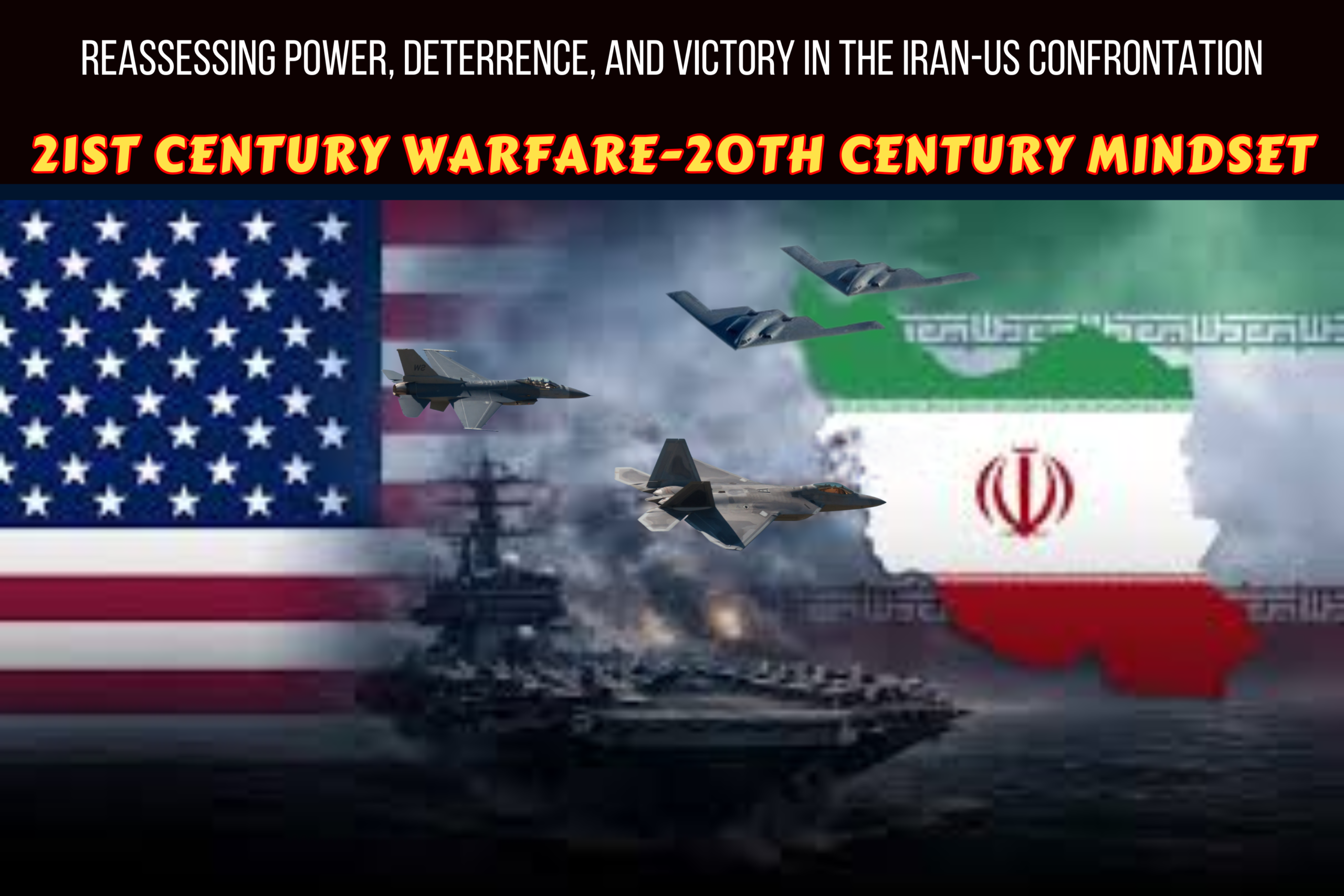
In the annals of military history, victory has traditionally been measured by the destruction of enemy capabilities, the seizure of territory, and the imposition of political will through overwhelming force. Yet, the recent confrontation between the United States and Iran presents a strategic paradox that challenges these conventional metrics. Despite possessing unparalleled conventional superiority—an annual defense budget exceeding $1.5 trillion, nearly 800 global military bases, and dominant naval and air platforms—the United States finds itself seeking an off-ramp from a conflict it has not decisively won. Conversely Iran, operating with a fraction of the financial and material resources, has successfully deterred escalation and maintained its strategic posture.
This disconnect suggests a fundamental shift in the nature of statecraft and conflict. We are witnessing the collision of a 20th-century security architecture, built on the premise of absolute security through platform dominance, against a 21st-century warfare model defined by asymmetry, virtual domain capabilities, and multipolar alignment. This article analyzes the strategic dynamics of this confrontation, the role of emerging technologies, and the implications for the evolving global order.
I. The Trap of Absolute Security: The 20th Century Model
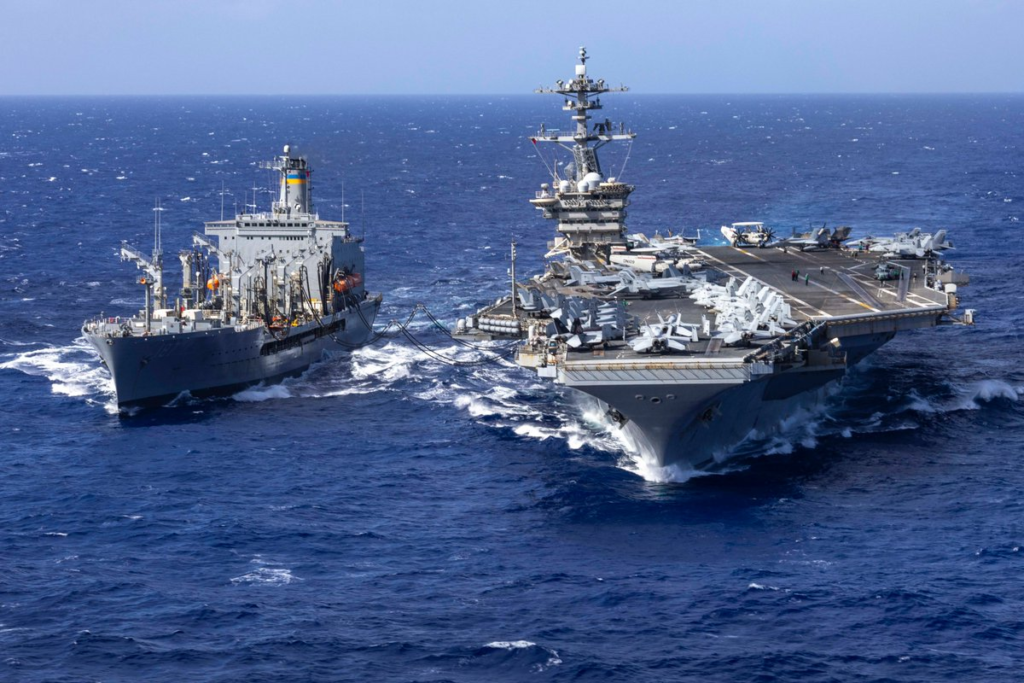
The United States’ approach to the Iran confrontation is rooted in the post-Cold War unipolar moment. This security architecture relies on the concept of Absolute Security: the belief that dominance in physical platforms (aircraft carriers, stealth fighters, nuclear submarines) guarantees strategic outcomes.
Key Characteristics of this Model:
- Platform-Centric Warfare: Reliance on high-cost, high-maintenance assets that require extensive logistical tails.
- Alliance Dependency: The expectation that regional allies will integrate into US-led coalitions, providing troops and basing rights to enforce American security objectives.
- Escalation Dominance: The assumption that superior firepower allows for control over the escalation ladder.
However, in the current theater, this model has encountered friction. The US expectation that regional allies would fully commit troops and platforms to a war for American security objectives has not materialized to the required degree. Furthermore, the cost of maintaining absolute security in a contested environment has become politically and economically unsustainable. The US is repeatedly seeking diplomatic off-ramps, signaling that conventional superiority alone cannot compel a determined asymmetric adversary without unacceptable risk.
II. The Asymmetric Edge: 21st Century Warfare Capabilities
Iran’s strategy represents a matured form of Asymmetric Warfare, perfected over decades. Rather than attempting to match the US platform-for-platform, Iran has focused on denying the adversary the ability to operate freely within the battlespace.
Core Components of the Asymmetric Strategy:
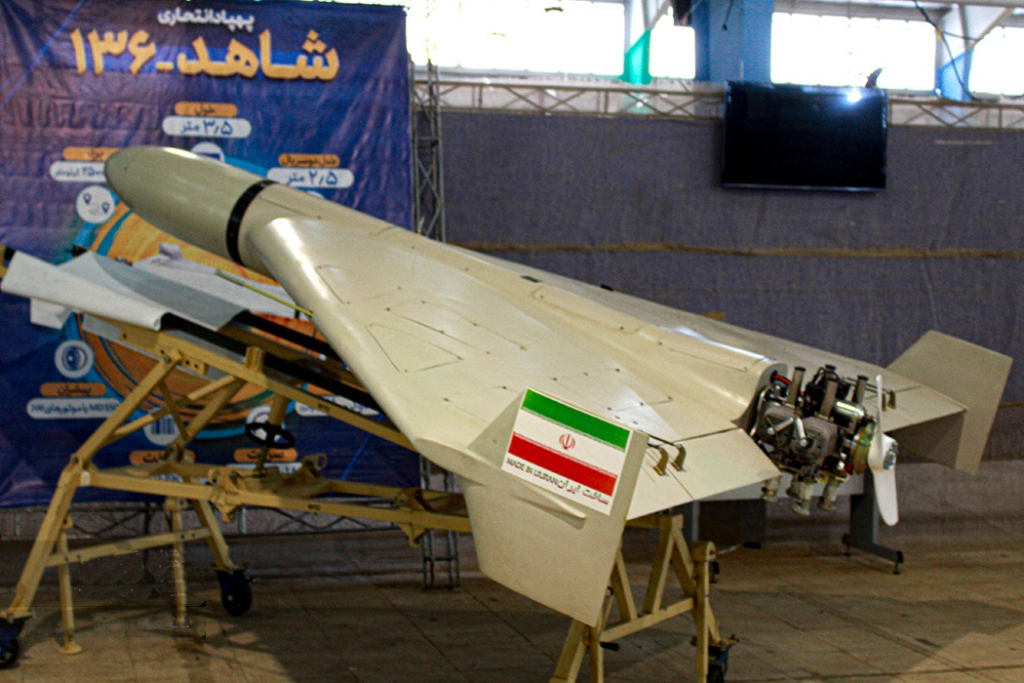
- Missile and Drone Swarms: The deployment of varied missile systems and unmanned aerial vehicles (UAVs) at scale. This saturates defense systems and imposes a unfavorable cost-exchange ratio on the defender.
- Proxy Networks: Leveraging regional partners to extend reach and complicate the adversary’s target set.
- The Virtual Domain: Perhaps the most critical shift is the integration of space, cyber, and electronic warfare capabilities.
The Technology Multiplier: BeiDou and Precision
A pivotal element in this conflict has been the integration of advanced satellite navigation and surveillance systems. Reports indicate that Iran has leveraged capabilities akin to China’s BeiDou-3 satellite constellation, supplemented by low-earth orbit augmentation satellites (such as the Yaogan series).
Unlike the US GPS system, which can be vulnerable to jamming or degradation in contested zones, these alternative constellations offer:
- Persistent Surveillance: The capability of “persistent stare,” allowing for 24/7 monitoring of the battlespace regardless of weather conditions.
- Precision Strike: Enhanced ability to guide long-range missiles and drones with accuracy previously reserved for major powers.
- Electronic Warfare Resilience: Robustness against electronic countermeasures that traditionally hindered weaker militaries.
This technological integration allows a regional power to project precision power without needing a massive air force or navy, fundamentally altering the deterrence equation.
III. The Multipolar Shield: Great Power Support Without Direct Engagement
A defining feature of 21st-century conflict is the ability of great powers to support partners without direct kinetic involvement. China and Russia have provided Iran with a Multipolar Shield, not by deploying troops, but by enabling sovereignty through technology and diplomatic cover.
The Strategy of Indirect Support:
- Technology Transfer: Sharing virtual domain capabilities (space, cyber, electronic spectrum) rather than manpower. This avoids direct great power conflict while significantly boosting the partner’s defensive posture.
- Diplomatic Alignment: Utilizing frameworks like the Shanghai Cooperation Organization (SCO) and BRICS to legitimize sovereignty claims.
- Strategic Messaging: Public statements supporting territorial integrity (e.g., regarding the Strait of Hormuz) serve as diplomatic deterrence.
This approach contrasts sharply with the 20th-century model of sending troops. As seen in recent regional exchanges (such as the 2025 India-Pakistan crisis), the sharing of electronic identification and space capabilities allowed the defending side to anticipate moves and manage escalation without necessarily engaging in prolonged ground combat. The lesson is clear: Military credibility in the multipolar era is derived from technological resilience and strategic autonomy, not just troop numbers.
IV. Diplomacy and Mediation: The Rise of Regional Intermediaries
As the limitations of military coercion become apparent, the focus has shifted to diplomacy. The recent mediation efforts highlight the changing geopolitical landscape.
Pakistan’s Strategic Positioning: Pakistan has emerged as a credible mediator, leveraging its unique relationships with the US, China, Russia, and West Asian nations. Recent diplomatic engagements, including meetings in Islamabad involving Turkey, Egypt, and Saudi Arabia, followed by high-level talks between Pakistan and China, underscore this role.
- The Five-Point Statement: Joint statements emphasizing the sovereignty and indivisible security of Iran and Gulf states reflect a shift away from regime change narratives toward stability and coexistence.
- Credibility: Unlike previous eras where mediation was dominated solely by Western powers, the current environment accepts mediators who maintain strategic ties with all major poles (US, China, Russia).
The Strait of Hormuz Question: Iranian leadership has signaled that the security of the Strait of Hormuz is a matter of territorial sovereignty involving Iran and Oman, rejecting the notion of it being purely international waters subject to external policing. This stance, backed by the threat of strategic closure, forces a recalibration of global energy security assumptions (the potential shift from Petrodollar to Petroyuan dynamics).
V. Strategic Lessons: Redefining Victory and Credibility
The confrontation offers three critical lessons for statecraft and military strategy in the coming decades:
- Victory is Political, Not Just Military: Military success is no longer defined by battlefield destruction but by the ability to achieve political objectives without catastrophic escalation. Iran’s ability to force negotiations on its terms constitutes a strategic victory despite conventional disparities.
- Technology Trumps Platforms: Access to space-based surveillance, cyber capabilities, and precision guidance allows smaller powers to neutralize the advantages of larger conventional forces. The “virtual domain” is now the center of gravity.
- Multipolarity Requires Adaptability: Nations that can navigate relationships across multiple power centers (US, China, Russia) gain strategic autonomy. Pakistan’s rising geopolitical profile demonstrates the value of being a connector rather than a subordinate ally.
Conclusion: Crossing the Rubicon
The ultimatum issued by President Trump with a deadline of April 6 represents a critical juncture. However, the strategic reality on the ground suggests that a return to 20th-century solutions—such as the induction of ground troops—would cross the Rubicon into a chaotic, unlimited war with no clear off-ramp.
The international community watches in disbelief not because Iran defeated America in a traditional sense, but because the rules of engagement have changed. The era of unipolar coercion is yielding to a multipolar reality where sovereignty is defended through asymmetric technology, strategic patience, and diplomatic alignment.
For policymakers, the takeaway is stark: Narrative building cannot replace military credibility, but military credibility is no longer solely about firepower. It is about resilience, technological integration, and the wisdom to recognize when the cost of absolute security exceeds its value. As the world transitions into this new order, the nations that understand the nuances of 21st-century warfare will define the peace, while those clinging to the past risk fighting wars they cannot win.