(By Khalid Masood)
I. The Verdict
WASHINGTON — The world awoke this morning to a transformed American political landscape. After months of uncertainty, voters delivered a resounding judgment on Donald Trump’s second, non-consecutive presidency: Democrats have seized control of both chambers of Congress, flipping the Senate and House in a wave that exceeded even the most optimistic Democratic projections.
The numbers are stark. In the Senate, Democrats flipped at least five seats—Texas, Ohio, Iowa, North Carolina, and Kansas—while holding their vulnerable incumbents in Arizona, Nevada, Wisconsin, and Pennsylvania. In the House, Democrats gained more than 10 seats, winning an estimated 252 seats to Republicans’ 183, with Hakeem Jeffries poised to become the first Black Speaker in American history.
The gubernatorial map shifted even more dramatically. Democrats won Texas for the first time since 1995, electing Gina Hinojosa as the state’s first Hispanic governor. In Georgia, Keisha Lance Bottoms became the first Black woman elected governor in American history. Republicans countered in Florida, where Byron Donalds became the state’s first Black governor. A record number of Black governors—Bottoms, Donalds, and Maryland’s Wes Moore—will serve concurrently.
Trump’s response was characteristically defiant. “I wasn’t on the Ballot and if I was, we would have won IN A LANDSLIDE!” he wrote on Truth Social. Yet the president had spent the final month of the campaign telling voters to “pretend” he was on the ballot, holding 28 rallies in October alone. The American people did pretend—and they resoundingly rejected what they saw.
“America is back,” declared House Democratic Leader Hakeem Jeffries in his victory speech. “The American people have spoken and made clear they’ve had enough of the extremism, enough of the corruption.”
The message was unmistakable: After seven months of war with Iran, record diesel prices, and persistent affordability concerns, voters wanted a check on presidential power. They got it.
II. The New Power Map in Washington
What Democratic Control Means
| Chamber | Previous Control | New Control | Key Change |
|---|---|---|---|
| Senate | Republican 53-47 | Democratic 51-49 | Flipped TX, OH, IA, NC, KS |
| House | Republican 218-212 | Democratic ~252-183 | 10+ seat gain; Jeffries likely Speaker |
| Presidency | Republican (Trump) | Republican (Trump) | Divided government |
Table 1: Control of the 120th Congress
The immediate implications are profound. For the first time since Trump’s return to office, congressional Democrats will have subpoena power. Representative Robert Garcia, likely the next chair of the House Oversight Committee, issued a blunt warning to Republicans on election night: “LAWYER UP.”
Garcia has made his priorities clear: “No. 1 is going to be Trump family corruption, and I think just going after the amount of grift that’s happening in the government is going to be at the top of the list.” His committee will also examine “abuses” by ICE and the Department of Homeland Security, corporate corruption, and the administration’s handling of the Jeffrey Epstein files.
In the Senate, Democratic control means committee chairmanships over Foreign Relations, Armed Services, and Appropriations—positions that will shape US engagement with the world for the next two years.
The Investigation Agenda
| Committee | Likely Chair | Priority Investigations |
|---|---|---|
| House Oversight | Robert Garcia (D-CA) | Trump family corruption, DHS/ICE abuses, Epstein files |
| House Judiciary | Jerry Nadler (D-NY) | DOJ politicization, SAVE Act implementation |
| House Foreign Affairs | Gregory Meeks (D-NY) | Iran war origins, NATO commitments |
| Senate Foreign Relations | Ben Cardin (D-MD) | War powers, diplomatic appointments |
| Senate Armed Services | Jack Reed (D-RI) | Defense spending, military readiness |
Table 2: Key committee chairs and investigative priorities
Impeachment and War Powers
Impeachment articles are likely to be introduced, though conviction in the Senate would require Republican votes. More immediately consequential is the War Powers Resolution. With Democratic control, Congress can now force votes on restricting or ending the Iran war—something Republicans refused to allow.
Defence Secretary Pete Hegseth, already controversial for his handling of military affairs, faces removal proceedings. Democratic senators have signaled they will block any military nominations until the Iran war’s legal justification is fully examined.
III. Implications for the Middle East
The Iran War: Congressional Intervention
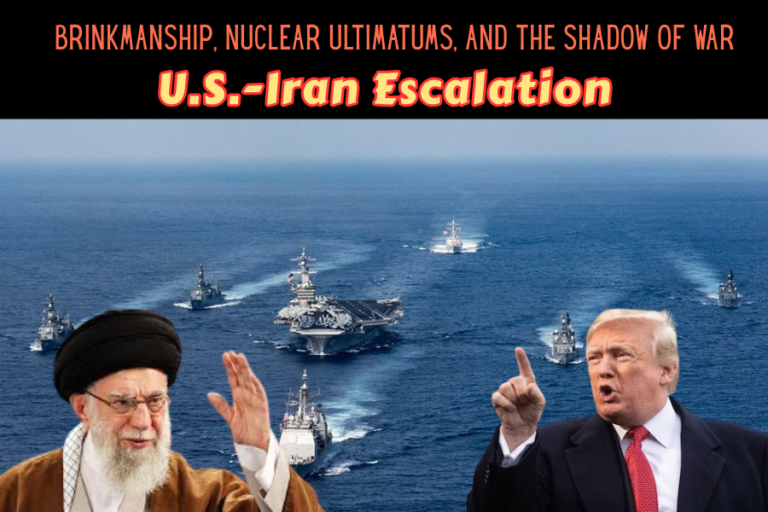
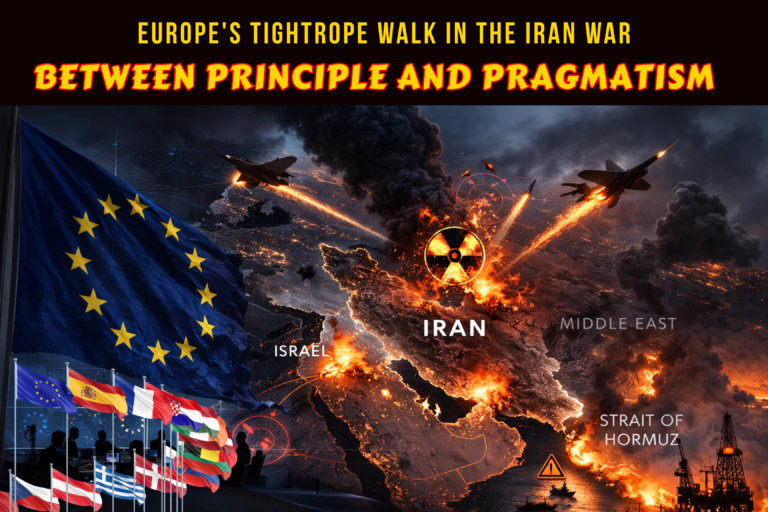
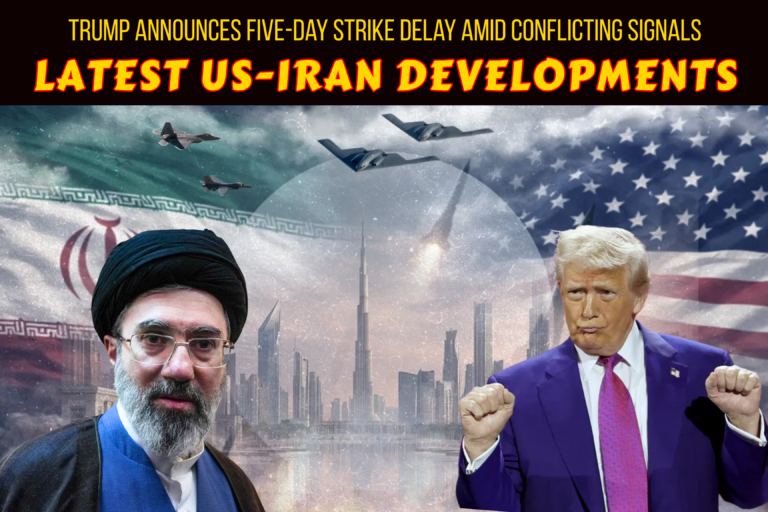
The most immediate global consequence of the Democratic victory is the likely restriction of the Iran war. For seven months, the United States and Israel have conducted military operations that have destabilized the region, driven oil prices to record highs, and killed thousands. Trump initiated the conflict without congressional authorization—a constitutional violation that Democrats can now challenge.
“The American people have spoken,” said Senator Chris Murphy (D-CT), a leading foreign policy voice. “They want this war to end. They want their sons and daughters to come home. And they want Congress to do its job.”
Expect a War Powers Resolution within the first 100 days of the new Congress. While Trump could veto it, the political pressure will be immense. Sixty percent of Americans oppose the war, according to Fox News polling—a remarkable consensus that transcends party lines.
The Financial Times reported that Trump had blocked an Israeli military operation for electoral reasons—a revelation that will now face congressional scrutiny. If true, it suggests the war’s management was influenced by domestic politics rather than strategic necessity.
Israel: A Strained Alliance
The US-Israel relationship faces its most serious strain in decades. AIPAC’s political action committee, the United Democracy Project, invested $30 million in the 2026 cycle, primarily to support Republican candidates. That investment largely failed. In Michigan, Democrat Abdul El-Sayed—who would be the first Muslim American senator—leads Mike Rogers despite AIPAC’s support. In Ohio, Sherrod Brown defeated Jon Husted despite millions in pro-Israel spending.
Prime Minister Benjamin Netanyahu’s government now faces a Washington where its traditional allies are weakened and its critics are empowered. The two-state solution, moribund under Trump, may find new life in congressional resolutions and aid conditionality.
Gulf States and Oil Markets
Saudi Arabia, the UAE, and other Gulf states are recalculating. The US security umbrella that has protected their regimes for decades now looks less reliable. With Congress potentially restricting military operations and demanding human rights conditions on arms sales, these states may accelerate their pivot toward multipolar diplomacy—engaging China, Russia, and India as counterweights.
Oil markets reacted immediately to the election news. Brent crude fell 3% in early trading as traders priced in reduced likelihood of expanded Middle East conflict. OPEC+ faces new uncertainty as US production policy shifts and Iranian oil potentially returns to global markets under a negotiated settlement.
| Country | Current Position | Post-Election Trajectory |
|---|---|---|
| Iran | Defiant, sanctions-hit | Negotiation prospects improve |
| Israel | Aggressive, Trump-aligned | Pressure to de-escalate |
| Saudi Arabia | Hedging, Vision 2030 | Accelerate multipolar pivot |
| UAE | Business-first | Expand China/Russia ties |
| Iraq | Fragile, proxy battleground | Stability depends on US withdrawal |
| Yemen | Humanitarian catastrophe | Aid conditionality possible |
Table 3: Middle East state reactions and trajectories
IV. Implications for Europe (EU & NATO)
NATO: Relief and Anxiety
European capitals greeted the election results with cautious relief. A Democratic Congress is more likely to uphold NATO commitments and resist Trump’s periodic threats to withdraw from the alliance. Yet the anxiety remains: Trump is still president, and his disdain for multilateralism is undiminished.
“The American people have checked their president,” said one senior European diplomat who requested anonymity. “But they have not removed him. We must prepare for continued volatility.”
NATO Secretary General Mark Rutte issued a statement congratulating the winners while emphasizing “the enduring strength of the transatlantic bond.” Behind the diplomatic language, however, European defense ministries are accelerating their own rearmament programs, recognizing that American commitment can no longer be taken for granted.
Ukraine: Aid Prospects Improve
For Ukraine, the election results offer hope. Democratic control of Congress makes renewal of military and economic aid far more likely. The Biden-era packages that sustained Ukraine’s defense against Russian aggression had been blocked by Republican isolationists; Democrats can now pass them over Trump’s objections, though a presidential veto remains possible.
President Zelenskyy tweeted his congratulations, expressing hope for “continued American leadership in defense of freedom.” Ukrainian officials privately acknowledge that while the war’s trajectory depends on battlefield realities, a supportive US Congress improves their negotiating position.
Russia: Sanctions and Signals
Moscow’s read is more complex. A Democratic Congress strengthens sanctions enforcement and closes loopholes that Russian oligarchs have exploited. Yet Putin may also see opportunity: A divided Washington, consumed by investigations and impeachment talk, has less bandwidth for strategic competition.
The Kremlin’s official response was muted. “We respect the American people’s choice,” said spokesman Dmitry Peskov. “We will judge actions, not words.”
EU-US Trade and Climate
Transatlantic trade tensions may ease. Democratic lawmakers have been critical of Trump’s tariff wars, particularly those targeting European allies. The digital services taxes that Trump threatened to retaliate against may find compromise. Climate cooperation, while limited by presidential opposition, could advance through congressional appropriations and state-level partnerships.
| Issue | Trump Position | Democratic Congress Position | Likely Outcome |
|---|---|---|---|
| NATO funding | Threatened withdrawal | Strong support | Continued US presence, burden-sharing demands |
| Ukraine aid | Skeptical, conditional | Supportive | Renewed packages, possible veto fight |
| Russia sanctions | Inconsistent enforcement | Strengthened | Expanded Magnitsky designations |
| Climate | Withdrawal from Paris | Reengagement efforts | Subnational cooperation, limited federal action |
| Trade tariffs | Aggressive, unilateral | Multilateral preference | Selective de-escalation |
Table 4: EU-US policy divergence and convergence
V. Implications for Asia-Pacific
China: Strategic Competition Continues
Beijing’s response to the election was characteristically restrained. “We hope the United States will work with China to promote the stable, healthy and sustainable development of bilateral relations,” said Foreign Ministry spokesperson Mao Ning.
Behind the diplomatic language, Chinese strategists are recalculating. A Democratic Congress is more likely to maintain technological restrictions on semiconductor exports and scrutinize Chinese investments. Yet it is also less likely to engage in the provocative rhetoric that characterized Trump’s trade wars.
Taiwan policy remains a critical variable. While congressional support for Taiwan is bipartisan, Trump’s unpredictability had raised fears of abandonment. Democratic control provides reassurance, though the risk of miscalculation persists.
India: Strategic Partnership Holds
For New Delhi, the election results offer continuity. The US-India strategic partnership, strengthened under both Democratic and Republican administrations, is likely to persist. Democratic lawmakers have been critical of India’s human rights record, particularly regarding religious minorities and press freedom, but strategic imperatives—countering China—override these concerns.
The Quad (US, India, Japan, Australia) will likely strengthen under a Democratic Congress, with increased military cooperation and technology sharing. Indian officials privately welcomed the results, viewing Democratic control as more predictable than Trump’s transactional approach.
Japan and South Korea: Alliance Reassurance
Tokyo and Seoul greeted the results with relief. Both nations had feared Trump’s “America First” approach would weaken security guarantees. A Democratic Congress provides a counterweight to presidential unpredictability, though both governments recognize that ultimate authority remains with Trump.
North Korea policy faces new uncertainty. Trump’s summit diplomacy with Kim Jong-un had produced photo opportunities but no denuclearization. Democratic lawmakers are skeptical of further engagement without concrete concessions, potentially freezing the diplomatic track.
VI. Implications for Pakistan & South Asia
US-Pakistan Relations: An Opening
For Pakistan, the Democratic victory presents both opportunity and challenge. Historically, Democratic administrations have engaged more deeply with Pakistan on development, democracy, and human rights, while Republican administrations have emphasized security cooperation and counterterrorism.
The new Congress will likely demand greater accountability for military aid, human rights conditions, and democratic governance. This creates pressure on Pakistan’s establishment but also opens space for civilian-led engagement.
“The Pakistani diaspora in the United States played a significant role in these elections,” said one Pakistani-American political activist. “We mobilized in Michigan, in Texas, in Virginia. Now we expect our voices to be heard.”
Afghanistan: The Forgotten Crisis
With the Iran war dominating headlines, Afghanistan’s humanitarian catastrophe has received scant attention. A Democratic Congress may push for renewed aid, refugee admissions, and diplomatic engagement with the Taliban—policies that Republicans had blocked.
The specter of terrorism remains. ISIS-K and other groups have exploited Afghanistan’s instability. Democratic lawmakers will demand a comprehensive strategy that addresses both humanitarian needs and security concerns.
India-Pakistan Dynamics
US mediation between India and Pakistan, always fraught, becomes slightly more plausible under Democratic oversight. Congressional hearings on Kashmir, human rights, and regional stability could pressure both nations toward dialogue. Yet the deep structural conflicts—over Kashmir, water, and terrorism—remain resistant to external pressure.
The China Factor
Pakistan’s relationship with China, particularly the China-Pakistan Economic Corridor (CPEC), faces new scrutiny. Democratic lawmakers have criticized BRI projects for debt-trap diplomacy and lack of transparency. Pakistan may find itself squeezed between American pressure and Chinese entanglement.
| Issue | Current Status | Democratic Congress Impact |
|---|---|---|
| Military aid | Conditional, security-focused | Human rights conditions added |
| Afghanistan policy | Neglect, isolation | Renewed engagement, aid |
| Kashmir | Silence | Possible hearings, resolutions |
| CPEC/BRI | Uncritical acceptance | Scrutiny, alternative offers |
| Diaspora | Growing political influence | Increased access, influence |
Table 5: US-Pakistan policy shifts under Democratic Congress
VII. Implications for the Global Economy
Market Reactions
Global markets responded positively to the election results. US stock futures rose 2% in overnight trading, with technology and renewable energy sectors leading gains. The dollar strengthened against the euro and yen, reflecting investor confidence in American institutional resilience.
Oil markets fell on expectations of reduced Middle East conflict. Gold, a traditional safe haven, declined as risk appetite returned.
Trade Policy
Trump’s tariff wars face new congressional resistance. While the president retains significant trade authority, Democratic lawmakers can block implementing legislation, demand impact studies, and condition appropriations. The USMCA review scheduled for 2026 may see a more collaborative approach.
Energy Transition
Democratic control accelerates the energy transition. Congressional appropriations for renewable energy, electric vehicle infrastructure, and grid modernization—blocked by Republicans—can now advance. This has implications for global climate negotiations and the competitiveness of American clean technology.
VIII. The Democracy Question: Global Reverberations
The 2026 midterms were not just an American event; they were a global test of democratic resilience. For years, autocratic regimes have pointed to American dysfunction as evidence that democracy is failing. The peaceful transfer of congressional power, despite Trump’s attempts to undermine it, offers a counter-narrative.
Yet the challenges remain. The SAVE Act’s voter restrictions, the DHS election operations, and the DOJ’s attempt to block California mail ballots all occurred under Trump’s watch. These assaults on democratic norms will now face congressional investigation, but the damage to American credibility is real.
“The world watched America check its president,” said former Secretary of State Madeleine Albright in a statement. “Now the world watches to see if America can heal itself.”
For democratic movements in Hong Kong, Belarus, Sudan, and Myanmar, the American example offers both hope and warning: Democracy is resilient, but it requires constant vigilance.
IX. The 2028 Shadow: Presidential Prospects
The 2026 results immediately reshape the 2028 presidential landscape. For Democrats, the victories in Texas, Georgia, and Florida create new talent pools. Gina Hinojosa, Keisha Lance Bottoms, and Xavier Becerra emerge as potential contenders. Hakeem Jeffries, as the first Black Speaker, will have a national platform.
For Republicans, the reckoning begins now. Trump’s grip on the party has weakened, but his base remains loyal. Potential successors—Ron DeSantis, Nikki Haley, Tim Scott—must decide whether to embrace or distance themselves from the outgoing president.
The gubernatorial results offer clues: Byron Donalds’ victory in Florida suggests the party’s future may be more diverse, even as its policy orientation remains uncertain.
X. Conclusion: A World in Transition
The 2026 midterm elections mark a turning point, but not an endpoint. America has checked its president, but it has not removed him. The world faces two more years of divided government, investigative warfare, and policy uncertainty.
For the Middle East, the Iran war’s trajectory will determine whether this election accelerates peace or merely rearranges the players. For Europe, American reliability remains in question, even as congressional support improves. For Asia, strategic competition continues, tempered by institutional checks. For Pakistan and South Asia, new opportunities for engagement come with new demands for accountability.
The American experiment in self-correction has survived its latest test. Whether it can restore its global leadership role remains an open question—one that will be answered not by elections, but by the choices of the 120th Congress and the president it now checks.