(By Khalid Masood)
At 15:15 hours on May 28, 1998, the granite and sand of the Ras Koh Hills in Balochistan’s Chagai District shuddered with five simultaneous underground detonations that instantly redrawn the geopolitical map of South Asia. In that searing moment, Pakistan crossed the nuclear threshold—codenaming the operation Chagai-I—followed two days later by a sixth explosion, Chagai-II, on May 30. What Pakistan commemorates today as Youm-e-Takbeer (The Day of Greatness) began not as celebration, but as strategic necessity: a direct, thunderous answer to India’s Pokhran-II tests earlier that same May, and the culmination of decades of covert scientific ambition under the shadow of existential rivalry.
Yet the tremors of Chagai reached far beyond the test site. A tightly guarded decision forged in war rooms became, within hours, a permanent fixture in South Asian security history—a pivot point that would inspire fierce national pride, trigger global non-proliferation crises, and lock the subcontinent into a new and precarious balance of terror.
This article traces the arc from secrecy to spectacle: the historical forces that made Chagai inevitable, the strategic calculus behind the blasts, the technical mastery required to execute them, and the complex legacy that still shapes regional stability, international arms control, and Pakistan’s scientific identity three decades later.
Historical Context: From Vision to Reality
Pakistan’s nuclear journey did not begin in 1998. Its foundations were laid in January 1972, shortly after the country’s military defeat in the 1971 war, when then-Prime Minister Zulfikar Ali Bhutto convened leading scientists in Multan and committed the nation to developing nuclear capability. The program progressed over decades, navigating international technology restrictions, resource constraints, and shifting geopolitical alliances.
The immediate catalyst for the 1998 tests was India’s Pokhran-II series on May 11 and 13, 1998. With New Delhi openly demonstrating nuclear weaponization, Islamabad faced a strategic dilemma: absorb a perceived asymmetry in regional power or take decisive action to restore deterrence. After days of intense deliberation, Prime Minister Nawaz Sharif’s government authorized the tests, framing the decision as essential to national survival and strategic parity.

Operational Security and Military Preparations
In the two weeks leading up to the detonations, Pakistan’s armed forces undertook extensive measures to ensure the tests could proceed without external interference. Intelligence assessments indicated potential risks of preemptive strikes or sabotage, with concerns ranging from Indian conventional responses to possible third-party intervention. In response, a comprehensive security and deception framework was activated across all domains.
Covert Logistics and Transport
Nuclear devices, diagnostic equipment, and specialized personnel were moved to the remote Ras Koh test site under strict operational secrecy. Pakistan Air Force C-130 Hercules aircraft conducted night-time airlifts to ferry sensitive cargo directly to forward airstrips in Balochistan, minimizing exposure along vulnerable ground routes. Where road transport was necessary, Pakistan Army units provided armed escorts, established route denial zones, and implemented strict movement control protocols to prevent reconnaissance or interdiction.
Multi-Domain Force Posture
- Pakistan Army: Assumed overall responsibility for site security, establishing layered defensive perimeters around the test locations. Infantry, armor, and air defence units were deployed to deter ground incursions, while engineering teams prepared contingency measures for site hardening and rapid evacuation if required.
- Pakistan Air Force: Maintained continuous Combat Air Patrols (CAPs) over western and southern approaches, with quick-reaction alert fighters positioned to intercept any unauthorized aerial activity. Electronic warfare assets monitored regional radar and communications signatures for early warning of hostile intent.
- Pakistan Navy: Elevated alert status along the Arabian Sea coastline, particularly near Gwadar and Pasni, to monitor maritime approaches. Surface patrols and coastal surveillance systems were tasked with preventing infiltration or reconnaissance from the sea.
Deception and Information Control
To mask the true purpose of military movements, the armed forces employed decoy deployments, simulated exercises in unrelated sectors, and controlled information release protocols. Civilian air and rail traffic near the test zone was temporarily restricted under the guise of routine security drills. These measures collectively created ambiguity for external observers, reducing the risk of preemptive action while preserving strategic surprise.
This integrated military effort not only safeguarded the technical execution of the tests but also demonstrated Pakistan’s capacity for joint operational planning under high-stakes conditions—a capability that would shape its defence posture in the years that followed.
Technical Execution and Scientific Leadership
The Chagai tests represented a significant engineering achievement. Conducted underground in remote, seismically active terrain, the detonations required precise drilling, containment design, and diagnostic instrumentation to verify yield while minimizing environmental exposure. Chagai-I involved five simultaneous devices, while Chagai-II, conducted two days later, featured a single test to evaluate different weapon configurations.
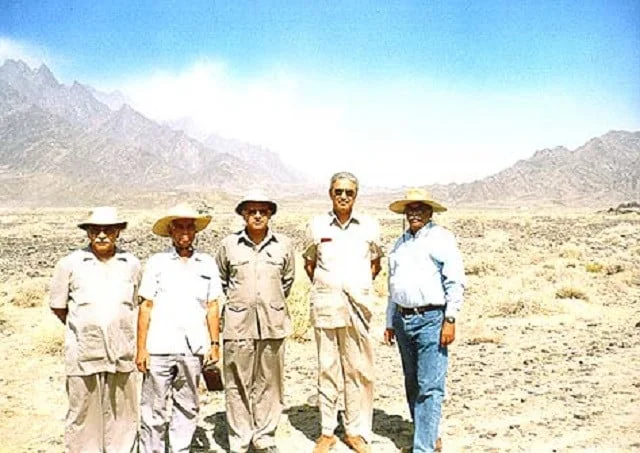
The program was engineered by a coordinated network of institutions, including the Pakistan Atomic Energy Commission (PAEC) and the Khan Research Laboratories (KRL). Prominent figures such as Dr. Abdul Qadeer Khan and Dr. Samar Mubarakmand played visible roles, alongside hundreds of engineers, metallurgists, and physicists whose work remains largely unpublicized due to classification protocols. The tests demonstrated Pakistan’s capacity to design, fabricate, and detonate nuclear devices independently, marking a transition from theoretical research to operational capability.
Strategic Significance: Deterrence and Regional Balance
At its core, the 1998 tests were about deterrence. Pakistan’s official doctrine centers on “credible minimum deterrence,” a posture designed to prevent large-scale conventional aggression by ensuring a survivable retaliatory capability. By crossing the nuclear threshold, Islamabad sought to neutralize India’s conventional military advantage and establish a strategic equilibrium that would make full-scale war mutually unacceptable.
The tests fundamentally altered South Asia’s security architecture. They triggered immediate international sanctions, particularly from the United States, Japan, and Western financial institutions. However, within a few years, geopolitical realities—including Pakistan’s role in counterterrorism efforts and broader non-proliferation diplomacy—led to the gradual lifting of most penalties. Today, Pakistan and India both operate as de facto nuclear states outside the Nuclear Non-Proliferation Treaty (NPT), maintaining robust command-and-control structures, safety protocols, and evolving delivery systems ranging from short-range tactical platforms to intercontinental-range ballistic missiles and sea-based deterrents.
Domestic Narrative and National Identity
Youm-e-Takbeer is more than a historical marker; it is woven into Pakistan’s national identity. The federal government’s designation of May 28 as a public holiday reflects the state’s effort to institutionalize the tests as a symbol of technological self-reliance and sovereign resilience. Annual commemorations feature official speeches, scientific exhibitions, and media programming that highlight national achievement.
Yet, the day also invites nuanced domestic discourse. While many celebrate the tests as a necessary guarantee against coercion, policymakers and academics periodically debate the long-term economic trade-offs, the impact on regional arms racing, and the imperative of channeling scientific excellence toward civilian applications. Over time, the nuclear program has also served as a catalyst for advancements in Pakistan’s higher education, research infrastructure, and STEM workforce development, creating spillover benefits that extend beyond defence.
Contemporary Relevance and Future Challenges
More than two decades after Chagai, the strategic landscape continues to evolve. Pakistan’s nuclear posture has adapted to emerging threats, including missile defence proliferation, cyber vulnerabilities, and the integration of artificial intelligence into military decision-making. Crisis episodes such as the 1999 Kargil conflict, the 2001–2002 military standoff, and the 2019 Balakot aerial exchange have tested nuclear deterrence in practice, demonstrating both its stabilizing effect and the risks of escalation miscalculation.
The May 2025 crisis further underscored these dynamics. Characterized by intensive exchanges of drones, precision-guided missiles, and electronic warfare capabilities, the brief but high-intensity confrontation highlighted how emerging technologies can compress decision-making timelines and increase escalation pressures. According to multiple diplomatic and open-source reports, the conflict de-escalated within four days following international intervention, prompted by concerns over unverified but widely circulated indications that both sides were evaluating options for limited tactical nuclear signaling. While neither government officially confirmed such deliberations, the episode reinforced the critical importance of clear communication channels, crisis hotlines, and third-party diplomatic engagement in preventing misperception from spiraling into irreversible escalation.
Globally, the nuclear order faces renewed strain. Great power competition, modernization of arsenals, and stalled arms control negotiations have reduced diplomatic bandwidth for South Asian confidence-building measures. For Pakistan, the challenge lies in maintaining a credible deterrent while actively supporting regional dialogue, crisis communication mechanisms, and responsible nuclear governance. The integration of emerging technologies, climate-security linkages, and non-state actor threats further complicate long-term stability calculus.
Conclusion: A Complex Legacy
Youm-e-Takbeer marks a watershed moment in Pakistan’s modern history. The 1998 nuclear tests were driven by strategic necessity, executed through decades of scientific dedication, and institutionalized as a symbol of national resilience. Their legacy is multifaceted: they altered the balance of power in South Asia, triggered international realignments, and embedded nuclear deterrence at the center of regional security planning.
As Pakistan commemorates this day, the enduring question is not whether deterrence remains relevant, but how it can be managed responsibly in an increasingly complex strategic environment. The dual imperative of the 21st century is clear: sustain credible security guarantees while pursuing diplomatic channels, risk-reduction measures, and scientific cooperation that serve broader human development goals. In navigating this path, Pakistan’s nuclear journey offers enduring lessons on sovereignty, strategy, and the careful balance between strength and stability.