(By Khalid Masood)
I. The Morning After: A Mandate for Confrontation
WASHINGTON — Forty-eight hours after the most consequential midterm election in a generation, the message from Capitol Hill was unmistakable. Democrats had not merely won control of Congress; they had been handed a mandate to check a presidency that had operated without restraint for two years.
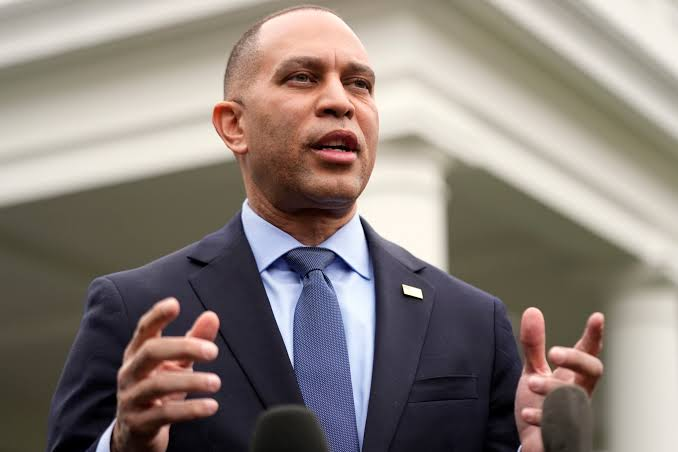
“We hear you,” said House Democratic Leader Hakeem Jeffries, addressing the voters who delivered his party a majority. “We hear you loud and clear.”
The numbers were stark. Democrats flipped the Senate with victories in Texas, Ohio, Iowa, North Carolina, Kansas, and South Carolina, while holding their vulnerable incumbents in Arizona, Nevada, Wisconsin, and Pennsylvania. In the House, they gained more than a dozen seats, winning an estimated 224 seats to Republicans’ 211, with Jeffries poised to become the first Black Speaker in American history.
But the electoral victory was only the beginning. The real test begins on January 3, 2027, when the 120th Congress convenes and Democrats must convert campaign promises into governing power. The first 100 days will determine whether they can restore the constitutional balance of power—or whether Trump’s imperial presidency has permanently reshaped American governance.
The voters have made their expectations clear. According to the AP Voter Poll, 7 in 10 voters said Congress was not doing enough to check the presidency. They did not elect Democrats to compromise; they elected them to confront.
“The staggering results are setting up a starkly divided government,” the Associated Press reported, “with an emboldened Congress poised to reassert itself as a coequal branch when Democrats take over in the new year.”
II. The Lame-Duck Battlefield: What Happens Before January 3
Before the new Congress can act, the old one still holds power for 60 days. And those 60 days may be the most dangerous of Trump’s presidency.
The Government Funding Crisis
The current government funding expires in December 2026. Defeated Republicans, facing the loss of their majorities, have little incentive to cooperate on a clean funding bill. Some may prefer to sabotage the incoming Democratic majority by forcing a shutdown and leaving them to clean up the mess.
Democrats are preparing counter-moves. They have signaled they will not accept a “continuing resolution” that locks in Trump-era spending cuts. Instead, they want a short-term funding bill that expires in early 2027, giving the new Congress leverage to negotiate its own priorities.
The Judicial Confirmation Rush
With Republican control of the Senate ending in January, the Judiciary Committee may attempt to rush through dozens of judicial nominations in the lame-duck session. Democrats have vowed to block any controversial nominees, using procedural tools to slow the process.
The most alarming prospect: a Supreme Court vacancy. If any justice were to resign or die before January 3, Republicans could confirm a replacement with just 50 votes, ignoring the will of the electorate. Democratic leaders have warned that such a move would trigger a constitutional crisis.
The Executive Order Barrage
Trump is expected to issue a flurry of executive orders in his final weeks of unified government control. Immigration crackdowns, tariff escalations, federal workforce purges, and last-minute pardons are all anticipated. Democrats are preparing “do not destroy” letters to federal agencies, demanding preservation of all documents relevant to ongoing and future investigations.
“Everything must be preserved,” said one senior Democratic staffer who requested anonymity. “We are preparing for the possibility that the administration will attempt to hide evidence of wrongdoing before we take the gavels.”
III. January 3, 2027: The Gavels Change Hands
When the new Congress convenes, the transformation will be immediate and visible.
Hakeem Jeffries will be elected Speaker, shattering one of the last glass ceilings in American politics. The House chamber will reflect the new Democratic majority: more women, more people of color, more young members, including the first Gen Z woman ever elected to Congress.
But the symbolism will be secondary to the substance. Within hours of taking the oath, Democrats plan to launch their agenda.
The First 100 Hours
Jeffries has promised action “right out of the gate.” The first 100 hours will include:
| Priority | Action | Timeline |
|---|---|---|
| Healthcare | Reinstate ACA tax credits that expired in 2025 | Day 1-3 |
| Medicaid | Reverse Republican cuts and work requirements | Day 1-5 |
| Tariffs | Vote to claw back trade authority from White House | Week 1 |
| Iran War | Force vote on War Powers Resolution | Week 1-2 |
| Ethics | Pass anti-corruption and conflict-of-interest legislation | Week 2 |
| Oversight | Issue first round of document requests and subpoenas | Week 2-4 |
Table 1: The First 100 Hours Agenda
“We need to lower the cost of groceries and gas,” Jeffries said. “Two, we need to make healthcare affordable for every single American. Three, we’re going to hold the crooks accountable who’ve visited unprecedented corruption on the American people. Beginning on day one.”
IV. The Investigation Agenda: Four Fronts
The investigative machinery of Congress is about to be turned against the Trump administration with unprecedented intensity. Incoming House Oversight Chair Robert Garcia has been blunt about his intentions.
“Lawyer up,” Garcia said in a two-word statement released as Democrats were projected to take the House. He expanded on Wednesday: “We should be very clear that the American people have spoken loudly and clearly—they want change. They are tired of the destruction and the corruption of Donald Trump and this administration.”
Front 1: The Trump Crime Family
Garcia’s first priority is what he calls “the Trump crime family.” The investigation will examine:
- Crypto ventures: Trump’s digital asset schemes and potential conflicts of interest
- Real estate deals: Properties sold to foreign governments and entities
- Defence contracts: Awards to Trump-connected firms
- Pardon sales: Allegations of pay-for-play clemency
- Stock trading: Suspicious market activity by Trump family members
Jared Kushner and other Trump family members are expected to be called to testify. The committee will demand financial records, communications, and documents related to all Trump Organization activities during the presidency.
“The amount of grift and corruption is unprecedented in American politics,” Garcia said. “We’re going to take it on directly.”
Front 2: DHS and ICE Abuses
The second front targets the Department of Homeland Security and Immigration and Customs Enforcement. This investigation will examine:
- Operation Epic Fury: The Iran war’s legal justification and civilian casualties
- Election interference: DHS field operations that a federal judge blocked in nine states on October 22, 2026
- Family separation: Continuation of policies that separate children from parents
- Detention conditions: Overcrowding, abuse, and deaths in ICE facilities
- Whistleblower retaliation: Treatment of career officials who objected to unlawful orders
“What we see on the streets—across the country, but I want to talk about California—whether it’s been here in Orange County, in Long Beach, in Los Angeles,” Garcia said. “The abuses are systematic and they must be stopped.”
Front 3: Corporate Corruption and Tech
The third front targets corporate America, particularly tech executives who aligned with Trump. Early targets include:
- Elon Musk: SpaceX contracts, DOGE activities, X platform manipulation
- Mark Zuckerberg: Meta’s content moderation changes and political influence
- Jensen Huang: Nvidia’s government contracts and AI chip restrictions
- Sam Altman and Dario Amodei: OpenAI and Anthropic’s government relationships
In the administration, Commerce Secretary Howard Lutnick and FCC Chair Brendan Carr are obvious targets. Democrats will investigate tariff implementation, broadcast licensing threats, and no-bid contracts like the Reflecting Pool contractor and White House ballroom donors.
“While you’re struggling, CEOs and companies across this country are making record profits,” Garcia said. “They’re putting in systems of surveillance pricing, so that when you go to the supermarket, you might be paying a different price than your neighbor.”
Front 4: The Epstein Files
The fourth front addresses the Jeffrey Epstein scandal. Democrats plan to hold public hearings, replacing the closed-door interviews that occurred under Republican control. They will demand testimony from administration officials about their knowledge of Epstein’s activities and the DOJ’s failure to release all files under existing law.
The investigation has bipartisan support, but Democrats intend to pursue it more aggressively, examining potential cover-ups and connections to powerful figures.
| Committee | Chair | Priority Investigation | First Hearing Target |
|---|---|---|---|
| House Oversight | Robert Garcia (D-CA) | Trump family corruption | February 2027 |
| House Judiciary | Jamie Raskin (D-MD) | DOJ politicization, SAVE Act | January 2027 |
| House Energy & Commerce | Frank Pallone (D-NJ) | Tech, AI, data centers | February 2027 |
| Senate Finance | Ron Wyden (D-OR) | Tax and tariff abuses | February 2027 |
| Senate Armed Services | Jack Reed (D-RI) | Pentagon contracting, Hegseth | March 2027 |
| Senate Foreign Relations | Ben Cardin (D-MD) | Iran war origins | February 2027 |
Table 2: Key Committee Chairs and Investigative Priorities
V. The Legislative Agenda: What Can Actually Pass
The investigative agenda will dominate headlines, but Democrats also want to deliver on their campaign promises. The challenge: Trump’s veto pen.
The Reality of Divided Government
With Republicans holding the presidency and likely more than 40 Senate seats, Democrats cannot pass partisan legislation over Trump’s objections. They need either Republican defections or popular pressure to overcome a veto.
Yet there are opportunities. Some Republicans, facing reelection in 2028, may be willing to break ranks on popular issues. The affordability crisis that drove Democratic victories creates pressure for action.
Priority Legislation
War Powers Resolution (Iran)
The most consequential early vote will be on the Iran war. Democrats plan to force a vote within the first 60 days, using the War Powers Resolution to require congressional authorization for continued military operations.
Sixty percent of Americans oppose the war, according to Fox News polling. If enough Republicans defect—particularly those facing tough reelections—Congress could pass a resolution requiring withdrawal. Trump would likely veto it, but the vote itself would create a 2028 campaign record.
Affordability Package
Democrats will move quickly on healthcare and cost-of-living legislation:
- Reinstate ACA tax credits that expired in 2025
- Reverse Medicaid cuts and work requirements from the “One Big Beautiful Bill”
- Prescription drug pricing reforms
- Housing and energy cost reductions
- Tariff reductions on consumer goods
Democracy Protection
Democrats plan to pass legislation protecting voting rights, restoring ethics rules, and constraining presidential power. While unlikely to become law, these votes will establish a record for 2028.
Immigration Reform
The DREAM Act, providing permanent status for undocumented immigrants brought to the US as children, will receive a vote. Democrats will also push for DHS oversight and accountability measures.
The 2028 Calculation
Every vote is a campaign ad. Democrats want to force Republicans to take difficult positions on popular issues. Republicans want to avoid votes that could be used against them in 2028. This dynamic will shape every legislative battle.
“The presidential veto will limit what bills the new Congress can pass,” said Rebecca Patterson of the Council on Foreign Relations. “A Republican minority eyeing the 2028 elections may be willing to join on certain economic issues that resonate with their constituents.”
VI. The Confirmation Wars: Senate’s New Power
Democratic control of the Senate transforms the confirmation process. For two years, Trump has faced minimal scrutiny on his nominees. That ends in January.
Immediate Targets
Pete Hegseth (Defence Secretary)
Hegseth’s tenure has been controversial from the start. His firing of senior military officers, handling of the Iran war, and alleged personal misconduct have drawn criticism. Democrats are preparing removal proceedings and will block any military nominations until his conduct is fully investigated.
Howard Lutnick (Commerce Secretary)
Lutnick’s tariff implementation and potential conflicts of interest will face scrutiny. Democrats will demand documents related to trade negotiations and examine his connections to businesses affected by his policies.
Brendan Carr (FCC Chair)
Carr’s threats to revoke broadcast licenses of critical media outlets have raised First Amendment concerns. Democrats will investigate whether he has abused his regulatory authority to punish political opponents.
Judicial Nominees
With Democratic control, Trump’s ability to confirm judges effectively ends. Any vacancies will remain unfilled or be filled by compromise nominees acceptable to both parties. This is a seismic shift in the balance of judicial power.
The Nuclear Option Risk
Trump may pressure Republicans to eliminate the filibuster for nominations, allowing confirmations with a simple majority. Democrats will resist, but the pressure will be intense. If successful, it would fundamentally alter the Senate’s character.
VII. The Budget Battle: Funding the Government
The power of the purse is Congress’s most fundamental authority. Democratic control of appropriations creates new leverage.
The Appropriations Lever
Democrats can condition funding on policy changes:
- Defence spending: Require reporting on Iran war costs, restrict funds for specific operations
- DHS funding: Condition on ICE reforms, detention standards, and accountability measures
- Foreign aid: Restore USAID funding, condition military aid on human rights
- Domestic programs: Increase funding for healthcare, education, infrastructure
The Shutdown Risk
Trump may veto appropriations bills that include Democratic priorities, forcing a shutdown. The political calculus is complex: Who gets blamed? In 1995, Republicans suffered when they shut down government under Clinton. In 2013, Republicans suffered under Obama. The pattern suggests Trump would bear the blame, but his base may reward confrontation.
VIII. The Wild Cards: Impeachment, 25th Amendment, and Crisis
Impeachment Scenarios
Impeachment articles are likely to be introduced, but conviction requires 67 Senate votes. The timing will depend on the investigation’s findings.
- Summer 2027: If investigations uncover damning evidence, articles could be introduced
- Fall 2027: After midterm momentum fades, impeachment could energize the base
- 2028: Impeachment during an election year would be unprecedented
The political calculation is fraught. The base demands accountability, but moderates fear backlash. Democratic leaders will be guided by evidence and public opinion.
The 25th Amendment Question
Trump’s age and health raise questions about his ability to serve a full term. If he were unable to serve, Vice President JD Vance would become president. Vance’s ambitions and relationship with Trump will shape succession dynamics.
Crisis Management
The greatest risk is an international crisis that unites the country behind the president. A terrorist attack, cyber warfare incident, or military escalation could transform the political landscape. Democrats must prepare to support the country while maintaining oversight.
IX. The Opposition: How Trump Fights Back
Trump will not be a passive observer of his own constraint. His counter-strategy is already taking shape.
Executive Order Barrage
Trump will use executive orders to bypass Congress entirely. Immigration crackdowns, tariff escalations, and federal workforce changes can all be implemented without legislative approval. Each order will be challenged in court, creating a legal war that could reach the Supreme Court.
Legal Warfare
The White House will claim executive privilege to block testimony and document production. They will challenge subpoenas in court, delaying investigations for months or years. The DOJ may launch retaliatory investigations of Democratic officials.
Media Strategy
Trump’s Truth Social platform will be a weapon. Fox News and the alternative media ecosystem will amplify his message. Rally schedules will keep his base energized. The goal: Make Congress appear obstructionist while portraying Trump as the victim of a partisan witch hunt.
“Donald Trump has already been ruling through executive orders,” said Scott Lucas of the Clinton Institute. “Democrats can propose their own legislation. They can put forth their own priorities. Now all of that legislation could get vetoed by Trump, of course, and you need a two-thirds majority to override that.”
X. The Historical Frame: 100 Days That Will Define an Era
The first 100 days of the 120th Congress will be studied alongside the great confrontations in American history.
| Year | Congress vs. President | Outcome | Lesson for 2027 |
|---|---|---|---|
| 1995 | Gingrich vs. Clinton | Shutdown backfired on GOP | Overreach carries risks |
| 2007 | Pelosi vs. Bush | Iraq funding fights | War powers are contested |
| 2011 | Boehner vs. Obama | Debt ceiling crisis | Brinkmanship can backfire |
| 2019 | Pelosi vs. Trump | First impeachment | Evidence matters |
| 2027 | Jeffries vs. Trump | ? | Unprecedented: former president, non-consecutive term, active war |
Table 3: Historical Comparisons for the 120th Congress
The unique challenge of 2027 is that there is no playbook. Never before has a former president served a non-consecutive second term and faced midterm checks. Never before has an active war coincided with a congressional transition. Never before has one party so completely rejected the legitimacy of the other’s governance.
XI. Conclusion: The Test of American Democracy
The first 100 days of the 120th Congress will answer a fundamental question: Can a divided government function when one branch refuses to accept limits?
If Democrats succeed—if they conduct rigorous investigations, pass meaningful legislation, and restore constitutional balance—the American experiment in self-correction will have survived its greatest test. If they fail—if gridlock prevails, if Trump defies subpoenas, if the war continues unchecked—the normalization of executive supremacy will be complete.
The choice belongs to 535 men and women in Washington, and to the president they were elected to check. The world is watching. History is watching. And in 100 days, we will know whether American democracy still works.