(By Mohsin Tanveer)
Introduction
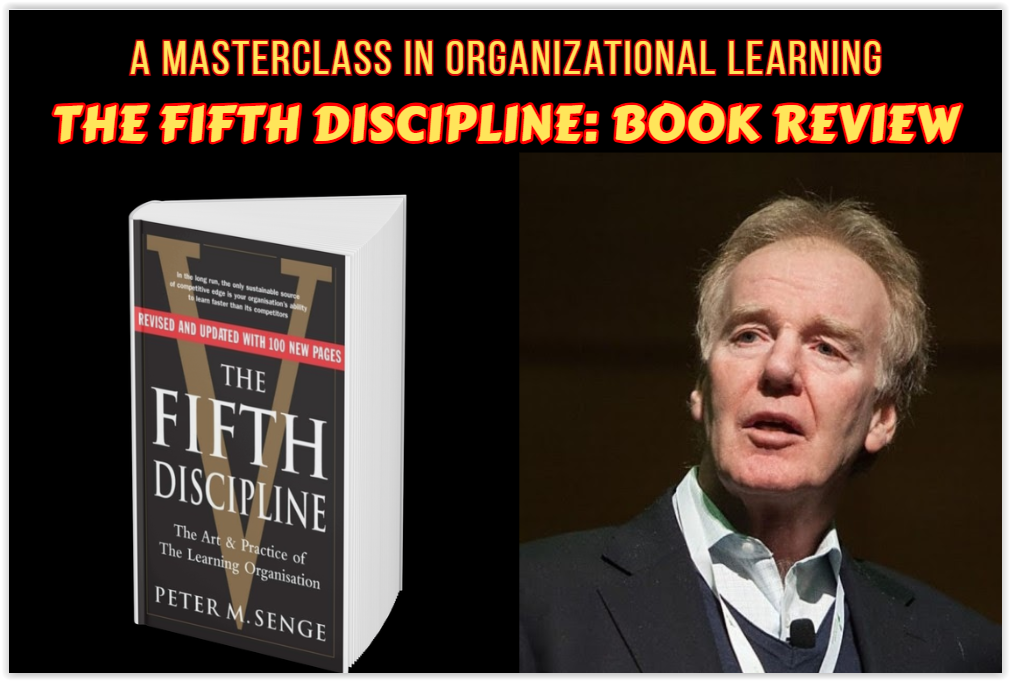
More than three decades after its first publication, Peter Senge’s The Fifth Discipline: The Art and Practice of the Learning Organization remains a cornerstone of modern business literature. But is it still relevant in today’s fast-paced, agile-driven world? In this The Fifth Discipline book review, we’ll break down Senge’s core ideas—especially systems thinking—and explore why leaders, consultants, and educators continue to recommend this influential work.
Whether you’re new to organizational learning or revisiting Senge’s classic, this review covers the key concepts, practical takeaways, and limitations you need to know.
What Is The Fifth Discipline About?
At its heart, The Fifth Discipline argues that organizations struggle not because of bad people or weak effort, but because of flawed mental models and an inability to see the larger patterns shaping their problems. Senge’s solution? Build a learning organization—one where people continuously expand their capacity to create the results they truly desire.
To do this, Senge introduces five core disciplines:
- Personal Mastery – Clarifying and deepening personal vision, focusing energy, and seeing reality objectively.
- Mental Models – Uncovering deeply held assumptions and generalities that influence behavior.
- Shared Vision – Building a genuine sense of commitment to a future the group wants to create.
- Team Learning – Aligning team capacity through dialogue and skillful discussion.
- Systems Thinking – The “fifth discipline” that integrates all the others, helping us see interrelationships rather than linear cause-effect chains.
Senge argues that systems thinking is the linchpin. Without it, the other disciplines remain isolated tools. With it, an organization can recognize feedback loops, delays, and unintended consequences—and act more wisely.
What Makes This Book Compelling?
1. A Shift in Mindset, Not Just Tactics
Unlike many business books that offer quick fixes, Senge challenges readers to change how they think. The concept of learning organizations isn’t about installing a new software or restructuring teams—it’s about cultivating curiosity, reflection, and shared accountability.
2. Practical Frameworks (With a Philosophical Edge)
Senge doesn’t just theorize. He introduces tools like:
- Systems archetypes (e.g., “limits to growth,” “shifting the burden”)
- The ladder of inference for testing mental models
- Dialogue vs. discussion in team learning
These frameworks are immediately useful for managers, team leads, and consultants.
3. Enduring Relevance
Written in 1990, the book predicted many of today’s organizational challenges: siloed thinking, short-termism, and the failure to learn from mistakes. In an era of remote work, AI disruption, and complexity, Peter Senge’s key concepts feel more urgent than ever.
Pros and Cons of The Fifth Discipline
| Pros | Cons |
|---|---|
| Deep, transformative ideas | Dense and sometimes repetitive |
| Strong emphasis on real learning (not just training) | Light on step-by-step implementation |
| Cross-industry applicability | Some examples feel dated |
| Excellent for leaders and consultants | Requires significant organizational buy-in |
✅ Strengths
- Systems thinking is explained more accessibly than in most academic texts.
- Encourages long-term, sustainable change.
- Rich with anecdotes and case studies (Ford, Apple, Federal Express).
❌ Weaknesses
- The writing can feel academic and dry in places.
- Senge underestimates how difficult it is to change organizational culture without executive alignment.
- The “learning organization” ideal can seem utopian for small businesses or crisis-mode teams.
Key Takeaways for Leaders and Practitioners
If you’re reading The Fifth Discipline to improve your organization, focus on these three actions:
- Start with personal mastery. You can’t create a learning organization if individuals aren’t committed to their own growth.
- Surface mental models regularly. Run “assumption audits” in team meetings to avoid blind spots.
- Use systems mapping for persistent problems. When a problem keeps returning, draw a causal loop diagram before proposing a solution.
Even implementing one discipline can improve team dynamics. But the real magic happens when all five reinforce each other.
Is The Fifth Discipline Still Worth Reading?
Yes—with one caveat.
If you want a lightweight business book with 10 easy steps, this isn’t it. The Fifth Discipline demands patience, reflection, and a willingness to question your own leadership assumptions. But if you’re serious about building a resilient, adaptive, and genuinely learning organization, Peter Senge’s masterpiece remains essential reading.
Rating: ★★★★☆ (4.5/5)
Deducting half a star for density, but the substance is timeless.
Final Verdict
The Fifth Discipline: The Art and Practice of the Learning Organization is not a quick read—it’s a foundational one. It has shaped how we understand organizational learning, and its principles are still taught in business schools and applied in forward-thinking companies today.
Whether you’re an executive, a consultant, or a curious team lead, this book will change how you see problems, solutions, and the hidden structures that shape both.