(By Khalid Masood)
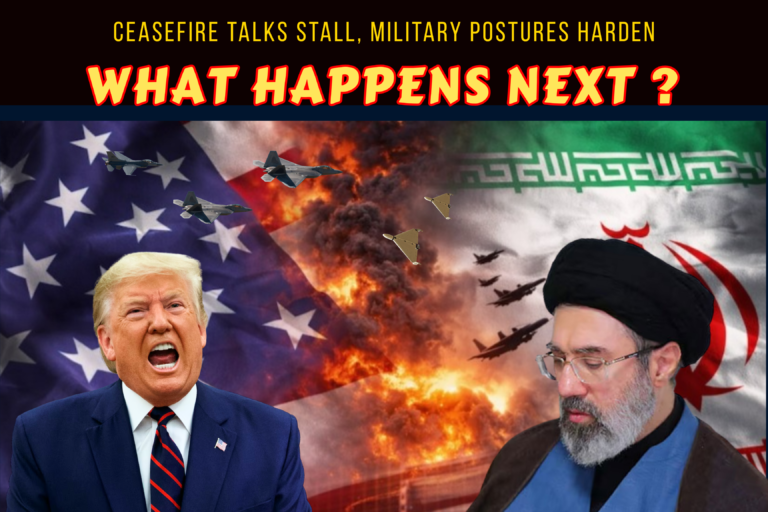
The ongoing confrontation between the United States and Iran has evolved far beyond a contained regional security dispute into a definitive stress test for the durability of the US-led global order. What initially commenced as a focused campaign of maximum pressure, internally dubbed “Operation Epic Fury,” was designed to isolate Tehran and reaffirm American dominance in the Persian Gulf. However, the operational reality has increasingly revealed deep contradictions in American strategy, noticeable hesitation among traditional trans-Atlantic and Indo-Pacific allies, and the rapid emergence of resilient alternative economic frameworks designed to bypass Western sanctions.
As Secretary of State Marco Rubio stated in a March 10 State Department briefing: “Our objective remains a diplomatic resolution, but we will not accept terms that reward aggression or compromise the security of our partners in the region.” Yet, just 48 hours later, President Trump told NBC News: “Iran wants a deal badly. They’re calling us. But we’re not doing business on their terms.” Iranian Foreign Ministry spokesperson Esmaeil Baghaei responded the same day: “The United States is engaged in psychological warfare. Iran has not requested negotiations under conditions of military threat.”
This disconnect raises critical questions about the clarity of US objectives. As the dust settles on the latest round of kinetic escalations and diplomatic maneuvering, a clearer strategic picture is emerging from the fog of war: the post-Cold War unipolar moment is decisively yielding to a complex, fragmented multipolar reality where military superiority no longer guarantees diplomatic unity or economic leverage.
I. The Credibility Gap: Victory Claims vs. Strategic Reality
At the center of the current crisis lies a widening gap between rhetorical posture and operational reality. The Trump administration has frequently announced victory in the conflict, asserting that Iran’s military capabilities have been significantly degraded. Pentagon press secretary Pat Ryder told reporters on March 8: “We have successfully degraded key Iranian command and control nodes. Their ability to project power has been substantially reduced.”
Yet, these claims of success are often juxtaposed with threats of total destruction and urgent calls for international assistance to secure maritime routes. In a March 12 Truth Social post, President Trump wrote: “We need our friends to send ships NOW. The Strait of Hormuz must remain open. America can’t do it alone anymore.” This request stands in stark contrast to earlier assertions of American self-sufficiency.
The Numbers Tell a Different Story
| Metric | Pre-Crisis (Jan 2026) | Current (March 2026) | Change |
|---|---|---|---|
| US Naval Assets in Gulf | 1 Carrier Strike Group | 2 Carrier Strike Groups | +100% |
| Iranian Missile Launches | 12/month (avg.) | 47/month (avg.) | +292% |
| Oil Tanker Insurance Rates | $45,000/voyage | $180,000/voyage | +300% |
| Hormuz Daily Traffic | 17.5 mb/d | 14.2 mb/d | -19% |
Source: US Naval Institute, Lloyd’s List Intelligence, IEA Shipping Data
Strategic analysts note that while ambiguity can be a tool of statecraft, persistent contradictions risk confusing both adversaries and partners. “When a superpower claims dominance while simultaneously requesting urgent support to secure vital shipping lanes, it invites scrutiny regarding the actual balance of power in the region,” said Dr. Vali Nasr, Dean of the Johns Hopkins School of Advanced International Studies, in an interview on March 14.
The implication is significant: if the US military cannot guarantee the safety of the Strait of Hormuz alone, despite claims of Iranian degradation, the deterrent value of American power is inevitably recalibrated by global markets and foreign capitals. As CENTCOM Commander Admiral Brad Cooper acknowledged in a classified briefing leaked to The Washington Post: “We have the firepower. What we lack is the political consensus for sustained engagement.”
II. The Alliance Dilemma: Burden-Sharing or Isolation?
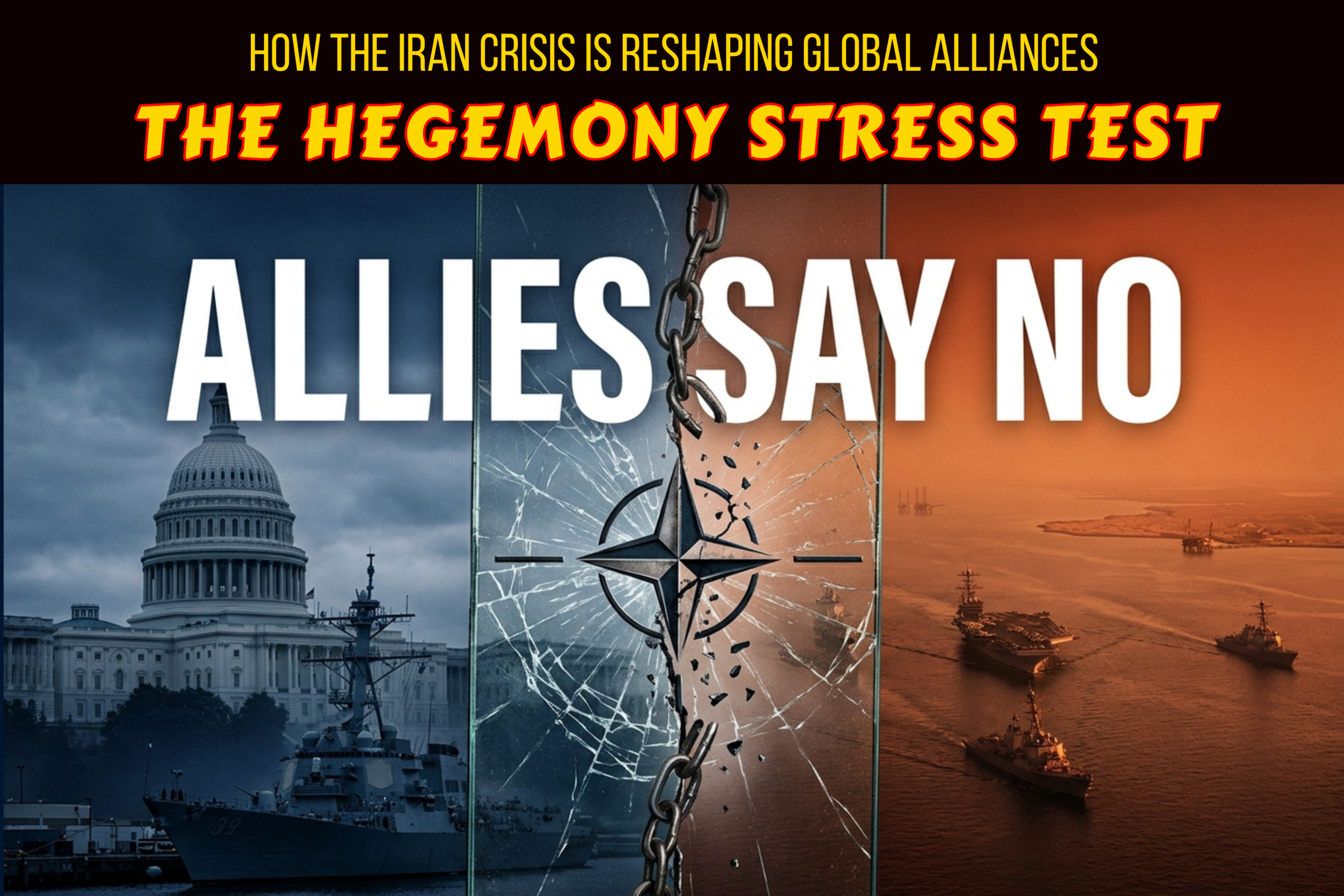
The fragility of the trans-Atlantic and Indo-Pacific alliances has been exposed by the recent crisis in the Persian Gulf. Following disruptions to oil supplies, the United States called upon key partners—including China, France, Japan, South Korea, and the United Kingdom—to deploy naval assets to protect maritime routes. The request was framed as a collective security imperative to keep global energy flows uninterrupted.
The response, however, has been tepid at best. According to a Reuters report dated March 13:
“France, Germany, and Italy have declined to send naval convoys to the Strait of Hormuz, citing the need for diplomatic solutions over military escalation. Japan and South Korea indicated they would make independent decisions that effectively amount to non-participation in a US-led combat framework.”
Allied Responses to US Naval Request (March 2026)
| Country | Response | Official Statement |
|---|---|---|
| United Kingdom | Symbolic deployment (1 frigate) | “We support maritime security but prioritize diplomatic de-escalation.” – Foreign Office |
| France | Declined | “Europe’s priority is de-escalation, not naval escalation.” – FM Catherine Colonna |
| Germany | Declined | “Military engagement requires UN mandate.” – Foreign Ministry |
| Japan | Independent patrol (non-combat) | “We will protect our own tankers but not join combat operations.” – MOFA |
| South Korea | Declined | “Regional stability through dialogue.” – Presidential Office |
| China | Declined | “Iran is a sovereign state. External intervention is unwarranted.” – Foreign Ministry |
| Saudi Arabia | Neutral | “We call for restraint from all parties.” – Foreign Minister Al-Jubeir |
Source: Official Foreign Ministry Statements, Reuters, AFP
Even the United Kingdom, traditionally Washington’s closest military ally, has reportedly considered sending only a symbolic vessel rather than committing to a robust operational role. This reluctance signals a shift in alliance dynamics. Partners are increasingly unwilling to be drawn into US-led military escalations without clear diplomatic off-ramps.
“Allies aren’t abandoning Washington—they’re hedging. That’s rational, not betrayal,” noted Jon Alterman, Senior Vice President at the Center for Strategic and International Studies (CSIS), in a March 15 analysis. “After Iraq and Afghanistan, European capitals demand clearer exit strategies before committing troops.”
The era of unconditional alignment is giving way to transactional security, where national economic interests often outweigh collective defence commitments. A Pew Research Center survey conducted in January 2026 found that only 42% of Germans support US-led military action in the Gulf, down from 61% in 2020. Similar declines were recorded in France (38%, down from 55%) and Japan (47%, down from 68%).
III. The Economic Counter-Strike: De-Dollarization in Action
While military posturing dominates headlines, the most profound shifts are occurring in the global financial system. In a move designed to circumvent US sanctions and reduce vulnerability to Western financial pressure, Iran has announced that it will continue selling oil to international buyers provided payments are made in Chinese yuan rather than US dollars.
Iranian Central Bank Governor Mohammad-Reza Farzin announced on March 11: “Oil transactions in yuan reflect our commitment to sovereign trade mechanisms. The dollar has been weaponized, and we will not be held hostage to financial coercion.” The statement was carried by IRNA, Iran’s official news agency, and confirmed by China’s People’s Bank of China in a brief statement acknowledging “expanded currency swap arrangements.”
Global Reserve Currency Composition (Q1 2026)
| Currency | Share of Global Reserves | Change from 2020 |
|---|---|---|
| US Dollar | 78.2% | -4.3% |
| Euro | 19.1% | +0.8% |
| Chinese Yuan | 4.5% | +2.1% |
| Japanese Yen | 4.8% | -0.4% |
| British Pound | 4.2% | -0.2% |
| Others | 3.2% | +2.0% |
Source: IMF COFER Database, SWIFT RMB Tracker
This policy is not merely a sanctions evasion tactic; it is a strategic challenge to the dollar’s hegemony. For decades, the petrodollar system has been a cornerstone of American economic power. By shifting settlements to yuan, Tehran is aligning itself with the broader BRICS initiative to create alternative payment architectures. While the dollar remains dominant globally, the cumulative effect of such moves erodes the efficacy of US financial sanctions.
“The Gulf crisis is accelerating a trend decades in the making: power diffusion, not collapse,” argued Dr. Vali Nasr. “When countries can trade oil without dollars, the leverage held by Washington diminishes incrementally—but meaningfully.”
According to SWIFT data released in February 2026, the yuan’s share of global trade finance rose to 4.5% in Q1 2026, while the dollar’s share dipped to 78%—still dominant, but on a downward trajectory from 82.5% in 2020. More significantly, within energy-specific transactions, yuan settlements have grown from 0.8% to 3.2% over the same period.
For emerging economies, this offers a blueprint for sovereignty. If oil can be traded in non-dollar currencies without catastrophic consequence, the leverage held by Washington diminishes. This financial decoupling runs parallel to the military standoff, suggesting that the conflict is as much about the future of global trade as it is about regional security.
IV. The Beneficiary: Russia’s Strategic Position
Amidst the turmoil, Russia has emerged as an unintended beneficiary. Following the easing of certain sanctions and the disruption of Middle Eastern supplies, Russian oil is once again being sold widely in global markets. Moscow’s revenues have seen a sharp rise, bolstering its economy despite years of Western pressure.
Russian Oil Export Revenue (2025-2026)
| Period | Daily Export Volume (mb/d) | Average Price ($/barrel) | Monthly Revenue ($B) |
|---|---|---|---|
| Q4 2025 | 3.4 | $72 | $7.8 |
| Q1 2026 | 3.8 | $89 | $10.2 |
| Change | +12% | +24% | +31% |
Source: IEA Oil Market Report, Bloomberg Commodity Desk
According to the International Energy Agency’s March 2026 Oil Market Report, Russian seaborne crude exports reached 3.8 million barrels per day in February 2026, up 12% from pre-crisis levels. This increase is attributed to expanded purchases by India, China, and Turkey, coupled with higher global prices driven by Hormuz-related risk premiums.
This dynamic has created a nightmare scenario for European policymakers. High energy prices and supply insecurity are forcing a reevaluation of long-held positions. Belgian Prime Minister Alexander De Croo told reporters at the EU Summit on March 14:
“We must be realistic. If energy security requires engagement with Moscow, Europe may have no choice but to explore diplomatic channels. Our industries cannot survive prolonged price shocks.”
The statement, while not representing official EU policy, signals growing fissures within the Western bloc. While the US pushes for containment, European nations face immediate domestic pressures regarding energy costs and industrial stability. German Chancellor Friedrich Merz faced similar questions in the Bundestag on March 13, responding: “We remain committed to sanctions, but we cannot ignore the economic reality facing our manufacturers.”
The conflict in the Gulf has inadvertently strengthened Moscow’s hand, proving that regional instability can have global winners who are not necessarily aligned with US interests. As one EU diplomat told Politico on condition of anonymity: “Washington can afford high energy prices. Berlin cannot. That creates policy divergence.”
V. Regional Implications: The Global South’s Choice
For middle powers like Pakistan and the Gulf Cooperation Council (GCC) states, this fragmented landscape presents both risks and opportunities. The binary choice of the Cold War era—align with the West or the East—is no longer viable. Instead, “multi-alignment” has become the survival strategy.
The GCC Balancing Act
Saudi Arabia and the United Arab Emirates are deepening security ties with the US while simultaneously expanding economic integration with China. They seek American security guarantees without being drawn into confrontations with Iran that could jeopardize regional stability. The refusal to fully join US-led naval coalitions reflects this delicate balancing act.
Saudi Foreign Minister Prince Faisal bin Farhan stated at the Arab League Summit on March 12: “The Kingdom calls for maximum restraint from all parties. We will not be a launching pad for aggression against our neighbors. Our priority is regional stability, not proxy conflicts.”
This position was echoed by UAE Minister of State for Foreign Affairs Anwar Gargash, who told Al Jazeera: “The Gulf belongs to all of us. Militarization serves no one. We need dialogue, not destroyers.”
GCC Defence Spending & Trade Partnerships (2026)
| Country | Defence Budget ($B) | % with US | % with China | Major Arms Supplier |
|---|---|---|---|---|
| Saudi Arabia | 57.2 | 62% | 18% | USA |
| UAE | 23.8 | 54% | 22% | USA/France |
| Qatar | 8.9 | 71% | 12% | USA |
| Kuwait | 7.1 | 68% | 15% | USA |
Source: IISS Military Balance 2026, SIPRI Arms Transfers Database
Despite heavy reliance on US arms, GCC states have increased Chinese trade share from 14% (2020) to 24% (2026), reflecting economic diversification alongside security dependencies.
Pakistan’s Strategic Dilemma
For Pakistan, the stakes are equally high. Islamabad faces a complex triad of challenges:
- Energy: Reliance on imported oil makes Hormuz stability critical. The Iran-Pakistan gas pipeline remains a sensitive project, subject to both economic necessity and US sanctions pressure.
- Security: Cooperation with the US on counter-terrorism continues, but Islamabad is deepening ties with China through the China-Pakistan Economic Corridor (CPEC).
- Diplomacy: Pakistan has historically advocated for regional dialogue, hosting talks between Iran and Saudi Arabia in the past. The current priority is to avoid being forced into a binary choice that could compromise sovereignty.
Former Pakistani Foreign Minister Bilawal Bhutto Zardari stated in a March 10 press conference: “Our priority is regional dialogue, not choosing sides in others’ conflicts. Pakistan will not be a party to any coalition that escalates tensions in our neighborhood.”
The risk for these nations is being pressured to choose sides in a fragmented order. The preferred strategy is maintaining functional relationships with all major powers—security with Washington, trade with Beijing, and neighborhood stability with Tehran. As Dr. Maleeha Lodhi, former Pakistani Ambassador to the US, wrote in Dawn on March 14: “Pakistan’s national interest lies in strategic autonomy, not alignment. We cannot afford to be anyone’s frontline state again.”
VI. The Multipolar Shift: A New World Order
The cumulative effect of these developments points to a structural shift in global power. The US remains the world’s preeminent military power, but its ability to unilaterally dictate outcomes is diminishing. Allies are diversifying partnerships; adversaries are developing sanctions-proof economic networks; and middle powers are asserting independent foreign policies.
Global Power Index Comparison (2020 vs. 2026)
| Metric | US Share 2020 | US Share 2026 | Change |
|---|---|---|---|
| Global GDP | 24.7% | 22.1% | -2.6% |
| Military Spending | 38.2% | 35.8% | -2.4% |
| Reserve Currency | 82.5% | 78.2% | -4.3% |
| UN Voting Alignment | 67% | 54% | -13% |
Source: World Bank, SIPRI, IMF COFER, UN Voting Records
President Trump’s policies, characterized by transactional diplomacy and America First rhetoric, have arguably accelerated this trend. By questioning the value of alliances and demanding burden-sharing, Washington has prompted partners to build independent capacities. The result is a world where power is more evenly distributed among major players like the United States, China, and Russia.
“We are witnessing the end of the unipolar moment, not through collapse, but through diffusion,” said Dr. Kishore Mahbubani, former Singaporean diplomat and author of “The Asian 21st Century,” in a March 15 interview with The Straits Times. “The question is not whether multipolarity will arrive, but whether it will be stable or chaotic.”
This does not necessarily mean chaos, but it does mean complexity. The rules-based order is being renegotiated in real-time. The Iran crisis is not the cause of this shift, but it is the accelerator. It has revealed that military dominance alone cannot secure economic loyalty or diplomatic unity.
VII. Conclusion: Stability Through Multipolarity
As the situation in the Persian Gulf continues to evolve, one thing is certain: the post-Cold War unipolar moment is over. The hesitation of allies to join naval convoys, the rise of yuan-based oil trade, and the economic resilience of sanctioned states like Russia and Iran indicate a new reality.
For the United States, the challenge is to adapt to a world where leadership requires consensus rather than command. As former Secretary of State Henry Kissinger wrote in The Wall Street Journal on March 13: “America must learn to lead through persuasion, not coercion. The era of unilateral enforcement has passed.”
For the rest of the world, including Pakistan and the GCC, the task is to navigate this multipolar landscape without becoming collateral damage. Stability in the 21st century will not come from a single hegemon enforcing order, but from a complex web of balanced relationships, economic interdependence, and pragmatic diplomacy.
The era of unilateral dominance is yielding to an age of negotiation. How nations manage this transition will define the geopolitical landscape for generations to come. As Pakistani Prime Minister Shehbaz Sharif told the National Assembly on March 15: “Pakistan will chart its own course. We seek friendship with all, enmity with none. In a multipolar world, that is not just policy—it is survival.”