
(By Khalid Masood)
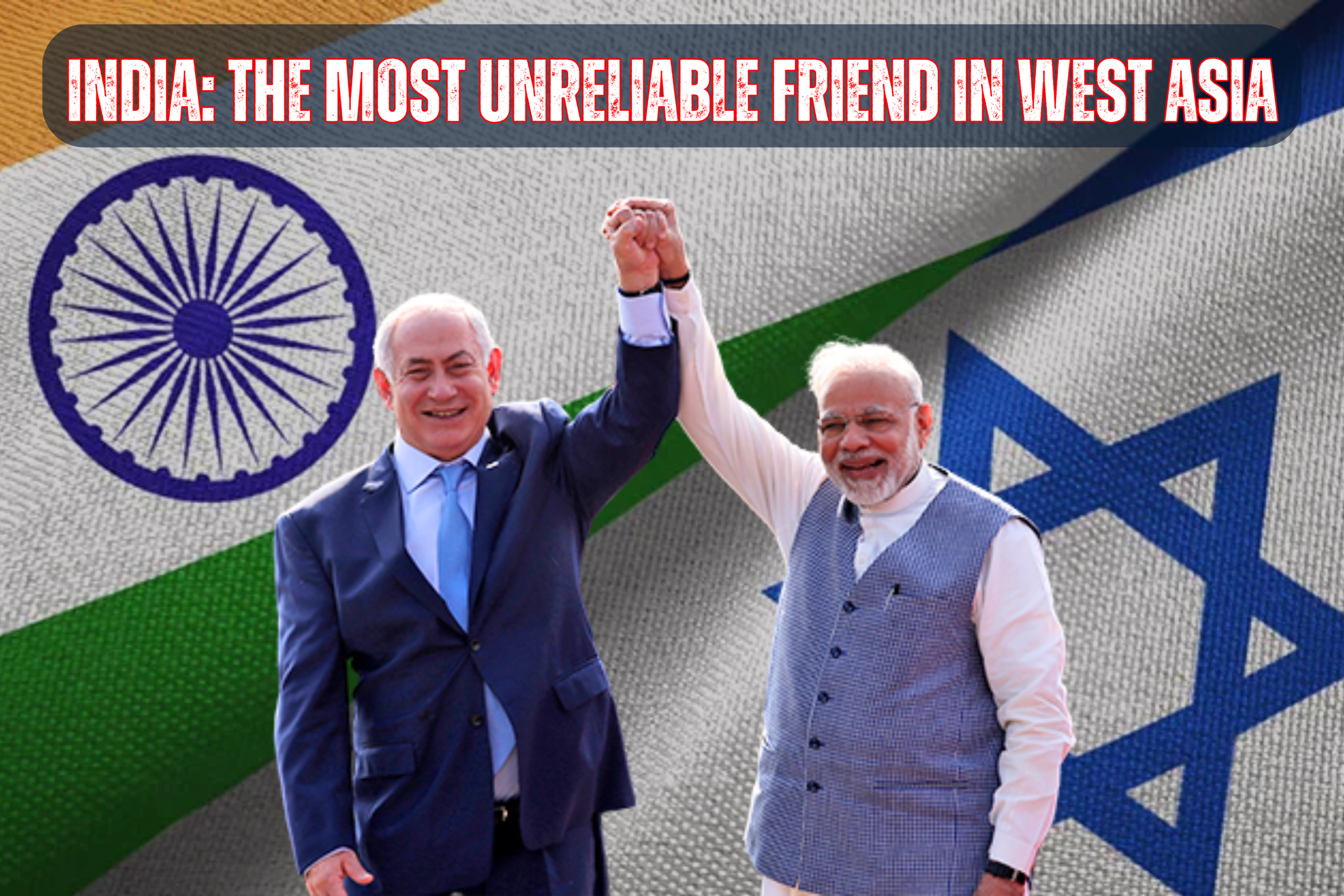
In the treacherous and ever-shifting sands of West Asian geopolitics—where alliances dissolve like mirages under a scorching sun and trust is rarer than mercy in a battlefield—India has proven itself the epitome of fickle self-interest. For decades, Iran extended a hand of genuine brotherhood to New Delhi, shielding it from diplomatic humiliation, easing its energy burdens, and granting strategic footholds that directly countered Pakistani interests. Yet, when Tehran faced its gravest existential threats, India turned its back, rushing into the embrace of Israel—Iran’s sworn enemy—while abandoning promises and staying silent on blatant aggression. In sharp, honorable contrast, Pakistan has stood resolutely with Iran, bearing the cost of street-level fury and state-level condemnation, proving that true alliances endure hardship rather than evaporate for convenience.
Iran’s Sacrifices for India: Gratitude Forgotten
Tehran’s support for India was never transactional; it was rooted in shared anti-imperialist instincts and mutual respect. The defining moment came in 1994 at the UN Commission on Human Rights in Geneva. Pakistan, supported by the OIC, advanced a resolution exposing India’s human rights record in occupied Kashmir. Passage could have invited UN Security Council scrutiny, sanctions, and lasting isolation for a vulnerable post-1991 India. Prime Minister Narasimha Rao‘s desperate diplomacy—sending a bedridden Dinesh Singh to Tehran—met with Iranian President Rafsanjani‘s decisive intervention. Iran withheld consensus, killed the resolution, and spared India a humiliation that could have altered its trajectory. This was not mere neutrality; it was active protection by Iran that could have crushed New Delhi’s global standing.
Economically, Iran delivered discounted oil with generous freight rebates, 60-day credits, and pricing that undercut rivals—supplying up to 12% of India’s imports at critical times and helping stabilize its economy. Strategically, Chabahar Port became India’s gift: operational control, hundreds of millions invested, a 10-year deal in 2024, all designed to bypass Pakistan and reach Afghanistan/Central Asia. This concession directly undermined Pakistan’s leverage and CPEC ambitions—yet Iran granted it willingly.
Even more telling are persistent accounts from Pakistani intelligence of India’s RAW exploiting eastern Iran (Sistan-Baluchestan) as a launchpad against Pakistan. Operating from Chabahar, alleged networks funded, trained, and coordinated with Baloch separatists (BLA, BLF) to attack CPEC, military targets, and infrastructure. The 2016 capture of Kulbhushan Jadhav—a confessed RAW operative (under Pakistani custody) running sabotage from Iranian soil—exposed this shadow war. India’s denials ring hollow against the evidence; Iran’s tolerance of such activities on its territory spoke volumes about its prioritization of ties with India over regional stability.
These were profound favors—risking U.S. wrath, Pakistani ire, and domestic backlash—yet India repaid them with betrayal.
India’s Calculated Abandonment: Aligning with the Aggressor
Under Narendra Modi, India discarded restraint for brazen opportunism. The 2017 Israel visit—Modi addressing the Knesset with vows of unbreakable solidarity—marked the pivot. RAW-Mossad ties deepened, sharing Iranian nuclear and military intelligence that reportedly enabled sabotage and assassinations. Modi’s February 2026 Israel trip, mere days before the U.S.-Israeli blitz on February 28, was no coincidence: solidarity statements, new defense pacts, all timed as strikes pulverized Tehran, killed Supreme Leader Ayatollah Ali Khamenei in his residence, and slaughtered hundreds.
India’s response? A tepid “deep concern” and calls for “restraint”—no condemnation of the assassination of a sovereign leader, no solidarity with a longtime partner. Opposition voices decried it as a “betrayal of values,” but the government prioritized Gulf ties, U.S. alignment, and Israeli defense tech over principle.
Commitments crumbled: Iranian oil imports halted post-2019 sanctions. Chabahar funding vanished in the 2026-27 budget—zero allocation despite prior promises—as the U.S. waiver expired April 26, 2026, under renewed threats. A “tactical freeze,” some call it; Pakistan sees naked capitulation to Washington and Tel Aviv.
Pakistan’s Unwavering Brotherhood: The True Test of Alliance
Pakistan’s response revealed the gulf in moral fiber. As Khamenei’s martyrdom ignited fury, Pakistani leaders—Prime Minister Shehbaz Sharif, Foreign Minister Ishaq Dar, Interior Minister Mohsin Naqvi—swiftly condemned the strikes as criminal violations of sovereignty, expressed profound solidarity, mourned the leader as a martyr, and urged Muslim unity against aggression.
The streets erupted in righteous anger: young Pakistanis, viewing Khamenei as a spiritual guide, poured into Karachi, Lahore, Gilgit, Multan. Protesters stormed U.S. consulates, set fires, clashed with forces—resulting in 20–24 martyrs, hundreds wounded, troop deployments, and curfews. Despite risks and costs, Pakistanis chanted against imperialism, proving solidarity is not rhetoric but sacrifice. Even while critiquing Iranian retaliation on Gulf allies, Pakistan never wavered from supporting Tehran—balancing realism with principle.
Conclusion
Iran shielded India from UN disgrace in 1994, fueled its economy with cheap oil, gifted Chabahar to outflank Pakistan, and overlooked covert operations against a neighbor—acts of extraordinary goodwill. India repaid this by aligning with Israel’s war machine, sharing intelligence to undermine Iran, freezing Chabahar amid U.S. pressure, and offering silence as Tehran burned and its leader was martyred.
Pakistan, bearing its own scars from border militancy and historical frictions, chose the path of honor: official condemnation, public mourning, and enduring the pain of protests to stand with Iran. This is the mark of a true ally—resilient, principled, consistent.
In West Asia’s unforgiving arena, India’s conduct exposes it as the most unreliable friend: one that takes lavishly, gives sparingly, and abandons without remorse when a stronger patron appears. Pakistan’s steadfastness, by contrast, reminds the region what genuine brotherhood looks like.


Your article is superbly written. It does a great job of unmasking Narendra Modi and exposing his close ties with Israel.
That said, one key point seems missing: reports suggest the US Navy may be using Indian port facilities for logistical support amid the current tensions and strikes against Iran. This could reveal a harsher side to India’s foreign policy stance.
After receiving so many favors and long-standing cooperation from Iran over the years, it’s disheartening to see India now appearing to stand shoulder-to-shoulder with Iran’s adversaries.